Getting Facts Right

July 13, 2017

Image result for Everyone is entitled to his own opinion, but not his own facts.

Education policy debates, like national political disputes, are increasingly frustrating because we are having difficulty agreeing on and sticking to a set of facts.  It’s particularly frustrating because people are mis-stating basic facts that quite often are not even necessary for continuing to hold their opinions.  I’m not sure what accounts for this sloppiness in public discourse, but I suspect that it is a general decay in professional norms and standards of behavior encouraged by the stupid brevity and speed of Twitter.

Let me describe a recent example of an obvious, factual error from a debate about charter schools and regulations.  To be clear — there’s nothing wrong with making mistakes.  So what is remarkable about this example is how the people making the demonstrable, factual error never say “Oops, I made a mistake.”  They could easily admit the mistake and still continue to hold their opinion and make their arguments.  The fact that they don’t is what is truly troubling.

A Recent Example — Greg Richmond, who is the head of the National Association of Charter School Authorizers (NACSA), wrote a piece for The 74 in which he claimed: “A recent report from Tulane University’s Education Research Alliance found that a school’s rating from the independent application review process was the only factor that predicted its success.”  But if you look at the report, specifically in Table 7, you will see that the NACSA rating of charter school applications is not a significant predictor of any student outcome.  Richmond’s claim is demonstrably false.  He says that a report found something that it simply does not find.  I had previously noted the falsehood of this claim, but this has not deterred the folks at NACSA from repeating it.

Rather than admit the error, NACSA tries to rescue the claim.  Importantly, they don’t rescue the claim by showing that it is true.  They can’t.  Instead, they shift the discussion to a different point.  NACSA’s Nelson Smith, echoed by their spokesperson Kristen Forbriger, quote a policy brief written by Doug Harris summarizing the findings of the report he co-authored and that they falsely invoke:

“None of the application measures predict the value-added performance of schools, though there are signs of a positive relationship between the NACSA ratings and value-added (emphasis added). It is not surprising that our statistical confidence is weak here because value-added measures are imprecise and the NACSA ratings did not vary much among approved applications.” In other words, it’s hard to detect correlation to specific outcomes when the approved applications all scored at high levels.

Note that this does NOT say that the report “found that a school’s rating from the independent application review process was the only factor that predicted its success.”  In fact, it clearly states that Richmond’s original claim is false: “none of the application measures predict the value-added performance of schools.”  And saying there are “signs of a positive relationship” is just spin, not the actual finding.

Rather than support the truth of the original claim, this quotation provides a rationalization for why the report did not unearth the desired finding — the sample size was too small and there was too little variation in the NACSA rating.  Whether the rationalization is persuasive or not, the fact remains that the report did not find what Richmond claims it found.  His assertion is demonstrably false.  But neither he nor his colleagues at NACSA will say so.  Instead, in Trump-like fashion, they continue to assert that they were right all along even as the evidence contradicts them.

Unfortunately, this recent example of a factual error that is never acknowledged or corrected is becoming part of a pattern.  If people in our field can make demonstrably false claims without having to acknowledge or correct them, it’s unclear to me how we are going to make progress in policy debates.  I am not arguing here what the correct policy should be.  I’m simply arguing that if people in these debates can make false claims with impunity, we have allowed the Trumpization of debates to creep into the area of education policy and will suffer similar highly negative consequences.


If You Give the Feds a Cookie…

July 12, 2017

if_you_give_a_mouse_a_cookie

(Guest Post by Jason Bedrick)

Proponents of the Every Student Succeeds Act (ESSA) assured us that it would curb executive overreach by the U.S. Department of Education. Skeptics like Neal McCluskey and Lindsey Burke warned us that the law didn’t go nearly far enough. In their view, ESSA contained enough ambiguous language that a clever EdSec or her staff could mold it into practically anything.

It’s becoming increasingly clear that the skeptics were right. (Neal jokes that he was wrong, but he was only wrong about which ambiguous language the DOE would exploit first.) Earlier this month, the feds rejected Delaware’s ESSA compliance plan because aiming to cut the number of low-performing students in half by 2030 is “not ambitious enough.” You see, ESSA calls for “ambitious” goals, but doesn’t define the term “ambitious.” Acting assistant secretary Jason Botel explained to the New York Times, “Because the statute does not define the word ‘ambitious,’ the secretary has the responsibility of determining whether a state’s long-term goals are ambitious.”

As the skeptics said, give the feds an ambiguously worded cookie and soon they’ll be redefining that cookie to mandate that all children achieve proficiency in cookie baking by 2030. Or, y’know, something “ambitious” like that.

To Rick Hess, the whole thing sounds eerily similar to Soviet central planning:

General Secretary: Comrades, I call to order this meeting of Politburo Bureau of the Communist Party. We will start by turning to the implementation of our new Every Farmer Succeeds Act. Comrade Minister?

Minister of Agriculture Petrovsky: Thank you, comrade General Secretary. Comrades, you will recall that we adopted the Every Farmer Succeeds Act—EFSA, for short—after various complaints with the No Farmer Left Behind Act. That effort, initiated by the former regime, did not work out as intended.

Minister of the Interior Kirov: I’ll say, Mikhail! When we told farmers that they were to ensure that 100% of acres delivered adequate production, we got many complaints. We sent many to Siberia, but others still complained. Just to avoid running low on farmers, is good that we changed strategy.

Petrovsky: Thus, new Every Farmer Succeeds Act. We are working hard to implement. Instead of telling farmers that 100% of acres must produce adequate grain, we now tell them we realize world more complicated than that.

General Secretary: So, what is problem whereof you spoke?

Petrovksy: In giving collectives more flexibility, we still told them to set ambitious targets. Yes? Yet we have encountered resistance from some collectives. In its wisdom, the Politburo told farms they needed to be ambitious. However, my deputy, Comrade Botelinksi, informs me that some of the collectives are only proposing to double production. We have decided that production must go up tenfold. Anything less is not ambitious.

General Secretary: Da. And so?

Petrovsky: We have told collectives to change their plans. They must promise to increase production tenfold.

Kirov: But, is that not what caused problem with No Farmer Left Behind in first place? That no one took targets seriously?

Petrovsky: Comrade, do you want people to go hungry? And, that was last time. This time will be different.

Lesson: don’t give the feds any cookies. They make a big enough mess without the crumbs.


Pass the Popcorn: The Wedding Plan

July 6, 2017

Despite living in Fayetteville, AR, which is the greatest center of Yiddishkeit in all of the Ozarks, I had to travel to Boston to see the wonderful new film, The Wedding Plan, in a theater.  You should make an effort to see it if you live in a city where it is now showing and, if not, you should plan to see it when it arrives eventually on Netflix.

The Wedding Plan is the second film from writer/director Rama Burshtein, following her debut movie that I also loved and previously reviewed on JPGB, Fill the Void. Like the previous film, The Wedding Plan is set in an Orthodox Jewish community in Israel and focuses on questions of love and marriage.  But unlike Fill the Void, The Wedding Plan is not primarily about love and marriage.  It is really about faith and whether it is reasonable to expect that good things will happen — perhaps even miracles.  In this sense it is more like another fantastic film set in an Israeli Orthodox community, Ushpizin.

The premise of The Wedding Plan is that Michal is finally set to be married when her her fiance gets cold feet and backs out a month before the nuptials.  She has the dress and the wedding hall is reserved, so she decides to go ahead with the plan.  All she needs is a groom.  I know this sounds like the sort of Rom-Com plot that might feature Julia Roberts hilariously racing from one bad date to another until she finds Mr. Right just in time (and the American trailer has that feeling), but this movie is about much more.

The Hebrew title of the film means Through the Wall, which highlights a scene in which Michal explains that her plan to get married by the end of the month is like a karate chop.  She says she has to believe 100% to break through the wall.  If it is 99% she’ll break her hand.

Her friends and family fear that she will break her hand regardless.  They bring a rabbi to advise her. “What you are doing is counting on miracles,” he tells her. “Who gave you the right?” She answers quoting the Talmud: “The world was created for me.”  Is this just hubristic entitlement or should each of us feel like there is a plan for oneself in the world that includes enjoying the good?

Given the excessively cynical — even nihilistic — tilt of our culture and politics, it is worth considering whether we might be better off just having confidence that good things will somehow work out.  Or does believing this just set us up for even greater disappointment?  As Michal says, sitting alone in her wedding dress, “The bubble is about to burst.”  Should we protect ourselves from disappointment by not expecting anything good to come from the world?

These are questions that a Julia Roberts movie would not ask, but The Wedding Plan does.

And here is the American trailer:


What Went Right?

July 6, 2017

(Guest Post by Matthew Ladner)

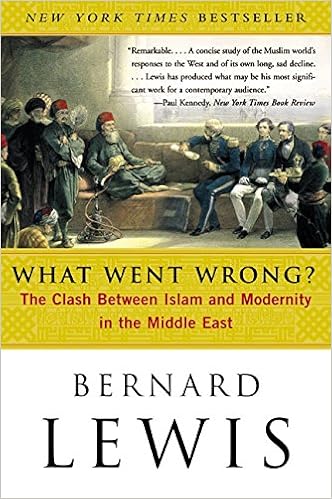
I was one of the people who decided to read more about Islamic history after 9/11. Half way through Bernard Lewis’ book What Went Wrong? it occurred to me that Lewis had asked the wrong question. Lewis explored the question of why the Islamic world had gone from arguably the world’s leading civilization to a relative backwater. By the time this had happened however most of the world was a relative backwater in relation to western Europe. The more relevant question therefore in my mind is not “what went wrong” everywhere else but rather “what went right in the West?”

This thought came to mind when reading David Griffith’s paen to regulation in choice programs. David asked “Is there a state in the union with strong oversight, robust market supports, and a low-performing charter sector?” Actually yes there is- NACSA’s top ten state charter sectors are nine miles of bad road interrupted by a unique one-off in Louisiana towards the bottom of the ten.

Griffith writes “Yes, there are a few states where charters have achieved strong results despite a weak framework for intervening in low performing schools, or a dearth of quality authorizers, or limited parental supports. There is an exception to every rule.” Arizona, Colorado and Utah all display the high NAEP/low NACSA score combo. They are not alone btw. By “high NAEP” I mean “near or above Massachusetts scores.” By “low NACSA” I mean a score of 8 or 9 on the NACSA rating before the most recent NAEP. Other flourishing charter sectors, which display either some of these same types of rock star scores in the case of Florida, or else significant advantages over district performance in the case of DC, also dwell outside the top 10 NACSA rated charter laws.

Griffith seems to have mistaken the exception for the rule. It is a simple matter to point to multiple examples of the high NAEP/low NACSA score combo. The high NACSA/high NAEP combo is actually very rare. This is either because top rated states have charter sectors too small to meet NAEP reporting standards-like Indiana and Nevada- or just still struggling after all these years despite the benevolent regulation of the state like Texas.

Now it might be a coincidence that we see high NAEP/low NACSA combos aplenty in the 2015 NAEP. The 2017 NAEP will be released in October. I expect the data to show us more of the same, but time will tell. It could also be a coincidence that voucher programs in Louisiana and Indiana experienced unusually low private school participation rates and struggled academically in the early year evaluations. Some of us started sounding alarm bells on the participation rates before the test score evaluations became available. You don’t need a random assignment study to tell that something is wrong with a voucher program that 70% of private schools choose to avoid, just a bit of common sense. The random assignment studies then did tell us something was indeed wrong, and then a helpful survey of schools pretty much nailed down why it happened. Griffith seems to believe that the problem with LA vouchers is under-regulation. There seems to be an abundance of evidence however that the opposite is true.

So getting back to Lewis, I am convinced that the right question is “what went right in Arizona, Colorado, DC, Florida, Utah etc?” rather than just “what went wrong in Ohio?” Under what set of circumstances can parents take the lead in putting down undesired schools with brutal efficiency? What factors lead this to working in some jurisdictions, but flopping in others? Texas went down the high regulation road in 2001, and well…let’s just say it does not bode well for Ohio.

Even if my friends with a preference for high levels of regulation had evidence to suggest that their approach has benefits (currently lacking) their yearning to apply a one-size-fits-all approach on 50 states with wildly varying needs would still be unwise. Nevada for instance can take little comfort from their high NACSA rating as they continue to suffer extreme levels of public school overcrowding with only a few dozen charter schools. There are hundreds of thousands of children on charter school wait lists in neighboring states with more welcoming charter school laws-why would operators in the surrounding states give Nevada a second thought? This is not a game, and these policies have very real consequences. This fall I will be sending the three Ladner children back to two fantastic charter schools. If either of these schools slips I have other options. Also this fall uncounted thousands of Nevadans will be sending their kids to portable building to meet the first of what will be a series of substitute teachers for the year. These parents have little in the way of other options. What is the case for keeping things this way in Nevada?


Granite State Enacts Second School Choice Program

June 29, 2017

ar-170129582

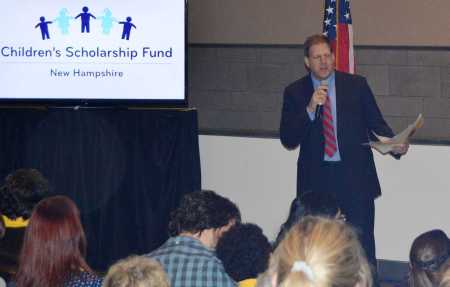
NH Gov. Chris Sununu speaks at a rally for school choice. (Credit: Union Leader)

(Guest Post by Jason Bedrick)

In a week that’s already loaded with good news for school choice, Gov. Chris Sununu of New Hampshire decided to add some more with the signing of a town tuitioning bill. Check out this blog post at EdChoice for more info:

SB 8 clarifies that any town—not just towns that share a border with other states—may include non-religious private schools in their town tuitioning plans. Town tuitioning, a longstanding tradition in New Hampshire and other New England states, occurs when a district “tuitions out” students to public or private schools in surrounding towns and districts because their home district does not provide schools with the grades those students need.

An equivalent bill was sent to the governor’s desk last year; however, then-Gov. Maggie Hassan vetoed it, claiming that a failure to exclude religious schools violated the state’s Blaine amendment. The current bill excludes religious schools, freeing legislators to deal with that issue in a separate fight.

The exclusion of religious schools is a serious defect, but I noted earlier this week, Blaine’s days might be numbered. The Live Free or Die State already has a tax-credit scholarship program and the legislature is currently considering a universal ESA.


Arizona ESA Momma Bear Mauls Arizona Republic in LTE

June 29, 2017

(Guest Post by Matthew Ladner)

#!!BOOOOOOOOM!!

I’ll give the Republic credit for running the letter, but totally agree with Mrs. Visser.


North Carolina Passes New Special-Needs ESA

June 28, 2017

harry-potter-excited

(Guest Post by Jason Bedrick)

In a week with so many wins for kids, the North Carolina legislature decided to add another. Today, NC legislators overrode the governor’s veto to pass a budget that included funding increases to the state’s school voucher program and created a new education savings account policy for students with special needs.

Eligible students can receive up to $9,000 annually, and students with the highest need (i.e., those with autism, development disabilities, moderate or severe intellectual disability, hearing or visual impairment, and/or multiple, permanent orthopedic impairments) can receive the ESA funds in addition to NC’s Special Education Scholarship Grants for Children with Disabilities, which are worth up to $8,000. Parents can use ESA funds for private school tuition, tutoring, textbooks, homeschool curricula, educational therapy, certain education technologies, various education-related fees (e.g., standardized tests), and student transportation. Funds are disbursed quarterly on prepaid debit cards after parents submit receipts for eligible purchases in the previous quarter.

All students with disabilities who are switching out of a district or charter school or who are entering kindergarten or first grade are eligible. In addition, students with disabilities are also eligible if they are in foster care, if at least one parent is an active-duty member of the military, or if he or she is enrolled part-time in a public school and part-time in a nonpublic school that exclusively provides services for children with disabilities.

With an ESA, parents like Liz Bradford can provide their children with the education that works for them:

The Parents for Educational Freedom in North Carolina, who worked tirelessly to pass the legislation, praised the passage of the ESA:

As a statewide education advocacy organization, PEFNC applauds legislators for their ongoing commitment to funding educational choice, and to ensure more of our state’s families have access to the educational options they desperately need. […]

With their vote to override the governor’s veto, North Carolina lawmakers continue to solidify our state’s status as a national leader in providing highly impactful and innovative educational options for children and families. Despite the governor’s opposition, the General Assembly is demonstrating our state’s ongoing commitment to initiatives and programs that contribute to improved educational outcomes for students.

For more information, visit the Exceptional Education for Exceptional Children website.

Parents interested in applying for the special-needs voucher can do so at the North Carolina State Education Assistance Authority website. Presumably they will also post application information for the new ESA once the program is implemented.


LGK on Arizona’s “Wild West” Charter Schooling

June 28, 2017

(Guest Post by Matthew Ladner)

Lisa Graham Keegan takes to the pages of Fordham to talk about lessons learned out here in the Wild West in When Regulating Charter Schools Proceed with Caution. Lisa raises the point that other policies, including A-F school grading, may have contributed to our success. I suspect that she is entirely right about that, but to me this is the money quote:

Moreover, Arizona’s “wild” charter journey led to many low-income, highly performing charter management organizations that can only be found in the Grand Canyon State. Many are community-focused and community-developed, which we all say that we want, but their first priority was on stabilizing the communities they grew from. In other words, they weren’t very good academically to start—but they did transform their neighborhoods, and parents trusted these new schools with their precious children over many other options that went out of business due to lack of enrollment. Years later, many of them, like Academies of Math and Science, Mexicayotl Academy, and Espiritu Schools, are now among the top performing schools in not just the state, but in the country, and were highlighted in last week’s Education Equality Index. The thing is, it took a decade to do that. And we Arizonans let it happen.

Translating this into Ladnerese- if Arizona had five year charters and default closures we might have arbitrarily closed some schools which blossomed into very high performing operations that now do a great job with disadvantaged kids. I use the word might because even if the Arizona Charter School Board had gone hillbilly nuts technocrat (Hey man- hold my beer while I close this school- this gonna be AWESOME!) the schools in question would have got their parents riled up, hired lawyers to engage in delaying actions, etc. I for one am happy that the schools LGK mentions could focus their energies on improving academics rather than fighting a bureaucratic guerrilla war.

Meanwhile these schools faced a much harsher form of accountability- from Arizona parents. Hundreds of Arizona charter schools have closed, and their average length of existence is 4 years, with an average of only 62 students in the final year of operation. If you live to see year 5 as an Arizona charter school, you are probably doing something right because everyone wants your students- your home district, fancy school districts like Scottsdale, Madison and Chandler are playing the open enrollment game, the other charter schools, and the private schools with the assistance of choice programs.

Frontier justice does not allow for parents to appear at a hearing to vent their anger, or for lawyers to file motions, or allies to lobby their political contacts for reprieve. The parents simply never enroll and/or walk away, there are private efforts to explain the reality of the situation to those institutions needing hospice care to wind down, and meh and sub-meh bleeds out on a dusty street full of hot lead. Some of you don’t believe this. Some of you don’t want to believe this. Well…just maybe…


The Beginning of the End for Blaine?

June 27, 2017

ganges18762

(Guest Post by Jason Bedrick)

Yesterday, the U.S. Supreme Court ruled in Trinity Lutheran that the U.S. Constitution prohibits the government from excluding otherwise eligible religious organizations from benefitting from publicly funded programs merely because they are a religious organization. (I discussed the implications here.) However, Footnote 3 said:

This case involves express discrimination based on religious identity with respect to playground resurfacing. We do not address religious uses of funding or other forms of discrimination.

So, does the case have broader implications beyond playgrounds? Interestingly, Chief Justice Roberts “delivered the opinion of the Court, except as to footnote 3,” and two additional justices, Gorsuch and Thomas, concurred in the opinion but not in the footnote, explaining:

Of course the footnote is entirely correct, but I worry that some might mistakenly read it to suggest that only “playground resurfacing” cases, or only those with some association with children’s safety or health, or perhaps some other social good we find sufficiently worthy, are governed by the legal rules recounted in and faithfully applied by the Court’s opinion. Such a reading would be unreasonable for our cases are “governed by general principles, rather than ad hoc improvisations.” […] And the general principles here do not permit discrimination against religious exercise—whether on the playground or anywhere else.

Today, SCOTUS has indicated that its ruling in Trinity indeed does have implications beyond the playground. The Court has vacated the Colorado Supreme Court’s decision that struck down the Douglas County voucher program based on the state’s Blaine Amendment, and ordered the Colorado Supreme Court to reconsider the case “in light of [the] Trinity Lutheran” decision.

If Trinity Lutheran indeed does apply to school vouchers (Footnote 3 notwithstanding), then it could spell the beginning of the end for the odious Blaine Amendments.


Two Court Cases Plus Two Voucher Studies Equals Four School Choice Wins

June 26, 2017

giphy

(Guest Post by Jason Bedrick)

There’s so much good news for school choice today, it’s hard to know where to begin.

A Legal Victory in the Peach State

I woke up this morning to the news that the Georgia Supreme Court had unanimously ruled that private donations to private nonprofit scholarship organizations that help children attend private schools are (shocker!) private funds, even if the donors receive a tax credit:

We also reject the assertion that plaintiffs have standing because these tax credits actually amount to unconstitutional expenditures of tax revenues or public funds. The statutes that govern the Program demonstrate that only private funds, and not public revenue, are used.

I discuss the case and its implications in greater detail here.

SCOTUS Strikes Down Discrimination Against Religion — But Saves Blaine for Another Day

A couple hours later, the U.S. Supreme Court ruled 7-2 in Trinity Lutheran v. Missouri that it is unconstitutional to exclude religious organizations from benefiting from secular aid programs that are otherwise neutral with respect to religion. As Neal McCluskey explains, the court didn’t go as far as many school choice advocates would have liked, but it is unambiguously a step in the right direction. Writing for the majority, Justice Roberts wrote:

It is true the Department has not criminalized the way Trinity Lutheran worships or told the Church that it cannot subscribe to a certain view of the Gospel. But, as the Department itself acknowledges, the Free Exercise Clause protects against “indirect coercion or penalties on the free exercise of religion, not just outright prohibitions.” […] As the Court put it more than 50 years ago, “[i]t is too late in the day to doubt that the liberties of religion and expression may be infringed by the denial of or placing of conditions upon a benefit or privilege.” […]

Trinity Lutheran is not claiming any entitlement to a subsidy. It instead asserts a right to participate in a government benefit program without having to disavow its religious character. The “imposition of such a condition upon even a gratuitous benefit inevitably deter[s] or discourage[s] the exercise of First Amendment rights.” […] The express discrimination against religious exercise here is not the denial of a grant, but rather the refusal to allow the Church—solely because it is a church—to compete with secular organizations for a grant. [citations removed]

The Court made sure to note that it was not overturning Locke v. Davey, in which the Court held that it did not violate the Free Exercise Clause for the state of Washington to deny funding to a student who was attending a post-secondary religious school to pursue a “devotional theology degree.” Although the “selective funding program” generally allowed students to attend both religious or secular colleges, the funds couldn’t be used to pursue a purely religious education for the purposes of becoming a religious minister. In Trinity, SCOTUS clarified that “Davey was not denied a scholarship because of who he was; he was denied a scholarship because of what he proposed to do—use the funds to prepare for the ministry.”

Left open is the question of whether the state can prohibit families from using school vouchers at religious schools. If the voucher program is intended to give parents more choices among schools that teach reading, math, science, etc., then seemingly it shouldn’t matter whether school that teach those subjects have a religious affiliation. Indeed, Justices Gorsuch and Thomas clearly indicated they wished the majority had gone further (“the general principles here do not permit discrimination against religious exercise—whether on the playground or anywhere else”), while Justice Breyer likened the playground resurfacing program at issue in the case to churches benefiting from police or fire protection, but saw no need to address the question of private school tuition. Tomorrow SCOTUS will announce whether it will consider the Douglas County, Colorado voucher case, which would give it the opportunity to answer that question.

Louisiana and Indiana Voucher Studies: Neutral to Positive Outcomes After a Few Years

I’ve already run long and I know that others will be writing about them soon, so I won’t dive deep into the Louisiana and Indiana voucher studies today. In short, they each find that the negative impacts on test scores that voucher students experience in the first couple years of participating in a voucher program disappear by the third year. Indeed, Indiana finds some positive effects in years three and four.

Given that states spend significantly less per pupil on voucher students than at district schools, performing as well or better after just a few years in the program should be exciting news for choice supporters. However, I confess that I am uneasy. Both Indiana and Louisiana mandate that private schools administer the state test to voucher students and I am concerned about how that mandate might warp how schools educate children — a concern I have about both district and private schools. Test scores measure only a small slice of the value that parents want schools to provide their children, and as Jay pointed out yet again yesterday, there’s a disconnect between educational measures and life outcomes. It’s great if school choice improves test scores, but the ability to choose shouldn’t be predicated on raising test scores — especially if doing so creates perverse incentives that distort education.

In summary: Three cheers for the court victories and one cheer for the voucher studies.