Jonathan Gruber for the Higgy

April 15, 2015

(Guest Post by Matthew Ladner)

An ongoing plea to think twice, and even three times, before buying into the wonders of central planning and/or technocrats more broadly stands as one of the underlying themes of JPGB. Given that we primarily discuss American education policy here, and that if rules, regulations and earnest bureaucrats were a solution America would long ago ceased to have had K-12 problems, this ought not to require elaboration. Technocrats sadly have a funny habit of either exacerbating problems or creating new problems under the best of circumstances. At their worst, such people hide behind a false cloak of science in order to boss other people around while rationalizing away their ill effects in the name of some higher good. Each year we honor a select few of such people with a Higgy nomination.

It is my distinct pleasure therefore to nominate Jonathan Gruber for the 2015 Higgy.

It is no accident that the two broad fields with the heaviest government funding and regulation- education and health- have seen a truly incredible combination of rampant cost inflation in return for nebulous quality improvements. No one in their right mind would voluntarily pay higher prices for dubious quality improvments- only a truly convoluted system of indirect payment could deliver such an outcome. Health care comes with some additional difficulties of price inelastic demand (“nah don’t even try life saving heart surgery I don’t want to pay that much” is not a phrase often heard in America) and information asymmetries between doctors and patients.

In the end of the day the demand for health care exceeds our ability to supply it, which raises the difficult subject of rationing. There are two general methods for rationing a scarce good or service- by price or by bureaucrat. Europeans long ago embraced bureaucratic methods in various ways. The United States however created a hybrid system that in essence denied the need to choose in creating a convoluted system of tax subsidies and public programs that led to decades of rampant cost inflation. In the immortal words of the late Massachusetts Senator Paul Tsongas, America became the only country dedicated to the proposition that death is optional. The American left yearns for a European system but must face an American health care culture (largely of their own creation) that has operated without any type of rationing for many decades.

All of this predates Dr. Gruber, but Gruber has been deeply involved in fashioning both state and federal public policies designed to double down on third-party payers in order to treat a symptom of America’s health care dysfunction. Rampant and long-lasting health care inflation far above that in the consumer price index has, needless to say, made insurance more expensive. Increasing the price of any good or service decreases the pool of people able and willing to purchase it. Thus the percentage of those carrying insurance has been in decline, and the cost of private and public insurance programs have steadily increased.

What to do? How about a fine to compel people to buy health insurance? This of course would do nothing about the underlying problem per se, so Gruber and company engaged in an elaborate deception in the “Affordable Care Act.” CNN helpfully ran down several of Gruber’s greatest hits:

Gruber’s gloating on video regarding the various deceptions of Obamacare deservedly generated deep hostility manipulation of the scoring of the bill: obfuscation of the use of taxes, an attempt to obscure what amounts to a massive transfer of wealth. Gruber’s gleeful recounting of just how clever in deception Congressional Democrats and the Obama Administration had been represents a damning indictment all its own.

Jonathan Gruber perfectly symbolizes the dangers of “scientific progressivism” in my mind because by Gruber’s own admission very little has been done to address the real underlying problem.  In one of his videos, Gruber laments the fact that it was necessary to pretend to “bend the cost curve” and name the bill the “affordable care act” because controlling costs represents an overwhelming concern while expanding coverage to the uninsured does not. It was necessary to deceive the American public, you see, because the American public lacks virtue and cares more about controlling costs than expanding coverage.

The unwashed masses seem to understand much more clearly than our MIT technocrat that controlling costs represents the only sustainable method for expanding access to care. Expanding coverage cannot and will not be sustained without addressing the fundamental issue of rampant cost inflation.  The United States of America had trillions of dollars in unfunded entitlement liabilities before Gruber and company began their campaign of deception in order to transfer wealth and extend coverage while doing very little about cost.  “We’ll get to that part later” on cost control represents a sickening level of irresponsibility that treats a symptom (lack of health insurance) rather than the cause (decades of cost inflation).  Gruber and our other health technocrats would like us to trust them they will address this more difficult issue of cost containment later.  This after conclusively proving that no one should ever trust anything that comes out of their mouths ever again.

William F. Buckley famously noted that he would rather be ruled by the first 1,000 names in the Boston phone book than by the faculty of Harvard. Our elites routinely display horrible judgement and a sense of entitlement to make decisions for those whom they judge to be in need of their benevolent guidance. Plato had it all wrong in the Republic, would-be “philosopher kings” deserve our unrelenting skepticism. Voluntary exchange drives human progress and innovation, not allegedly well-meaning busy bodies concealing their lies and deceptions behind a lab coat as they attempt to better order our lives for us.


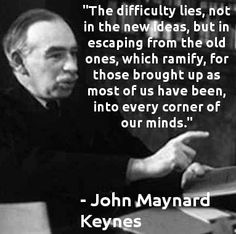
John Maynard Keynes for the Higgy

April 14, 2015


(Guest post by Greg Forster)

Last year, when commenter Allen nominated John Maynard Keynes for the highest (dis)honor known to man, the Higgy judges expressed skepticism on grounds that politicians corruptly manipulate the economy with or without the convenient excuses provided by Keynesianism. However, the judges reserved final judgment on Keynes’ Higgyworthiness because a full case had not been made.

I hereby offer a full case, on three grounds:

  1. Corrupt political manipulation of the economy has been greatly increased as a direct result of Keynes’ influence.
  2. Keynes did far, far worse things than simply give politicians a convenient excuse to corruptly manipulate the economy. 
  3. On both the above counts, Keynes not only worsened the world, but also met the more specific Higgy qualification of having “arrogant delusions” that “self-righteous proclamations” improve the world. 

Point One: As Paul Johnson documents in Modern Times, in the first half of the 20th century there was an unprecedented shift in the politics of corrupt collaboration between political and business elites. Previously, such collaboration occurred episodically, when some serious crisis arose and it could be justified as an “emergency measure.” Hence the big expansions of corrupt government manipulation of the economy occur in tandem with wars, depressions, and financial panics. After each crisis passed, however, pressure would mount to roll back these manipulations and restore the natural order. These rollbacks were never 100% successful, of couse, but in most cases far more than 50% or even 75% successful. Consider Coolidge’s rollback of Wilson’s autocratic WWI measures. 

But after WWII, everything is different. We have entered a whole new world. Corrupt government manipulation of the economy is now normalized. It is universally expected that political and business elites will get together in smoke-filled rooms and determine our fate for us. This is simply the way we live now. True, the more extreme wartime measures like rationing were recinded, and without the war as a justification the further growth of political control of the economy was greatly slowed. But, however slowly, that growth did continue. The political ground had permanently moved. The old world of merely episodic corrupt manipulation was gone; a new world of permanent, normalized corrupt manipulation had arrived.

This was almost 100% attributable to Keynes, for reasons that will become clear in Point Two.

Point Two: To understand the significance of Keynes, it is necessary to set aside our immediate policy concerns (fighting over the latest stimulus package or “economic plan”) and appreciate his role as a world-historical figure of the first rank. He revolutionized the entire discipline of economics, and by doing so, had a dramatic impact on the social order as a whole.

From classical Greco-Roman philosophy through the Patristic Era, the Middle Ages, early modernity and the Enlightenment, the study of economic phenomena was a subset of moral philosophy. It was always grounded in moral assumptions about human nature. Plato, Aristotle, Augustine, Aquinas, the Salamanca School, the Reformers, Locke, the Physiocrats and Adam Smith, though they had different moral views in some important respects, were agreed that the purpose of studying economics was to help align economic activity with virtue and right purposes – encouraging productive, thrifty, efficient, flourishing behavior, often with a particular interest in extending opportunity to the poor; and opposing greed, sloth, irresponsibility and (above all) injustice. The professional scholar of economics was par excellence the opponent of corruption and abuse of power. 

Over the course of the 19th century, however, this was changing. Especially in England, prominent economists increasingly expressed a desire to get out of the ethics business and abandon the fight against corruption. They wanted to do something that is impossible, and would be irresponsible if it were possible – to describe the world without evaluating it, to be morally neutral, to refrain from calling injustice unjust without being implicated as its accomplices.

Try as they might, however, these would-be neutral technicians could not find a way to extract themselves from the ethics business. A century of efforts to invent a paradigm of economics not beholden to morality bore no fruit.

And then came John Maynard Keynes, and the Keynesian Revolution.

Where before economists had defined the purpose of their discipline as encouraging the ethical production of wealth and well-being, Keynes taught them their purpose was to help people gratify their immediate desires – whatever those happened to be. Where before economists took self-sufficiency (producing more than you consume) as normative, Keynes taught them “the paradox of thrift” and trained them to despise the old rule that households and nations must live within their means. Where before economists took it for granted that our goal was to leave the world better than we found it, Keynes taught them that “in the long run we’re all dead” so we don’t need to worry what kind of world we leave to our grandchildren.

And where before economists thought their policy recommendations were constrained by the limits of justice, which compelled us to be concerned about the problem of corruption, Keynes taught them to treat human beings as merely irrational animals – bundles of appetites – without a transcendent dignity that needed to be respected.

Point Three: At this point you might be tempted to say Keynes isn’t Higgy material in light of the Sarnoff Codicil, which holds that the Higgy should not go to those who intend to make the world worse and succeed. It should go to those who intend to improve the world and fail – or, more specifically, to those who have “arrogant delusions” that “self-righteous proclamations” improve the world.

But Keynes passes this test with flying colors. He intended to improve the world – he had a detailed and well worked out philosophy of utilitarian materialism, and believed he was replacing the reign of superstition and barbarism with a new era of beautiful technocratic progress. He was a constant, nonstop fount of self-righteous proclamations. And all his asperations failed. The new, post-Keynes economics does not work as empirical science. It does not work as a practical guide to policy, either. And it has created sociological conditions that will, in the long run, destroy it. Keynesianism today is in the same state as Marxism in the Soviet Union in about the 1970s or so; it is a politically convenient god to whom all must still bow, but longstanding suppressed doubts about the god’s power to deliver the goods have hardened into permanent cynicism. The downfall may still be 20 years away, but it is coming.

John Maynard Keynes richly deserves the Higgy.

Image HT


Wildflower Fever

April 10, 2015

(Guest Post by Matthew Ladner)

So I am struggling not to nominate the most blindingly obvious choice for the Higgy this year….must……resist!

In the meantime, I decided what this blog needs this Friday is a late 20th Century folk-revival tune…enjoy!


This Just In: Human Existence Validated

May 9, 2014

http://www.youtube.com/watch?v=-G6Rmdyt01s

(Guest post by Greg Forster)

Ladies and gentlemen, a YouTube channel consisting entirely of board game reviews called GETTIN’ HIGGY WITH IT! exists.

Human life is now confirmed valid. That is all.


Paul G. Kirk, Jr. for the Higgy

April 15, 2014

473px-Paul_Kirk_Official_Photo

(Guest post by Greg Forster)

A good Higgy nomination is a tough target to hit. As we found out last year, your pick can be rejected for being too powerful and thus being more a case of BSDD (Big Scary Dictator Disorder) than PLDD (Petty Little Dictator Disorder), as happened to my nomination of David Sarnoff. But your nomination can also be rejected for being not powerful enough, and thus not making a sufficiently large contribution to the worsening of the human condition to merit the award; this was the rationale given by the judges for not selecting Jay’s nomination of Louis Michael Seidman.

So the big behind-the-scenes bigshots who pull the real strings of power are out, and TV blowhards who just talk about what the bigshots do are also out. The core value of the Higgy is “arrogant delusions of shaping the world”; the bigshots are not deluded in thinking they can shape the world, whereas the blowhards don’t really even try to shape the world so much as describe those who do.

With all that in mind, I nominate Paul G. Kirk, Jr. for the Higgy, for inventing the “free speech zone,” also known as the “First Amendment area.”

Free-Speech-ZonesImage HT

As you can see from the image above, the basic idea of free speech zones is that “constitutional first amendment rights” are only to be exercised in government-designated areas. They are now used in virtually all major events, such as national political conventions; they are also set up anywhere something controversial is happening that attracts protests. They’ve been in the news lately in connection with the Bureau of Land Management’s dispute with the Bundy family in Nevada. As Mark Steyn comments, “The ‘First Amendment Area’ is supposed to be something called ‘the United States.'”

Gone is the old idea of America as the one country on the face of God’s earth where literally anyone can just stand there on the sidewalk talking to anyone who will listen, or where people can organize to protest the actions of the powerful in genuinely public spaces. The pseudo-genius of the free speech zone is that government doesn’t forbid you from speaking per se, it simply designates the zone in a secluded, out of the way place, destroying the public nature of your speech.

Yes, everyone agrees that there have to be some limits on the use of public space; if ten different groups all want to have huge rallies in the town square at the same time, you’ll run into problems. But, again, the pseudo-genius of the free speech zone is that it shifts us from dealing with that kind of coordination problem to the removal of free speech from public spaces entirely. It’s a transition from “speak as you will, unless your activities get in other people’s way, and then we have to find some accommodation for competing claims,” to “you may not speak in public places, lest you get in other people’s way.”

But of course the real motive behind the creation of free speech zones is not to avoid coordination problems. It is to prevent protests from besmirching the public image of big events and other things that powerful officials want to run smoothly. These zones are intended to isolate “free speech” from actual public participation, in order to create the appearance that all is smiles and unicorns in the sun-kissed lands of modern America, under the benevolent rule of our lords and masters, whose benevolence is proven by the fact that they generously grant us free speech zones.

Kirk’s actions in inventing the free speech zone exemplify the core value of the Higgy exceptionally well. He was chairman of the Democratic party during its 1988 national convention, which seems to be generally agreed upon as having pioneered the use of these zones. And it’s pretty clear that Kirk’s goal was to silence free speech in public places. Consider this contemporary account:

But even those groups that are cooperating with the system are upset that the official “free-speech zone” is too far from the convention arena (in fact, it’s about 500 yards away, down a hill, around a corner and hidden by a hotel-and-shopping complex). “You can’t be seen by delegates in the ‘free- speech zone,’ ” complained Peterson.

“The city keeps telling us that the buses bringing delegates will let them off right across from the protest area, so they’ll have to see us,” said Paul Cornwell, chief organizer of Alternative ’88. “But you know how that’ll go. It’s going to be about 100 degrees out there and all the delegates are going to zoom into the air conditioning as fast as they can.”…

Protesters also were angered to learn – during a hearing on the suit – that the city plans to use the street that separates the “free-speech zone” from the Omni Center to park the delegates’ buses.

“In addition to putting us out of sight, they’re going to form a barricade of parked buses,” Peterson said.

Kirk seems to have drawn his inspiration from the Planning Office in Hitchhiker’s Guide:

The tradition has continued in the use of free speech zones ever since.

If this were effective in silencing speech, Kirk might not qualify for the Higgy on grounds that he’s a case of BSDD. But in fact free speech zones don’t silence free speech. Protestors ignore them; note that the quote above begins with “But even those groups that are cooperating with the system . . .” There were a number of groups that didn’t cooperate with Kirk’s system in 1988. The public image of the event was even more effectively spoiled than it would have been by a peaceful public protest.

By contrast, when Communist authorities in China copied our model of free speech zones (read those words again: Communist authorities in China copied our model of free speech zones) during the 2008 Olympics, it had few difficulties. Over in China, free speech zones are BSDD. Here in America, they’re PLDD.

True to form, today the rallies in Nevada were not held in the designated free speech zone, and protesters got into nasty conflicts with authorities. Ultimately the authorities – who were actually in the right as regards the merits of the case, but who had blown everything out of proportion and were more concerned with swaggering around with guns than with settling the dispute in a reasonable way – had to back off in humiliation.

Huge shock: people who are highly motivated enough to turn out for a protest do not simply bow their heads and do as they’re told when they’re told that free speech is no longer allowed in genuinely public spaces. If you deny them a legitimate opportunity to make their voice heard, that only makes them more angry and more determined to make their voices heard. So even when the lawful authorities are in the right, their efforts to silence dissent only make them look wrong and undermine their ability to enforce the rules.

Talk about arrogant delusions of shaping the world! I’m proud to nominate Paul G. Kirk, Jr. for The Higgy.


Barney Frank for the Higgy

April 3, 2014

(Guest Post by Matthew Ladner)

I will never forget where I was when I heard him say it: I was driving through a high-desert forest near Prescott Arizona.  The nation was in the midst of a full financial meltdown. I had the radio on, and one of the Sunday Morning Talk shows playing, Face the Nation if I recall correctly.  That’s when I heard Representative Barney Frank, Chairman of the House Financial Services committee state without the slightest hint of shame:

The private sector got us into this mess. The government has to get us out of it.

I nearly ran my vehicle into a tree.

I could pain you dear readers with a blow by blow of just how completely culpable federal policy in general and Mr. Franks in particular were in the meltdown. Others however have performed that task. A delightfully short summary however was to be found in the comments section of a Vanity Fair article by Joseph Stiglitz. Dr. Stiglitz had written a long article for the magazine whose purpose was to absolve Freddie and Fannie and other elements of federal housing policy from blame for the financial crisis.  One comment put the matter succinctly:

Let me get this straight: the creation of the sub-prime mortgage market had nothing to do with the sub-prime mortgage financial meltdown?

Now don’t get me wrong- there are private sector villains in this sordid tale (did for instance the credit rating agencies sign a pact with the Devil to survive what ought to have surely been a death-blow to their credibility?) but these private actors respond predictably to bad incentives created by federal policy.  A few decades of nudging banks in the direction of making dodgy loans coupled with creating entities dedicated to buying them up eventually turned ya-hoo mortgage brokers into funny money printers.  Can anyone truly be shocked that people making huge fees off absurd loans that they could quickly offload onto someone else’s balance sheet failed to resist the temptation to do so?

It would be delightful if the federal government could distort the mortgage market for decades in the interest of creating a more just society without creating unintended consequences.  It would also be delightful if we could bottle the tears of unicorns as a cure for cancer, depression and baldness.  The law of unintended consequences is a terribly powerful force. The beginning of policy wisdom is to fear its awful power.  Central planners tend to assume rational technocratic adjustments being made to policies and seem shocked, shocked when they wake up and find that pesky politics has taken over.

The “Break in Case of Emergency” glass box in Congressman Franks mind contained a piece of paper that read “If it hits the fan, pretend the government had nothing to do with it and call for more government.”  That makes him worthy of a Higgy in my estimation.


Nominate a Fool for the Higgy!

April 1, 2014

William Higginbotham

(Guest post by Greg Forster)

Yes, that glorious time of year has come once again – it’s time to post or send in your nominations for the William Higinbotham Inhumanitarian of the Year award. As the notorious younger twin to JPGB’s prestigious Al Copeland Humanitarian of the Year award, “The Higgy” recognizes outstanding achievement in the field of petty crapulence.

The award is named for history’s greatest monster, William Higinbotham.

Nominate someone who worsens the human condition in a way that meets the judges’ criteria for the award:

Higinbotham’s failing was in mistaking self-righteous proclamations for actually making people’s lives better in a way that video games really do improve the human condition. So “The Higgy” will not identify the worst person in the world, just as “The Al” does not recognize the best.  Instead, “The Higgy” will highlight individuals whose arrogant delusions of shaping the world to meet their own will outweigh the positive qualities they possess.

This year we’re inaugurating a new tradition of launching The Higgy on April 1. It’s a very fitting practice, given the emphasis in the judges’ comments last year on the role of foolishness in evaluating the merits of a nominee. The ideal Higgy nominee is not just someone who makes the world worse, but who has “arrogant delusions” that “self-righteous proclamations” improve the world. But don’t worry, the ancient custom – established by our forefathers in a distant age now lost to history – of announcing the winner on the only appropriate day (April 15) shall not change.

Last year saw a spirited competition that made the judges proud. I nominated David Sarnoff, who ruined the lives of the inventors of television and FM radio. Jay nominated Louis Michael Seidman, who provided spurious legitimization that helps officeholders get away with disobeying the supreme law of the land in the pursuit of their selfish ends. But Matt’s nomination of the winner, Pascal Monnet, surpassed all our fondest expectations for The Higgy. As Matt relates:

UX is a clandestine group of Parisians who make use of the underground tunnels to break into museums in order to restore neglected pieces of art. Pascal Monnet is a museum administrator who did everything in his power to shut them down…The group invests their time, effort and money into restoration projects neglected by the state, and even gives pointers to museum administrators regarding the flaws in their security. Armed with a map of the underground tunnel networks beneath Paris, UX members set up workshops in order to conduct late night restoration projects.  In 2006, they decided to fix a large clock within the Pantheon…After fixing the clock, UX notified the administration of the Pantheon, whereupon the story started to go wrong…[Bernard] Jeannot’s then-deputy, Pascal Monnet, is now the Pantheon’s director, and [on top of Jeannot’s huge lawsuit] he has gone so far as to hire a clockmaker to restore the clock to its previous condition by resabotaging it. But the clockmaker refused to do more than disengage a part—the escape wheel, the very part that had been sabotaged the first time. UX slipped in shortly thereafter to take the wheel into its own possession, for safekeeping, in the hope that someday a more enlightened administration will welcome its return.

In the face of such Higinbothamesque behavior, the mind simply boggles. But does Monnet stand alone, or are there more Higgy-worthy scoundrels out there awaiting our discovery? Dear readers, it’s up to you to bring further vile offenders to light so we can dishonor them!


And the Higgy Goes to…

April 15, 2013

In announcing the William Higinbotham Inhumanitarian of the Year Award, I established the following criteria for selecting dis-honorees:

The Higgy” will not identify the worst person in the world, just as “The Al” does not recognize the best.  Instead, “The Higgy” will highlight individuals whose arrogant delusions of shaping the world to meet their own will outweigh the positive qualities they possess.

Frankly, I had in mind those suffering from Petty Little Dictator Disorder (PLDD) more than those with BSDD (Big Scary Dictator Disorder).  BSDD folks obviously worsen the human condition with their blood-thirsty and brutally oppressive ways.  But almost everyone can recognize BSDD folks and an opposition to them forms naturally and immediately.  BSDD is awful and frightening ( it is Big and Scary), but it is also relatively rare.

The more common and insidious threat to the human condition comes from PLDD folks as they sit around in their offices or bars or cafes dreaming about how everyone else’s lives should be organized and what should be done with everyone else’s money.   Unlike those with BSDD, the PLDDers are facilitated in their disorder by the righteous (and self-deluding) conviction that everything they are doing is actually for the benefit of others.

The alphabet soup of DC-based think tanks and advocacy groups are filled with PLDD, but we couldn’t just give the Higgy to all of them.  We aren’t Time Magazine (and as  the recipient of the 2006 Time Magazine Man of the Year honor, I intend the magazine no disrespect).  Instead, we have to name an individual who has worsened the human condition through the arrogant delusion of shaping the world to meet his or her own will.

This year’s recipient of the William Higinbotham Inhumanitarian Award is Pascal Monnet.  Monnet is what the alphabet-soup PLDDers look like if they actually succeed in gaining power.  Once their dreams of lording over others have been realized, rather than fixing the world, as they had imagined back in their cubicle days, successful PLDDers like Monnet just want to make sure that others don’t displace their position by fixing it on their own.  In the end we learn that it was all really about control, not repairing the world.

Greg also had an excellent nomination, David Sarnoff.  But Sarnoff didn’t have delusions of shaping the world; he actually did shape the world, at least for a while.  He might be closer to a BSDDer than a PLDDer.  And my nomination of Louis Michael Seidman fell short because Seidman only provides the rationale for the PLDD of others.  Matt’s nominee, Pascal Monnet, more closely captures the essence of the Higgy because of his petty dictatorial impulses to block a group of artists from doing his job better than he could by fixing the clock in the Pantheon.

Anyone who could block a group of super-hero-looking artists like the UX members pictured below certainly has to be cast in the role of the villain.


Pascal Monnet for the Higgy

April 14, 2013

(Guest Post by Matthew Ladner)

A fascinating 2012 article in Wired introduced readers to the exploits of Urban eXperiment (UX for short). UX is a clandestine group of Parisians who make use of the underground tunnels break into museums in order to restore neglected pieces of art. Pascal Monnet is a museum administrator who did everything in his power to shut them down.

If this sounds too much like Robert DeNiro’s rebel-commando air conditioner repair man character from Brazil for comfort, well, yeah-me too.  A friend of mine from graduate school, Dan Twiggs, sagely noted that Brazil was actually a documentary rather than a bizarre dark comedy.

UX is more than cool enough to force you to revise any stereotypes Americans hold about the French, but people like Monnet force you to reconsider your reconsideration. The group invests their time, effort and money into restoration projects neglected by the state, and even gives pointers to museum administrators regarding the flaws in their security. Armed with a map of the underground tunnel networks beneath Paris, UX members set up workshops in order to conduct late night restoration projects.  In 2006, they decided to fix a large clock within the Pantheon:

That September, Viot persuaded seven other UX members to join him in repairing  the clock. They’d been contemplating the project for years, but now it seemed  urgent: Oxidation had so crippled the works that they would soon become  impossible to fix without re-creating, rather than restoring, almost every part.  “That wouldn’t be a restored clock, but a facsimile,” Kunstmann says. As the  project began, it took on an almost mystical significance for the team. Paris,  as they saw it, was the center of France and was once the center of Western civilization; the Latin Quarter was Paris’ historic intellectual center; the Pantheon stands in the Latin Quarter and is dedicated to the great men of French history, many of whose remains are housed within; and in its interior lay a clock, beating like a heart, until it suddenly was silenced.

Untergunther wanted to restart the heart of the world. The eight shifted all their free time to the project.

After fixing the clock, UX notified the administration of the Pantheon, whereupon the story started to go wrong:

As soon as it was done, in late summer 2006, UX told the Pantheon about the successful operation. They figured the administration would happily take credit for the restoration itself and that the staff would take over the job of maintaining the clock. They notified the director, Bernard Jeannot, by phone, then offered to elaborate in person. Four of them came—two men and two women, including Kunstmann and the restoration group’s leader, a woman in her forties who works as a photographer—and were startled when Jeannot refused to believe their story. They were even more shocked when, after they showed him their workshop (“I think I need to sit down,” he murmured), the administration later decided to sue UX, at one point seeking up to a year of jail time and 48,300 euros in damages.

Jeannot’s even more clueless successor, Pascal Monnet, not only continued to file suit against known members of UX,  and he even hired someone to break the newly restored clock:

Jeannot’s then-deputy, Pascal Monnet, is now the Pantheon’s director, and he has gone so far as to hire a clockmaker to restore the clock to its previous condition by resabotaging it. But the clockmaker refused to do more than disengage a part—the escape wheel, the very part that had been sabotaged the first time. UX slipped in shortly thereafter to take the wheel into its own possession, for safekeeping, in the hope that someday a more enlightened administration will welcome its return.

Meanwhile, the government lost its lawsuit. It filed another, which it also lost. There is no law in France, it turns out, against the improvement of clocks. In court, one prosecutor characterized her own government’s charges against Untergunther as “stupid.” But the clock is still immobile today, its hands frozen at 10:51.

Well thank goodness for that- after all we wouldn’t want a clock actually displaying the correct time for more than two minutes a day- that would be like having a public school system that actually taught children how to readquelle horreur! It strikes me that in a sense we are all waiting for that “more enlightened administration” in one form or another. I happily nominate Pascal Monnet for the Higgy, as he is a good candidate to be Patron Saint of Soulless Bureaucrats everywhere by displaying rigidity well past the point of absurdity.


Louis Michael Seidman for William Higinbotham Inhumanitarian

March 26, 2013

My nominee for the William Higinbotham Inhumanitarian Award is Georgetown University law professor, Louis Michael Seidman.  Seidman wrote an op-ed in the New York Times during the midst of the budget and tax battle between the president and Congress in December suggesting that we should no longer think we have an obligation to adhere to the requirements and procedures of the U.S. Constitution.  As Seidman puts it:

Our obsession with the Constitution has saddled us with a dysfunctional political system, kept us from debating the merits of divisive issues and inflamed our public discourse. Instead of arguing about what is to be done, we argue about what James Madison might have wanted done 225 years ago.

Seidman thinks that political leaders should just do what is “best,” not worry themselves with the legal niceties of an archaic document:

Imagine that after careful study a government official — say, the president or one of the party leaders in Congress — reaches a considered judgment that a particular course of action is best for the country. Suddenly, someone bursts into the room with new information: a group of white propertied men who have been dead for two centuries, knew nothing of our present situation, acted illegally under existing law and thought it was fine to own slaves might have disagreed with this course of action. Is it even remotely rational that the official should change his or her mind because of this divination?

Remember this wasn’t a classroom exercise with a group of law students meant to provoke critical discussion.  This was an essay in the house organ of the Democratic Party in the midst of a struggle over budget and tax issues.  The clear implication is that if the president doesn’t get from Congress what he thinks is best for the country, he should ignore them and just do the “right thing” anyway.  I’m not the only one who read the piece this way; here is Paul Peterson’s take:

If a call for constitutional disobedience is openly advocated in the nation’s leading liberal newspaper, one must assume similar arguments, phrased more carefully, are being elaborated by skilled attorneys inside the White House.

Peterson continues, suggesting that the Seidman op-ed was carried by the NYT as  intellectual justification for an executive branch power-grab of enormous proportions:

As the administration begins its second term, it is expressing extreme frustration at the constitutional powers held by the House of Representatives. To counter, the administration is threatening to catapult presidential power to levels attained only by such Machiavellian politicians as Otto von Bismarck, who consolidated executive power vis-a-vis the German parliament and local fiefdoms in the late 19th century.

Peterson lists the president’s threat to ignore the debt ceiling, the Senate use of a simple majority vote to curtail the super-majority barriers to passing legislation particularly threatening to minority interests, the expansive use of regulatory powers to make what are effectively new laws without congressional authorization (with examples from environmental issues, No Child Left Behind, and healthcare), and effectively changing immigration law by publicly announcing that the executive branch will not enforce large portions of the existing law.  Whatever you may think about the merits of each of these issues, this pattern of executive actions represents a remarkable centralization of power and subversion of Constitutional checks and balances.  Peterson warns that the long-term implications are ominous:

Clearly, the president has shown a willingness to interpret his constitutional authority and the laws of the land about as freely as Bismarck did 150 years ago. The German chancellor got away with his power grab for many years, though by so doing he laid the groundwork for 20th century political disasters.

To be fair, it is not just the current president who has been using extra-legal and un-Constitutional means of accumulating more power.  The imperial presidency has been a one-way ratchet of increasing executive power for decades.  But the rate of centralizing power in the president has accelerated in the last two administrations.  Yes, our country faces challenges, like terrorism and financial difficulties, but are these challenges really greater than the Cold War, civil rights, the Great Depression, industrialization, etc…?

Even in the face of great challenges we need our Constitutional system of separation of powers, federalism, and the attending decentralized nature of checks and balances precisely because there are legitimate disagreements about how best to meet those challenges.  Presidents shouldn’t just do the “right thing” regardless of Constitutional procedures, as Seidman suggests, because it isn’t really obvious what the right thing is.  We have to follow Constitutional procedures because they ensure that competing visions of solutions can be heard and compromises achieved.  This often results in improvements in the quality of government solutions as well as protection for minority interests.  And if you think that compromises achieved under Constitutional procedures are lower quality than solutions derived from the best judgment of a central authority, I suggest that you consider North Korea, Syria, Soviet Union, Egypt, etc…

Eventually there will come a day when someone the New York Times hates will be president and perhaps control majorities in both chambers of Congress.  When that day comes, don’t you think it would be wise for them to have preserved the non-majoritarian procedures of our Constitution and political tradition?  I distinctly remember them feeling that way when Bush was president.

What is the origin of this recklessness of wishing to prevail in a current political conflict by destroying the Constitutional procedures that protected us in the past and could again in the future?  Why does the New York Times find a receptive audience to arguments about just doing the “right thing” at the expense of the Constitution?  I suspect, but cannot prove, that it has something to do with the changing nature of social studies in our schools.  Social studies used to consist primarily of civics, with a focus on understanding and appreciating our system of separation of powers, federalism, and the virtue of checks and balances.  That version of social studies has been eclipsed by one focused on social justice.  Students are learning about the importance of doing the “right thing” perhaps “by any means necessary.”  So, it should come as no surprise that there would be a receptive audience to claims that getting the “right” marginal tax rate trumps Constitutional procedures.  That’s how little a growing cadre of elites now think of civics.

There is a name for central authorities doing what they think is best regardless of the law and governmental procedures.  It is fascism.  For contributing to the intellectual defense of this neo-fascism, Louis Michael Seidman is worthy of the William Higinbotham Inhumanitarian Award.  As the criteria for the award require, he displays the arrogant delusion of trying to shape the world to meet his own will.  Let’s hope he really is delusional and we do not see a triumph of his will.