 (Guest Post by Matthew Ladner)
George Leef on the gap between higher education agitprop and the reality on the ground.
(Guest Post by Matthew Ladner)
George Leef on the gap between higher education agitprop and the reality on the ground.
 3 Comments |
  higher education | Tagged: George Leef, Pope Center for Higher Education Policy |
  Permalink
 Posted by matthewladner

Everyone involved in education policy understands that the Gates Foundation is the octopus with many arms (and even more dollars) pushing the national standards and assessment movement forward. In a recent report in the Lowell Sun we learn:
The Gates Foundation since January 2008 has awarded more than $35 million to the Council of Chief School Officers and the National Governors Association Center for Best Practices, the two main organizations charged with drafting and promoting common standards.
In the run-up to his recommendation, [MA school chief] Chester told the Board of Elementary and Secondary Education that he would base his decision on analysis being done by his staff, as well as independent reports prepared by three state and national education research firms — Achieve, Inc., The Fordham Institute, and the Massachusetts Business Alliance for Education.
Achieve, Inc., a Washington, D.C.-based education-reform organization, received $12.6 million from the Gates Foundation in February 2008, according to data provided to the Washington Post by the foundation.
The Fordham Institute has accepted more than $1.4 million from the Gates Foundation, including nearly $960,000 to conduct Common Core reviews.
Checker Finn, the head of the Fordham Foundation, oddly felt the need to tell Business Week in their profile of the Gates push for national standards that: “The Gates folks are well aware of our independence and, I think, incorruptibility.”
This sounds like Nixon declaring that he is not a crook. If it’s true, there is usually no need to announce it.
I’ve long argued that in education policy debates we should focus on the merits of the arguments rather than the motives of the people involved in the argument. Whatever Fordham’s motives I think their arguments have to be addressed and I have done so here, among other places.
But let me go further. I strongly doubt that Gates money has had any serious effect on Fordham’s stance on national standards. Fordham has always been in support of the idea, although it has often opposed specific proposals for standards that it thought were counter-productive. Gates decided to pour a mountain of money on Fordham because Fordham was already on board for the idea of national standards. The money would just help improve the efficacy of Fordham to advocate the view they already held. There was the danger that Fordham would have opposed the specific national standards backed by Gates, but Fordham has decided that these are good enough standards for them. Of course, Fordham may still change its mind (and is known for strategic reversals on policies, such as NCLB), but I have no doubt that Fordham is completely sincere in its support for national standards and assessment.
3 Comments | higher education, politics | Permalink
Posted by Jay P. Greene
 (Guest Post by Matthew Ladner)
Interesting article about a controversy at UC Berkeley concerning the provision of online coursework.
Of course, Edley is right and his opponents have their heads buried in the sand. Remember, you heard it here first:
The only question in my mind is how long it will be until an elite player has the necessary vision to defect from the comfortable cartel. Several universities have the means to do this, and could receive philanthropic help to do so. Attention Oxford and Cambridge: it wouldn’t require an American university to pull this off. A British university could put out a low-cost version of this, and unlike their American counterparts, they aren’t swimming in resources.
This is not what Berkeley is doing. At least, not yet. Their approach seems like a more limited foray into the use of technology to lower higher education costs, given that their state government benefactor is completely bankrupt and dysfunctional to boot. I’m amused by the resistance. Guess what Berkeley reactionaries: if you don’t start down this course, someone else is going to do it to you.
I bounced my theory that it is only a matter of time until an elite private university begins offering tuition free online degrees under a Google financial model off of two executives from a private for-profit online university a few months ago. Their response:
“We know it is coming. We are trying to figure out what to do about it.”
Jay has touched on the impact of general fiscal calamity and specifically Obamacare will have in moving states to consider innovative approaches for lowering costs in education. After a recent conference in Las Vegas, Patrick Gibbons of the Nevada Policy Research Institute summed it up:
Dr. Greene didn’t make this point to scare people away from Obamacare. He was pressing a point about the financial imperative of using existing resources more efficiently to provide a better system of public education. We have to reform, because public education is simply unsustainable in its current form.
I wrote recently about the Carpe Diem charter school’s successful use to boost strongly boost academic scores while fundamentally incorporating technology into the education model. The good in all of this is that while creative destruction is painful, the fact is that we can get better schools and better universities out of it. International comparisons show that American K-12 schools spend lavishly and teach ineffectively. American universities, in my opinion, tend to be overpriced, overrated and blissfully unconcerned with student learning or their own ever-increasing costs. If ever there were two sectors in more dire need of a shakeup, I would be hard pressed to think of better examples than American K-12 and American academia.
5 Comments | higher education, school funding | Tagged: Christopher Edley, Online learning, University of California Berkeley | Permalink
Posted by matthewladner

(Guest Post by Matthew Ladner)
Joanne Jacobs and the Quick and the Ed posse are asking provocative questions about higher education. A move is afoot to regulate for profit higher education, but the traditional higher ed sector suffers from many of the same issues. Higher education costs have been racing ahead faster than even health care inflation, without the slightest bit of evidence that the quality of education provided to students has improved.
Higher education can be thought of as a bubble, or as an industry ripe to be disrupted. The only thing that seems certain to me is that the trends of the past twenty years cannot be maintained indefinitely: something has to give. Similar to many of our problems, the government has done far more to cause these problems than to solve them.
Leave a Comment » | higher education | Tagged: higher education reform, Joanne Jacobs, the Quick and the Ed | Permalink
Posted by matthewladner

(Guest post by Greg Forster)
Stephen Spruiell notes that even as the administration is trying to make a college degree a new constitutional right, it is going to war against the institutions that have actually figured out how to extend college education in a sustainable way – for-profit colleges.
Why? Spruiell cites “ideological” hostility to profit in the education industry. But I suspect it’s at least as much a consciously cynical attempt to reshape the higher education sector in a way that will make it more supine – businesses that make a profit answer to the customer, and are thus harder to coopt for political purposes.
Among the policy tricks being deployed or considered for the purpose of destroying for-profit colleges is a new rule that would bar them from federal student aid unless they have a 70 percent graduation rate and a 70 percent rate of placement “in field” after graduation. Elsewhere on NRO, Robert VerBruggen remarks that the nationwide average college grad rate is only 60 percent.
But Spruiell gets the prize for this comment:
Imagine the Department of Education telling Big State U that 70 percent of its “peace studies” grads must be placed “in field” or it will lose federal funding for the program.
Gives a new meaning to the old outburst “Get a job, hippie!”
3 Comments | higher education | Tagged: Greg Forster, NRO, Robert VerBruggen, Stephen Spruiell | Permalink
Posted by Greg Forster

(Guest Post by Matthew Ladner)
It was bad enough when Arizona scored second to the bottom in the K-12 Race to the Top competition, but Arizona State University officials and students reacted with dismay, shock and outrage as Playboy Magazine named another university “Top Party School.” The University of Texas at Austin took first place, and ASU placed a shocking sixth place.
“I’m stunned…I really just don’t know what to say,” stated Justin Bongwater, an ASU 8th year sophomore. “I mean sixth place? SIXTH *#@&*!@# PLACE?!? Dude, that just can’t be right. We threw everything we had into this ranking! EVERYTHING!!!! Rock bottom admission standards! Embarrassingly low graduation rates! Hell, the mayor of Tempe bragged that we have the highest beer consumption rates in the world! A MAYOR said that dude! If the government said it, it has to be true!”

Campus officials promised to redouble their efforts by expanding recruiting among students from the Midwest who like beer, sunshine and universities that do not require the SAT exam. Privately, they admitted that they thought that last year’s Daily Show video should have sealed the competition, and that it may have caused some complacency on campus. “When you get called the ‘Harvard of Date Rape’ you might tend to coast a bit,” a highly placed source explained.
University of Texas roving ambassador Matthew McConaughey will accept the award in a public ceremony at the Playboy Mansion in Beverly Hills Friday night.
8 Comments | higher education | Tagged: Arizona State University, Party Schools, Playboy Party School Rankings, University of Texas at Austin | Permalink
Posted by matthewladner
(Guest Post by Matthew Ladner)
Arizona Governor Jan Brewer has been encouraging the universities to develop lower cost alternatives to getting a four-year degree. But, the state is bankrupt and will not be able to find additional money to help create such options.
I have an idea that would help, and it will not cost a dime.
A consulting firm recently presented a report to the Maricopa County Community College District Governing Board with disturbing information about completion rates. The report found that 82 percent of community college students aim to get a degree, but only **11 percent** of them have done so after three years. This completion rate puts MCCCD in the bottom 12 percent of all community college systems nationwide, the report says.
When we go to the university level, the results are little better. The Education Trust’s database of university statistics reveals the four-year graduation rates of Northern Arizona University, the University of Arizona, and Arizona State University to be 28.4 percent, 32.7 percent and 27.7 percent, respectively.
Arizona’s system of higher education is doing an extremely poor job in matching students with colleges. There is a fine line between giving students an opportunity to seek an education despite previous academic failure, and simply using students as financial cannon fodder. Arizona obviously went screaming past that fine line many years ago.
We are not doing students any favors by encouraging them to run up thousands of dollars in debt to pay for school, only to flunk out. In addition, taxpayers should not subsidize six-year odysseys of self-discovery that half of the time fail to result in a university diploma
Arizona’s community colleges and universities should raise their admission standards for new students. Some, perhaps most, of the students flunking out of ASU, UA and NAU ought to be attending community colleges. Community colleges traditionally focus on remediation and are less costly to students and taxpayers.
If we would properly match students to institutions, our higher education system would both save taxpayers money and serve students better.
Those in higher education often are quick to point an accusing finger at the K-12 system for not preparing enough teenagers for college, and rightly so, but no one is forcing them to admit utterly unprepared students.
While we are at it, we might want to do something about K-12 to lower the flood of unprepared students heading to failure in higher education. High-schools, community colleges and universities should all raise their standards.
3 Comments | higher education | Tagged: Arizona higher education, Arizona State University, Maricopa County Community College District, Northern Arizona University, University of Arizona | Permalink
Posted by matthewladner
 (Guest Post by Matthew Ladner)
And the winner of the Aughts is….GOOGLE! Chris Thompson account of Google’s decade reminds me of a bands name: And You Will Know Us by Our Trail of Dead. Thompson concludes:
In industry after industry, by offering services for nothing, Google has metastasized the modern economic dilemma: Everything is free, but no one has a job. This was probably inevitable, and maybe we should thank Google for forcing us to face reality now, and in such a dramatic fashion. But as we look back on the last 10 years, one thing is clear: Google should change its slogan from “Don’t be evil” to “Be everywhere.”
Now if these guys would team up with Oxford to offer free university degrees…
Happy New Year!
1 Comment | higher education | Tagged: And You Will Know Us by Our Trail of Dead, Chris Thompson, Disruptive Technology, Google, Leonardo Dicaprio, The Aviator | Permalink
Posted by matthewladner
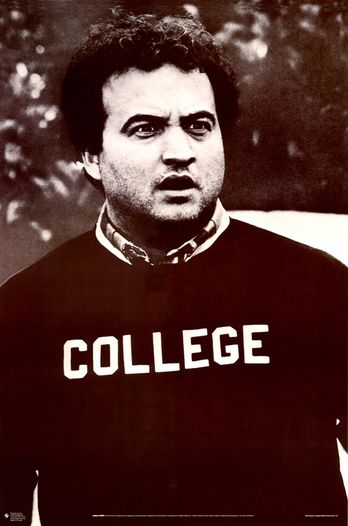
(Guest post by Greg Forster)
Good gravy! Never mind the debate on using test scores to evaluate teachers. Florida is actually using test scores to evaluate teacher colleges:
It determined what percentage of graduates from each program had 50 percent or more of their students make a year’s worth of progress [on the FCAT]. USF’s College of Education — a huge pipeline for teachers in the Tampa Bay area — had 76 percent of its graduates reach that bar, putting it ninth among the 10 state university programs. Florida International University in Miami topped the field at 85 percent. The University of West Florida in Pensacola was last at 70 percent.
The only problem I can see here is that this just compares education schools to one another. All education schools are part of the problem. Still, I can see a lot of value in knowing which ones are more a part of the problem or less – not least because if they start competing with one another on the basis of results, maybe someday one of them will actually produce a radical transformative revolutionary breakthrough and actually become a value-adding rather than value-subtracting part of the education system.
62% of a hat tip goes to Flypaper’s Andy Smarick. I’m penalizing Andy by withholding 38% of the hat tip because he claims, with no justification, that Arne Duncan must somehow deserve some credit for this move. First of all, as Andy sort of sheepishly admits, a move like this must have been in the works for a while before reaching fruition.
But more important is that Florida has been the nation’s leader in this field for a long time now. Florida doesn’t follow the USDOE on this issue, the USDOE follows Florida. The only effect the USDOE has ever had on Florida’s interest in using test scores for evaluation purposes is to prevent it from going further faster.
7 Comments | higher education, school accountability | Tagged: Andy Smiack, Arne Duncan, FCAT, Florida, Flypaper, Greg Forster, teacher colleges | Permalink
Posted by Greg Forster

(Guest post by Greg Forster)
The monument pictured above is quite large and centrally located on the Yale campus. When you walk into a nearby building, you enter a small atrium of solid marble walls, covered from floor to ceiling with the inscribed names of Yale alumni who have died in military service for their country.
Neither the monument nor the atrium recieve any attention from the people who walk by them every day. Students sometimes take advantage of the monument’s prominent location by taping fliers to it advertising their beer-and-sex parties.
ROTC has been banned from Yale since 1969.
Happy Veterans Day.
6 Comments | civic values, higher education | Tagged: Greg Forster, Yale, Yale WWI memorial | Permalink
Posted by Greg Forster
You are currently browsing the archives for the higher education category.

 Jay P. Greene's Blog
