Your Own Money on Yourself

July 17, 2015

(Guest Post by Matthew Ladner)

Just a quick note on Jason’s post from earlier today– I totally agree that it is premature to draw firm conclusions concerning the potential of voluntary exchange in education from our charter school experience.

So the traditional public school system sadly falls in the lower right hand quadrant- little market discipline to go along with an all to often captured governance structure. Charter schools certainly qualify as a quasi-market mechanism that attempts to realize gains through voluntary association. However on the above chart they are basically trying to move K-12 education from the bottom right quadrant over towards the bottom left- and imperfectly so. Voucher programs basically attempt to do the same.

We are trying to nudge things towards the upper-left with multiple uses and college savings in an ESA program. In other words, we are trying to create an incentive for parents to exercise the same care with ESA funds that they would with their own money.

Keep your fingers crossed.


The Wisdom of the Market

July 17, 2015

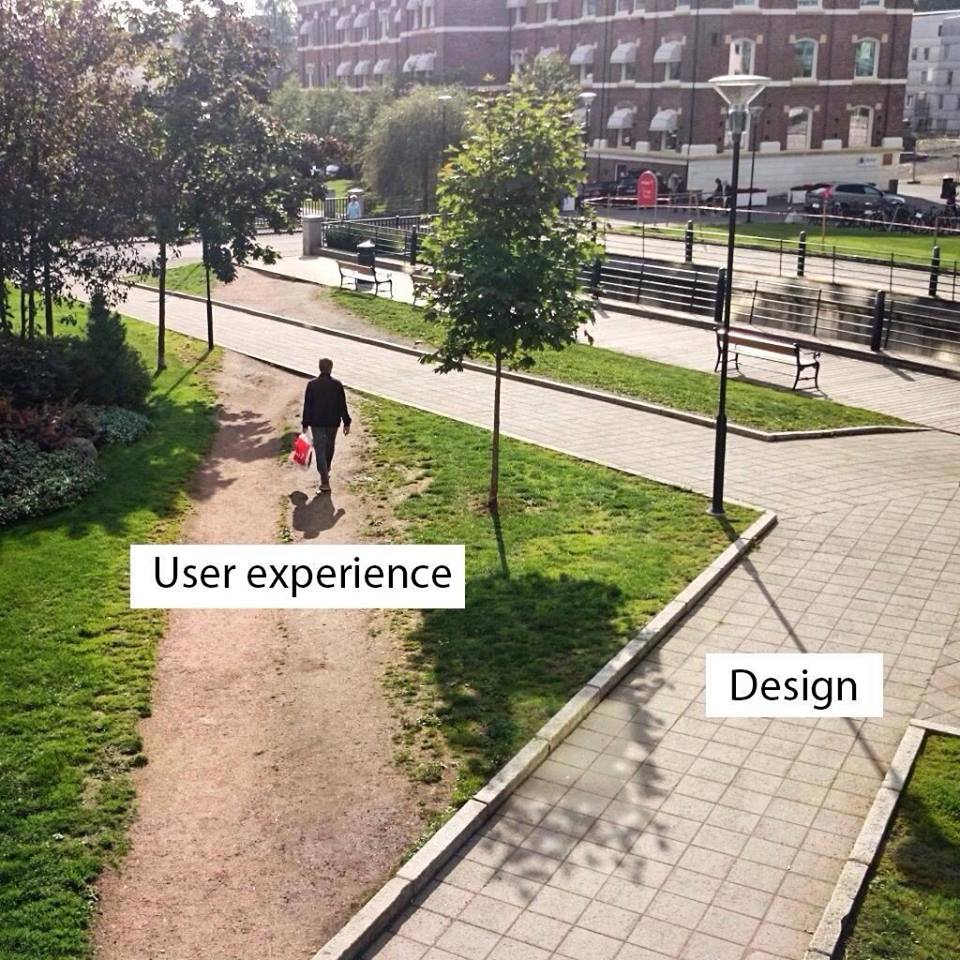
Design vs Experience

(Guest Post by Jason Bedrick)

I’m humbled that Andy Smarick thinks I “offered the most compelling philosophical explanation for a system of choice” among the recent Fordham Institute Wonkathon participants. However, he misreads me when he states that my “professed ‘humility’ (we don’t know everything) came across as agnosticism (we can’t know anything) given that we’ve learned gobs about choice over twenty-five years.”

Nowhere do I claim “we can’t know anything.” Of course we do, and of course we can learn more. But questions remain: who are “we,” what do “we” know, and is that knowledge sufficient to achieve “our” ends?

By “we” Smarick seems to have in mind “policymakers and wonks” and the “what” that “we” supposedly know is that markets alone just don’t cut it so some very, very smart people must bend schools to their will impose government regulations to ensure accountability. To bolster his case, Smarick cites a recent article in National Affairs by Chester Finn and Bruno Manno on the lessons they’ve learned from their decades of experience studying charter schools:

Both strongly support school choice, but they concede the “vexing reality” that “market forces alone can’t reliably generate academic effectiveness.” Overconfidence led to accountability getting short shrift early. “Those present at the creation of the charter bargain (ourselves included) paid too little attention to how authorizing would work.”

Throughout the article, the [Finn and Manno] explain how events played out differently than expected. Because they assumed “a barely regulated marketplace would provide more quality control than it has…we focused on quantity rather than quality.” They were excited by policies that would spur “infusions of capital and entrepreneurialism,” but “we didn’t take seriously enough the risk of profiteering.”

Smarick claims that my Wonkathon entry’s “sanguine title, ‘Let the market work,’ runs headlong into Finn and Manno’s reflections.” As Justice Scalia might say: pure applesauce.

It may or may not be true that “market forces alone can’t reliably generate academic effectiveness” but Finn and Manno cannot draw that conclusion from experience in the charter sector because charters are not operating in a free market, never mind a “barely regulated” one. Charters are secular public schools that can’t charge families tuition, can’t devise their own criteria for admission, they have to meet certain state standards, and they can be shut down by their “authorizers” even if a sufficient number of students and parents prefer the charter to make it financially viable.

In other words, charters provide more choice and competition than the status quo, but charters are not operating in a market. The lack of a price mechanism alone should make that apparent. Drawing any conclusions about what an actual market in education would or would not produce based on the charter experience is ludicrous.

There’s some truth to Smarick’s contention that “theory without experience is [mere] intellectual play,” but he’s drawing the wrong lessons from Finn and Manno’s experience. Although it’s impossible to draw solid conclusions about a market from a non-market, the charter sector has much to teach policymakers about the chasm between policy intentions and policy results.

For example, Finn and Manno lament that “charters in many places are hobbled by many operational constraints, too little money, and, often, insufficient attention both to the delicate balance between quantity and quality.” These constraints often stem from the very regulatory framework that was intended to ensure quality. A 2010 Fordham study found that “state laws were the primary sources of constraint on charter school autonomy, accounting for three-quarters of the infringement that these schools experience.” This year, an American Enterprise Institute study found that “one-fourth of average charter application contains inappropriate and onerous requirements,” and that authorizes “sometimes mistake length for rigor” and “often prize innovation less than they say they do.”

The fatal conceit of the charter school agenda was that granting schools a bit more autonomy and granting parents a bit more choice in a controlled environment would create a true “market” in education. But a market requires a price mechanism, a means of channeling dispersed knowledge. Smarick accuses me of believing that “we can’t know anything” but that’s not so. Policymakers can’t possibly ever know enough to design the education system from the top down but the market can channel dispersed knowledge to produce higher quality through experimentation, evaluation, and evolution.

Smarick confuses the technical knowledge of experts for the dispersed knowledge of the entire system. Sure, technocrats have learned “gobs about choice” in a quarter-century, but they can’t possibly know enough to design the most effective possible education system. Likewise, a panel of a dozen Nobel-prize winning economists certainly knows “gobs” about how markets function, but they cannot possibly know enough to effectively set the price of tin on any given day.

The technocrats’ approach is attempt to define quality, measure it, and shut down any school that doesn’t live up to it — even against the will of parents. As Finn and Manno wrote:

Charter doctrine is clear: Bad schools should be closed (or “non-renewed”) by their authorizer. Yet it turns out to be as hard to close bad charters as traditional district schools. Hundreds of kids are affected, and the alternatives for them are often no better than the troubled charter. Furthermore, parents are almost universally hostile to the demise of their children’s current schools.

First, why are those parents “almost universally hostile” to closing down their chosen school? Could it be because “the alternatives for them are often no better” and probably worse? Could it be that the schools are effectively providing some things–safety, discipline, good values, a love of learning–that the parents legitimately prioritize over test scores in a few subjects?

Attempts to define and measure quality too often come at the cost of innovation. At present, states’ standardized testing regimes assume that all students should progress at the same pace across all subjects — a system that is anathema to reforms like competency-based learning which dispense with Carnegie units. Moreover, the focus on a few subjects both creates a perverse incentive for schools to focus on those subjects to the exclusion of others and overlooks the other, often more important areas where a school may be performing quite well. As AEI’s Michael McShane wrote:

Recently, I have been influenced by the work of Northwestern University economist Kirabo Jackson, whose fascinating NBER working paper calls into serious question policy’s recent overreliance on math and reading scores as the primary measure of the “goodness” of schools and teachers. As it turns out, teachers have important and measurable impacts on both the cognitive and non-cognitive development of students. While it’s certainly true that test scores can tell us something important about a teacher, what is troubling for the test-score types is that it looks like (1) non-cognitive scores are better predictors of later life success (completing high school, taking the SAT, and going to college) and (2) that it is not the same set of teachers that is good at raising both cognitive and non-cognitive measures.

Such has to be the same for schools, right? If there are teachers that are increasing non-cognitive, but not cognitive skills, surely there are schools that are doing the same. As a result, trying to assess if a school is “good” or “bad” relies on a complex web of preferences and objective measures that, quite frankly, cannot be taken into account in a centralized accountability system. We need something more sophisticated, and something that can respect a diverse conception of what “good” and “bad” means.

This is not to say that there should be no standards or accountability. The question is who imposes the accountability on whom. As I’ve noted previously, the absence of a government-imposed standard does not imply the lack of any standards. Rather, it leaves space for competing standards, which in turn fosters innovation and diversity. Parents can then evaluate the quality of education providers based on their own experience and the expert evaluations of appropriate external providers, and the entire system evolves as parents select the providers that best meet their children’s needs.

So yes, policymakers should be humble about what they know or think they know, but we can have greater confidence in a system that channels dispersed knowledge to produce greater quality and innovation. This is more than mere “intellectual play.” It’s the process by which we’ve seen enormous gains in productivity and quality in nearly every other sector in the last century — not top-down technocratic tinkering but bottom-up experimentation, evaluation, and evolution in a free market.


School Choice Movement Checkup

July 10, 2015

(Guest Post by Matthew Ladner)

Veteran school choice warrior Bob Holland landed a nice overview of the school choice movement in the Orlando Sentinel. One of the money quotes:

This past school year, more than 350,000 students used a conventional voucher, a tax-credit scholarship, or an Education Savings Account via 58 school-choice programs in 28 states and the District of Columbia. Ten years ago, there were only 10 voucher and tax-credit scholarship programs supporting 106,456 students.

Watch those savings accounts. An ESA is the next-generation voucher, much as Uber is the next-generation taxi service. It works like this: Parents may have a sizable percentage of their child’s share of state education dollars deposited into an ESA from which they can draw to pay for educational products, providers or services of their choosing.

This has the potential to individualize education as much as it is now bureaucratized. Families could seek and pay for courses or programs that meet a child’s particular needs — tutoring if math is tough, or advanced math in an elite private school if that is the student’s bent; a home-school co-op for a reading round table; or even an early credit literature course at an area university. Possibilities abound.

Bob’s tally of the last decade adds emphasis to a point I raised earlier on JPGB- lawmakers have passed 48 private choice programs in the last decade (which is awesome) and the number of participants has more than tripled (could be better). Many of these programs, like the new special needs program that passed in the Wisconsin budget last night, remain newborns or infants and will begin adding students soon. Still…

Nevada’s new ESA program sets a new bar for the movement. The law has what we should all recognize at this point as a highly desirable broad pool of eligibility-we don’t means test public schools, charter schools or virtual schooling programs. We should not means test private choice programs either. NVESA deals with equity issues through varied funding rather than eligibility and allows multiple uses for funds. Nevada lawmakers can improve NVESA over time by including funding weights as policymakers develop for them for the public system. NVESA is not your father’s Oldsmobile and that’s a good thing.

Nevada lawmakers passed the best school choice program to date this year, but they can improve upon it over time and we can surpass it in other states.


Attack of the Wonks!

June 23, 2015

(Guest Post by Jason Bedrick)

As the Fordham Institute’s ESA Wonk-a-thon is coming to a close, I thought it would be useful to summarize the views of the participants to identify areas of consensus and contention. As JayBlog readers may recall, Fordham’s central question was:

As Nevada implements its groundbreaking education savings account program, what must it get right in order to provide positive outcomes for kids and taxpayers? Should state authorities stay out of the way? Or are there certain areas that demand oversight and regulation?

Inevitably, such summaries will lack the depth and nuance of the complete essays, but I will endeavor to faithfully record what I take to be the main recommendations from each wonk. (If an author thinks I missed or misconstrued something, please yell at me in the comments section.) The following summaries appear in the order that Fordham posted the originals:

Michael Goldstein (Match Education): Nevada needs an “individual, organization, or coalition of champions who take it upon themselves to ensure that their [state] provides excellent school options to all children and families.” This “harbormaster” would recruit high-quality providers to the state and provide parents with good information.

Seth Rau (Nevada Succeeds): Nevada should ensure all ESA students take NNR tests and track student outcomes. The state treasurer must ensure the application process is user friendly, distribute restricted-use debit cards, and conduct annual audits. Otherwise, providers should be free to innovate and parents should be free to choose among them.

Matthew Ladner (Foundation for Excellence in Education): The state should ensure financial accountability through restricted-use debit cards and the whitelisting of vendors and eventually of individual products. The market can foster quality through platforms where users rate providers (as happened informally in Arizona). The state should aggregate NNR test scores and hire an academic researcher to report on the data, but otherwise avoid trying to regulate quality.

Jonathan Butcher (Goldwater Institute): The state should ensure the ESA funds are being used for eligible educational purposes by reviewing receipts before issuing the next quarterly installment. Students should take NNR tests and the state should commission an academic researcher to report on the results. Otherwise, policymakers should rely on the market to ensure quality.

Tracey Weinstein (StudentsFirst): The state should “set a high bar for the quality of services offered by providers” and “eliminate providers who consistently fail to meet the mark.” The state should also provide ESA families with information about providers.

Andy Smarick (Fordham Institute): The state should “prioritize transparency, continuous and small-scale course corrections, and research” and “collect and publish information on providers, participation rates, student outcomes, and more.” In the long term, researchers should “study how the public’s interests are and are not being met by these increasingly private choices.”

Neerav Kingsland (New Schools for New Orleans): Nevada should increase public funding to $7,000 per student with more for low-income, ELL students, and special needs students, and that educational institutions should be prohibited from charging ESA families additional tuition beyond the amount the state deposits in the ESA. 

Lindsey Burke (Heritage Foundation): State regulators should stay out of the way of the market. The state should primarily concern itself with ensuring taxpayer dollars are used only for eligible expenses and making the application process transparent and user friendly. Responsibility for academic outcomes should lie primarily with parents, though the state’s NNR testing requirement is appropriate.

Jason Bedrick (Cato Institute): Policymakers should resist the urge to overregulate. Quality is best fostered through the market process: provider experimentation, parental evaluation, and organic evolution. A robust market ensures quality by channeling expert knowledge (e.g. – private certification and expert reviews) and user experience (e.g. – platforms for user ratings). The state should limit its role to ensuring that ESA funds are spent only on eligible expenses and serving as a repository for information. 

Adam Peshek (Foundation for Excellence in Education): The state should primarily concern itself with providing financial accountability (restricted-use debit cards, auditing), but responsibility for academic outcomes should rest with parents. We must “remain vigilant against death by a thousand regulatory cuts.”

Robin Lake (Center on Reinventing Public Education): Nevada must recruit a “new breed” of bureaucrat that will “learn how to regulate choice without squashing innovation,” “develop creative and better approaches to fiscal and performance accountability,” “coordinate with non-governmental agencies to develop a strong supply of high-quality providers,” ensure transparency, and “build a dashboard of indicators of a healthy market and government regulatory structure” (among other objectives).

Travis Pillow (redefinED): Regulators should give providers the freedom to experiment (even though some experiments will fail). However, the state should ensure the health and safety of students and prevent financial fraud. The results of NNR tests should be reported to parents and the public. The state should provide an online forum for parents that would help catch administrative problems and could serve as a Yelp-like provider rating system. The state should give more money to low- and middle-income families and students with special needs. 

Robert Tagorda (SoCal education reformer): To operate at scale from the outset, the state treasurer’s office and state department of education must collaborate effectively. The state must broker information to ensure the marketplace functions properly, but it can’t do it alone. The state must foster organic solutions and exchanges of information such as platforms for user reviews.

Rabbi A.D. Motzen (Agudath Israel): “Almost universal” eligibility isn’t good enough. The state should expand eligibility to all students, not just those who attended a district school for 100+ days in the previous year.

There appears to be some consensus around financial accountability. The state must ensure that ESA families are only using taxpayer funds for their intended educational purposes. To that end, most of the wonks who addressed the matter called for utilizing restricted-use debit cards and/or auditing.

The primary area of contention is the role of the state in guaranteeing educational quality. Some want the state to set standards, measure performance, and perhaps even “eliminate” providers who don’t meet those standards. Others (myself included) respond: “Get your regulatory paws off me, you dirty technocrats!” are concerned that such efforts would stifle the very diversity and innovation that the ESA is intended to foster.

It’s an important debate. I commend both the Fordham Institute for hosting it and the participants for offering their insightful analysis. Differences in means aside, we all share the same end: fostering an education system in which all children have access to high-quality providers that meet their individual needs.


NVESA Wonkathon Keeps Swinging

June 18, 2015

(Guest Post by Matthew Ladner)

NV ESA wonkathon continues to belt out tunes and has spilled into other venues! Rick Hess weighed in with this off-site commentary:

The thinking provoked by the Nevada ESA has been especially promising. For instance, this week the Fordham Institute has had a number of folks contributing to a blog series on the program. I’d been prepared for a lot of bureaucratic talk about how we have to ensure there are “only” quality offerings (as if we a] know how to do that and b] we can all easily agree on what “quality” entails). Instead, most of the contributors asked what it will take to promote an influx of great providers, healthy transparency, useful information on quality, and a vibrant ecosystem. This focus on what it takes for choice systems to work has too often been buried under vacuous cheerleading or bureaucratic proposals for test-based quality control when it comes to vouchers and charters, and I find it a really promising sign. 

Meanwhile back at wonkathon central, we have two new entries from Neerav Kingsland and Lindsey Burke.

Goldstein-Gone-Wild already nominated NK for harbormaster in the first post, which may have raised expectations for the actual NK post to Sports-Illustrated Cover Curse type of level. I’m broadly sympathetic to the notion that NVESA is leaving too much money on the table for the incumbent system, and too little for disadvantaged kids-especially for special needs kids. I don’t however see the current stock of private school seats and their prices as terribly relevant to where this is ultimately going to go, as those seats are few and far between anyway. NVESA is going to create a demand for schooling models that can get the job done at what passes as low spending per pupil these days. The challenge is to see how we can meet that demand.

NK also seems to view NVESA as a voucher program rather than a multi-use account model. GGW’s call for micro-schools, education cooperatives and who-knows-what-else-parents-may-come-up-with all stand within the realm of the possible.

Meanwhile Lindsey Burke calls the Wolf!

No not that Wolf!

Not that one either!


Now cut it out! This Wolf:

Burke quite rightly cites the fantastic survey of private school leaders in Louisiana that Wolf and company did for AEI. This very careful and important study can be summarized as:

I fear btw that Kingsland’s call to disallow topping-off for private schools would result in just such a backfire by serving as a defacto price cap. Better in my view to increase the funding for low-income and otherwise disadvantaged kids.

Also some interesting discussion yesterday on Twitter about NCLB supplemental services as a cautionary tale for ESA. More on that later and more wonkathon posts are on the way-stay tuned!


Florida Legislature proposes ESA funding and eligibility expansion, NVESA wonkathon is west bound and down!

June 16, 2015

(Guest Post by Matthew Ladner)

Travis Pillow over at RedefinED has details on the Florida special session budget process proposal for expanding funding and eligibility for Florida’s ESA program. Looking good Billy Ray!

Meanwhile NV ESA wonkathon is loaded up and truckin! New entries from Jonathan Butcher, Tracey Weinstein and Andy Smarick today. Each piece makes important points in my view.

Butcher (quite rightly) warns of the dangers of over-regulation and unintended consequences. Sith lord enforcers overly empowered bureaucrats will inevitably find your lack of faith in their benevolent wisdom…disturbing.

Weinstein raises equity concerns. She has a map (!) showing that Nevada’s modest pre-existing private school infrastructure tends to be clustered in well-to-do areas. Those experimenting with high-quality low-cost private school models-I’m looking directly at you Christo Rey, Acton and Notre Dame ACE Academies- we are firing up the signal!

And you bring something nice to wear…

Seriously though I hope we will see deeply committed efforts to expand the supply of options for disadvantaged children. Seth Rau raised the possibility of using the tax credit program to enhance the buying power of low-income students, which ought to be viewed in a benign fashion so long as the total amount of aid does not exceed the average spending per pupil. In the absence of these programs however, new private school efforts for low-income areas were terribly unlikely. I expect future wonkathon posts to raise additional equity concerns. These deserve careful consideration, especially if the trailer park schools with substitute teachers don’t happen to cluster in the leafy suburbs. The program does provide more funding for low-income children, but I view it as a perfectly legit topic for further discussion as to what level those funding differences ought to be set. This is a question upon which Nevada legislators must deliberate and decide on an ongoing basis.

Andy Smarick sounds a note of Burkean caution:

My bigger worry, though, relates to the rapidity and expanse of possible changes. Fast, fundamental change of longstanding institutions is generally hazardous. What we have today (in education and elsewhere) is the result of trial-and-error processes played out over generations. It is never perfect, but it is robust, and it often possesses wisdom.

I actually don’t expect rapid change. The supply of private school seats will start off quite limited, and our experience with private choice programs shows consistent incremental take-up rates. This program has more allowable uses and broader eligibility than most, but even so we have no reason to expect a blast furnace of participation in the early years. Funded eligibility creating a credible exit option will be crucial, the rate at which parents choose to exercise that option- not as much.

The McKay Scholarship program has been contributing to substantial public school gains among public school special needs children since 2001. It doesn’t bother me in the slightest that only 7% of Florida special needs students directly utilize the program, or that there are more special needs students in Florida public schools today than when the program passed in 1999, more people working in the schools etc. Color me blissfully unconcerned so long as the parents who have their children in the public schools are there by choice- meaning they had other options. Constraints on the supply of private school space just makes it all the better that Florida lawmakers have made ESAs available as well.


Nevada ESA Wonkathon

June 16, 2015

(Guest Post by Matthew Ladner)

The first three salvos in Fordham’s Nevada ESA oversight wonkathon have been fired by Michael Goldstein, Seth Rau and Yours Truly.

Goldstein’s call for a “harbormaster” has me a bit concerned about going from this:

To this:

I’m a big fan of the New Orleans experiment, and would like to know more specifics about the role of “harbormaster” but personally would like to see what Nevada parents come up with rather than having things nudged hard in a particular direction. I’m also a fan of charter schools chock full of TFA Ivy League kids but in the end that is more of a formula of tiny hot-house sectors rather than a model that can reach scale.

In my view we should work to improve the bill (inclusion of ELL and SPED weights and long-term higher education savings especially critical) and give parents space to see what they come up with. Living out in the wild west myself gives me an appreciation for the benefits of messy freedom. In the Arizona charter sector we often hear laments regarding the fact that the very expensive KIPP organization avoids our patch of cactus. I’d like to have KIPP, but I’m consoled by the development of low-cost high quality models like BASIS, Great Hearts and Carpe Diem. High quality and (lower) cost is what the country will badly need in the near future. MG’s call for micro-schools sounds like a great start.

Although I disagree that the use of a state test is in any way desirable, I admire Seth’s creative attempt at analogy.

My entry, New Tools for New Challenges, is here. I’m hopeful that we can apply the accountability lessons of uber to the education sector, especially the technology-enabled hyper transparency.

More posts in the wonkathon are on the way so stay tuned.


Governor Haslam signs TN ESA

June 12, 2015

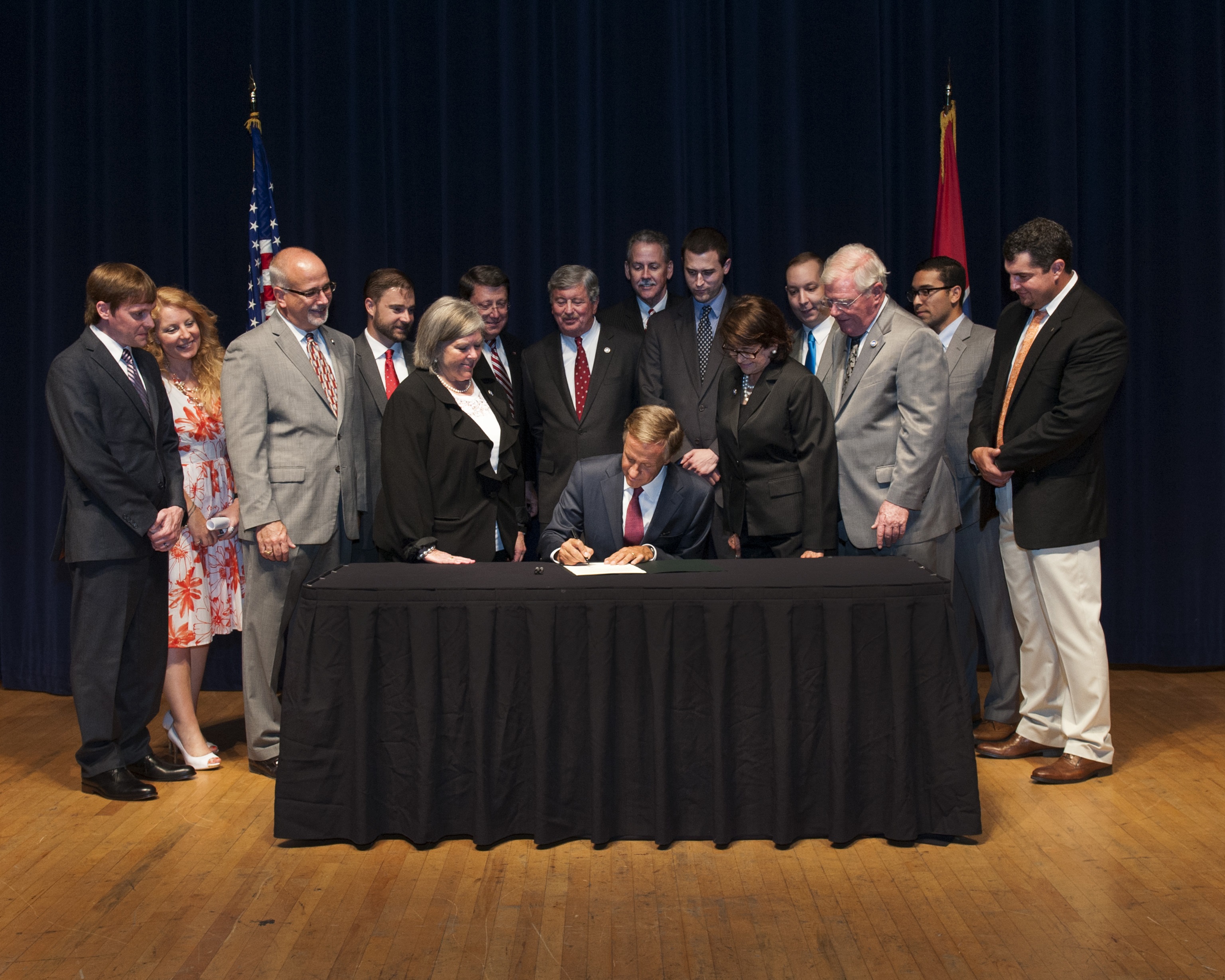
6/10/2015 Governor Bill Haslam signs SB 27

(Guest Post by Matthew Ladner)

Ryan Mahoney (Excel in Ed colleague- and the tall thin chap in the middle) sent me this happy photo of Governor Bill Haslam signing SB 27, the Tennessee ESA bill a couple of days ago.  I don’t know everyone in the photo, but do know some, including Rep. Debra Moody and Sen. Dolores Gresham (sponsors) along with Justin Owen from the Beacon Center, Jonathan Butcher from the Goldwater Institute and Daniel Zavala from Students First.


Oklahoman: School Choice is All Around

June 12, 2015

(Guest Post by Matthew Ladner)

Nice piece from the Oklahoman discussing the progress of school choice. P-Diddy Wolf consulted, which is always good. This quote got my attention:

There are essentially three policy mechanisms for providing private school choice: vouchers, tax credits, and the new kid on the block, education savings accounts (ESAs).

So choice bills continue to pass and more are to come. Hang tough and we can debate 2011 vs. 2015 after the smoke clears.


If the System Can’t Kill the Bunny with $312k per classroom, perhaps new choices will help them out

June 10, 2015

NSEA letter

(Guest Post by Matthew Ladner)

So during the recent Nevada legislative session, Nevada State Education Association President Ruben Murillo Jr. sent the above letter to the members of the Senate Finance committee. In the letter (in case you are squinting) he included the following paragraph:

However, the abundant number of overcrowded and aging campuses, high class sizes in middle and high schools, hundreds of unfilled licensed teaching positions, and an 81% non-compliance rate of the elementary class size limit law all point to the fact that Nevada’s public schools remain under-funded.

Well, that’s a little rich don’t you think? Especially given that the Digest of Education Statistics reports that inflation adjusted current spending per pupil more than doubled since 1969:

NV spending


Despite this doubling of current funding, there can be no doubt that overcrowding remains a chronic problem in Nevada. National Public Radio recently profiled Forbuss Elementary school in Clark County. Architects designed the building for 781 students, but it currently has 1,230 students, spilling out into 16 trailers. The Nevada public school system has been unable to keep up with either physical or human capital needs-thus the unfilled public school teaching positions cited by President Murillo. In the same NPR piece, a teacher in Bertha Ronzone Elementary School reports having 33 students in an overcrowded trailer classroom.

Now my excel spreadsheet says that if you multiply 33 by $9,455 you get $312,015 in current spending, with more in capital spending. How do you kill the bunny with these claws and teeth  hire a teacher for only $312,015? Sounds like they at least should not have a series of substitute teachers going through those trailer classrooms. But wait, Murillo notes hundreds of unfilled teaching positions. What’s that? Overhead?!? C’mon you’re a BEAR man!


Of course, if you can’t keep up with enrollment growth, can’t build public schools fast enough, can’t hire enough teachers, and create trailer parks outside your schools for extra classroom space, well, you’ve got problems. If the Census Bureau further projects a huge increase in your youth population and the NAEP say you only get a fraction of your students proficient this actually makes an entirely compelling case for giving as much choice as possible. Apparently the Nevada public school system needs as much help as it can get.

So Silver State legislators:

NSEA: thanks for the assist!