Pass the Popcorn: Families Versus Monsters

June 4, 2015

romance-black-widow-bruce-banner-hulk

“Thanks for asking nicely?” Brother, you hadn’t seen anything yet.

(Guest post by Greg Forster)

I don’t like to interrupt our celebration of the incomparably important victory for universal school choice in Nevada, but I have something that takes higher priority. I saw the new Avengers movie again and I have some new thoughts to add. Unlike my previous post, this one contains much more serious spoilers.

I liked this movie a lot better the second time. Before I was expecting that its deep theme would be tied to Ultron’s mission and motivation, so I was frustrated we got virtually nothing to chew on there. Loki articulated a clear and philosophically important argument against the dignity and freedom of the human person, so I was waiting for something analogous from Ultron. I see now that I was looking in the wrong place. The real action is in the tug-of-war for Bruce Banner.

In my essay on the first Avengers movie, I wrote that Banner, not Stark, is the real man of science, knowledge and Enlightenment. Those forces produce great power but cannot direct that power toward an end. While moral culture is important in its own right, ultimately it is religion that directs power toward ends. The great question of the past three hundred years or so has been the struggle of competing religions – Christianity, Romantic individualism, Marxism, fascism, etc. – to control the power unleashed by the Enlightenment. Our own culture represents a messy but reasonable working compromise between Christianity (represented by Steve Rogers) and Romantic individualism (represented by Tony Stark). The question raised by the first Avengers movie is whether that compromise can hold together.

The second Avengers movie is not the masterpiece the first one was, but I now see that it carries forward the same theme, but on totally different ground. The conflict between Rogers and Stark remains, and remains religious, as I observed before. But I was mistaken to view this as the center. A new conflict moves to center stage – a philosophical conflict rather than a religious one as such. The question is no longer science and God, but science and nature. (Although God continues to hover in the background and silently haunt this story with his presence, as he always does.)

In the first movie, the words “war” and “freedom” were featured prominently from the very first scene onward. The key themes in this movie are “monsters” and family. The movie dares not use the politically freighted word “family,” but you can hardly miss theme.

In one corner we have Tony Stark, the Romantic individualist. With clear echoes of the Frankenstein myth, he seduces Banner away from loyalty to the group, seduces him into creating a “monster.” He even says to Banner “we’re monsters” and urges him to embrace that identity. Now, in this context, a “monster” is what you get when you use science to reshape nature arbitrarily – use science not to understand nature and use it in accordance with some natural or supernatural scheme of values that tells you its proper purpose, but to manipulate nature as if it had no intrinsic or transcendent purpose. The implicit philosophy here is that science is above nature absolutely and arbitrarily – science is to nature as the potter is to the clay. Or, as another Romantic individualist once put it, “you shall be as gods.”

In the other corner we have, not Steve Rogers this time, but Natasha Romanov. She tries to seduce him as well, to seduce him away from loyalty to the group, but in this case toward the creation of a marriage. The context here is the Barton family and the clear signal it gives us – almost ham-handedly so – that (on the natural level at least) what makes life most meaningful is marriage and children. It has always been central to the Bruce Banner character that he is an outcast, bearing the burden of isolation and alienation due to his affliction. Romanov, who alone can tame the Hulk, offers him redemption. But when he finally accepts, the needs of the greater good drive them apart. Not even the family is ultimate; like Frodo, Romanov and Banner must give up their home so that others may have theirs.

And the family, of course, is the great foundation of human nature. The feminists are right to hate this movie, and not only because Marvel shamefully neglects and disrespects its female characters. (If anyone at DC had a brain, they’d be turning out Wonder Woman and Zatanna movies by the truckload to pick up these underserved customers. Alas.) I believe Whedon was probably catering to the gay lobby by making the point that marriage is meaningful even apart from childbearing. Of course, Christians have always said the same, but the rhetorical incompetence of the “new natural law” people has effectively concealed this. What Whedon apparently did not anticipate (unless he did it on purpose to court publicity) was the feminists’ offense – very justified if one takes their perspective – at the fact that Romanov’s and Banner’s lives are gravely wounded by their inability to have children.

Human nature is not, as the feminists (and the gay lobby!) would have it, infinitely malleable. It has a purpose, and when that purpose is thwarted, we suffer.

And why can’t Romanov and Banner have children? In both cases, the hubris of science that reaches past its bounds, creating “monsters.” Science is to nature not as the potter is to the clay, but as mother and father are to the child.


Pass the Popcorn: Romantic Individualism and Technocracy 

May 16, 2015


[CAPTION NEEDED, something about cooks and broth]

(Guest post by Greg Forster)

Only mild spoilers lie in wait for you here, but if you want compete nonspoilage, don’t read. 

The new Avengers is awesome while you watch it but doesn’t live up to the original. A certain amount of comic book schlock – magic gems and a slew of newly introduced characters and bad guys who turn into good guys in the blink of an eye and . . . a magical biotechnological AI robot/human hybrid thingy that the bad guy built to be one thing but it became something else because the program upload was interrupted and it had a magic jewel put in its forehead . . . or something . . . well, a certain amount of that is okay, but past a certain point it’s just too damn much. 

But living up to the first Avengers film is a high standard to set from someone who called it “the movie for our time.” We’ve been spoiled by too many really outstanding comic book movies. This one is a lot of fun, go see it. Just don’t try too hard to follow the plot. 

I understand the original cut of this movie was three hours and Whedon had to chop it to the 2:20 we see on the screen. That would explain not only the confusing and inadequately explained plot and the underdevelopment of the character conflicts that made the first Avengers such a triumph, but also the mismatch between the themes early web articles anticipated would be in the movie and the absence of those themes from the movie. I saw several articles written on the assumption that Ultron, programmed to establish world peace, wanted to wipe out humanity because he realized that human beings are evil and will always create war and suffering, and deserve to be wiped out. That could have made a fascinating movie, but it’s not the one we got. 

What I do think is present in this movie is the tendency of Romantic (capital R) individualism, even in its most libertarian forms, to produce a destructive and oppressive technocracy. One of the great illusions of our time is that we can escape the tyranny and dehumanization of technocracy by romanticizing the individual. That is precisely what we cannot do. It was and is the romanticization of the individual that creates technocracy. Romantic individualism consistently ends in unsustainable narcissism. As the results of the narcissism become unsustainable, the Romantics – less and less willing to give up their Romanticism as they become more and more narcissistic – seek technocratic solutions that will take care of our problems for us without any of us having to practice self-denial, which is for them the sin against the Holy Ghost. Technocracy, they hope, will maintain the necessary conditions for individual narcissism. That is what Stark is doing when he creates Ultron – solve the problem of war not by creating people who want justice but by creating machines that will eradicate [people who practice] injustice. 

The whole logic of this is laid out admirably in Tocqueville, in Eliot’s famous line about “systems so perfect,” and in Wall-E. Men who live for nothing but pleasure are fit for nothing but slavery. 

The movie clearly understands what it is that makes Romantic individualism plausible and attractive. We see it in the fact that Stark’s hubris produces Vision as well as Ultron. We see it when Stark says “I’m not in charge, I just . . . pay for everything and make everyone look awesome.” We also see it when he says to Steve Rogers, “I don’t trust anyone who doesn’t have a dark side.” Here we really see, as we did in the first film, that the difference between them is a religious one, and it boils down to what one does with one’s dark side. Stark gives in to it, like Emerson, whose response to the doctrine of the sinfulness of man was that he did not think he was sinful, but even if he were, “if I am the devil’s child I will live then from the devil.” What is there for a man to do but be what he is? Stark, like Emerson, does not believe there is a Power who can purge the darkness and truly make men clean. 

Rogers opposes Stark’s individualism not by overt appeal to God but by appeal to human relationships. We are made to live and work with one another, to solve – or at least cope with – our problems “together.” The solution to our problems lies not in machines and systems but in people wanting to be in right relationship with one another. 

This is just as religious a claim as “there’s only one God, ma’am.” I am not sure it isn’t an even more religious claim. For it asserts that we are made not simply to be what we are and do what we want, but to overcome what we are and control what we want in order to achieve a fulfillment that lies outside ourselves. 

I am surprised to say that Avengers: Age of Ultron seems to recognize that it is Steve Rogers’ America, not Tony Stark’s, that holds the secret to saving all that they both hold dear. 


School Choice Myths in Perspective

April 28, 2015

The-Caterpillar-alice-in-wonderland-25961684-800-400

(Guest post by Greg Forster)

Check out the trippy cover on this month’s OCPA Perspective – and, if you have any extra time when you’re done admiring it, spare a minute to read the cover story, too:

For thirteen years, I’ve been a researcher in the school choice movement, and from day one the most important part of the job has been mythbusting. Ask any other researcher in this field and he’ll say the same. There’s no other issue in American politics where one side has built its case so thoroughly upon untrue factual statements. It seems like no media story on this topic can get by without repeating these myths as facts. It never stops.

Here are a few of the more important myths, drawn from recent debates in Oklahoma…

It’s a shame we still have to spend so much time mythbusting:

There’s so much we still don’t know about education. I’d love it if we researchers could focus our energy on uncovering the facts we don’t yet have. What factors are most important in a high quality teacher? To what extent does a school’s institutional culture make a difference? What policy and social conditions are needed to support more robust creation of new schools? Why do we see some evidence that there may be a tradeoff between good academic outcomes and good moral character outcomes, when we would expect the two to be aligned?

What we still don’t know about education is a big deal. But our bigger problem is what we think we know that isn’t so.


John Maynard Keynes for the Higgy

April 14, 2015


(Guest post by Greg Forster)

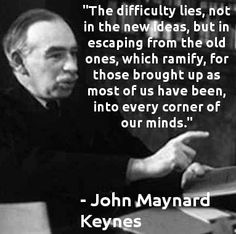
Last year, when commenter Allen nominated John Maynard Keynes for the highest (dis)honor known to man, the Higgy judges expressed skepticism on grounds that politicians corruptly manipulate the economy with or without the convenient excuses provided by Keynesianism. However, the judges reserved final judgment on Keynes’ Higgyworthiness because a full case had not been made.

I hereby offer a full case, on three grounds:

  1. Corrupt political manipulation of the economy has been greatly increased as a direct result of Keynes’ influence.
  2. Keynes did far, far worse things than simply give politicians a convenient excuse to corruptly manipulate the economy. 
  3. On both the above counts, Keynes not only worsened the world, but also met the more specific Higgy qualification of having “arrogant delusions” that “self-righteous proclamations” improve the world. 

Point One: As Paul Johnson documents in Modern Times, in the first half of the 20th century there was an unprecedented shift in the politics of corrupt collaboration between political and business elites. Previously, such collaboration occurred episodically, when some serious crisis arose and it could be justified as an “emergency measure.” Hence the big expansions of corrupt government manipulation of the economy occur in tandem with wars, depressions, and financial panics. After each crisis passed, however, pressure would mount to roll back these manipulations and restore the natural order. These rollbacks were never 100% successful, of couse, but in most cases far more than 50% or even 75% successful. Consider Coolidge’s rollback of Wilson’s autocratic WWI measures. 

But after WWII, everything is different. We have entered a whole new world. Corrupt government manipulation of the economy is now normalized. It is universally expected that political and business elites will get together in smoke-filled rooms and determine our fate for us. This is simply the way we live now. True, the more extreme wartime measures like rationing were recinded, and without the war as a justification the further growth of political control of the economy was greatly slowed. But, however slowly, that growth did continue. The political ground had permanently moved. The old world of merely episodic corrupt manipulation was gone; a new world of permanent, normalized corrupt manipulation had arrived.

This was almost 100% attributable to Keynes, for reasons that will become clear in Point Two.

Point Two: To understand the significance of Keynes, it is necessary to set aside our immediate policy concerns (fighting over the latest stimulus package or “economic plan”) and appreciate his role as a world-historical figure of the first rank. He revolutionized the entire discipline of economics, and by doing so, had a dramatic impact on the social order as a whole.

From classical Greco-Roman philosophy through the Patristic Era, the Middle Ages, early modernity and the Enlightenment, the study of economic phenomena was a subset of moral philosophy. It was always grounded in moral assumptions about human nature. Plato, Aristotle, Augustine, Aquinas, the Salamanca School, the Reformers, Locke, the Physiocrats and Adam Smith, though they had different moral views in some important respects, were agreed that the purpose of studying economics was to help align economic activity with virtue and right purposes – encouraging productive, thrifty, efficient, flourishing behavior, often with a particular interest in extending opportunity to the poor; and opposing greed, sloth, irresponsibility and (above all) injustice. The professional scholar of economics was par excellence the opponent of corruption and abuse of power. 

Over the course of the 19th century, however, this was changing. Especially in England, prominent economists increasingly expressed a desire to get out of the ethics business and abandon the fight against corruption. They wanted to do something that is impossible, and would be irresponsible if it were possible – to describe the world without evaluating it, to be morally neutral, to refrain from calling injustice unjust without being implicated as its accomplices.

Try as they might, however, these would-be neutral technicians could not find a way to extract themselves from the ethics business. A century of efforts to invent a paradigm of economics not beholden to morality bore no fruit.

And then came John Maynard Keynes, and the Keynesian Revolution.

Where before economists had defined the purpose of their discipline as encouraging the ethical production of wealth and well-being, Keynes taught them their purpose was to help people gratify their immediate desires – whatever those happened to be. Where before economists took self-sufficiency (producing more than you consume) as normative, Keynes taught them “the paradox of thrift” and trained them to despise the old rule that households and nations must live within their means. Where before economists took it for granted that our goal was to leave the world better than we found it, Keynes taught them that “in the long run we’re all dead” so we don’t need to worry what kind of world we leave to our grandchildren.

And where before economists thought their policy recommendations were constrained by the limits of justice, which compelled us to be concerned about the problem of corruption, Keynes taught them to treat human beings as merely irrational animals – bundles of appetites – without a transcendent dignity that needed to be respected.

Point Three: At this point you might be tempted to say Keynes isn’t Higgy material in light of the Sarnoff Codicil, which holds that the Higgy should not go to those who intend to make the world worse and succeed. It should go to those who intend to improve the world and fail – or, more specifically, to those who have “arrogant delusions” that “self-righteous proclamations” improve the world.

But Keynes passes this test with flying colors. He intended to improve the world – he had a detailed and well worked out philosophy of utilitarian materialism, and believed he was replacing the reign of superstition and barbarism with a new era of beautiful technocratic progress. He was a constant, nonstop fount of self-righteous proclamations. And all his asperations failed. The new, post-Keynes economics does not work as empirical science. It does not work as a practical guide to policy, either. And it has created sociological conditions that will, in the long run, destroy it. Keynesianism today is in the same state as Marxism in the Soviet Union in about the 1970s or so; it is a politically convenient god to whom all must still bow, but longstanding suppressed doubts about the god’s power to deliver the goods have hardened into permanent cynicism. The downfall may still be 20 years away, but it is coming.

John Maynard Keynes richly deserves the Higgy.

Image HT


The New School Choice

March 31, 2015

schoolchoiceweek

(Guest Post by Greg Forster)

The new issue of OCPA’s Perspective carries my article on how more recent school choice programs are moving us slowly but surely closer to universal school choice:

The huge wave of new school choice programs enacted in 2011-13 went far beyond earlier programs in expanding student eligibility pools, providing larger vouchers, and reducing unnecessary regulations on participating schools. Education savings accounts, probably the best program design yet devised, have been enacted in Arizona and Florida; as I write, new programs have just been approved by legislative chambers in Virginia and Mississippi. These programs, while still limited in eligibility, give parents much more control over education dollars than traditional school choice.

I argue there are both educational and civic reasons to embrace universal choice:

Two of the great pillars of our country are equal rights and freedom for diverse beliefs. Neither of these pillars is consistent with a government school monopoly, nor with the educational oligopoly of limited school choice.

A monopoly or oligopoly exists by stamping out the rights of challengers in order to protect the privileges of the powerful. When educational entrepreneurs are denied the right to start new schools on equal terms with dominant providers, all of us lose. A society where the education of children is controlled by the few is a society that doesn’t respect equal rights.

And the education of our children is at the very heart of how we all live out our most central beliefs about life and the universe. Our country can never fully live up to its commitment to freedom for diversity until we undo the monopolization of education. Part of the reason we created the government school monopoly in the 19th century was bigotry and a childish fear of religious diversity. It’s long past time we, as a nation, grew up. Let’s leave those fears behind us, in the nursery of our national history.


Huckabee Sinks to a New Low (Yes, It’s Possible)

March 6, 2015

Shameless Huckabee

(Guest post by Greg Forster)

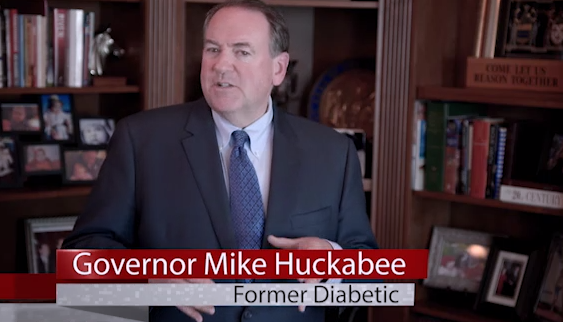
Over on Hang Together, I declare shenanigans. Everybody grab a broom!


NEA “Cognitive Linguistic Analysis” Conducted by Wile E. Coyote

February 9, 2015

35eb9-wile2be-2bcoyote2bfalling

(Guest post by Greg Forster)

ALELR draws our attention to Conor Williams’ reporting on a rich, rich vein of hilarious tomfoolery at NEA. Williams has a leaked memo in which the NEA uses “cognitive linguistic analysis” to change reality by using magic words. As ALELR points out, some items in Lily Eskelsen’s “cloven hoofed minions” speech appear to have been driven by this magical thinking.

But wait, it gets better. One of the union’s magic words is “the right ZIP code.” Apparently people aren’t much moved by complaints about “inequality” so the unions will seek to advance the redistributionist agenda by saying that a quality education should not depend on living “in the right ZIP code.”

How long do you think it will take the NEA’s soooooooper geniuses to figure out the problem with that approach?


The 123s of the ABCs

February 3, 2015

Print

(Guest post by Greg Forster)

We are now up to an astonishing 51 school choice programs in 24 states plus DC. We are one state short of having private school choice in half the states. Who wants to put us over the top?

Check out all the latest stats on all these programs in the 2015 edition of The ABCs of School Choice, just released from Friedman.


How to Nail the Pats with Stats

January 23, 2015

pic_corner_012315_fumbles

(Guest post by Greg Forster)

It may not be Super Chart! or Son of Super Chart! but this graph of fumble rates sure doesn’t make the Patriots look good. Jack Fowler breaks it down in The Corner:

Over the last five seasons, the average NFL team fumble-to-play ratio is 1 in every 50. The Patriots record is 1 in every 73. Why such a disparity? The obvious argument: Under-inflated balls are much easier for running backs to protect, and therefore less likely to be fumbled.

Yeeeeeeeeeeeeeeeeeeesh.


Choice for Foster Kids

January 13, 2015

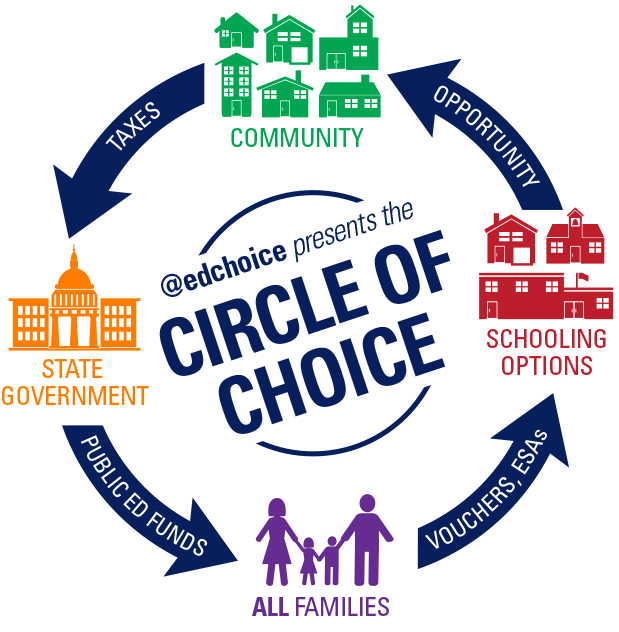
2013-10-Circle-of-Choice

(Guest post by Greg Forster)

The new issue of OCPA’s Perspective carries my article on school choice for the 12,000 foster children in Oklahoma. The state is now adopting massive fixes to address its broken, abusive foster care system:

If Oklahoma is going to adopt sweeping reforms to serve these children better, it shouldn’t just think about homes. It should think about schools. Having failed to care for these 12,000 children when they needed it most, Oklahoma owes them something.

The state wouldn’t have to create a new program:

Oklahoma already has two school choice programs: a special needs voucher modeled on McKay, and a tax-credit scholarship program serving low-income students. Either or both of these programs could accommodate foster children with a slight modification – just write a line into the law saying foster children are eligible regardless of disability status or family income.

Other states have already adopted this practice. Foster children are automatically eligible for two school choice programs in Arizona. “Lexie’s Law,” which is Arizona’s answer to McKay, includes foster children alongside special education students. So does Arizona’s innovative new education savings account law, which gives parents control of their children’s education funding to direct to a school of their choice. Meanwhile, in Florida, foster children of any income level are eligible for the state’s tax-credit scholarship program for low-income students.

And since choice saves money, it wouldn’t cost a dime – an important consideration given that Oklahoma is on the hook for $150 million to clean up its foster care mess.

Of course, only universal choice will get us where we need to go. But it’s not a perfect world, and few people know that better than foster kids in Oklahoma. One line in a new law could give 12,000 kids access to choice on better terms than the ones that prevail in some other programs already.