Arne Duncan’s Doubleplusgood Doublespeak

September 30, 2009

(Guest Post by Matthew Ladner)

ABC quoted Arne Duncan yesterday on DC vouchers:

“The children who were in school, we fought hard to keep them in their schools. Congress has made it clear they are not accepting any additional students,” Duncan told ABC News last month. “So, kids that were in schools, we wanted them to go. Kids who weren’t yet in when the program ended, according to Congress, it didn’t make sense. … I encourage them to come in and look at what’s going on with the public schools here in D.C. It’s pretty exciting.”

Duncan strongly opposes vouchers and has made clear his belief that the money is better spent investing in lasting reforms.

“Vouchers usually serve 1 to 2 percent of the children in the community. And I think we, as the federal government, we as local governments or we as school districts, we have to be more ambitious than that,” Duncan said in a speech before the National Press club last May.

“I don’t want to save 1 or 2 percent of children and let 98 to 99 percent drown. We have to be much more ambitious than that. And we have to expect more,” he added. “This is why I would argue … rather than taking three kids out of there and putting them in a better school and feeling good and sleeping well at night, I want to turn that school around now and do that for those 400, 500, 800, 1,200 kids in that school, and give every child in that school, in that community, something better and do it with a real sense of urgency.”

Oi vey…

Duncan’s logical flaws smell so overwhelming that there isn’t really any need for me to point them out.  Duncan’s absurd claptrap does however remind me of a joke:

So one day a great flood came, and the sheriff went to the house of a man to tell him that he needed to evacuate to higher ground. “No, God will save me” replied the man.

So the storm raged on. The man’s house flooded, forcing him to flee to his roof. Rescue workers came in a canoe to save him, but the man again refused, saying “No, God will save me.”

Finally, the man stood desperately atop of his chimney. A rescue helicopter flew by and threw him a rope ladder, which he refused. “God will save me!” he screamed to the helicopter crew.

So the water rose and the man drowned.

After entering the Pearly Gates, the man asked “God why didn’t you save me from the flood?”

God replied “What do you mean? I sent you a police car, a canoe and a helicopter.”

If Duncan thinks DC schools are “exciting” then why doesn’t he enroll his own children in them? Strangely enough, they are off in the suburban Virginia schools. Admittedly, checkbook school choice does serve way more than “1 or 2 percent” of students.

“I don’t want to save 1 or 2 percent of children and let 98 to 99 percent drown. I am however willing to let 30-40 percent buy their way out and let the other 60 to 70 percent drown, so long as my kids are among those safely sequestered in the leafy suburbs.”

What’s that?  He didn’t say that?

You forget: actions speak louder than words.


Just About Everything is Endogenous

September 30, 2009

A common technique in analyses of education policies (and popularized in the book, Freakonomics) has suffered a setback recently.  The technique attempts to correct for endogeneity, which occurs when your dependent variable is causing one of your independent variables rather than simply the other way around.

It’s probably best to explain this with an example.  Let’s say you want to know how the number of police officers in a city affects the crime rate.  In this example the dependent variable is the crime rate and the independent variable is the number of police officers.  That is, you are trying to explain how the size of the police force causes crime rates to be high or low.

The trouble is that the causal arrow also goes in the other direction.  The crime rate affects the size of the police force because cities with a lot of crime may decide to hire a lot of police officers.  So, the number of police officers is endogenous to the crime rate.  

That endogeneity could produce some odd results if we didn’t do anything to correct it.  We might find that the number of police officers causes crime rates to be higher when it might really be the case that the size of the police force reduces crime but high crime rates cause larger police forces.

This kind of problem comes up quite often in econometric analyses in general and in particular in evaluations of education policies.  So, it was a great a thing that University of Chicago economist James Heckman developed a technique for unravelling these circular relationships and correcting for endogeneity bias.  Basically, the technique uses some exogenous variable to predict the independent variable without bias.

Again, it’s probably easiest to explain with an example.  If we can find something that predicts the number of police officers that has nothing to do with the crime rate, then we can come up with an unbiased estimated of the number of police officers.  We can then use that unbiased estimate of how many police officers there would be (independent of the crime rate) to predict the crime rate.  In theory the technique works great.  Heckman won the Nobel Prize in economics for developing it.

The tricky part is coming up with a truly exogenous instrument (something that predicts the independent variable but has no relationship with the dependent variable).  The only obviously exogenous instrument is chance itself.  An example of that kind of instrument can be found in analyses of the effect of using a voucher on the student achievement of students who actually attend a private school when the vouchers are awarded by lottery.  Those analyses use whether a student won the lottery or not to predict whether a student attended a private school and then used that unbiased estimate of whether a student attended a private school to predict the effect of private schooling on student achievement. 

Whether a student won the lottery is purely a matter of chance and so is completely unrelated to student achievement, but it is predictive of whether a student attends a private school.  It is a perfectly exogenous instrument.

The problem is that other than lotteries, it isn’t always clear that the instruments used are truly exogenous.  Even if we can’t think of how things may be related, they may well be.

A perfect example of this — and it is one that raises questions about how exogenous all instruments other than lotteries truly are — was recently described in the Wall Street Journal having to do with date of birth.  The date during the year when babies are born has long been thought to be essentially random and has been used as an exogenous instrument in a variety of important analyses, including a seminal paper in 1991 by Josh Angrsit and Alan Krueger on the effects of educational attainment on later life outcomes. 

Since states have compulsory education laws require that students stay in school until a certain age, babies born earlier in the year reach that age at a lower grade and can drop out having attained less education.  By comparing those born earlier in the year to those born later, which they believed should have nothing to do with later life outcomes, they were able to make claims about how staying in school longer affected income, etc…

But new work by Kasey Buckles and Daniel Hungerman at the University of Notre Dame suggests that the month and day of birth is not really exogenous to life outcomes.  As it turns out, babies born in January are more likely to be born to unwed, less educated, and low income mothers than babies born later in the year.  The difference is not huge, but it is significant.  And since this variable is not exogenous, perhaps some or all of the effect of attainment Angrist and Krueger observed is related to this relationship between date of birth and SES, not truly attributable to attainment.

And if birth order is not random when we all assumed it was, what other instruments in these analyses are also not truly exogenous but we just don’t know how yet?  It’s a potentially serious problem for these analyses.


Market Ideas at Work Around the World

September 29, 2009

(Guest Post by Jonathan Butcher)

It is a beautiful thing when improvements in how we live can be explained by economic theories rooted in free market principles.  When someone halfway around the world sees their way of life improve and this is featured in the media, dust off your favorite book by a free market thinker and look for the theory that explains it.

This week’s Economist provides an opportunity to do just that.  In a feature section on the telecom industry and emerging markets, this excerpt on cell phones in an article entitled “Eureka Moments” caught my attention:

“How did a device that just a few years ago was regarded as a yuppie plaything become, in the words of Jeffrey Sachs, a development guru at Columbia University’s Earth Institute, ‘the single most transformative tool for development’?  A number of things came together to make mobile phones more accessible to poorer people and trigger the rapid growth of the past few years.  The spread of mobile phones in the developed world, together with the emergence of two main technology standards, led to economies of scale…” (emphasis mine).

The casual reader may miss the significant principle at work here: the poor, even on the other side of the planet, benefit from developments in wealthier nations.  This idea is at least as old as 1960, as Friedrich A. Hayek, beautifully elaborates in The Constitution of Liberty:

“There can be little doubt that the prospect of the poorer, ‘underdeveloped’ countries reaching the present level of the West is very much better than it would have been, had the West not pulled so far ahead.  Furthermore, it is better than it would have been, had some world authority, in the course of the rise of modern civilization, seen to it that no part pulled so far ahead of the rest and made sure at each step that the material benefits were distributed evenly throughout the world…

“The over-all speed of advance will be increased by those who move fastest.  Even if many fall behind at first, the cumulative effect of the preparation of the path will, before long, sufficiently facilitate their advance that they will be able to keep their place in the march.”

So, if we want to help the poor at home or abroad, powerbrokers should do everything they can to foster the success of the successful.  Instead of redistributing wealth through higher taxes on the rich, policymakers should make policy that helps entrepreneurs succeed.  For it is the knowledge they create, use, and pass on with their enterprises that quickens the pace of progress, pulling everyone along at a faster rate as the new technology spreads.

It is not just tax policy or legislation pertaining to businesses to which this idea applies; other social programs can be improved in the same way, and education is no exception.  Charter schools are an excellent example of a public policy that promotes individual liberty and entrepreneurship—resulting in the creation of new ideas that can then be used widely.

Everywhere charters have spread, the new ideas on leadership and teaching, for example, that they carry with them have been copied.  Even those opposed to charter schools have decided to combat them using the charter concept.  For example, Pilot Schools were created in Boston by existing school leaders in response to charter schools, using concepts central to the charter movement (more freedom over administrative decision making, specialized mission statements, etc.).  The result is that parents have even more options than before—more schools to chose from and more freedom.

Likewise, President Obama’s recent call for a longer school day and year is nothing new; the much-heralded KIPP Academies, also charter schools, have been operating with this policy for many years.  Again, new ideas that survive once implemented, created in the realm of entrepreneurship, are difficult to ignore even at the highest level.

The Economist’s piece goes on to explain how cell phones help the poor in rural areas around the globe, by “generally mak[ing] it easier to do business.”  In fact, a recent study found that “adding an extra ten mobile phones per 100 people in a typical developing country boosts growth in GDP per person by 0.8 percentage points.”  Would that we could see such an improvement in student achievement from policies promoting educational entrepreneurship.  Here’s hoping policymakers let the successful succeed, in education and elsewhere.


EdWize’s Racial Libel

September 28, 2009

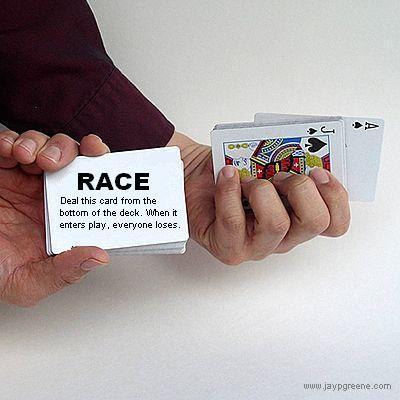
Race Card w watermark

(Guest post by Greg Forster)

On EdWize, Jonathan Gyurko finds himself forced to acknowledge that Caroline Hoxby’s recent blockbuster study is good news for charter schools. He then starts desperately groping for any excuse he can find to neutralize the good news.

Most of his claims will be familiar to those who have seen the teachers’ unions try to spin away gold-standard empirical evidence that their positions are wrong. We’ve read all these cue cards before.

But one of his claims deserves more attention. Like many before him, Gyurko tries his hand at racial demagoguery to make parental choice seem like a scary throwback to Jim Crow:

Such a dramatically-presented conclusion is sure to feature prominently in charter advocates’ efforts to expand the number of charter schools across the city and state. And if it’s true, then why shouldn’t we? The answer actually depends on how policymakers weigh the goal of improved student achievement against other worthy goals, such as greater educational equity and meaningful diversity. And on these other objectives, nagging questions dog the charter sector.

For example, Hoxby finds that 92 percent of charter students are black or Hispanic, compared to 72 percent in district schools and concludes that “the existence of charter schools in the city therefore leaves the traditional public schools less black, more white, and more Asian.” Such racial segregation is consistent with research on charter schools in other states including North Carolina, Texas and elsewhere.

Although this statistic is likely to be a function of charter schools’ location in largely black and Hispanic neighborhoods, Hoxby also reports that fewer white students are applying to the charters; although 14 percent of residents in the charter school neighborhoods are white non-Hispanic, only 4 percent are applying.

There are two claims made here:

1) If the citywide aggregate population of all charter school students is more heavily minority than the citywide aggregate population of district school students, charters must be increasing segregation.

2) If charter school applicants who live near the charter schools are disproportionately minority, charters must be increasing segregation.

Both claims are transparently bogus.

On the first claim: citywide aggregate figures tell us nothing whatsoever about the impact charters are having on segregation, for the simple reason that citywide aggregate figures can tell us nothing whatsoever about segregation in any context, even aside from the whole charter question.

Imagine for a moment that New York is made up of 50% green children and 50% purple children. Let’s look at two scenarios:

Perfect segregation scenrio: All the green children go to fully segregated schools made up exclusively of green children, and all the purple children go to fully segregated schools made up exclusively of purple children.

Perfect integration scenario: All children attend perfectly integrated schools made up of half green children and half purple children.

Now, let’s take a look at the citywide aggregate figures we would get under these two scenarios.

Perfect segregation scenario: Citywide aggregate 50% green, 50% purple.

Perfect integration scenario: Citywide aggregate 50% green, 50% purple.

You see? Aggregate figures are intrinsically incapable of providing any information about school segregation. To find out whether schools are segregated, you must look at the individual schools.

Let’s apply that principle to the real world. Hoxby finds that the citywide aggregate population of district school students is 72% minority. But does that mean every individual school is 72% minority? Of course not. You could very well have all the white children going to perfectly segregated exclusively all-white schools, all the black children to perfectly segregated exclusively all-black schools, all the Hispanic children going to perfectly segregated exclusively all-Hispanic schools, etc., and the citywide aggregate figure would remain unchanged.

And, in fact, the reality on the ground is a lot closer to that dystopian hypothetical than it is to the utopian scenario of ideal racial balance. But Gyurko’s argument relies on the unspoken assumption that the reality on the ground in district schools is utopian.

Meanwhile, the citywide aggregate for charter schools is 92%. As with district schools, the aggregate figure tells us nothing about the actual racial balance in any individual school. Supposing for a moment that New York’s district schools are very heavily segregated – which they are – it is quite possible that the actual charter schools on the ground are better integrated than the district schools even though their aggregate population figure is disproportionately minority.

And, in fact, given that the primary cause of school segregation is housing segregation, the fact that charters can break down neighborhood barriers and draw students from other neighborhoods with different demographics makes it highly likely that they are, in fact, better integrated. That’s the reality in voucher programs, where the empirical evidence unanimously shows parent choice improves integration.

But at any rate, the data to which Gyurko appeals don’t tell us either way.

Once the essential sham behind the first claim is exposed, the second claim is much easier to refute. What counts is not how the local applicant pool differs from the local resident population, but how the final makeup of each charter school differs from the final makeup of each district school. Once the process of parents making choices is completed, are the individual charter schools more segregated? This datum tells us nothing about that.

Ironically, Gyurko’s argument on this second claim really implies that he wants charter schools to represent the racial balance of their local neighborhoods. That would imply endless racial segregation, given that neighborhoods are so racially homogeneous. Any serious attempt to break down racial segregation in schools must begin by acknowledging that schools representing their neighborhoods is the problem.

That’s why hyper-arrogant courts forced us to go through the disastrous failed experiment with forced busing. That was a terrible idea, just like anything that robs parents of their freedom. But at least those tyrannical judges understood the source of the problem correctly.

If parents want to send their children to their local neighborhood schools, they should be allowed. But anything we do that forces them to send their children to school locally is – among so many other evils – going to increase racial segregation. Assigning students to schools by ZIP code is not only educationally bankrupt, it’s racially poisonous.


Pass the Clicker — Filled with Glee

September 25, 2009

With the possible exception of Flashforward, which I haven’t had a chance to see yet but looks promising, Glee is the best new TV show of the season.  It’s a dark high school comedy about the struggles and triumphs of the glee club coach and its members. 

The best part about it is its unhindered departure from realism.  No glee club really sounds that good.  All of the characters are outrageous stereotypes.  No high school is filled with as much viciousness.  I especially love the coach of the “Cheerios” cheerleading team enforcing the Darwinian social hierarchy and Principal Figgins with his hand always on the calculator looking to save money by feeding the students prison food.

But in fully departing from realism the show probably better captures the reality of high school life than any of the sappy, gritty, “realistic” high school dramas, like Boston Public, Dangerous Minds, or Dead Poets Society.  Those are adult fantasies of what they would like high school to be — filled with heroic teachers battling the odds to save eager students . 

That’s not high school.  High school is often banal, outrageous, awkward, and pathetic.  Surrealism captures the experience so much better than realism.  The only other depiction of high school that I can think of that similarly captures the high school experience is the movie, Election.

Given that much of the attraction of the show is its outrageousness and novelty, I expect that the quality of the show will rapidly fade.  By season 2 we will have exhausted the one-dimensional characters and become jaded to the show’s novelty.  But enjoy the ride for now.

And yes, a show about a glee club is pretty “gay.”  The show tackles this issue head-on by featuring the tension between youthful anxiety about masculinity and youthful desire to express one’s creative self.  Just watch how the football team uses a dance to Beyonce’s All the Single Ladies to win the game:

And if you need more dancing to that song (and who doesn’t?), check out this video of All the Single Babies:

(edited to correct typo)


The Price of Things to Come: Free

September 24, 2009

(Guest Post by Matthew Ladner)

I am half way through Chris Andersen’s new book Free: The Future of a Radical Price and I can already recommend the book.

Andersen’s treatment of disruptive technologies and firms is simply fascinating. Craig’s List, for example, has from one perspective “destroyed” far more profits for newspapers than it creates for itself. The entire firm runs on a few dozen employees, but has played a large role in reducing a huge revenue stream for the entire American newspaper industry.

Craig’s List actually hasn’t destroyed profits, but in fact has redistributed them to the general public. Craig’s List provides a superior service to a want ad, and it is almost always free.

Likewise, Britannica and others used to make large profits going door to door selling $1,000 encyclopedia sets. Then Microsoft came out with a $99 dvd encyclopedia, and profits withered. Then Wikipedia came along and Microsoft abandoned their dvd project, and Britannica and company will be required to reinvent themselves if they are to survive.

Technology is driving all of these changes-exponential increases in computing power, storage capacity, are driving changes that are fundamentally disrupting several industries: music, newspapers, and perhaps banking.

The question I have half way through this book: who will become the Google of higher education?

Google has a core business of showing you online ads that is very, very profitable. Most of what they do, however, is throwing out products for free. Google has over 100 free software applications online- maps, Earth, documents, etc. and develops new ones all the time.

Highly successful American universities seem to have a core mission of educating students. This however is questionable at best. Some of these universities have endowments so large that if they simply followed the rules for non-profits and spent 5% of their endowment per year, they could eliminate tuition for their students entirely.

What these universities are really about, of course, is getting research grants and adding to their endowments. What if, however, one or more of them were to go down the road of truly seeking to educate the world by putting up entire degree programs online for free.

A Harvard, Princeton or Notre Dame is likely to always have more applicants than spaces, and in any case, these places could survive without students, not that they will ever need to do so. Why not put up entire rigorous degree programs online, and invite anyone and everyone in the world to complete them for free?

Concerned that it would lessen a regular degree? Pshaw-distinguish it from a regular degree, and require an exit exam, say the GRE, that indicates the student knows quite a bit. Random half-baked idea alert, but if a score on the GRE high enough to admit the student in the upper half of graduate programs were required, we’d know far more about the online student than the traditional ones.

Worried about quality? You should be, but don’t forget the recent U.S. Department of Education study showing that technology based learning is substantially more effective than the old fashioned way.

Imagine if students in Bangladesh could earn a Princeton math degree, or a theology degree from Notre Dame for free, or more accurately for the time, computer and internet cost. The marginal players of the American academy would squeal as they are forced to reinvent themselves from making buggy whips, but this is a small price to pay for bringing opportunity to the world.

The only question in my mind is how long it will be until an elite player has the necessary vision to defect from the comfortable cartel. Several universities have the means to do this, and could receive philanthropic help to do so. Attention Oxford and Cambridge: it wouldn’t require an American university to pull this off. A British university could put out a low-cost version of this, and unlike their American counterparts, they aren’t swimming in resources.


Oklahoma Civics Continued

September 23, 2009

(Guest Post by Matthew Ladner)


First Amendment Repealed, Part Two

September 23, 2009

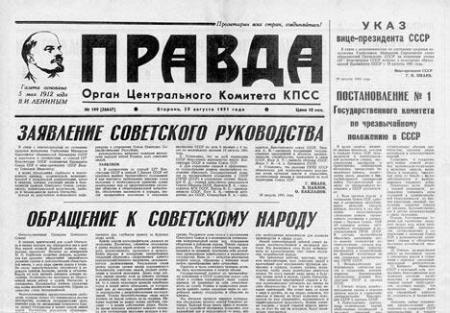
Pravda

(Guest post by Greg Forster)

No sooner do I put up a post on the death of the First Amendment than along comes Jim Geraghty with more free-speech funeral news.

On the floor of the Senate, Sen. Tom Carper appears to have openly and explicitly confirmed that legislators made an illegal quid-pro-quo deal with PhRMA to design health care legislation a certain way in return for a commitment to run ads supporting the bill.

Geraghty is focused on the bribery aspect – PhRMA bought a legislative outcome in exchange for money (spent on ads the legislators wanted). But it’s also a speech issue – congressional leaders used their power over the laws to bend political speech into the shape they wanted it.

The health care people just can’t destroy our freedom fast enough.


The First Amendment Is Hereby Repealed

September 23, 2009

Pravda

(Guest post by Greg Forster)

Items in the news this week:

1) The president signals he’s open to a government takeover of the newspaper industry. No word on whether government-supported papers will be required to change their names to PRAVDA.

If you’ve been told that the bill in question doesn’t set up direct government funding for newspapers, you’ve been misled. It doesn’t set up federal funding for newspapers, but it does everything possible to grease the skids for state and local government funding – and who’s prepared to bet that won’t happen once the opportunity is available?

As I wrote back in April:

Since the law already allows nonprofits to publish and distribute their own newspapers if they want to, the only possible rationale for Sen. Cardin’s proposal is that it allows newspapers to continue charging money to cover their costs while also recieving tax-free subsidies. And who would be doing the subsidizing? Even if government (at the state and local level) doesn’t do it directly, it’ll do it indirectly. Politicians have lots of wealthy friends who would love to have their own pet newspapers.

In fact, Cardin’s proposal is actually worse than a direct government subsidy. At least a direct subsidy would be on the books and subject to disclosure, oversight, and some level of accountability.

Cardin invokes the old Jeffersonian saw that it would be better to have newspapers without government rather than government without newspapers. Yes – but either of those would be better than having government newspapers.

I also wrote that “the proposal is obviously going to go nowhere because it fails the laugh test.” But the laugh test is one exam that’s been pretty radically dumbed down over the past six months; these days anyone can pass it.

2) Meanwhile, the latest development in the health care debate: The U.S. government is now openly using the criminal law to censor core political speech solely because the speech in question advocates a position the government opposes.

When I say “censor” I don’t mean they’re regulating donations and spending levels or imposing restrictions on the when, where and how. I mean they’re threatening to impose criminal sanctions for having said a certain thing, simply because it’s something they don’t want said.

And, of course, once the threat is made there’s no real need to prosecute. The threat itself is sufficient to censor all future speech on the subject.

I’ve written before that health care reform is a knife at the throat of our freedom. I had no idea the enslavement process would move so quickly. Care to place bets on which clause of the Bill of Rights will be the next to go?

UPDATE: Yet another health-care-destroys-free-speech story.


More Charter Evidence

September 22, 2009

Diane Ravitch has declared that the Obama administration’s policy of expanding the number of charter schools has “no credible basis in research.”  This is just plain wrong.  And a new study coming out today from Stanford’s Caroline Hoxby demonstrates that she is even more wrong.

I’ve already noted that the highest quality studies — those that avoid bias from the self-selection of students into charter schools either with random-assignment or rigorous instrumental variable research designs — show significant academic benefits for students who attend charter schools instead of traditional public schools.  These studies examine the effect of charter schools in Massachusetts, Florida, Chicago, and New York City. 

And now add to that pile an updated study from Caroline Hoxby mentioned in today’s WSJ and NYT on New York City charter effects.  Students accepted by lottery into one of NYC’s charter schools in kindergarten and remained in a charter school through grade 8 closed the achievement gap with wealthy kids attending schools in Scarsdale entirely in math and two-thirds of the way in reading.

Critics are clinging to a study by Margaret Raymond at CREDO, which shows more mixed results.  While that study has the benefit of covering 15 states and DC, it can’t correct for the self-selection of students into charter schools like the highest quality studies linked above.  On average, students appear to be drawn to switching to charter schools because they are having trouble in their traditional public school.  Simply controlling for those students’ prior achievement and other observed demographic factors doesn’t quite correct for whatever negative factors may have caused students to switch to charters and that may continue to hinder their academic progress.  The CREDO study is as good as it can be given its approach, but I would have greater confidence in the consistent findings from several studies in different locations that do control for self-selection into charter schools.