
(Guest Post by Matthew Ladner)
Mark J. Perry provides a fantastic illustration of the tremendous power of market forces to improve the human condition. If a picture is worth a thousand words, here is three thousand for you:
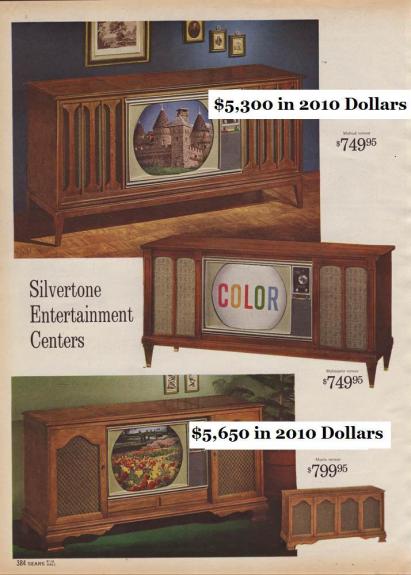
So adjusted for inflation, a now obsolete piece of furniture television set that could bring in all of 12 channels and had no remote control and a terrible picture quality was going to set you back more than $5,000. What could you buy for the same amount of money today in constant dollars? Perry is glad you asked. Try this:

AND:

Now, as a good skeptic, you quickly recovered from your shock and asked yourself if this was a phenomenon restricted to electronics. Perry, as it turns out, has anticipated your question:
 We live, in short, in an age wonders, except of course for areas of the economy heavily managed and financed by the government. In those areas, instead of radically improving products provided at continually lower costs, we tend to see expanded costs for no, little or ambiguous improvements. Take for instance, American K-12 education in the era of unionized workforces (HT Andrew Coulson):
 We need to be far more thoughtful about incentives in the K-12 system if we want to serve the best interests of children and taxpayers.


 Posted by matthewladner


 Jay P. Greene's Blog