
(Guest Post by Matthew Ladner)
DC has a long-standing spot in our thoughts as a poor urban district. While there certainly low-income folks with kids attending DC public schools, this image is in need of an update. Here is some data from the United States Census Bureau American Community Survey from 2014, DC is red:
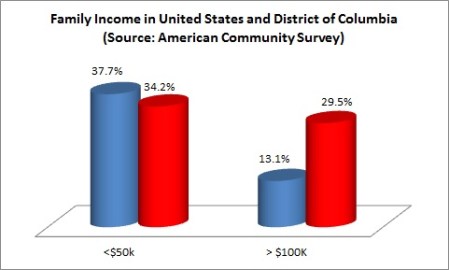
So the percentage of families with incomes over $100k is comfortably above twice the national average, while the percent below $50k is slightly below the national average. Mean family income:

Whatever statistic you want to examine- median income, mean income, workforce participation, etc. it all looks better in DC. Once upon a time you could say this doesn’t necessarily reflect upon public school scores because the affluent sent their children to private schools. Ah, but recall that private school attendance has been collapsing in the district despite the presence of a private scholarship program:

So between private school enrollment declining and overall public (district and charter combined) enrollment increasing and average family incomes well above the national average, the socio-economics of DC public education have likely never looked more favorable than now.


 Posted by matthewladner
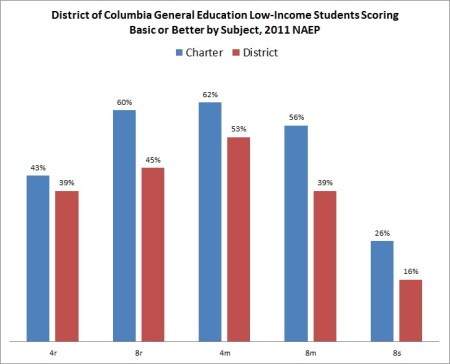 DC’s NAEP numbers allowed for some additional controls to be introduced when comparing charter and district schools
 Jay P. Greene's Blog