Whom would you nominate to recieve “the Al” – what person has made the largest net contribution to the happiness of humanity in a field of endeavor not traditionally recognized by the people who give out awards as contributing to the happiness of humanity?
Just leave a comment on any of the Al Copeland nomination posts with your nomination. If your suggestions strike our fancy we may compose a new post featuring your nomination. And make sure you tell us why you think that person is worthy of “the Al.”
Oh, and let us know which of this year’s nominees you think should win! Our panel of prestigious judges (well, OK, Jay) is not bound to respect the majority vote, any more than the Nobel committee is bound to respect basic common sense. But unlike the Nobel committee, our judges are at least interested in hearing what you think!
Get your nominations in by WEDNESDAY, OCTOBER 28. Why that deadline? Because in honor of the Halloween holiday, we plan to announce the winner of “the Al” on Friday, October 30.
Halloween captures the spirit (so to speak) of the Al Copeland Humanitarian of the Year award almost perfectly. It’s a ton of fun and it’s harmless, and it therefore makes a large net positive contribution to the happiness of humanity. Yet the snobs and the do-gooders – whom Michael Miller of the Acton Institute once remarked should be called “mean-wellers” because on balance they rarely do more good than harm – don’t value that as a contribution to humanity.
So reserve your seat at the head table, get your tux out of mothballs, and get ready to join us for the big awards banquet next Friday.
And until then, don’t miss your chance to make your voice heard!
Cruise control makes driving far less burdensome, which not only makes our lives more enjoyable on a day-to-day basis, it also facilitates a great increase in long-distance travel and reduces shipping costs by reducing not only the labor burden but also the cost of gas (since cruise control is more fuel-efficient). The truckers have a bumper sticker showing a stork delivering a baby, with the tagline “everything else you have arrived by truck.” Well, if that’s true, then anything that lowers the cost of trucking must have tremendous reverberations throughout the economy – which is to say, we’ll never know just how much our lives have been enriched by it.
Oh, and it saves lives. Lots of them. The professional safety narcs strongly resisted the introduction of cruise control on grounds that it would lead to inattentive driving and more deaths. But in fact it led to more uniform driving, with everyone going the same speed and therefore a big drop in the frequency of cars passing each other, and thus a dramatic drop in deaths.
P.J. O’Rourke contacted some of the professional safety narcs to ask them whether they were sorry for having opposed something that turned out to dramatically increase safety. If memory serves, I believe they were unrepentant. No doubt they were worried they’d have to give back the Nobel Peace Prizes they’d won for opposing it.
I chose to focus on cruise control because I thought it fit the values of the Al Copeland award most closely, but it’s worth noting that Teetor was a prolific engineer and inventor – he and his cousin built their first car, with a one-cylinder engine, at age 12 – and contributed far more to our lives than cruise control. In his first job out of college he developed a better way to balance steam turbine rotors in the torpedo boat destroyers we used to kick the Kaiser’s kiester in WWI. Later he ran a company that made piston rings for car engines, supplying Packard, General Motors, Chrysler and Studebaker.
Teetor got the idea for cruise control after a jerky and uncomfortable car ride. His lawyer, driving the car, was an incessant talker and paid more attention to the conversation than the car’s speed, letting the car speed up and slow down as his attention wandered.
Teetor secured the patent for automatic car speed control in 1945, dubbing it Controlmatic. It would later be called Touchomatic, Pressomatic and Speedostat before finally being christened cruise control. The technology was first offered on three Chrysler models in 1958. By 1960 it was available on all Cadillac models.
Oh, and did I mention that Teetor did all this after being blinded in a shop accident – at age five?
I proudly nominate Ralph Teetor for the Al Copeland award.
Now if only he had developed a control for this kind of Cruise:
After triumphing over Nazism and Communism in the 20th century, liberty faces a new threat in this century — radical Islam. This threat is being counteracted (we hope) by diplomacy with potential allies, force against enemies, and high-minded speeches to remind all that the cause of liberty is right and the cause of tyranny is wrong.
In addition to all that, there is another essential element in the arsenal of liberty — ridicule. Tyrants of all stripes, in addition to being monstrously cruel and evil, are also almost always laughably, pathetically, and outrageously ridiculous.
Charlie Chaplin realized this when he mocked Hitler in The Great Dictator. In Dr. Strangelove, Stanley Kubrick portrayed the communist leader as a weepy drunk and the war-mongering general as a paranoid suffering from ED. South Park has portrayed Osama Bin Laden as the slapstick LooneyTunes villain, Wile E. Coyote. The Daily Show and Colbert Report make their living off of puncturing the pomposity of politicians. Humor may not be the best weapon against tyrants, crooks, fools, and all other kinds of politicians, but it is a very important one.
But Chaplin, Kubrick, Parker, Stone, Stewart, and Colbert have mocked tyrants from the safety of the free world. Fasi Zaka does it from the front lines. Zaka is a Pakistani radio DJ — a shock-jock — and host of a TV news parody show, News, Views, and Confused. Given long stretches of military rule, government censorship, and death threats from extremists, Zaka can’t and doesn’t address oppression in Pakistan head-on. Instead, he flirts with the issues, poking fun at the Taliban and corrupt and incompetent Pakistani leaders with social satire more than political criticism.
For example, Zaka mocks the Taliban for smelling bad rather than for beheading opponents and suicide bombings. As an LA Times profile described his approach:
So when a guest host, a character named Mr. Enlightened Moderations, poked fun at fundos , slang for Islamic fundamentalists, it was not for any extreme religious views but for poor dress sense, aversion to after-shave and limited use of deodorant. “You sound like a fundo,” he’d say accusingly to callers. “You doesn’t even wears a deo, smelly boy.”
By mocking tyrants and their followers Zaka makes them seem uncool. Making them uncool may limit their power more than a speech on their logical errors. Remember that young men were drawn to Nazism in part because they wore shiny boots and neat brown shorts. It was a struggle whether people would perceive fascism as the trend of the future or a group of buffoons singing Springtime for Hitler. Buffoons who smell bad don’t attract girls, so young men are much less interested in movements that are uncool.
Not everyone agrees with Zaka’s humorous approach:
Some critics say Zaka is squandering a golden opportunity to be constructive and foster moderation in a confused younger generation. “It bothers me when people do silly entertainment shows when we really need people to make a difference,” says Mani, another radio host.
Radio hosts don’t have to be boring and didactic to get their message across, counters Zaka, pointing to frequent discussions on extremism, women’s equality and the violence sweeping Pakistan. “They presume preaching is the way for change,” he says. “It isn’t.”
Zaka can be serious. He is, after all, a Rhodes Scholar who was educated at Oxford. And he regularly writes op-eds with more standard political criticism. But it is his humor and ridicule that are really advancing the cause of liberty.
I make no claim that Fasi Zaka is as funny as Charlie Chaplin, Steven Colbert, and the others. The parts not in English seem even less funny, but you can check out a clip of his TV show here:
And like Chaplin, not all of Fasi Zaka’s political views are necessarily desirable. Again, Zaka is worthwhile because he mocks bad guys, not because he’s a sound political analyst.
While Zaka may not be the funniest of these satirists for freedom, he is clearly one of the most courageous. Making crap of the Taliban and military dictators is a real contribution to improving the human condition and makes Fasi Zaka worthy of a nomination for the Al Copeland Humanitarian of the Year Award.
Debrilla M. Ratchford, an airline stewardess, received U.S. Patent #4, 094, 391
for her invention of a suitcase with wheels and transporting hook in 1978.
Ratchford must surely stand as the most underrated inventor of the late 20th Century.
Some JPGB readers must be old enough to remember the bad old days when going to the airport meant lugging around a heavy bag. I remember a trip I made to England in the early 1990s, and my suitcase was just killing me. I happened across a store in London that sold a primitive add on device merely to emulate a modern suitcase with wheels and a telescoping handle (with elastic bands to bind the case).
I happily shelled out whatever it took to buy that contraption. My life as a tourist instantly improved. Mind you, it was terrible compared to a modern bag, but it beat the living daylights out of suffering as a human pack animal.
Strangely enough, America had sent a man to the Moon before inventing a decent roller bag. I’m all for guys jumping around in low gravity and planting flags, but to me, the roller bag is much more important advance in human civilization.
I can scarcely imagine modern business travel without the carry-on roller bag. Hop on the plane, stow your bag, land and hit the ground running. For you strange people still checking bags, **ahem**, catch a clue. You’ll be suprised how much you can stuff into a carry-on with a suiter for hanging clothes.
Sometimes it is the little improvements that make a big difference in life. Companies guided by the invisible hand of the market popularized and improved upon the Ratchford design, and now I don’t have to sit around bored out of my mind waiting for luggage. Better yet, luggage can now be renamed “rollage.”
If someone can name a Nobel Peace Prize winner that has had a more beneficial impact on my life than Debrilla Ratchford, I’d love to hear who and how. I’m sure there are some wonderful people on that list but amidst all those grandees, they will have had to have done something very special for me to appreciate them more than Ratchford.
I’m talking about something on the order of inventing Tex-Mex or College Football to even get in the neighborhood.



 Posted by Greg Forster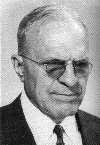

 (Guest Post by Matthew Ladner)
 Jay P. Greene's Blog