PJM Column Today

June 16, 2008

(Guest post by Greg Forster)
Jay and I have a column on Pajamas Media this morning with our take on Response to Intervention. A sample: 

Five years ago, we published a study with disturbing implications — literally millions of students may have been labeled as “disabled” and placed into special education when they didn’t really have a disability. Since then, we’ve been struggling to get past the many myths and misconceptions surrounding special education, trying to get people to see the problem.

Now there’s finally been a change, and there’s good news and bad news. The good news is, federal special education authorities have at last acknowledged the problem and adopted a policy designed to address it. The bad news is, the policy is no good.

That’s the way it usually goes in education reform — two steps forward, one step back. And the obstacles to reform in special education are unusually large, so the steps are baby steps.

But you know what they say: the first step is admitting you have a problem. And we’re glad to see that step has been taken.

UPDATE: Whoops, forgot the link.


Jurassic Schools

June 16, 2008


(Guest Post by Matthew Ladner)

The ending sequence of Jurassic Park represents one of the great cinematic thrills of the 1990s. For those of you who couldn’t bear to watch, Drs. Grant and Sadler, et al, found themselves running for their lives inside the Jurassic Park compound, followed by a nasty group of foolishly resurrected velociraptors. The raptors had our heroes surrounded, when suddenly a Tyrannosaurus-Rex appeared to chomp one of the raptors, allowing our human protagonists to slip away. The T-Rex and surviving raptor battled it out. After disposing of the raptor, the triumphant T-Rex bellows out a roar so loud that the overhanging “When Dinosaurs Ruled the Earth” banner to dramatically flutters to the floor.

Now, for you incurable skeptics wondering how the T-Rex got into the building, how it approached with such stealth despite being large enough to shake the ground from far away earlier in the film, etc.- just stop it. It’s a popcorn movie, after all. You didn’t even realize you wanted to see T-Rex vs. velociraptors, but Steven Spielberg did and he delivered the goods.

It’s exciting to watch the future of education unfold, made all the more so by an appreciation of just how dysfunctional our schools are in the present. In 2006, a blue-ribbon panel delivered a scathing indictment of the American public education system. The panel, called the New Commission on the Skills of the American Workforce, included a bipartisan mix of the great and good, including two former secretaries of Education and an assortment of other grandees.

“If we continue on our current course, and the number of nations outpacing us in the education race continues to grow at its current rate,” the report states, “the American standard of living will steadily fall relative to those nations, rich and poor, that are doing a better job.”

The commission has come up with a variety of (IMO) ideas of varying quality, some of which sound misguided (expanding pre-school to 3 year olds) and others that sound outlandish but deserve a hearing, with still others falling into the “no-brainer” category (merit pay).

“We’ve squeezed everything we can out of a system that was designed a century ago,” Marc Tucker, vice chairman of the New Commission on the Skills of the American Workforce told the Christian Science Monitor. “We’ve not only put in lots more money and not gotten significantly better results, we’ve also tried every program we can think of and not gotten significantly better results at scale. This is the sign of a system that has reached its limits.”

“I think we’ve tried to do what we can to improve American schools within the current context,” Jack Jennings told the CSM. “Now we need to think much more daringly.”

The Jurassic angle on all of this has been the reaction of the T-Rex of the education policy world: the teacher unions. T-Rex was none too fond of the report.

Antonia Cortese, executive vice president of the American Federation of Teachers told the New York Times that the report contains “some seriously flawed ideas with faddish allure that won’t produce better academic results.” My favorite line, however, came from Reg Weaver, the president of the National Education Association, who urged “caution in calling for drastic changes.”

Hello failed status-quo, meet my pal- the future!

Given the huge percentage of American 4th graders who can’t read, and the large percentage of high-school students dropping out, by all means, let’s be very, very cautious in making any drastic changes.

Don’t get me wrong: caution in making policy changes is a good idea, an underlying principle of conservative thought. Caution in the face of extreme and blaring need for change, however, moves one from the realm of being a conservative to the realm of being a full blown reactionary. The latest NAEP test of reading shows 59 percent of African American and 56 percent of Hispanic 4th graders scoring “below basic” on reading in 2005. Unable to read their texts, huge numbers of these same students will begin to drop out of school within the next five years. We haven’t exactly achieved great return on investment for spending beyond the dreams of avarice for a school administrator from the 1960s.

Unfortunately, the report did not emphasize school choice. It should have. Chubb and Moe had a pretty decent explanation for the failure of public schools: their monopoly on students promotes and enables them to away with it.

Just for fun, go to http://www.greatschools.net and call up a list of every high school within 30 miles of the 85028 zip code. This zip code is in North Central Phoenix. You’ll get a list of 200 high schools from all over the greater Phoenix area. Next rank the schools according to their performance on the Terra Nova reading exams. Charter schools comprise nine of the top ten schools. Rounding out the top ten is a magnet school. In other words, all of the top ten high schools are schools of choice. Not a single traditional district school makes the list despite the existence of plenty of wealthy suburban schools.

This is progress my friends, and we need much, much more of it. Dinosaurs have ruled the education earth for too long.


Pass the Popcorn: Night Falls

June 13, 2008

(Guest post by Greg Forster)

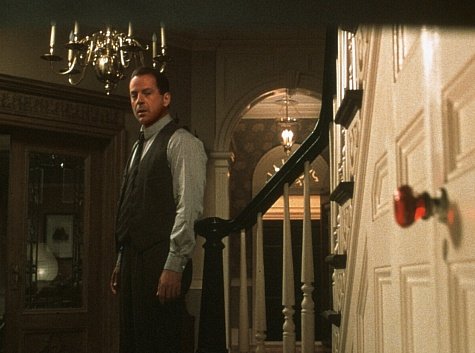
Original movie title: “The Man Who Didn’t Know He Was Dead.”

(Due credit: I stole that gag from the “loading” page of an old The Critic webisode. I’d link if the creators had a page, but I can’t seem to find one.)

In addition to the new Hulk movie, M. Night Shyamalan’s comeback attempt, The Happening, opens today. As I promised in last week’s edition of Pass the Popcorn, here’s a retrospective of Night’s fall.

Before we get down to business, though, fascinating fact: did you know that Shyamalan was the lead author on the screenplay of Stuart Little? Well, that’s why God made IMDB. Come to think of it, how much difference is there, really, between writing lines for Haley Joel Osment and for a cute animated mouse?

On one level, Ang Lee (whose rise and fall we chronicled last week) and M. Night Shyamalan were two big 1990s filmmakers trying to do similar things: produce popular, mainstream movies that nonetheless had the higher ambitions of arthouse films. But other than that, you couldn’t ask for two more different filmmakers. Lee is all about emotional relationships. If you have a sibling, parent, or child whom you love but absolutely cannot even begin to understand – someone who is biologically your immediate neighbor but whose whole life is just totally alien to you – you’ll appreciate Lee’s achievement in Eat Drink Man Woman. Ditto Sense and Sensibility if you’ve ever been in love, The Ice Storm if you’ve been hurt by other people’s personal self-indulence, and Crouching Tiger Hidden Dragon if you’ve ever loved someone you couldn’t have – or had to deal with an angry teenage girl.

By contrast, Shyamalan’s films aren’t about relationships, except in the sense that they’re about man’s relationship to the universe. What ties all his movies together is that they take place in a universe that isn’t what it seems, and they’re about how we cope with the realities that lie behind the universe of appearance that makes up our ordinary lives.

His characters are mostly two-dimensional. That’s not a criticism – Aeschylus’s characters are two-dimensional, too, and for the same reason. Narratives about “man and the universe” necessarily reduce the “man” to a broadly representational figure. That’s the whole point. In the Oresteia, Orestes is the paradigmatic “man torn between conflicting duties” – in other words, Orestes is all of us. So naturally Orestes as a character isn’t developed much; that would only detract from the drama, by preventing us from identifying with Orestes. Ditto for most of Shyamalan’s work.

By this rubric, Lee is the Sophocles of the 1990s – his plots are only there to illustrate and develop the personal qualities of the characters. Raise your hand if you remember the plot of Crouching Tiger Hidden Dragon. (Okay, all of you with your hands up, report for detox at once.) And The Ice Storm barely even had a plot. Whereas in Shyamalan, as in Aeschylus, instead of the plot only being there to illustrate the characters, the characters are only there for the sake of the plot. Quick, how many main characters from Shyamalan’s films can you name without looking them up?

(Who, then, is the Euripides of 1990s film – the cynic for whom both plot and character give way to lengthy chunks of hard-bitten dialogue that either proclaim, or else ignorantly illustrate, the meaninglessness of the human world and the absence of the gods from it? My vote: David Mamet.)

Shyamalan’s characters often don’t change at all. Of the three main characters in The Sixth Sense, all three remain the same people at the end of the movie they were at the beginning. They change only in that they start the movie ignorant of certain very important facts, and end it knowing those facts. The boy is terrified and disturbed at the beginning but calm and well adjusted at the end, not because he’s grown as a person, but because he had mistakenly thought the ghosts were a threat to him and now knows that they’re not. Similarly, the psychologist lets go of his anger at his wife, not because he’s grown as a person, but because he realizes that he’s dead. The mother’s attitude toward her son changes, not because she’s grown as a person, but because she finally sees proof that he’s really seeing ghosts and isn’t crazy. Their personalities are unchanged. Only their knowledge of the mysteries of their universe has changed.

Or consider that, as far as I can recall, the few really emotional scenes in Shyamalan’s films are all either confrontations or revelations – both of which can produce strong emotions without doing much to advance character development. The scene from The Sixth Sense that really stuck with me and haunted me, so to speak – it still does – is that harrowing moment where the mother realizes that her son’s doctor believes she’s abusing him. She boils over with furious indignation, as do we – until we remember that while she knows the true reason for the boy’s injuries, and we know it, he doesn’t – and from his perspective, abuse is the logical explanation for what he sees in front of him. We can’t help but hate him – hate him with a boiling passion – for doing the right thing.

(An interjection: I’ve heard some people criticize as vain Shyamalan’s inserting himself into each of his movies, Hitchcock-style. But look at where he inserts himself. In the first three movies, and above all in the first one, he appears as someone who makes us intensely uncomfortable: the doctor who mistakenly – but rationally, given the facts available to him – thinks one of the protagonists is abusing her son; the dark-skinned man who is singled out and pulled aside by the protagonist for a drug search; the reckless driver who killed the protagonist’s wife. And in the fourth movie he’s a lazy cynic. This is vanity?)

The Sixth Sense could have been just a shlocky thriller with a neato twist ending, but it’s something more. (Not something else instead of a shlocky thriller with a neato twist ending, but something else in addition to a shlocky thriller with a neato twist ending; it’s still that, of course.) It’s about what it’s like to encounter, and be changed by, things that you don’t understand and that the people around you don’t understand. The frustration, the isolation, the resentment, the anger – and finally the relief of coming to understand, and finding others who understand, what you’ve encountered. “I see dead people” is a proxy for “I have a mental illness” or “I didn’t kill that girl but everyone thinks I did” or “I’m a Montague and I’m in love with a Capulet”  or “I’m the only person in my family who does (or doesn’t) believe in the Bible” or any one of a thousand other strange, alienating things that happen to us in our very strange universe.

Likewise, Unbreakable – a gem of a movie if you have the patience for it – takes what could have been a comic-book-movie premise and turns it into a meditation on the metaphysics of duty and destiny. If you find yourself having been blessed in some very important way, is it mere arrogance to think that you’ve been chosen to recieve that blessing? Is that an insult to the others who presumably were not chosen, and who may be suffering (or, in this case, dead) because they lack what you have?  And do you have a duty to accept your chosenness if it doesn’t give you the life that you want? The deleted scenes to this movie are well worth watching; having seen them only once, I find it impossible to think about Unbreakable except in terms of how those scenes frame the story. One in particular, a conversation between the hero and the town priest immediately after the mass funeral for the train wreck victims, really expands the significance of the movie and should have been left in; this slow-paced movie could have stood to move faster anyway.

Then came Signs. Here, Shyamalan’s ambition to comment on man’s place in the universe becomes explicit. Rather than take a premise that could have stood on its own as an ordinary genre movie (e.g. man investigating ghosts discovers that he is one; pitiful man with broken life discovers he has superpowers) and then subtly imbuing it with greater philosophical significance, Shyamalan builds the plot directly around his philosophical reflections.

The key to the whole movie is the “miracle man” dialogue between our hero, the ex-priest – and by the way, one of the few really false notes in this movie is how it puts the hero in a priest’s collar but then carefully avoids calling him a priest, resorting to all sorts of ridiculous verbal gymnastics (“I’m not a reverend anymore.” Neither Protestants nor Catholics ever refer to a clergyman as “a reverend”). What was the point? Presumably to avoid establishing whether he was Catholic or Protestant, to allow the broadest possible audience to identify with him. But identifying him as a priest wouldn’t have established whether he was Catholic, since plenty of Protestant clergy are called priests, and in any event the unavoidable tone of falsehood this introduces to the movie does much more harm than . . .

Where was I? Oh, yes. The key to the whole movie is the “miracle man” dialogue between our hero, the ex-priest, and his brother about the concept of providence. Either all events are ordained to serve a cosmic plan – or else not. The point of the movie is that no empirical evidence can settle the question; the universe of the five senses, the universe as we experience it by living in it, equally vindicates the nihilist view and the theist one (provided, of course, that we’re talking about a real theism that robustly faces the problem of evil, not the watered down happy-talk theism that has sucked the life out of the oldline denominations in the past century . . . but I digress). And saying that it vindicates both is just another way of saying it vindicates neither. In other words, mere experience (or “evidence”) cannot by itself distinguish between a meaningless universe and a meaningful one. As a result, most people make their real choice between the two alternatives based on some combination of emotion, instinct, and inclination; Signs is the story of how one man came to change sides, and then change back.

Of course there is another way to judge between the two, namely by metaphysical reasoning – evaluating the universe not as we experience it with the five senses, but as it appears to our logic. Unforutnately, there’s no way to work this point into a movie, and Shyamalan was right not to try. Nonetheless, Signs always makes me think about this book, which is the one book anyone who wants to understand this subject should read. (Strict logicians who want the issues formulated the the technical style appropriate to a doctoral dissertation in philosophy should instead read this.)

Appropriately enough for a post about M. Night Shyamalan, the book begins with a ghost.

“In all my life I have met only one person who claims to have seen a ghost. And the interesting thing about the story is that that person disbelieved in the immortal soul before she saw the ghost and still disbelieves after seeing it. She says that what she saw must have been an illusion or a trick of the nerves. And obviously she may be right. Seeing is not believing.

“For this reason, the question whether miracles occur can never be answered simply by experience . . . . What we learn from experience depends on the kind of philosophy we bring to experience.”

Signs contains more meditation on man’s place in the universe than Shyamalan’s previous films, but the absence of an independent story that could have carried the movie on its own balances that out. On the whole, it’s not better or worse than the previous movies, just different. But the greater ambition Shyamalan displayed in Signs was, if you’ll pardon me, a good sign. Greater things were around the corner.

And then it all started going wrong. First came The Village. I went into The Village as a Shyamalan fan and thus predisposed to enjoy the movie. And I think it was for that reason that I actually did enjoy it while I was watching it – not a lot, but enough. The performances are superb, and the scene where the male romantic lead confesses his feelings for the female romantic lead is especially powerful. However, as soon as the credits started rolling, all that faded away; superb performances are the most perishable part of any film experience. What lives most vividly in the memory is not the work of the actors but the work of the writer and director – and that was subpar in this movie.

The problem, I think, is laziness. There are just too many dumb moments, and dumb moments are always a symptom of a filmmaker who couldn’t be bothered to keep reworking things until they all fit together right. So Lee and Shyamalan both got self-indulgent, but where Lee fell off one side of the horse, working too hard on the wrong things, Shyamalan fell off the other side, not working hard enough. (Or that’s my theory, anyway.)

I’m told that The Village improves with repeat viewing. I can well believe it. Repeat viewing tends to increase the relative value of the actors’ performances and decrease the relative value of the writers’ and directors’ contribution, most especially regarding this movie’s greatest weakness: plot. If a movie improves on repeat viewing, that may rescue the performances and the movie as a whole from a negative verdict, but in general it shouldn’t rescue the director.

Then, as we all know, came Lady in the Water – about which the less said the better, not that that ever stopped anybody.

When I saw that Shyamalan was staging a comeback, I had cautious hopes. If we didn’t have a two-year-old to look after, I’m sure we’d have gone to see it. But check this out:

Rotten Tomatoes Tomatometer

The Village: 43%

Lady in the Water: 24%

The Happening: 20%

Now, I know only too well – as readers of this blog will recall – that Rotten Tomatoes is not infallible. At the time of release it gave 100% to this flaming nuclear turd of a movie, although I see that with the passage of time a handful of critics who actually saw the movie rather than judging it by the name of the director have brought the average down to 96%.

But, to use this gag one last time, a rating below Lady in the Water is definitely not a good sign.


Voices of School Choice

June 12, 2008

(Guest post by Dan Lips)

Just as Louisiana appears likely to become the newest state with a school voucher progarm, liberals on Capitol Hill are working to end school choice in the District of Columbia. 

As I explained in a post over at Heritage’s The Foundry, Del. Eleanor Holmes Norton is working to kill the D.C. Opportunity Scholarship progarm, which is currently helping 1,900 low-income kids attend private school in the nation’s capital.  Today, the Washington Post goes after her effort in an editorial:

DEL. ELEANOR Holmes Norton‘s campaign against school vouchers in the District has hit a new low. While proclaiming a desire to protect children, she is seeking to eliminate a program that benefits them and that is valued by their parents. Her actions make it all the more urgent for Mayor Adrian M. Fenty to convince Congress that the educational interests of children are more important than party ideology. Failure to do so would imperil not just the 1,900 children in the scholarship program but the essence of school reform in the District.

To meet some of the families who would be harmed if Norton’s succeeds, visit Voices of School Choice, a new website where parents and students participating in the voucher progarm explain how scholarships are improving their lives. 


Ho, Hum, Yet Another New Voucher Program

June 12, 2008

(Guest post by Greg Forster)

Yesterday the Louisiana Senate passed Gov. Bobby Jindal’s voucher program, 25-12. As soon as the governor signs, it will be the nation’s 24th school choice program. That makes three new programs and two expanded programs this year.

Not a lot of news coverage on this. But then, why would there be? It’s only news when school choice loses. Fortunately, that doesn’t happen very often.

UPDATE: It has to go back through the House before it goes to Jindal, since it was amended in the Senate, but no one seems to think there’ll be any problems there. The Senate vote was the real test.


The Shape of Things to Come

June 11, 2008

(Guest Post by Matthew Ladner)

Recently I described how the primordial soup of a market system could transform education. A new article suggests that this is already well under way.

The article How Do We Transform Our Schools? in Education Next by Clayton M. Christensen and Michael B. Horn has created a big buzz. Christensen and Horn have now released a coauthored a book on the same subject: how technology will fundamentally transform American K-12 education:

That schools have gotten little back from their investment in technology should come as no surprise. Virtually every organization does the same thing schools have done when implementing an innovation. An organization’s natural instinct is to cram the innovation into its existing operating model to sustain what it already does. This is the predictable course, the logical course—and the wrong course.

I had always thought of online learning as interesting, but ultimately only a niche activity. Christensen and Horn, however, maintain that filling niches is exactly how a disruptive technology like online learning advances:

The way to implement an innovation so that it will transform an organization is to implement it disruptively—not by using it to compete against the existing paradigm and serve existing customers, but to let it compete against “non-consumption,” where the alternative is nothing at all.

The essence of the argument is this: a disruptive technology starts off as something which is perceived to be of inferior quality to the dominant practice. It gains a foothold however by satisfying the needs of consumers who otherwise would have gone under served by the dominant technology.

Online learning seems to fit the bill. Distance learning for example is very popular in Alaska, where children might otherwise have to commute vast distances through dangerous weather to attend a traditional school. Homeschoolers have taken to online learning and the authors point out that only about a third of American high schools have Advanced Placement courses. Better, many school administrators are now reasoning, to adopt such courses online than not to offer them at all.

Christensen and Horn describe the progress of online learning to date as being broadly similar to past disruptive technologies. The key moment of transformation comes years after the disruptive technology has filled niches here and there. Through the normal course of incremental improvement, the disruptive technology becomes superior to the dominant technology, and displaces it. Projecting from the limited amount of data available, the authors project 50 percent of K-12 courses will be delivered online by 2019.

 Whoa, I know calculus!

Bill, forget the phone booth, I just downloaded our history report straight to my brain dude!!

Out with the old, and in with the new. In this case however, the “old” is the labor intensive method of teaching students which has gone more or less unchanged since before Socrates. Could we really be on the verge of transforming the basic method of content delivery?

When I first read this article, I was skeptical. It seemed to me that the authors had underestimated the political obstacles standing in the way of such a transformation even if online learning does become recognized as a superior form of learning, which to date, it has not.

And yet…

It isn’t that hard to imagine the day coming when online programs would improve to the point where they were of demonstrably better quality than the tried and only sometimes true methods. Innovators are working on computer based learning programs that will adapt to the individual learning styles of children. Such programs will present information in a variety of ways, figure out which way works best for the individual learner and adapt the presentation accordingly.

Enormous promise also resides in the area of personalized, self-paced learning. Both fast and slower learners often find themselves frustrated by the pace of a course which settles on a class average which doesn’t suit them.

Can you imagine some clever team designing an online course around, say, the work of Milton Friedman and coming up with something better than the average high-school or college economics class? It doesn’t sound implausible to me-I can’t remember the name of the graduate student who taught my Econ 101 course, but he wasn’t Milton Friedman. He didn’t adapt his presentation to my learning style either. Come to think of it, I don’t think he spoke English fluently.

Exactly how such a transformation would play out, none can say. This was one of the lessons of Chris Andersen’s excellent book The Long Tail.  Andersen convincingly made the case that the internet is fundamentally transforming society. The transformation is simply different and more subtle than expected during the height of the dot.com bubble. The change isn’t exactly subtle for newspapers and record labels, which are being pushed aside, or network television, which draws starkly smaller audiences for top programs today than 30 years ago despite a much larger population.

I’m inclined to think that education will remain primarily a social enterprise, but mixed models of classroom and online instruction are already underway. The nonsensical notion of teachers being a “guide on the side” instead of a “sage on the stage” might actually make sense when the content comes primarily through technology.

Can technology deliver learning better and cheaper than today’s schools? NAEP shows that thirty four percent of American 4th graders can’t read. Somewhere close to that percentage of students drop out of high school, and many others graduate in need of remediation. The Colossus has feet of clay.

Politics will doubtlessly play an inhibiting role, but bet on the better mouse trap in the long run.


The College Access Myth Marches On

June 11, 2008

(Guest post by Greg Forster)

In the May 30 edition of NEA’s Education Insider, the union makes the following request: “As we approach the graduation season, we are asking NEA members to share stories of your students who would like to attend college but cannot because of the cost. Stories will be collected and used to bolster the case for action by policymakers.” (Hat tip to America’s last education labor reporter.)

Here we go again. A while back, Jay and I ran the numbers using data from the U.S. Department of Education’s NAEP Transcript Study and found that the number of graduating 12th graders whose academic transcripts and possession of basic skills made them eligible to apply to four-year colleges was very close to the number of students actually entering four-year colleges for the first time: 1.3 million. The difference between the two figures was only about 42,000. The rest of the 4 million or so college-entrance-aged persons consists of those who either 1) dropped out of high school, 2) didn’t take the academic coursework (four years of English, three years of math, etc.) that is generally necessary to attend a four-year college (we reviewed the entrance requirements at a selection of low-prestige four-year colleges to confirm this), or 3) did not possess even basic reading skills. In other words, the college-entrance-aged population consists almost entirely of people who either entered college or were not academically qualified to enter college. A subsequent study Jay did with Marcus Winters confirmed the finding.

Obviously there are some non-traditional-age students entering college, and some students can get into four-year colleges without possessing the qualifications that are generally necessary to do so. (For more discussion of the methodological issues, see you know where.) But even if we allow a (probably over-generous) 10% allowance for these and similar factors, that still leaves us with about 2.4 million people who can’t go to college because they’re not academically qualified, as compared with about 270,000 who are qualified to go to college but don’t go because of all other factors combined. Some of those 270,000 will be people who are qualified to go but don’t want to, or are prevented by some other, non-monetary factor. So the number who are qualified to go and would like to go and are kept out by no other barriers but money would be some subset of that 270,000.

In other words, if our goal is to increase college access, focusing on people who lack access because of money is an extremely inefficient way to do it. You’re going to find a lot more “low-hanging fruit” in a pool of 2.4 million than in a pool of less than 270,000 (by this over-generous estimate). And that’s even before you consider that improving the academic performance of the K-12 system would create many other benefits besides just increasing college access.


Can RTI Work? We Went To The Moon, Right?

June 10, 2008

(Guest post by Reid Lyon)

Jay’s analysis of Response to Instruction, also known as Response to Intervention (RTI), and the need for additional reforms to help ensure effectiveness is provocative and informative. I agree with a good deal of his analysis but feel the need to expand the discussion a bit.

First off, his piece offers a wake-up call to those who are prone to fall in love with magic bullets that will close the achievement gap and reduce referrals to special education. One of my dreams is to provide policymakers and educational leaders two free tattoos to be placed anywhere they want on their persons that read: (1) “Necessary but not sufficient,” and (2) “Great policy idea, but implementation is a bitch.” Jay’s points address both tattoos.

RTI is a noble and well researched concept. One of its major goals is to reduce referrals to special education by documenting that the student’s learning difficulties are not because of inadequate instruction in general education classrooms but because of a disability. Years ago, S. Allen Cohen provided us with a more interesting term for lousy teaching which he called “dyspedagogia” (I believe this was tongue in cheek). 

But the fact is most kids identified for special education and labeled as having a Learning Disability (LD) are not LD but achieve poorly because of “dyspedagogia”. In fact, our research over the past 20 years has taught us that scientifically based early reading intervention provided through a tiered approach to instruction can reduce the percentage of LD from upwards of 22% to between 2% and 10% in some states and LEAs. This is a very good thing given that LD referrals and placements constitute about 50% of all referrals to special education, and reading disabilities comprise about 80% of kids identified with LD. 

Those working on the development of RTI knew that classroom teachers and special educators are from different planets, with entirely different backgrounds in curriculum and instruction and entirely different professional languages. This makes collaboration and the provision of coherent and systematic instruction impossible. In essence, RTI was developed, in part, to underscore the need to develop a common assessment and instructional language between well intentioned teachers with different specializations so that instruction was not so fragmented, and so kids would not feel like ping-pong balls when receiving entirely different types of instruction on the same day from classroom teachers and special educators. There was no other alternative – typical colleges of education would not provide the professional development necessary to accomplish the level of shared training and collaboration skills  essential for effective and differentiated instruction. 

Related to this, RTI as a concept was also developed to take advantage of the converging research that prevention through early identification and intervention provides a more effective approach to reducing academic failure than hanging out waiting until the kid chucks his books through the window in the third or fourth grade. RTI procedures can differ across LEAs but they typically screen all students in kindergarten or early first grade to determine which students require enhanced instruction in the classroom or more intensive instruction in smaller groups, while still under the direction of the regular classroom teacher. If the kid demonstrates little academic (or behavioral) growth following more intense instruction, then special education becomes a possibility. It is critical to remember that being placed in special education is also a tiered process. The questions are: Does the student have a disability?  (RTI contributes to answering this question); and, if yes, does the student require special education? (RTI contributes to answering this question).

So we have two elements in RTI that we know can increase achievement (at least in reading): (1) collaboration/common language and (2) prevention is where it’s at. These elements are inseparable. But we know that these two elements cannot work the way they are supposed to unless the folks who run the system know all of the potential barriers to the implementation of RTI and ensure that essential conditions to support the initiative are in place. There are examples of districts implementing successful RTI initiatives that increase students’ reading achievement and reduce referrals to special education. There are other examples where the initiative has not resulted in changes in achievement or referral outcomes.

So what is going on?  It will be important to figure out what works in some districts and not others. Susan Hall has recently published a very user-friendly book that lays out what districts and schools did in implementing RTI in a way that resulted in substantial reductions in referrals and significant increases in reading achievement: A Principal’s Guide: Implementing Response to Intervention. I am not hawking this book, as there are others that lay out the conditions that are essential for implementing RTI and scaling it (see Dianne Haager et al. for specific evidence of effectiveness).

The bottom line is that effective implementers of RTI have had to do a tremendous amount of study and planning to ensure that the initiative actually makes a difference. Jay lays out some the barriers, including problems with implementing a program that actually takes funding away from your district or schools, and persuading educators to replace programs and procedures that they have used for some time.

But there are others as well. For example, how do you overcome the fact that intervention services in schools are often funded by separate entitlement programs, especially Title I and IDEA, that have specific eligibility criteria that make it difficult to co-mingle funds to support school-wide programs? How do you implement programs that have been typically isolated from general education? And how can school leaders and teachers avoid the mistakes that result in limited or no effectiveness, not to mention that the excitement for change and increased morale will be crushed?

If you did a factor analysis of all the crap that can derail the implementation of RTI, these are the most common errors:

–Focusing Too Many Resources on Administering and Collecting Assessment Data Rather Than Ensuring  that Staff Use the Data to Inform Instruction
-Viewing Purchased  Programs as Silver Bullets Rather Than Aides to Help Well Prepared Teachers Make Informed Instructional Decisions
-Confusing Awareness Training with Implementation Training
-Using Ineffective Practices to Train Teachers
-Underestimating the Magnitude of Change
-Taking on Too Many Grade Levels and Schools the First year
-Beginning the Implementation Without a Comprehensive Implementation Plan
-Failure to View the Implementation as a Systems-Wide Change

The good news is that districts and schools that have effective RTI programs in place know they can’t make the mistakes above and provide incentives that have trumped the traditional financial rewards that have potential for increasing referral rates.

I am sure that I have taken up too much space with details that may be of little interest to policymakers. But the details are what make RTI effective, and when RTI works, it really works. However, if you can’t deal with complexity, either-or concrete thinking, or have an allergic reaction to human and systems change, you might as well blow off trying to implement RTI.

Jay has done a service laying out the big picture issues. Implementing additional reforms to increase the probability that RTI can succeed is essential, as he has articulated. But the return on investment is only as good as understanding and addressing the amount of grunt work involved. It’s that “necessary but not sufficient” thing. I know this is self-evident, but we sure keep trying to do one without the other.


A Final Salute to a Great Teacher

June 9, 2008

(Guest post by Matthew Ladner)

Greg Patterson, a former state lawmaker and Arizona’s foremost political blogger, delivers a moving final tribute to the teacher who changed his life.

If you were fortunate enough to have a teacher like this, now would be a good time to let them know how much you appreciated their efforts on your behalf.


Tell Them about the Whales

June 9, 2008

(Guest post by Jonathan Butcher)

It is possible to meet the requirements of the much-maligned, perennially debated, and frequently mau-maued federal No Child Left Behind Act. No really, it is—in fact, last spring third and fourth grade students at Ocean City Elementary School in Ocean City, Maryland accomplished this feat. Here, let me help you pick your chin up off the floor. 

The Washington Post reports this school is the first in the state apart from some special education centers to have every student proficient in reading and math. This news is cause for celebration, of course; however, if you read the Post‘s article to the very end, you are given an almost backhanded reminder in the last full paragraph that Ocean City Elementary has to keep this up until 2014, according to the law. Ouch–six more years. 

Back to celebrating, though. Two questions come to mind whenever I read about a school’s remarkable success: First, how did they do it, and, second, how could their approach be replicated elsewhere? The Post helps us answer the first question, as reporter Daniel de Vise says the school has an “unusually structured, relentless, and consistent” approach and a skilled and motivated principal, Irene Kordick. De Vise provides the principal’s inspiring story of how she immigrated to the U.S. from Germany and was passed along in the public education system until the fifth grade before she learned to read and write in English. Kordick was determined not to let that happen to anyone else, and the rest is history. 

As to my second question, if I had the answer or if I could put Ocean City Elementary’s method in a bottle and sell it, I would have a better haircut and wear more expensive shoes. Things being what they are, though, I have to refer to larger issues regarding the federal government’s involvement in public schools.

For starters, we taxpayers spend nearly $2 million educating whales. Specifically, for years our representatives in Washington have funded the “Exchanges with Historic Whaling and Trading Partners” to the tune of $2 million or more (so I guess we fund “whalers,” not whales, or “exchanges with whalers,” whatever that is—for details check out this page on OMB’s web site; why this doesn’t have Greenpeace protesting on the Capitol steps I don’t know). In addition, OMB’s handy earmarks database shows, in nine pages of small type, mind you, that in committee deliberations in January everything from the Brooklyn Public Library to the Houston Zoo to the School Board of Broward County, Florida was on the dole. 

In searching this document, I didn’t find “Ocean City,” or better yet, “doing what Ocean City does” anywhere. I did find nearly $400,000 for jazz instruction in New York City and a similar amount for a parent training program in San Diego, though. Most of the programs listed on these nine pages of small type sound wholesome and like great ideas (“homework assistance,” “mentoring programs,” “after-school programs,” etc.), but I’ll ask the same question free market, small-government types have been asking for decades: why should Ocean City care about New York City’s jazz program? 

Now, I realize it is routine for right-of-center observers to bang the drum for fiscal responsibility in government—and I realize this drum is old and worn and some are tired of it. But considering the success of folks like me who dwell on this stuff, it makes me wonder if I shouldn’t be talking about it more (because it hasn’t worked so far) or if I should just pick another issue. 

The danger in suggesting that our government is spending money on pet projects instead of on spreading successful programs is that it is another way of saying, “Gee, if we’d only spend money on the right things maybe we could get something done around here….” So I won’t suggest this. Instead, I recommend we all move to Ocean City. Or New York City, if you like jazz. Because either one seems to be about as effective at getting government spending to produce more Ocean City Elementaries as my drum. 

Take every opportunity to praise exemplary students, schools, and school leadership. Spread the word about them. Celebrate them. But when somebody says, “Let’s take this same approach here! And here!” be ready for the question of “Why isn’t Washington doing more to help spread programs like this?” And then tell them about the whales.