Indiana Teacher Union Implodes like a Freddie

May 21, 2009

(Guest Post by Matthew Ladner)

AIG, Bear Stearns, Freddie, Fannie, and now….the Indiana State Teachers Association!

The National Education Association has taken over the operations of the ISTA, its’ Indiana affiliate, due to “financial distress.”  ISTA’s medical and long-term disability insurance fund is projecting a $67 million deficit and is on the brink of bankruptcy due to very questionable investment management.  For instance, in a nine month timeframe, over 4,000 investment trades were made, many of which were in high-risk equities.

Question for Leo: when do we start that LLC? The fire-sale has begun! A mere $67m to buy a controlling interest in the political overlords of Indiana K-12 policy is cheeeeeeap!!


This is the Song That Never Ends

May 20, 2009

The AFT’s Leo Casey of union cue-card check and sock-puppet fame has written a blog post for his “steakholders” once again accusing me of cherry-picking.  The last time Leo accused me of cherry-picking voucher studies I produced what I believe are comprehensive lists of random-assignment voucher participant and high-quality voucher competitive effect studies.  Given his inability to substantiate that cherry-picking charge, I’m a bit surprised to see that he is a glutton for punishment and wants to make the charge again.  I guess Leo has joined with Shari Lewis, Lambchop, and all his sock-puppet friends to make this cherry-picking charge another song that never ends.

This time the issue is whether teacher unions tend to raise costs and lower student achievenement.  Leo noticed my guest posts over at Flypaper on this and asserts: “if you think that the scholarly literature on the subject is a guide, it clearly comes down in a place quite different from that suggested by Greene.”

Leo’s claim hinges entirely on what “scholarly literature” means and whether all “studies” should be treated equally.  For example, I could claim that the scholarly literature shows that candy improves student achievement, citing as scholarly literature papers written by my 5th grade son and friends whose research design involved describing how smart they felt after eating candy.

Leo doesn’t go quite that far but he does cite a study by the AFT’s very own Howard Nelson that makes a cross-sectional comparison of test scores controlling for a handful of observed demographics.  He also cites literature reviews that consist mostly of these cross-sectional analyses controlling for observed demographics. 

The problem is that there is a serious design flaw with these studies — unobserved factors that are associated with unionization may also be associated with student achievement.  For example, wealthier communities may be more likely to produce unionization because those communities have the wealth to bear the higher costs associated with unionized teachers.  Wealth may be associated with higher student achievement, but our controls for wealth (free lunch status) may not fully or accurately capture the differences in wealth.  So, unobserved and uncontrolled factors would bias the results from these cross-sectional studies.

Caroline Hoxby’s study, upon which I base my claims, employs a vastly superior research design that addresses this problem.  I’ll let her describe the problem and how she solves it:

“The … most serious obstacle is the identification problem caused by the difficulty of differentiating between the effects of a union on a school and the characteristics of a school  that make a union more likely to exist.  Even after controlling for observable characteristics of a school district such as demographics, there are presumably unobservable school characteristics associated with unionization.  The unobservable school characteristics that promote unionization may themselves affect the education production function….  My third, and probably best, attempt to solve the identification problem combines differences-in-differences and instrumental variables estimation.”

Her instrumental variable strategy involves using changes in state laws regarding unionization to derive unbiased estimates of when schools would unionize.  The change in the state law would help predict whether a school unionizes without being associated with the academic achievement in that school.  This is a far better way to estimate the effect of unionization than simply looking at whether unionized schools have higher or lower scores, since the scores and other factors associated with school quality could themselves be causing the unionization.

I’d put much more confidence in this rigorously designed study than a dozen weakly designed cross-sectional analyses.

But even if Leo insisted upon relying on the literature reviews he cites rather than the higher quality research, he would have to accept some results that aren’t very flattering to teacher unions.  Those lit reviews find that unionization raises the cost of education by about 8% to 15%.  In addition, they find that unionization tends to hurt the academic achievement of high-achieving and low-achieving students while benefiting more typical students found in the middle of the ability distribution. 

As Leo’s authority, Eberts, Hollenbeck and Stone, put it: “While on average students fare at least as well, if not better, in unionized schools, atypical students – students well below or above average ability – do appear to fare less well because instructional settings are more standardized, less individualized in unionized schools.”

So, if Leo wants to say that unions exacerbate the achievement gap for disadvantaged minority students while driving up costs, I guess he can rely on that literature review.  I prefer to rely on Caroline Hoxby’s rigorously designed study in a top economics journal.


Free to Teach: What America’s Teachers Say about Teaching in Public and Private Schools

May 20, 2009

Free to Teach cover

(Guest post by Greg Forster)

Today the Friedman Foundation releases Free to Teach: What America’s Teachers Say about Teaching in Public and Private Schools, a study I co-authored with my Friedman colleague Christian D’Andrea.

It’s a simple study with a powerful finding. We used the teacher data from the Schools and Staffing Survey, a very large, nationally representative, confidential survey of school employees conducted by the U.S. Department of Education. We just separated public school teachers from private school teachers and compared their answers on questions covering their working conditions.

We found that the government school system is not providing the best environment for teaching. Public school teachers fare worse than private school teachers on virtually every measurement – sometimes by large margins. They have less autonomy in the classroom, less influence over school policy, less ability to keep order, less support from administrators and peers, and less safety. So it’s not surprising that they also have less job satisfaction on a variety of measures. About the only thing they have more of is burnout. (The measures of teacher burnout were some of the more eye-popping numbers we found in the federal data set.)

Free to Teach box scores

The Schools and Staffing Survey is observational, so we can’t run causal statistical analyses. But it’s really not hard to figure out why private schools provide a better teaching environment. The government school system responds mainly to political imperatives, because anything owned and run by government is inherently political and always will be. Meanwhile, the biggest pressure on private schools is from parents, because if the schools don’t please the parents, the parents can take their children elsewhere.

Which of the two sources of influence – politics or parents – do you think is more focused on demanding that schools provide better teaching?

That’s why private schools deliver a better education even when they serve the same students and families as public schools, and public schools improve when parents can choose their schools.

Parents and teachers are traditionally thought of as antagonists. And no wonder – under the current system, parents have no effective control over their children’s education other than what they can extract from their teachers by pestering and nagging them. The status quo is designed to force parents and teachers into an antagonistic relationship.

But in the big picture, parents are the best friends teachers have. Ultimately, it’s parents who provide the pressure for better teaching, and – if what we’re seeing in the Schools and Staffing Survey is any indication – that pressure for better teaching provides better working conditions for teachers.

Here’s the executive summary:

Many people claim to speak on behalf of America’s teachers, but we rarely get the opportunity to find out what teachers actually have to say about their work – especially when people are debating government control of schooling.

This study presents data from a major national survey of teachers conducted by the U.S. Department of Education; the Schools & Staffing Survey. We break down these observational data for public and private school teachers, in order to compare what teachers have to say about their work in each of the two school sectors.

These are eye-opening data for the teaching profession. They show that public school teachers are currently working in a school system that doesn’t provide the best environment for teaching. Teachers are victims of the dysfunctional government school system right alongside their students. Much of the reason government schools produce mediocre results for their students is because the teachers in those schools are hindered from doing their jobs as well as they could and as well as they want to. By listening to teachers in public and private schools, we discover numerous ways in which their working conditions differ—differences that certainly help explain the gap in educational outcomes between public and private schools. Exposing schools to competition, as is the case in the private school sector, is good for learning partly because it’s good for teaching.

Key findings include:

• Private school teachers are much more likely to say they will continue teaching as long as they are able (62 percent v. 44 percent), while public school teachers are much more likely to say they’ll leave teaching as soon as they are eligible for retirement (33 percent v. 12 percent) and that they would immediately leave teaching if a higher paying job were available (20 percent v. 12 percent).

• Private school teachers are much more likely to have a great deal of control over selection of textbooks and instructional materials (53 percent v. 32 percent) and content, topics, and skills to be taught (60 percent v. 36 percent).

• Private school teachers are much more likely to have a great deal of influence on performance standards for students (40 percent v. 18 percent), curriculum (47 percent v. 22 percent), and discipline policy (25 percent v. 13 percent).

• Public school teachers are much more likely to report that student misbehavior (37 percent v. 21 percent) or tardiness and class cutting (33 percent v. 17 percent) disrupt their classes, and are four times more likely to say student violence is a problem on at least a monthly basis (48 percent v. 12 percent).

• Private school teachers are much more likely to strongly agree that they have all the textbooks and supplies they need (67 percent v. 41 percent).

• Private school teachers are more likely to agree that they get all the support they need to teach special needs students (72 percent v. 64 percent).

• Seven out of ten private school teachers report that student racial tension never happens at their schools, compared to fewer than half of public school teachers (72 percent v. 43 percent).

• Although salaries are higher in public schools, private school teachers are more likely to be satisfied with their salaries (51 percent v. 46 percent).

• Measurements of teacher workload (class sizes, hours worked, and hours teaching) are similar in public and private schools.

• Private school teachers are more likely to teach in urban environments (39 percent v. 29 percent) while public school teachers are more likely to teach in rural environments (22 percent versus 11 percent).

• Public school teachers are twice as likely as private school teachers to agree that the stress and disappointments they experience at their schools are so great that teaching there isn’t really worth it (13 percent v. 6 percent).

• Public school teachers are almost twice as likely to agree that they sometimes feel it is a waste of time to try to do their best as a teacher (17 percent v. 9 percent).

• Nearly one in five public school teachers has been physically threatened by a student, compared to only one in twenty private school teachers (18 percent v. 5 percent). Nearly one in ten public school teachers has been physically attacked by a student, three times the rate in private schools (9 percent v. 3 percent).

• One in eight public school teachers reports that physical conflicts among students occur everyday; only one in 50 private school teachers says the same (12 percent v. 2 percent).


Rubber Room Rules

May 7, 2009

You…administrator…bastards…still…can’t…fire me!!!!

Matt has done a great job of describing how we could restructure schools to attract and retain the most effective people as teachers — most recently in this post.

But nothing really captures the insanity of granting lifetime employment to modestly paid graduates mostly from the bottom third of college classes with no reward for excellent performance like stories about rubber rooms.  Rubber rooms are the places where teachers too incompetent to remain in classrooms go to receive public paychecks for doing absolutely nothing.  A number of large districts have developed rubber rooms because it is prohibitively costly and time-consuming to actually fire a teacher.

In Los Angeles the rubber rooms have become so crowded that they’ve started “housing” teachers — paying them to stay at home.  In an excellent piece this week in the Los Angelese Times we learn:

“For seven years, the Los Angeles Unified School District has paid Matthew Kim a teaching salary of up to $68,000 per year, plus benefits.

His job is to do nothing….  In the jargon of the school district, Kim is being “housed” while his fitness to teach is under review….  About 160 teachers and other staff sit idly in buildings scattered around the sprawling district, waiting for allegations of misconduct to be resolved.

The housed are accused, among other things, of sexual contact with students, harassment, theft or drug possession. Nearly all are being paid. All told, they collect about $10 million in salaries per year — even as the district is contemplating widespread layoffs of teachers because of a financial shortfall.”

The Los Angeles Times also reported (in a separate article):

“The Times reviewed every case on record in the last 15 years in which a tenured employee was fired by a California school district and formally contested the decision before a review commission: 159 in all (not including about two dozen in which the records were destroyed). The newspaper also examined court and school district records and interviewed scores of people, including principals, teachers, union officials, district administrators, parents and students.

Among the findings:

* Building a case for dismissal is so time-consuming, costly and draining for principals and administrators that many say they don’t make the effort except in the most egregious cases. The vast majority of firings stem from blatant misconduct, including sexual abuse, other immoral or illegal behavior, insubordination or repeated violation of rules such as showing up on time.

* Although districts generally press ahead with only the strongest cases, even these get knocked down more than a third of the time by the specially convened review panels, which have the discretion to restore teachers’ jobs even when grounds for dismissal are proved.

* Jettisoning a teacher solely because he or she can’t teach is rare. In 80% of the dismissals that were upheld, classroom performance was not even a factor.”

If unions succeed in organizing charter schools, they could eliminate a refuge from  “worker protection” measures like these.


Union Sock Puppetry, California Edition

May 6, 2009

oscar-the-grouch-caroll-spinney

(Guest post by Greg Forster)

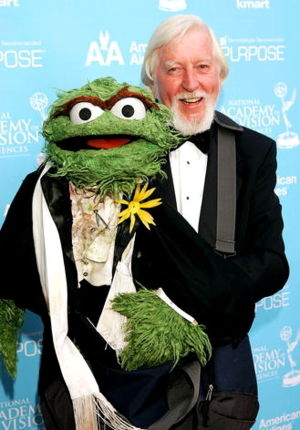
That’s right, it’s yet another union sock puppetry scandal.

ALELR draws our attention to a cease-and-desist letter sent last week from the California Faculty Association (CFA) to the California Teachers Association (CTA). The CFA represents the faculty and staff of the California State University system; the CTA is of course the state K-12 teachers’ union.

Both organizations are affiliated with the NEA. Apparently CTA thought that this mutual affiliation gave them the right to do a little vicarious sock puppetry with the CFA – to promote a position that CTA supports but CFA opposes.

CFA is not amused.

You see, in California’s May 19 special election, voters will have the opportunity to vote on Proposition 1A, which will extend some of the state’s recent “temporary” tax hikes and divert a chunk of revenue into its alleged “rainy day fund.” CTA wants Prop 1A to pass because Proposition 1B contains a provision to take up to $9 billion out of the “rainy day fund” and blow it on the educational equivalent of coke and hookers (I’m paraphrasing), but this provision of Prop 1B doesn’t take effect unless Prop 1A also passes.

CTA has been calling CFA members to urge them to support Prop 1A. The CTA callers identify themselves as calling on behalf of “your union.”

That’s bad enough, because if you’re a member of CFA then CTA is not “your union.” But it gets better.

The California State University system isn’t invited to the $9 billion “Rainy Day Coke and Hookers Party” proposed in Prop 1B. So CFA opposes Prop 1A on grounds that it would take money away from their coke-and-hooker fund in the state’s general budget (I again parapharse).

Isn’t this fun?

Come on now, everybody sing along!

Oh, I love cash!
Any dollars or drachmas or dinars,
Any rubles or rand or rupees!
Yes, I love cash!

It’s true that my conscience is tattered and worn,
It’s all full of holes and I do feel quite torn,
But I’d sell my mother on the day I was born!
I love it because it’s cash!

Oh, I love cash!
Any euros or yuan or yen,
Any pesos or pounds or pennies!
Yes, I love cash!

I’m making a phone call, it’s totally cold,
All my talking points are amazingly old,
They won’t know I’m lying because they’re not told!
I love it because it’s cash!

Oh, I love! I love! I . . . love cash!


More Teacher Union Sock Puppetry

April 29, 2009

Henson and Kermit.jpg

(Guest post by Greg Forster)

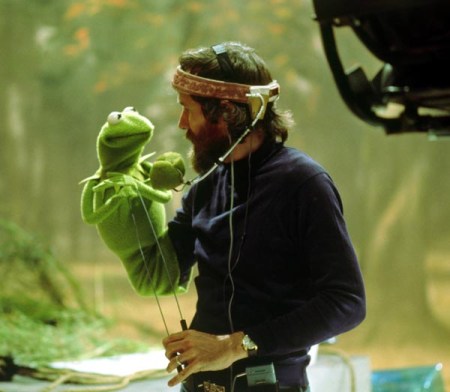
Recently we had a lot of fun with the Leo Casey/UFT “cue card check” story. But one fact that I don’t think got a lot of attention (here or elsewhere) is that this is far from the first instance of teacher union sock puppetry.

In this week’s Communique, ALELR highlights another one – the NEA’s longtime practice of setting up dummy organizations that are entirely controlled by the union, but conceal this fact and present themselves as independent voices. This week he highlights ROVE (Republicans Opposing Voucher Efforts), which, from the evidence ALELR presents, sure looks a whole lot like it has the NEA’s arm sticking out the bottom.

Apparently their strategy is to pay a whole chorus of voices to sing out of the union songbook, while hiding the singers’ union connections.

Say, I think I feel a song coming on myself…

Why are there so many songs about unions?
And choruses on their side?

The singers are honest and independent
And they have nothing to hide

So we’ve been told and some choose to believe it
I know they’re wrong, wait and see
Someday we’ll find it – the union connection
The reformers, the reporters, and me!


Democratic Control of Schools

April 26, 2009

Yesterday the New York Times profiled a school district in which the democratically elected school board is dominated by a group that places its financial interests ahead of the educational interests of children in the district.  And that group easily wins school board elections because they are well-organized, have cohesive interests, and turn-out to vote in much higher numbers than parents of children in the schools.

No, the NYT hasn’t suddenly decided to publicize the money-grabbing, electoral bullying of teacher unions in large numbers of school districts all around the country.  Instead the NYT is concerned about the money-grabbing, electoral bullying of a community of Orthodox Jews in Rockland County, NY.

Well, the NYT didn’t exactly describe the Orthodox Jews as money-grabbing: “Many of the Orthodox here and elsewhere feel crushed by the weight of high school taxes and private school tuition.”

The problem, as the NYT piece suggests, is the sense that schools ought be controlled by the families that send their children to those schools: “But increasingly, others are chafing at the idea that people who don’t send their children to the public schools are making the decisions for those from very different cultures who do.”

I have to say that I am sympathetic to this concern.  There are problems with control over schools being located outside of the families whose children attend those schools.  But, unlike the NYT, I don’t restrict my concern to instances involving Orthodox Jews. 

It concerns me that President Obama, who has never sent his children to public schools, and Arne Duncan, who intentionally avoided placing his children in DC public schools, are making decisions to compel children to return to D.C. public schools. 

It concerns me that teacher unions dominate school board elections all over the country, placing their financial interests ahead of the educational interests of children.  In many urban school districts disproportionate numbers of teacher union members also don’t send their own children to the public schools.

The obvious solution is to increase control over schools by the families that attend them by giving those families vouchers.  Empowered with vouchers, schools will be responsive to the interests of current and prospective students rather than the interests of people whose children do not attend those schools is order to attract and retain the revenue those vouchers bring.

Of course, the general regulatory framework governing schools could still be under democratic control, including non-parents.  But let’s restrict the general public’s involvement in controlling schools  to the broad regulatory issues that affect the public’s interests as opposed to the operational details of individual schools.


Famous Steakholders — The Grand Finale

April 23, 2009

You know how fireworks shows end with a massive display to sparkle the eye?  Well, this grand finale of the  Famous Steakholder series similarly contains an explosion of steakholder images.  Imagine the 1812 Overture playing in the background while you peruse these. Enjoy!

onecow

stakeholder

steakholder

steaks-250-01

donaldtrumpsteaks

btwwoodcowboy


Questions for Leo-The Final Chapter

April 23, 2009

(Guest Post by Matthew Ladner)

In my final question for Leo, I ask: Leo, do your puppets have Taco Flavored Kisses?


Questions for Leo: When Will You Answer?

April 22, 2009

Our ongoing series, “Questions for Leo,” asks when Leo Casey is going to answer.  Maybe he’d like to argue that NY City Council Members are not simply his puppets who ask questions that the teacher union writes on cue cards for them.  Maybe he’d like to sing about how they’ve got no strings on them.

We plan on continuing to ask questions until they are answered or until we stop laughing… and we haven’t stopped laughing yet.