Double Standards on Special Ed Placements v. Vouchers

July 25, 2012

(Guest post by Greg Forster)

In today’s Examiner, AEI’s Michael McShane (an official JPGB super best friend) wants to know why none of the people fighting to kill the DC voucher program seem to have any objections to DC’s high rate of outplacement for special education students. Could it be because there are a lot more rich white special ed parents? McShane is here to chew gum and kick the cans of edu-hypocrites, and he’s all out of gum.

McShane doesn’t make the mistakes others have made in characterizing DC’s high rate of outplacement. Still, the stats are eye-popping, and will no doubt have many readers asking questions. McShane really doesn’t have the opportunity in a short piece like this to provide the necessary background. Thankfully, Jay wrote this a while back to bring people up to speed.


Ed Week on Distorted Special Ed Counts

March 15, 2012

(Guest post by Greg Forster)

Ed Week dives into details on the difficult issue of how special education counts get distorted by a variety of factors. The article gets into a lot of interesting issues that make it difficult to get a clear picture of how many disabled students are served by the program. See also here for the researchers’ take on the issue.

One factor not canvassed in the Ed Week story – unsurprisingly – is the role of financial incentives in public school special education programs. Public schools are incentivized to label studnets as disabled in order to access additional funding. Study after study after study after study has confirmed the empirical relationship between the presence and strength of these incentives and rising rates of special education diagnosis in public schools. Private schools have no such distorting incentive and will thus report lower numbers of disabled students. (All this is true regardless of whether you think the true rate of disabilities is higher, as in the public system, or somewhat lower, as in the private system.)


Parenting Advice from Sara Mead

December 12, 2011

Sara Mead takes issue with my recent post that puts misconduct by some McKay schools in perspective.  I noted that those reacting to reports of misconduct by calling for the elimination or heavy regulation of McKay do not similarly react to incidents of misconduct in traditional public schools.  She likens this to a misbehaving child saying “he did it first.”  Sara urges us to be tough parents who don’t accept such weak excuses:

I was a very naughty child. When I was inevitably caught misbehaving, I often tried to justify it by saying “So-and-so (usually my sister or a classmate) did it first!” Not surprisingly, that argument never won the day or kept me from being punished.

I was reminded of this by Jay Greene’s recent blog post about reports of malfeasance and fraud by operators participating in Florida’s McKay Scholarship program for children with disabilities. Jay cites a series of examples of abuses in public school districts–basically a grown-up “he did it first!”–before stating that “existence of misconduct in traditional public schools in no way excuses the misconduct that has been uncovered in the McKay program.”

Glad we agree on that one!

Let’s ignore that I clearly said (in the comment she quoted!) that misconduct by McKay providers is inexcusable.  And let’s ignore that she mis-characterizes my call for perspective.  And let’s ignore my argument that the direct operation of schools by the government or heavy regulation of private providers unfortunately does not eliminate misconduct.

Instead, I would like to offer some parenting advice of my own.  When I was a child I sometimes tried to persist in making an argument, even when the evidence contradicted it.  My parents correctly taught me that when you are wrong, you should admit it.

I was reminded of this when thinking about Sara Mead’s repeated claim that the McKay Scholarship program provides incentives to increase the over-identification of students as disabled.  In 2003 she and Andy Rotherham released a report that made a series of speculative allegations against McKay, including:

special education vouchers may actually exacerbate the over-identification problem by creating  a new  incentive for parents to have children diagnosed with a disability in order to obtain a voucher. In fact, if special education identification led to funding for private school attendance, it would be unusual if this did not create an incentive to participate in special education in many communities, particularly those with low-performing public schools.

And in 2007 Sara Mead repeated the claim:

Offering vouchers to children with disabilities—and only children with disabilities—creates an incentive for parents to seek out a special education diagnosis in order to get a voucher. Anecdotal evidence suggests that some parents seek out diagnoses of learning disabilities or attention deficit hyperactivity disorder (ADHD) to get their children additional help and accommodations on tests. McKay’s offer of a voucher for students with disabilities creates an even stronger incentive for parents to “game the system.” And Florida psychologists who diagnose youngsters with ADHD and other disabilities have told reporters that they see some Florida parents who are seeking these diagnoses just so they can get a McKay voucher.

But in 2009 Marcus Winters and I released an empirical examination of the issue that actually found the opposite.  McKay actually provided incentives to reduce the excessively high rate at which students are identified as disabled.  And in June of this year, the leading quantitative AERA journal, Education Evaluation and Policy Analysis, published our article with this finding.

Nowhere has Sara Mead said that she was mistaken.  And last week Education Sector responded to reports of misconduct in McKay by urging people to read the 2007 report with this (and other) false or unsubstantiated claims.  People shouldn’t persist in repeating false claims.

I hope we can agree on that one.


Perspective on McKay

December 10, 2011

Ed Week, Ed Sector, and others are picking up on a hyperventilating story from the free weekly Miami New Times about misconduct in Florida’s McKay Scholarship voucher program for disabled students.  The piece is actually a re-hash of a story the New Times ran 5 months ago about private schools participating in McKay that mishandled money, hired incompetent staff, or failed to provide adequate services.

The stories were embarrassing, but the reaction by the New Times and others has been completely lacking in perspective.  Organizations receiving government funds are unfortunately even more prone to misconduct than typical organizations.  This is also true of public schools.  For example in the Detroit Public Schools we see:

 Five Detroit Public Schools employees have been charged with embezzlement in an ongoing probe into the “culture of corruption” that took hold in the state’s largest district, a prosecutor said Wednesday….

A series of audits into district finances have been ordered. Two separate audits announced last week revealed the district has been paying $2.1 million per year for health coverage for ineligible dependents, and bought 160 unused BlackBerries and 11 motorcycles.

“It has been said that the accomplice to corruption is frequently our own indifference, and I agree wholeheartedly with that,” Worthy told reporters in announcing the charges.

“My office was not surprised about the culture of corruption that we’ve been seeing in the past in the Detroit Public Schools system,” she said. “What did surprise even us, though … is how rampant, how overt and how conspicuous and downright bold-faced the corruption is, allegedly, in some of the cases that we’ve been looking at.”

And from Springfield, MA public schools we learn:

A 13-month audit recently concluded at Putnam Vocational Technical High School found that some employees abused a student association checking account that operated independently from the city and school system in apparent violation of Massachusetts law.

McCaskill was in charge of that unauthorized account, which averaged about $200,000 annually in transactions since late 2005, but was managed with a manual ledger that never matched bank statements, according to the report from Springfield’s Office of Internal Audit….

“There is no excuse for the disgraceful, dishonest practices that appeared to have run rampant among a group of employees at the school for several years,” Ingram also wrote in a post on his official blog.

And right in the backyard of the Miami New Times we find the mysterious absence of $3.8 million from the Broward County teacher union accounts, the prior head of the Broward teacher union in jail for soliciting sex from a minor, and the former head of the Miami-Dade County teacher union in jail for corruption and embezzlement.

And while the New Times was repeating the complaints of Miami-Dade superintendent  Alberto Carvalho about McKay, they somehow failed to mention Carvalho’s own history of manipulating newspaper coverage through a reporter with whom he was reportedly having an affair.

But these are just selected anecdotes.  In a systematic study of scandals in public and private schools, Greg Forster and Matthew Carr found that misconduct was actually slightly more likely in regulated public schools than in largely unregulated private schools.  That is, some amount of scandal is unfortunately unstoppable and increasing regulation or government operation of schools is unlikely to eliminate the problem.

Of course, the existence of misconduct in traditional public schools in no way excuses the misconduct that has been uncovered in the McKay program.  But then again no one calls for the public school system to be shut down as a result of these scandals like folks are calling for an end to McKay.  And Diane Ravitch, in her typical, scholarly fashion, responds to the McKay reports by tweeting “Legalized child abuse in Florida?”, but appears to have no reaction to similar reports from traditional public schools.

My point is that the reaction to reports of misconduct in the McKay program are lacking perspective.  Yes, abuses need to be stopped.  And the regulations on the books, if enforced, could keep those abuses to a minimum.  As former Senator John McKay told a Florida newspaper in response to calls for more regulation:

Kriseman suggested nine issues to increase accountability, including mandatory site inspections of facilities. He said the Department of Education should review and sign off on personnel criminal background checks in facilities seeking to receive McKay dollars. And teachers in a school accepting McKay dollars should have a state teaching certificate.

Former State Senate President John McKay — who created the law — agrees. McKay listened to Kriseman’s full list of suggestions.

“A number of his suggestions are quite positive,” McKay said. “Many of the things he’s asking for are already in the statute.”

McKay suggested asking officials with the Department of Education to enforce the law.

“It’s nice to have words in a statute,” McKay said. “Unless someone does something, it’s kind of meaningless.”

And of course, all of these criticisms of McKay fail to mention the proven positive effects of the program.  It improves student achievement for disabled students, reduces the rate of new identification of disabilities, increases the chances that students will receive needed services, and is overwhelmingly loved by parents.  I wish we could say the same about all traditional public schools, including those riddled with misconduct.


Special Ed Voucher Research

June 7, 2011

Marcus Winters and I have done a few studies on the effects of Florida’s McKay voucher program for disabled students.  These studies were published as Manhattan Institute reports:

“How Special Ed Vouchers Keep Kids From Being Mislabeled as Disabled,”  Manhattan Institute, Civic Report No. 58, August 2009.

“Evaluating the Impact of Special Education Vouchers on Public Schools,”  Manhattan Institute, Civic Report No. 52, April 2008.

It took a while, in fact a couple years, but a revised version of those two studies combined into one article has been published in the peer-reviewed journal, Educational Evaluation and Policy Analysis, which is the leading empirical publication sponsored by the American Educational Research Association.

You can read the full article on the EEPA web site here.

And here is the title and abstract:

Public School Response to Special Education Vouchers

The Impact of Florida’s McKay Scholarship Program on Disability Diagnosis and Student Achievement in Public Schools

Marcus A. Winters, University of Colorado at Colorado Springs

Jay P. Greene, University of Arkansas

Abstract

The authors expand on research evaluating public school response to school choice policies by considering the particular influence of voucher programs for disabled students—a growing type of choice program that may have different implications for public school systems from those of more conventional choice programs. The authors provide a theoretical framework to show that special education vouchers could influence both school quality and the likelihood that a school will choose to identify the marginal child as disabled. Using a rich panel data set from Florida, the authors find some evidence that competition from a voucher program for disabled students decreased the likelihood that a student was diagnosed as having a mild disability and was positively related to academic achievement in the public schools.


Jeb Kicks Off the New Year Right

January 3, 2011

Jeb Bush has an op-ed in today’s Wall Street Journal that gets the new year off to the right start.  Here’s a taste:

For the last decade, Florida has graded schools on a scale of A to F, based solely on standardized test scores. When we started, many complained that “labeling” a school with an F would demoralize students and do more harm than good. Instead, it energized parents and the community to demand change from the adults running the system. School leadership responded with innovation and a sense of urgency. The number of F schools has since plummeted while the number of A and B schools has quadrupled.

Another reform: Florida ended automatic, “social” promotion for third-grade students who couldn’t read. Again, the opposition to this hard-edged policy was fierce. Holding back illiterate students seemed to generate a far greater outcry than did the disturbing reality that more than 25% of students couldn’t read by the time they entered fourth grade. But today? According to Florida state reading tests, illiteracy in the third grade is down to 16%.

Rewards and consequences work. Florida schools that earn an A or improve by a letter grade are rewarded with cash—up to $100 per pupil annually. If a public school doesn’t measure up, families have an unprecedented array of other options: public school choice, charter schools, vouchers for pre-K students, virtual schools, tax-credit scholarships, and vouchers for students with disabilities.

Choice is the catalytic converter here, accelerating the benefits of other education reforms. Almost 300,000 students opt for one of these alternatives, and research from the Manhattan Institute, Cornell and Harvard shows that Florida’s public schools have improved in the face of competition provided by the many school-choice programs.

Florida’s experience busts the myth that poverty, language barriers, absent parents and broken homes explain failure in school. It is simply not true. Our experience also proves that leadership, courage and an unwavering commitment to reform—not demographics or demagoguery—will determine our destiny as a nation.


Violators of OK’s Special Ed Voucher Law Get Good Mocking

November 16, 2010

School Choice Oklahoma uses its 21st century skills to make this auto-animated piece mocking school officials who refuse to comply with state law requiring them to offer vouchers to disabled students.  Keep up the mocking, School Choice OK, and you may knock these modern-day George Wallaces away from blocking the school house door.


Look Who’s Standing in the Schoolhouse Door Now

October 18, 2010

The Oklahoma legislature and its Democratic Governor adopted a law allowing disabled students to use public funds to attend a private school if they wished to do so.  Similar laws have been passed in Florida, Georgia, Ohio, Utah, and Arizona.

Disabled students have had to fight for decades to receive an adequate education from the public school system.  Federal legislation, now called IDEA, was adopted in the mid-1970s to ensure an appropriate eduction for disabled students.  Unfortunately, having a legal right to something and actually receiving it are two very different things and many disabled students continue to be denied appropriate services despite their legal entitlements.

That’s why several states have decided to empower families with disabled children with an additional mechanism by which they could ensure receiving an appropriate education — special education vouchers that would allow them to transfer to private schools if they believe that the public schools are not serving them adequately.  Oklahoma is the latest state to offer these vouchers but it almost certainly won’t be the last as several other states are considering the idea.  And there is good evidence that special education vouchers are significantly improving outcomes.

But, according to Education Week, four Oklahoma school districts have decided not to offer these vouchers that are required by state law.  The reasons given for willfully disobeying the state law are varied.  One district, Broken Arrow, has suggested that the voucher laws violate the state’s constitution because funds would go to religious schools.

Besides the fact that the U.S. Supreme Court and several states have ruled that these vouchers would not pose this type of constitutional threat, apparently public school district officials in Oklahoma think they know better.  And they’ve discovered some new constitutional process by which school officials interpret the constitution rather than the courts.

Actually, it’s not really a new method of deciding who should interpret the constitution, since it was a method well-established by segregationist school officials and governors who believed that they had the power to block black students from exercising their civil rights no matter what the law or courts said.  Now it is disabled students who are being blocked at the schoolhouse door.

The willingness of public school officials to publicly flaunt their disobedience of the law is not even very unique in current times.  Just two years ago school officials in Georgia decided to disobey the state’s duly enacted social promotion policy simply because they disagreed with the policy. Some of the Oklahoma public school officials similarly believe that they have standing as educators to decide what is best for kids and formulate the policy regardless of what the law and the people who pay them say.

Public school officials get away with this kind of willful violation of the law far too easily.  No one will go to jail.  No one will lose their job.  No one will be sanctioned in any way.  And they wonder why having a law to ensure appropriate services for disabled students isn’t sufficient.  Maybe it’s because public school officials apparently don’t have to follow the law.


Rhee Looks to Clean Up the DC Special Ed Barn with vouchers

July 23, 2010

(Guest Post by Matthew Ladner)

There is a new contender in the race to enact the next McKay Scholarship-like voucher program for children with special needs: DCPS, led by the reigning Queen of the Cool Kids Michelle Rhee.

The Washington Times has the story.

This makes sooooo much sense. Special needs parents have been successfully suing their way to Cadillac Ferrari judgements and six-figure per year private school placements for years. Before you start to feel sorry for DCPS, it is worth noting their historical abysmal performance in fundamental tasks such as teaching children reading and math. We have almost zero reason to think that DCPS did anything better than catastrophically bad on average in dealing with the needs of special needs children. 

Also note, as Jay does on an as-needed-basis, that the horror stories of such placements routinely fail to note that the amounts involved typically constitute a rounding error of the total public school budget. DCPS does suffer from an unusual combination of its own historically high level of incompetence (they seem to lose early and often in court) and a group of sophisticated special needs attorneys who have become quite skilled at shooting fish in the DCPS barrell.

At times in the past, I have seen rather intellectually sloppy attempts to use the DCPS as a cautionary tale to warn people off of the idea of enacting a voucher program for special needs children. Well, let’s wipe this bug off the bottom of our boot again: a McKay program allows parents to leave for another public or private school only with (at maximum) the allegedly inadequate funding provided for the child’s education.

For decades, the claim made by the public school establishment in lobbying for higher special education funding has been that they have had no choice but to transfer endless billions of dollars out of general education budgets to fund special education.

Back in 2004, my friends at the Texas Public Policy Foundation and I caught Texas districts red-handed quantifying the amounts transfered from general to special education. Usually such claims are made by lobbyists in private conversations, or as unsupported legislative testimony, but TPPF found someone who had written it down:

…Figures presented to the Texas Legislature by officials from Regional Education Service Center 20. Public school officials in Texas relate that the state and federal government inadequately fund special education in Texas. Representatives of Education Regional Service Center 20 recently presented information before the House Select Committee on Public School Finance regarding the disparity between special education funding and special education spending in the San Antonio, Northside, Northeast, Alamo Heights and Floresville Independent School Districts.

In each district, representatives provided figures showing that districts spent hundreds of thousands to millions of dollars more on special education services than the funding they received from state and federal sources. While school district expenditures exceeded government funding for special education, the decision to spend monies above and beyond government funds was a decision made by the districts. The exact nature of excess expenditure is unknown. Whether additional monies were necessary or simply elective spending was not identified. Nor is it known if these expenditures were required to underwrite the cost of delivering government-mandated services.

In San Antonio ISD, Education Regional Service Center 20 figures show a disparity of $8,163 more spent than received per full time equivalent special education student. The disparity figures for the Northside, North East, Alamo Heights and Floresville districts were $3,536, $4,521, $7,992 and $2,949 respectively.

Any disparity between special education funding and special education spending must come at the expense of general education spending. Because education dollars are limited, money is diverted away from regular classroom instruction when districts decide to spend additional funds above and beyond government funding for special education.

The Education Regional Service Center 20 figures, for example, show that the San Antonio ISD spent over $17 million more on special education services than received from the state. Under HB 2465, every special needs student departing from San Antonio ISD with a Freedom Scholarship, despite having special education funding included, would lift a substantial funding burden from the district, freeing resources to either focus more on the remaining special education students, or for general education programs, or for some combination thereof.

So in other words, a voucher program allowing kids to leave with their normal allotment of general education funding and their special education funding would save the district money with each transfer.

So a McKay Program in DCPS would democratize access to private schools for all children with special needs from those who can access specialized attorneys to everyone. No one gets a Ferrari plan from McKay, just to opportunity to walk away with the money allotted for your child. The District spares itself a Ferrari payment and reduces the need to transfer general education funds.

Oh, and by the way, such a program would vastly increase the satisfaction of parents across a whole array of school measures.
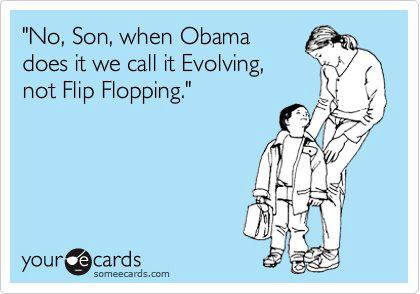

Blaming Special Ed — Again

July 12, 2010

When times get tough, school systems and their enabling reporters blame special education.  Regular readers of JPGB and and Education Next have seen this argument debunked before, but I feel compelled to do it again in response to a sloppy and lazy article in the Wall Street Journal.

The WSJ piece by Barbara Martinez is entitled “Private-School Tuitions Burden DOE.”  The DOE in this case is the Department of Education in New York City, which the article points out “last year spent $116 million on tuition and legal expenses related to special-education students whose parents sued the DOE on the grounds that the public-school options were inadequate. That’s more than double the number of just three years ago, and the costs are expected to continue to rise in coming years.”

As I’ve pointed out before, the trick to writing an article blaming special education is to mention a high cost for educating certain special education students (or even a high-sounding aggregate figure) without putting in perspective how much money that is relative to the entire school budget.  True to form, this article states: “The tuition payouts range between $20,000 and more than $100,000 per child and have been used for schools as far away as Utah.”  Wow, that sounds like a lot of money.  And going all the way to Utah sounds extravagant.

But let’s put this issue in perspective, which even a minimal amount of effort by the reporter could have done.  If private school tuition really is a “burden” as the title asserts, the cost of private-placement should be a significant portion of the New York City school budget.  It isn’t.  If you look at the NYC education budget you see that schools spent a total of $17.9 billion in 2009.  The total cost of private placement is only $116 million, which is about .6% of total spending.  This is close to rounding error for NYC.

To put it further in perspective, the NYC education system spent $151 million last year on pollution remediation to address lead paint, asbestos, and contaminated soil at its properties.  Imagine if there had been a news article entitled “Pollution Clean-Up Burdens DOE.”  People would have dismissed that as ridiculous, noting that the total amount spent on pollution is a very small part of the total budget and could hardly be considered a burden.  What’s more, people would have acknowledged that cleaning up pollution is important and the schools need to do it.

But this article on private tuition for special education “burdens” is even worse because the burden on the district isn’t the total cost, but the cost for private placement in excess of what the district would have spent if they had served these disabled students in traditional public schools.  We know from the article that there were 4,060 students who sought private placement for an aggregate cost of $116 million.  That works out to $28,571 per student.

We also know from the NYC DOE budget that schools spent a total of $17.9 billion for about 1.1 million students, which works out to $16,263 per student.  But wait, NYC spends more on its special education students than on the average student.  If we look at the NYC DOE budget (which any education reporter worth his or her salt could easily do), they identify additional costs associated with special education.  From that we can calculate that NYC spends an average of $24,773 on its special education students.

The “burden” on NYC DOE from paying private school tuition is the difference between the average tuition and legal costs associated with private placement ($28,571) and the average cost for a disabled student in the traditional public schools ($24,773), which works out to $3,798 per student.  An extra $3,798 per privately placed student over 4,060 students constitutes an additional expense of $15.4 million for NYC DOE.  That amounts to less than .09% of the NYC DOE education budget.

Calling this a “burden” on the district is irresponsible and just distracts people from the true and large areas of waste burdening the school system.