Saba: Advance on All Fronts!

December 17, 2008

(Guest Post by Matthew Ladner)

Dave Saba of the American Board for Certification of Teaching Excellence (and of Friday Fish Porn fame) recommends that education reformers adopt a comprehensive education reform plan to improve public schools with as many credible strategies as possible.  A must read.


The Year That Was

December 15, 2008

It’s getting to be that time when people make lists of good and bad things that happened during the preceding year.  Here’s mine from an interview with Michael F. Shaughnessy of EducationNews.org:

What were the 5 most important developments during 2008 that contributed to reform of K-12 education?

 1)     Barack Obama strongly endorsed the idea that expanding choice and competition is an important part of improving public schools.  He limited his support to expanding choice and competition through the introduction of more charter schools, but the theory is not fundamentally different than doing the same with vouchers.  Whether Obama follows through on this campaign position or not, it is now clear that it is considered politically desirable among both Democrats and Republicans to support choice and competition.  Holdouts from this view, including the teacher unions on the left and curriculum-focused reformers on the right, are being increasingly marginalized.

2)     Sarah Palin, in her only major policy speech, pushed the idea of special education vouchers.  Like Obama embracing choice and competition, Palin embracing special ed vouchers is a symbol of the political attractiveness of the policy.  Special ed voucher programs already exist in Florida, Georgia, Ohio, Utah, and Arizona (pending the resolution of a court case).  I’d expect the idea to spread to several more states in the next four years regardless of Sarah Palin’s political prospects.

3)     Reform ideas, including choice, merit pay, curbing teacher tenure, and promoting alternative certification, are gaining mainstream acceptance in the Democratic Party largely thanks to the efforts of Democrats for Education Reform.  An important indication of this political shift was an event at the Democratic National Convention organized by the Democrats for Education Reform at which an audience of about 500 cheered speakers denouncing the teacher unions and embracing reform ideas. The Democratic supporters of reform largely (but not exclusively) consist of urban minority leaders, including Michelle Rhee, Joel Klein, Adrian Fenty, Cory Booker, Kevin Chavous, Al Sharpton, and Marion Barry.  Go ahead and make all the Sharpton and Barry jokes you like, but this (mostly) minority defection of urban Democrats from union orthodoxy is like a political earthquake that will have important implications for future reform politics.  And it’s true that some conservatives have begun backtracking on reform ideas, including Sol Stern, Diane Ravitch, and depending on the day of the week, Checker Finn and Mike Petrilli.  But if the reform movement has traded some conservatives for the new generation of minority Democratic leadership, I think we’ve come out ahead.

4)     We saw a string of new or expanded school choice programs in 2008.  Georgia adopted a universal tax-credit supported voucher program.  Louisiana adopted a voucher program for New Orleans as well as a personal tax deduction for private school tuition.  Florida expanded and decreased burdensome regulation on its tax-credit supported voucher program.  And Utah increased and secured a source of funding for its special ed voucher program.  For a movement declared dead more times than Generalissimo Francisco Franco, school choice continues to grow.

5)     I’ll take the privilege of the final development to brag about the launch of the new doctoral program in education policy in the Department of Education Reform at the University of Arkansas.  It may not have been among the 5 most important developments in the whole country, but it was a big development in my little world.  With the first cohort of students starting in the Fall of 2009 (supported by a pool of generous fellowships) and a collection of outstanding faculty, we have the potential to significantly increase the number of reform-oriented researchers in academia, think-tanks, and foundations.

What were the 5 most important developments during 2008 that hindered reform of K-12 education?

1)     The reform movement lost two great champions this year with the passing of John Brandl and J. Patrick Rooney.  Brandl, who had been the Democratic leader of Minnesota’s state senate and Dean of the University of Minnesota’s Hubert Humphrey School of Public Policy, contributed significantly to the argument that choice was not only efficient, but also enhanced opportunities for the disadvantaged.  He helped create the state’s pioneering charter school law and other choice programs.  Brandl also served as mentor to many of today’s leading choice researchers.  Rooney, who had always been active in the civil rights movement, personally sponsored scholarships for disadvantaged students to attend private schools.  His privately financed program became a model for publicly funded voucher and tax-credit supported scholarship programs.

2)     In 2008 we saw a number of “implementation” problems undermine otherwise promising reform initiatives.  For example, Georgia adoption a social promotion policy that required students to pass a test or follow a formal exemption policy to be promoted in certain grades.  My research with Marcus Winters on a similar policy in Florida suggested that it would improve student achievement.   But in several districts around Georgia more than 90% of students were promoted without passing the test and without following the formal exemption procedure.  They simply disregarded the law on a large scale with no consequences for any district or school employee.  Another promising idea undermined by implementation was Reading First. There is a lot of rigorous science to support a phonics-based reading approach, but getting public schools to do it well is a completely different matter.  Implementation also appears to have done-in a promising teacher mentoring program.  I could go on, but the point is that there is no shortage of clever reform practices out there.  The problem is that without addressing the lack of proper incentives in the public education system to improve, we regularly see these clever practices fall flat. We need incentive-based reforms along with reform of educational practices.

3)     Earlier this year an Arizona court struck down voucher programs for students with disabilities and students in foster care on the grounds that the state constitution forbids aid to private schools.  This month defenders of the program argued on appeal to the state Supreme Court that the program aids students, not schools.  And the state already sends disabled students to private schools when it is determined that the public schools are unable to provide adequate services.  That practice may also be in jeopardy, even though it is actually required by federal law (IDEA).  Who knows how this will all be resolved, since courts can adopt any interpretation they like, reasonable or unreasonable.  But court action has prevented these beneficial programs from operating and threatens to kill them.

4)     A Florida court struck down the ability of a state commission to approve charter schools.  If upheld by the (notorious) Florida Supreme Court, only school districts could approve charters and existing charters approved by the state commission may have to be closed.  Giving districts the exclusive power to grant charters essentially allows the districts to decide with whom they will have to compete.  It’s like giving McDonalds the exclusive power to approve the opening of all new restaurants.  The state Supreme Court used the same narrow interpretation of clauses in the state constitution to strike down the Opportunity Scholarship voucher program, so the prospects for a vibrant and competitive charter sector in Florida are not good.

5)     And finally the most disappointing development of 2008 is that we spent another half trillion dollars on public education without significantly altering the dysfunctional system that fails to teach a quarter of 8th grade students to read at a basic level or get them to graduate from high school.  Results for minority students are significantly worse.  The economic bailout may be a $700 billion enterprise, but the public school system spends almost that much each and every year.  Every year that we spend that money without fundamentally altering how we operate public education is another fortune wasted and another year lost for millions of students.

(Note: corrected spelling of Marion Barry’s name)


Why JPGB Beats Edwize

December 11, 2008


  Edwize is a blog by Leo Casey that is sponsored by the United Federation of Teachers (UFT), the New York affiliate of the American Federation of Teachers.  The UFT has tens of millions of dollars at its disposal and thousands upon thousands of members.  Jay P. Greene’s Blog (JPGB) by contrast has a $25 registration fee for the domain name and a couple of laptops. 

Despite this huge disparity in resources, JPGB has a significantly larger audience than does Edwize.  According to Technorati JPGB has an authority rating of 95 while Edwize has a rating of 74.  An authority rating measures how many other blogs link to a given blog during the last 180 days, which is meant to capture how much influence a blog has in the blogoshpere.  In addition, each post on JPGB generates about 4 or 5 comments, on average, while posts on Edwize generate about 1 or 2 comments, on average.  Fewer comments suggest fewer readers and/or material on which people do not care to comment. 

None of these measures is perfect, but it is clear that JPGB beats Edwize.  Why?

The primary challenge for Edwize is that it has to tout teacher union views on education issues.  And those views are mostly junky.  So, Edwize suffers because it takes significantly more resources to interest people in crappy ideas than in sensible ones. 

In case you doubt that the unions have to push junky ideas, ask yourself whether it is sensible to have a system of education in which students are mostly assigned to schools based on where they live; where teachers are almost never fired, no matter how incompetent they are; where teachers are paid almost entirely based on how many years they’ve been around rather than on how well they do their job; where teachers are required to be certified even though there is little to no evidence that certification is associated with quality; and where all teachers are paid the same regardless of subject, even though we know that the skills required for expertise on certain subjects have much greater value in the market than other subjects.

The mental gymnastics required to sustain the union world view has a much greater “degree of difficulty” than the views that are regularly expressed on JPGB.  And the resources required to generate support for these union views are enormous.  You need millions of people financially benefiting from these policies to volunteer as campaign workers.  You need millions of dollars in union dues for campaign contributions.  You need a large team of paid staff in every state and in Washington, DC.  It takes an army and a fortune for the unions to hold their ground.

This not only helps explain why JPGB beats Edwize, but also why reformers are able to beat the unions in the policy arena.  It’s true that the unions win most of the time.  But given their enormous advantage in resources, it is amazing that the unions ever lose.  The reason that the unions lose as often as they do is that their policy positions are much more difficult to defend intellectually.

So, we should feel sorry for Leo Casey and his union comrades.  They may have a lot more money and a lot more people, but they constantly have to defend obviously dumb ideas.

(edited for clarity and to add photo)


Barack Obama’s Senate Seat For Sale on Ebay

December 10, 2008

(Guest Post by Matthew Ladner)

See for yourself


The Humpty Dumpty Arkansas Courts

December 7, 2008

Courts claim to be in the business of interpreting the meaning of laws.  But the oddly limited or expansive meanings that are selectively applied to the words in those laws suggest that they are engaged in a completely different enterprise — namely, politics.  The idea that courts are just another political institution has long been held by political scientists, including myself.  We tend not to be hypnotized by the black robes, marble columns,  and Latin jargon into buying the notion that judges are some sort of special priesthood, immune from and indifferent to politics.  

Judges are just regular pols without the typical reelection pressures but also without the typical resources to advance their agenda.  Legislators have the power of the purse while executives have the power of the sword, but judges just have the power of their word.   The limitation on the power of judges is not the constraint of reelection, but the constraint of having to convince the other branches and the public to do what they say.  Cultivating the image of a disinterested priesthood enhances the power of judges to get others to do what they say.  But if the judges demand too much, they undermine their priestly image and erode their future power. 

Judges have been in a particularly strong position to get others to do what they say for the last five decades.  Early in the civil rights struggle our democratic institutions failed us, protecting obviously unjust and illiberal practices.  After initially siding with these illiberal forces (see Dred Scott or Plessy), the Courts detected a shift in elite opinion and joined forces with those elites to consolidate a new, progressive coalition.    The Courts could rightly take credit for having helped rescue us from the failure of our democratic institutions. 

Because they were instrumental in civil rights,  judges accumulated a considerable amount of political capital and popular goodwill.  And they’ve been spending that political capital ever since.   The civil rights era gave the Courts the role as guardians of our liberal virtue.  So, it’s hard to suggest that the Courts have overstepped their bounds, usurped the power of other branches, or arbitrarily interpreted the law without being accused of opposing the liberal virtue that Courts are supposed to protect.  Past critics of over-reach by Court included segregationists, so if you criticize judicial over-reach today on some other topic you must also be a segregationist.

This is especially true in Arkansas, where the memories of desegregation battles at Little Rock’s Central High School are particularly painful.  You cannot criticize Arkansas Courts for over-stepping their bounds or abusing their authority without being accused of being Orval Faubus — and there is no worse political insult in Arkansas.  The problem with immunity from legitimate criticism is that Arkansas Courts are especially unaccountable for judicial over-reach or arbitrariness. 

The most salient recent example of this is the action of the state Supreme Court in the Lake View school funding case.  The state constitution does  say that the state must “maintain a general, suitable and efficient system of free public schools.”  But who knew that general, suitable, and efficient meant that there was a specific dollar amount that had to be spent on every student in Arkansas?  And who knew that that amount had to increase by at least the rate of inflation every year?  I doubt that the authors of the Arkansas Constitution knew that general, suitable, and efficient meant all of these things, but the members of the Arkansas Supreme Court sure did.  And they figured out how much the legislature needed to spend per pupil and for school infrastructure by appointing Special Masters, who convened public meetings, received testimony from interested parties, and wrote a report summarizing their recommendations. 

Of course, there already exists a body for holding public meetings, receiving testimony from interested parties, and deciding upon the appropriate levels of public spending — it’s called the legislature.  With the appointment of Special Masters the Arkansas Supreme Court clearly usurped the legislature’s power.  And the Special Masters showed no restraint in determining spending priorities for the state — a power reserved by the Constitution for the legislature.  They declared: “[School districts] should have the means to meet the challenge if the State remains committed to the all-important practice of funding education first.”  Where in the state Constitution does it say that education has the first priority on resources? 

Some have argued that the responsibility to fund education first is implied by having education as the only policy area specifically mentioned in the Constitution.  I’m sorry to say that these people have never read the Arkansas Constitution.  It also specifically mentions a number of other policy areas, including the need for an agriculture, mining, and manufacturing policy.  Specifically, it says that the legislature must pass laws to “foster and aid the agricultural, mining and manufacturing interests of the State.”  If the Court and its Special Masters see the words general, suitable, and efficient as meaning that education must be supported as the first priority and at a specific, ever-increasing amount of spending, why haven’t they interpreted “foster and aid” to mean that the legislature must provide specific subsidies to agriculture, mining, and manufacturing?

Clearly we have a Humpty Dumpty Court.  The words mean what they want them to mean.  General, suitable, and efficient have expansive meanings if it suits their purposes while foster and aid mean essentially nothing.  Only judges, as the special class of high priests, possess the magical glasses that allow them to read between the lines of the Constitution to see that one phrase implies the moon while the other implies bupkis.

And now the Arkansas Supreme Court is at it again.  They are currently hearing arguments on whether a state law exempting state contracts in excess of $5 million from competitive bidding violates the state Constitition.  A plain reading of the text would suggest that it does.  The Constitution states: “All contracts for erecting or repairing public buildings or bridges in any county, or for materials therefor shall be given to the lowest responsible bidder, under such regulations as may be provided by law.” 

But Circuit Judge Jay Moody ruled that the state law did not violate the Constitution because he interpreted the provision as only applying to contracts from county governments — not contracts made by the state government and its agencies.  I’d like you to re-read the constitutional provision and ask yourself whether this is the most reasonable interpretation of the language.  Doesn’t the phrase “in any county” seem to describe the location of public buildings and bridges, emphasizing that the bidding requirement applies in all parts of the state, not the government agency engaging in the contracting?

We don’t know how the state Supreme Court will rule on the matter, but figuring that out requires a political, not a linguistic analysis.  They can and will interpret it in any way the see fit to advance their interests.  The words can mean just about anything they want them to mean.  “The question is which is to be master — that’s all.”

UPDATE:  The Arkansas Supreme Court interpreted the cluase as applying only to county contracts and upheld the state law.  The decision can be found here.


Free the Fordham Five!

December 4, 2008

I can’t take it anymore.  Someone must have abducted the folks at Fordham and replaced them with inside the beltway obsessed navel gazers.  Who cares (this much) who the next education secretary will be?  Four of the last five posts have been about the ed sec naming and about half of all posts in the last few weeks.

If, as John Nance Garner is said to have remarked, the vice-presidency isn’t worth a warm bucket of spit, being education secretary isn’t worth having to drink the bucket.  Education secretaries barely have control over a professionalized staff that barely have control over a budget that contributes barely 8% of all education spending.  I guess they can use their bully pulpit to influence the agenda for education policy, but almost all of the important education decisions are made by state and local actors.

Someone needs to free Mike, Checker, Sleepy, Grumpy, and Doc (I guess there are 5 because the alliteration works).  Free the Fordham Five and bring back an interesting blog!

Update — The rescue team appears to have been successful!  Flypaper has just posted 6 items in a row not about the ed sec nomination.  Let’s all give thanks for the return of the Fordham Five and an interesting blog over at Flypaper.


Sidwell Friends, America’s Worst School

November 26, 2008

sidwell-friends

Sidwell Friends Middle School Building

“Brand new, but built to look obsolete and run down!”

(Guest post by Greg Forster)

Two weeks ago, Jay ruffled a few feathers by arguing that we shouldn’t care where President Obama’s children go to school. His point was that it isn’t necessarily hypocrisy for school choice opponents to send their kids to private schools, if they believe that private education is valuable (and thus something they’re willing to pay to acquire) but not the kind of thing government should subsidize to ensure equal access.

At the time, my response was that I totally believe Obama opposes school choice because he thinks government shouldn’t be in the business of ensuring that rich and poor alike have equal access to valuable goods and services, and I eagerly look forward to seeing this prinicple applied to his positions on welfare, health care, housing, labor policy, the environment, economic bailouts, entitlements, farm subsidies, taxes . . .

This morning, Jonah Goldberg argues that yes, Obama’s choice of Sidwell Friends while he opposes school choice makes him a hypocrite – but hypocrisy is overrated as a sin (this is a longtime hobbyhorse of Goldberg’s) and the real scandal is simply Obama’s (and other politicians’) opposition to choice. I couldn’t agree more.

But maybe school choice isn’t the only reason we should be interested in where the Obamas send their kids to school. This week, America’s Last Education Labor Reporter points out that Sidwell Friends is in abominable shape, and in desperate need of improvement:

It would be a shame if the Obama kids were to miss out on all these benefits, so we humbly submit these additions and subtractions to make Sidwell Friends the type of school the experts want all schools to become:

* Add a unionized workforce and a collective bargaining agreement. NEA asserts “that the attainment and exercise of collective bargaining rights are essential to the promotion of education employee and student needs in society.” How can the Obama kids have their education needs filled without agency fee, release time, grievances, binding arbitration and strikes?


* Add geographic enrollment boundaries. The Obamas will reside 3.5 miles from one Sidwell campus and 8 miles from the other, located in the state of Maryland. What’s next, flying in the next generation of Kennedy kids via helicopter from Massachusetts? Limit enrollment to those in the immediate neighborhood.


* Subtract weak teacher benefits. According to the Sidwell web site, teachers pay 10-40% of their health insurance premiums, pay into a defined contribution retirement plan, and receive only two personal days a year.


* Add diversity. The Obama kids will become part of the 39% of Sidwell students who are racial/ethnic minorities. But the DC Public Schools are 95% racial/ethnic minorities. How can the Obama children be denied so much of the rich cultural mix our nation’s capital provides?


* Subtract religion. The Quaker tradition is part of daily life at Sidwell Friends, including weekly worship meetings for all students, Quaker or not. This isn’t very inclusive of the Catholics, Muslims, Hindus, Wiccans and animists among the student body. Religious beliefs should only be studied from an academic standpoint and never practiced within a school’s walls.


* Add to the curriculum. Grades PreK-4 emphasize things like phonics, handwriting, vocabulary, comprehension, grammar, fractions, algorithms, geometry, and American history. Upper grades are heavy with English literature, advanced math, history, science, foreign languages and the arts. There isn’t much “getting information from television, film, Internet, or videos” or “Represent multiplication as repeated addition” for lower grades, or “Identify the countries, such as Italy, Poland, China, Korea, and Japan, where large numbers of people left to move to the United States at the end of the 19th and early 20th centuries” for upper grades. We don’t want to saddle a 21st century President with an 18th century curriculum.


As patriotic Americans, how can we stand by while our president’s family gets such substandard services?

Or maybe we shouldn’t be worried. After all, family and environmental influences are the only real determinants of educational outcomes. And clearly the Obama children are well blessed in that respect.

Or maybe we should be worried. After all, the Obamas did pick this shockingly substandard school, even though they had the opportunity to go with the nation’s most lavishly funded and heavily unionized schools in the D.C. public system, so how smart can they be?


Moe in WSJ

November 24, 2008

Terry Moe has an excellent piece in the Wall Street Journal today.  He suggests that the Democrats (including himself as an early Obama supporter) are the logical source of education reform.  He writes:

“If children were their sole concern, Democrats would be the champions of school choice. They would help parents put their kids into whatever good schools are out there, including private schools. They would vastly increase the number of charter schools. They would see competition as healthy and necessary for the regular public schools, which should never be allowed to take kids and money for granted.”


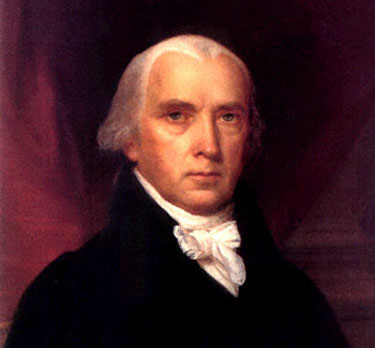
James Madison’s Case for Federal Education “Mandates”

November 19, 2008

madison

If you’re looking for an education secretary, Mr. Obama . . .

(Guest post by Greg Forster)

In a letter to Wall Street Journal on Friday, Pete Hoekstra follows the well trod path of populist conservatives who demonize “federal” interference in education and demand that power be handed back to “local schools.” (To his credit, Hoekstra also mentions school choice.)

Populist right-wingers need to learn that teachers’ unions and their allies laugh all the way to the bank when conservatives demand “local control” and romanticize the “local school.” The unions have a hammerlock on local school politics. The further you go down the chain geographically, the more power they have. Nobody votes in school board elections except school employees and their families and friends. They hold the elections at inconvenient times precisely to produce this result. Thus, local communities typically have little practical control over their own school boards. The school boards consider the staff unions representing teachers and other school employees to be their primary constituents. When the demands of school staff interfere with the needs of students, the school boards favor the staff.

If you want to know why so many of our schools are run as jobs programs and don’t produce a decent education, “local control” is how it’s done.

There are worthy criticisms of NCLB. Interference with local control isn’t one of them.

The “mandates” of NCLB aren’t even mandates. They’re conditions for funding. The federal government gives states tons of (my) money to participate in NCLB. Doesn’t it – don’t I – have a right to ask states to provide transparent data reporting and measurement of outcomes in return? And if the states are getting a bad deal, they can stop taking the money.

Whenever I point this out, the critics respond that states can’t be expected to turn down federal money no matter what terms it’s offered on. Well, if so, then the problem here isn’t with the federal government, is it?

But there’s a larger philosophical issue here. People think that pure, unsullied federalism requires not only that the federal government excercise no coercive power over areas of state authority, but that it exercise no form of influence whatsoever.

This is false, and for my authority I appeal to the original “federalists”: the authors of the Federalist Papers.

Federalist #47 and #48 take up an argument advanced by “the more respectable adversaries to the Constitution” – namely, that the Constitution fails to create a true separation of powers among the legislative, executive, and judicial branches because it allows each brach to influence the others. The president can veto legislation, the Senate gets to vote on cabinet members, etc.

Madison points out that there can be none of those crucial “balances and checks” between the separate branches if they exercise no influence over one another. A proper separation of powers not only permits but requires that each branch have some substantial beachhead of influence within each of the other branches:

Unless these departments be so far connected and blended as to give to each a constitutional control over the others, the degree of separation which the maxim [that powers must be separated] requires as essential to a free government can never in practice be duly maintained . . . . It will not be denied that power is of an encroaching nature, and that it ought to be effectually restrained from passing the limits assigned to it . . . . Will it be sufficient to mark, with precision, the boundaries of these departments in the constitution of the government, and to trust to these parchment barriers against the encroaching spirit of power?

This passage is the indispensible context – the “backstory,” as they say in Hollywood – for understanding the much more famous Federalist #51.

In #47 and #48, Madison shows that “pure” separation of powers is insufficient. In #49 and #50 he considers and rejects Jefferson’s position that government encroachments can be resisted by frequent appeals to the people. In #51, he draws the conclusion: true separation of powers requires not that powers be totally separate but precisely that they must be separated and then mixed or blended:

As all these exterior provisions are found to be inadequate, the defect must be supplied by so contriving the interior structure of the government as that its several constituent parts may, by their mutual relations, be the means of keeping each other in their proper places . . . . The great security against a gradual concentration of the several powers in the same department consists in giving to those who administer each department the necessary constitutional means and personal motives to resist encroachments of the others.

Whereupon he launches into the famous passage about ambition counteracting ambition, etc.

The real argument of Federalist #51 is not that we need a separation of powers – that argument comes in #47 – but that we need a certain kind of separation of powers. Specifically, the kind that allows each branch to have some power over the other branches.

Now, obviously this is all in the context of the separation of legislative, executive, and judicial powers, not the division of powers among local, state, and federal governments. But it seems obvious to me that the same principle applies – it would be dysfunctional for each level of government to have no influence over the others.

Of course, most of the founders did not envision the federal government influencing states and localities by offering them money. But it was always one of the very few great weaknesses of the original Constitution that it failed to clearly deliniate the boundaries of local, state, and federal responsibilities, and to provide institutional mechanisms to shore them up. It seems to me that in the phenomenon of what might be called “conditional federal subsidies,” like NCLB, we have stumbled unwittingly into a not-too-bad mechanism for allowing the federal government to influence states without directly taking over their operations.

As I said, there are legitimate criticisms of NCLB. The 100% proficiency promise is absurd. My own position has always been that the really valuable contribution of NCLB has been the mandate for transparent data reporting and testing.

But to say that it violates federalism to have the federal government attach conditions when it offers subsidies strikes me as not only incorrect, but an open door to unchecked power for “local” constituencies like the unions.


When All Politics is Personal

November 12, 2008

Max Brantley, Arkansas blogger and the editor of the free-weekly Arkansas Times, seems like a fun guy.  While I’ve never met him, I can tell from reading his blog that he enjoys good food and drinks.  He enjoys travel.  He’s devoted to family and friends.  He seems like the kind of guy that you might want to have some beers with as he recounted old stories.

Brantley is also a breath of fresh air in a state that is remarkably averse to open debate of controversial issues.  He’s fearless — a giant-slayer.  He’s willing to take-on powerful interests and actors in a Southern culture that leans heavily toward deference.  These qualities make him quite admirable and at times fun to read.

But Brantley has another, all-too-common, Southern trait that makes him much less than admirable and sometimes awful to read.  For Brantley it is clear that all politics is personal.  He doesn’t seem primarily interested in ideas or principles.  He’s interested in promoting his friends and punishing his enemies — mostly punishing his enemies.  Despite being strikingly and openly leftist in his thinking, Brantley is really not much of an ideologue. He’s a personal networker.

He’ll attack efforts that he might otherwise support if those efforts would help people he’s deemed to be enemies.  See, for example, his recent denunciation of state Rep. Dan Greenberg’s efforts to produce ethics reform in the Arkansas legislature.  If Brantley really cared about the idea of ethics reform, he’d probably back proposals to move things in the right direction.  But personal vendettas matter more to him than principles.

You see, Dan Greenberg is the son of Paul Greenberg, the editorial writer for the Arkansas Democrat-Gazette.  The Dem-Gaz is owned by Walter Hussman, who bought and basically closed the old Gazette newspaper for whom Brantley used to work in 1991.  After being let go by Hussman, Brantley has been reduced to running a free-weekly that occassionally has great investigative reporting but mostly lives off of gossip, show-listings, and naughty personal ads. 

For nearly two decades Brantley has seethed about this injury, lashing out at anyone connected to Hussman — even when connected with several degrees of separation.  So Brantley hectors Dan Greenberg because he’s connected to Paul Greenberg, who’s connected to Hussman.  I’m sure that Brantley and the younger Greenberg truly disagree on many issues.  But my point is that even when they agree, Brantley’s personal rage and relative disinterest in ideas prevent him from embracing that agreement.

I’ve also been a frequent target of Brantley’s bile.   My sin?  I’m connected to the Waltons, although more loosely than Brantley will admit or understands.  And the Waltons are allies with Hussman on school reform in Arkansas.  So when my department hosted a lecture by Democratic U.S. Senator Blanche Lincoln, Brantley posted this:

Coming to Waltonville

We notice that Sen. Blanche Lincoln(D-Waltonsas) is speaking Thursday at Walton University in a program sponsored by the Walton School of Education Reform.It’s a good forum for a senator who carries so much water for Wal-Mart and the Walton heirs on other matters — estate tax abolition, etc.. No Child Left Behind, “teacher quality” and other education topics will be discussed at this week’s event. Jay P. Greene, head Walton shill and professor of teacher derision at Waltonville, surely will be on hand, perhaps with a script for the senator.

Never mind that Sen. Lincoln agrees with Brantley on most issues.  And never mind that much of what Sen. Lincoln had to say in her lecture was consistent with what Brantley normally supports.  You can watch the lecture here to see for yourself if she was reading from a script that I or someone else wrote.  Brantley nevertheless had to find a way to denounce an event that was connected to people who were connected to other people who were connected to his enemies.  This kind of anger management problem is normally treated with medication and therapy, but Brantley finds blogging to be cheaper and easier.

Brantley may hate me (and a long list of other people) but I don’t feel the same about him.  He can be dangerous and spiteful, but Brantley is also entertaining and informative.  I’m OK with agreeing with him on some things and disagreeing on others.  I don’t feel the need to join his personal grudge-match and extend hatred to everyone with whom he is connected.  I only wish Max Brantley would do the same.