I am shocked – shocked! – to discover that political manipulation of education is going on in here!
Your NCLB and RTTT grants for supporting national standards, monsieur.
(Guest post by Greg Forster)
Over on NRO, Heritage’s Lindsey Burke and Jennifer Marshall warn that the Obama administration is finding even more ways to use federal influence to push “voluntary” national standards on the states.
So much for Checker’s apparently serious assertion that the standards “emerged not from the federal government but from a voluntary coming together of (most) states, and the states’ decision whether or not to adopt them will remain voluntary.” Bwa ha ha!
Don’t miss this solid gold story of Chris Christie v. the dishonesty of activists claiming to represent teachers.
Buildup: Teacher in the audience challenges Christie’s statements about teacher pay, saying if his figures were right she’d be making $83,000, and she doesn’t make nearly that much. Christie replies that she does if you count benefits. She fires back that she has a master’s degree and lots of experience and she isn’t adequately paid for these. Christie remarks that if she doesn’t think she’s paid what she’s worth, she’s free to do something else with her life, and moves on to the next questioner.
Kicker: Public records show that the teacher in question makes just under $85,000 base salary. Oops.
Is it me, or has the primary and special-election season that is now winding down down represented a major leap forward in excellence for the quality of campaign communications? I don’t just mean production values, although after the introduction of the “Demonsheep” those did go up dramatically. I mean, in addition, at least in some places there was a puncturing of the ordinary cheap and forumlaic insincerity. This was shocking and refreshing, and I’d like to honor it. So I’m giving out the following three awards.
The John Adams Award
For excellence in the strategic use of ironic self-effacement to embarrass your egomaniacal jackass of an opponent
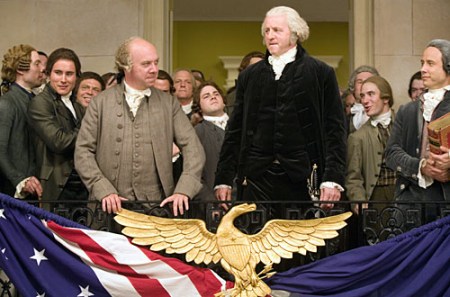
If you took U.S. History 101, you probably know that in 1800 John Adams and Thomas Jefferson allowed their surrogates in the press to circulate truly horrible fictions about one another. At one point, Jefferson’s papers circulated the rumor that Adams had sent one of his functionaries over to England to collect four women, two of whom were to serve as Adams’s mistresses and two for the functionary (as his compensation for making the trip).
Rather than blow a gasket and work himself into high dudgeon, Adams commented, “If it is true, then he has cheated me out of my two and kept them all for himself!”
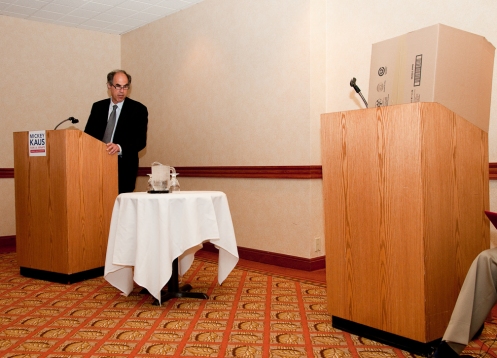
In that spirit, I bestow the John Adams award upon Mickey Kaus, blogger turned candidate for the Democratic Senate nomination in California, for his deftly ironic use of candid self-effacement to repeatedly humiliate his opponent, Barbara Boxer. His public statements have been consistently barbed and effective, but this and this were what moved me to create an award to give him.
“The box was on the defensive for the entire debate.”
The Gen. Anthony McAuliffe Award
For candor above and beyond the call of duty
Before the Battle of the Bulge, Gen. McAuliffe recieved the following communique:
To the U.S.A. Commander of the encircled town of Bastogne
The fortune of war is changing. This time the U.S.A. forces in and near Bastogne have been encircled by strong German armored units. More German armored units have crossed the river Our near Ortheuville, have taken Marche and reached St. Hubert by passing through Hompre-Sibret-Tillet. Libramont is in German hands.
There is only one possibility to save the encircled U.S.A. troops from total annihilation: that is the honorable surrender of the encircled town. In order to think it over a term of two hours will be granted beginning with the presentation of this note.
If this proposal should be rejected one German Artillery Corps and six heavy A. A. Battalions are ready to annihilate the U.S.A. troops in and near Bastogne. The order for firing will be given immediately after this two hours term.
All the serious civilian losses caused by this artillery fire would not correspond with the well-known American humanity.
The German Commander
McAuliffe sent back the following reply:
To the German Commander
NUTS!
The American Commander
In that spirit, I bestow the Gen. Anthony McAuliffe award upon Les Phillip, candidate for the Republican nomination for the U.S. House in Alabama District 5.
Test yourself:
How many of the references did you catch? (Jim Geraghty says that’s William Ayers’ wanted poster they flash near the end.)
The Ronald Reagan Award
For fearlessness in the mocking of buffoonery
Reagan won a close election in 1980 in large part because he wasn’t afraid to display his contempt for Carter’s contemptible behavior. This was captured in our historical memory in that famous debate, when Carter repeated for the umpteenth time his shameless lies about Reagan’s record on Medicare, and Reagan smiled and said, “there you go again.” (Never mind that we’d be living in a much better world now if Reagan really had wanted to slash Medicare; the fact is, he didn’t, and people knew it.)
In that spirit, I bestow the Ronald Reagan award upon Carly Fiorina. The Demonsheep was clever and funny, and it broke a lot of conventions in a way that got everybody paying attention, but it was also deeply amateurish and forced. The follow-up ad, though, was far superior.
Congratulations to the winners. My fervent hope is that I’ll have more awards to give out come November!
The Red Nose Institute mails red clown noses to U.S. troops stationed abroad. It does so, according to its web site, “to put a smile on the faces of our troops overseas.” They continue:
The idea is for folks who care about our military to donate red foam noses. Monetary donations are also accepted and used to purchase even more noses and also to help with mailing costs. The noses are then mailed to U.S. troops deployed anywhere overseas. A letter is enclosed with each package telling that the folks sending them are extremely proud of our military and thankful for what they are doing on our behalf. Servicemen and women are encouraged to share the noses with someone who might need a smile and possibly to share them with the nearby children. There is NO COST to our military or to anyone requesting noses. We all know that relieving stress is of the utmost importance! If sending red noses to troops can help do this, our job has been accomplished!
The Red Nose Institute is also a charitable organization exempt from taxes under section 501 (c) (3) of the tax code. This bothers Rob Reich and his colleagues at Stanford University. Reich, who is an associate professor of political science and not the diminutive former Clinton Administration official, issued a report last year, “Anything Goes: Approval of Nonprofit Status by the IRS,” calling for reform of the process by which the IRS approves organizations as tax exempt.
Their report laments “the distinctive modern American proclivity to confer special tax benefits to wildly diverse and indeed eccentric associations.” The report cites The Red Nose Institute along with several other nonprofit organizations as instances that illustrate the problem. Instead, they would like the IRS to scrutinize applications for nonprofit status more closely and raise fees to discourage applications. They conclude:
The 501(c) code, we believe, stands in need of reconsideration in light of the massive growth of the nonprofit sector. Is this really an effective way to organize charity? Should the mere desire to associate for nearly any purpose be rewarded with tax privileges?
I see the problem completely differently. Why should the IRS be in the position of determining whether certain organizations benefit the public or not? I would contend that the Red Nose Institute is doing much more good for the world than the Ford Foundation has (with its funding of anti-Israel and anti-semitic groups) . In fact a great many nonprofit organizations have promoted ideas that are much more harmful, wasteful, and just plain silly than sending red noses to boost the morale of troops overseas. At least the Red Nose Institute has a plausible theory of action and their intervention doesn’t cost much.
Essentially, Reich and his colleagues are trying to substitute their own taste (through the authority of government officials) for the taste of individual donors. They are just picking organizations that don’t strike their fancy rather than applying any objective or even reasonable test for whether an organization promotes the public good.
Another organization they feature in the report as obviously silly is Curtains Without Borders, which “aims to conserve historic painted theater curtains.” Why does this serve the public good any less than museums that conserve painted canvasses let alone ones that display jars of urine containing crucifixes?
The point is that there is a particular and distorted vision of “the good” that some people would like to impose on all of us through the coercive power of the government. I do not want to use the tax code to favor certain organizations as being for the “public good.” Instead, I would propose treating all organizations the same in the tax code.
And to be clear, allowing people to keep their own money is not a “tax privilege.” Taking people’s money through taxation is a necessary evil that we should try to keep as minimal and evenly dispersed as possible. Taxing all organizations at the same lower rate is better than taxing some at a higher rate so that others pay no taxes.
If we can’t go all the way and end tax exempt status, I’d favor keeping the door as wide open as possible to organizations that claim to be public charities. I’d rather err on the side of having some silly low-revenue organizations over having the IRS intimidate people into sharing a particular vision of the good.
In today’s Journal, a candidate for Pennsylvania governor offers a hard-hitting argument for school choice. And this is no “lifeboats for the worst off” argument for rinky-dink vouchers. He denounces the money myth and argues that every institution needs competition to thrive – the argument for universal choice.
Oh, did I mention he’s Democrat Anthony Williams?
The unions are still strong, but every day they’re a little bit less strong. And this is how it happens – the social justice folks are waking up to realize what the unions are all about, and they’re starting to contest the unions’ hammerlock on the Democratic party. What was it Danny DeVito said in Other People’s Money? “Obsolescence . . . down the tubes, slow but sure.”
The Illinois House voted down vouchers yesterday after a furious lobbying effort by teacher unions. The Chicago Tribunerelates dramatic details of the debate:
“Think back to why you ran for office,” said sponsoring Rep. Kevin Joyce, D-Chicago. “Was it for a pension? I doubt it. Was it to protect the leadership of a union? I doubt that. Actually in all cases, I believe each and every one of us here got involved to try and make a difference in the lives of our fellow man.”
Joyce could muster only 48 of the 60 votes needed to pass a bill that would have allowed students to get vouchers worth about $3,700 to switch to private or parochial schools beginning in fall 2011.
Joyce said the bill would have passed if it had not faced the union opposition. The bill got support from 26 Republicans and 22 Democrats, fewer votes than Joyce had expected from his fellow Democrats.
Fighting back tears during the lengthy debate, Rep. Suzanne Bassi, R-Palatine, called on fellow lawmakers to “search your souls” to support the measure because “we have failed these kids in the inner-city schools.”
“I’m pleading with you,” said Rep. Ken Dunkin, D-Chicago, who represents an area with four public schools where students would have been eligible for vouchers. “I’m begging you. Help me help kids in my district.”
Illinois choice advocates should keep their heads up: your day will come. A quick look at Illinois NAEP scores reveals abysmal performance for African Americans, Hispanics, children with disabilities, free and reduced lunch eligible kids and ELL students. Illinois kids need a great deal of K-12 reform with expanded parental choice contributing to an overall improvement strategy.
Sun Tzu wrote that a victorious general wins and then seeks battle, while a defeated army seeks battle and then seeks victory. Senator Meeks has seized the moral high ground. Martin Luther King Jr. didn’t win every battle, but he ultimately won his war because he held this same sort of moral high ground. The teacher union thugs in Illinois want to keep disadvantaged children in failing schools because they put the state funding in their pockets. Illinois reform advocates need to not only give these children options to go elsewhere, but they need to force public school improvement in every possible way.
If Senator Meeks and his allies will keep a relentless focus on justice and literacy, there will be no question of whether they will win, only one of when their victory will finally occur.
The City of Fayetteville, like many local governments, is facing a budget squeeze as revenues have declined without a commensurate reduction in expenditures. In those instances, responsible public officials should explain to voters that either certain services will need to be cut or taxes raised.
We don’t have that kind of public official in Fayetteville. Instead, our local officials seem to fancy themselves as slick politicians in the minor leagues, honing their skills at the art of public manipulation so that someday they may get called up to the big leagues of deception and lording over other people.
To offset the shortfall in the city budget, Mayor Lionel Jordan and his backers have proposed grabbing money from the hotel, motel, and restaurant (HMR) tax that is currently dedicated for park development so that they can use it to cover park maintenance and then redirect the general operating funds currently devoted to park maintenance to other parts of the city budget.
Jordan and friends are saying they want voters to approve changes in the HMR tax so that the revenue can be used for things other than the development of parks, giving the city more “flexibility.” This is just doublespeak. The flexibility they want is the flexibility to reduce park development spending so that they can keep other city operations unchanged.
Personally, I prefer the development of more parks and the cutting of other city services. Our parks and public bike trails are some of the best things about Fayetteville. But I could be persuaded that we needed to defer additional park development to avoid cuts in other services if they presented the trade-offs directly and honestly. Make the case that additional park development is less important than other city services that would be continued.
But no. Our local public officials refuse to treat us like grown-ups and have to use deception rather than presenting us with difficult choices straightforwardly. This is the same kind of doublespeak nonsense we saw with the business license proposal. That wasn’t really about “helping promote local business.” That was about facilitating the taxation and regulation of businesses while helping the Chamber of Commerce effectively compel membership.
And don’t buy the fall-back argument on the HMR tax change that says we are in danger of developing so many parks that the cost of maintaining all of them would be prohibitive. If this were true, advocates for changing the HMR tax would need to present facts about rising park maintenance costs. They haven’t. Park maintenance costs have not been growing at a significantly faster rate than the city budget. In addition, park maintenance only costs $1.9 million out of a total city budget that exceeds $120 million. The HMR tax dedicated to park development generates about $2.3 million per year.
And also don’t buy the argument that we are just correcting a “mistake” from when the HMR tax was initially adopted. It may well be that city officials meant to include maintenance and development as potential uses of the tax, but that’s not what was on the ballot and what voters ultimately approved. We can’t know whether voters would have approved the measure if it had permitted the funds to be used for park maintenance as well as development. And voters are under no compulsion now to allow the money to be redirected for other purposes. If city officials want to convince voters to approve the measure, they need to make the case that those new bike trails we are developing are less important than other uses for the same money.
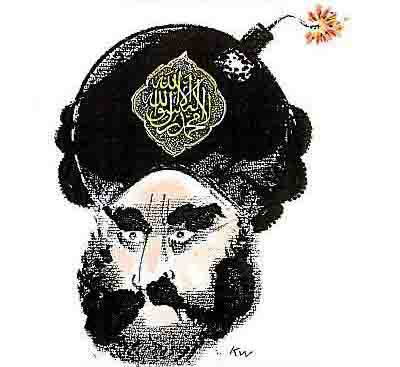
Today, Mark Steyn posts a letter he recieved from cowardly lioness Molly Norris, along with his absolutely devastating response. Not to be missed if you’ve been following the bru-ha-ha over Everybody Draw Mohammed Day.
Steyn does leave one thing out of his response, though. Asked to explain why he and others are so contemptous toward Norris, he offers a number of unassailable demonstrations that it’s because her behavior is contemptible. But Norris’s betrayal of her own professed principles was not only a missed opportunity, as Steyn stresses. It was a unique kind of missed opportunity.
For one person or one partnership or one organization – like, say, Trey Parker and Matt Stone, or Kurt Westergaard and Jyllands-Posten, or Ezra Levant and his team at the Western Standard – deliberately says something calculated to push back against a violent threat to freedom of speech, that is nothing short of heroic. They take all the risk, and all the rest of us reap the reward of their bravery as parasitic free riders.
But you can’t build a civilization on heroic virtue. Civilization has to be livable for the ordinary person. If a civilization is going to be characterized by freedom, it has to be built in such a way that the ordinary person can enjoy freedom without having to demonstrate heroic virtue.
Don’t get me wrong – heroic virtue such as has been demonstrated by Parker, Stone, Westergaard, and Levant – and Mark Steyn – will always be necessary. But that’s just another way of saying heroes will always be necessary. And you can’t have a whole civilization populated by nothing but heroes. In other words, heroes are a necessary but not sufficient condition for a free civilization. By all means, let’s affirm that the ordinary person can’t be free unless heroes make his freedom possible – but he also can’t be free if freedom for heroes is the only kind of freedom we have.
So what else, besides heroes, is necessary for the freedom of the ordinary person? A mutual defense pact.
We need a culture in which it is expected that when one person’s freedom is threatened, others will rally to his defense. If it’s everybody for himself, the enemies of freedom can pick us off one by one. Or if nobody but the government is responsible to defend those whose freedom is threatened – well, how well does anything work out if it’s a government monopoly? But if we come to each others’ defense, then defending freedom doesn’t require heroic virtue. It’s hard to be the first person to stand up for freedom – that’s why we need heroes, or nobody can be free. But it’s not so hard to be the tenth, or hundredth, person to stand up for freedom – that’s why those who aren’t heroes can be free, too.
It’s not necessary for everybody in the whole world to come to everybody else’s defense. But it is necessary that those who are morally and culturally proximate to the threatened person come to his defense. By “morally proximate” I mean those who have a special duty toward the threatened, whether by natural relationship (such as being a friend or family member) or for some other reason (such as by professional responsibility – doctors have more responsibility to care for the sick than others, because they are more able to do so and have voluntarily accepted the professional responsibility). By “culturally proximate” I mean those who best understand the social situation of the threatned person because they themselves inhabit a similar social situation.
And that’s what makes Norris’s abdication especially galling. The idea of Everybody Draw Mohammed Day was a fantastic way for all of us who are – as professional producers of social commentary – morally and culturally proximate to those whose freedom is threatened here to exercise a mutual defense pact. Steyn himself has articualted on numerous occasions the imperative for professional producers of news and culture to rally to fight off the threat to free speech from political Islamism. Well, this seemed to be, for a few brief shining moments, a way for some of us to do that.
But not now. Nobody else can make EDMD happen the way Norris could have. Yet it appears that being hip – i.e. not being even remotely associated with anything her elite-lefty social circle finds declasse – was more important to her than striking what could have been one of the most powerful blows for freedom in our generation.
When Obamacare passed, I lost hope. All the arguments that were being offered at the time for the feasability of repeal seemed to run from flimsy to transparently bogus. And Mark Steyn kept raising the question – has a victory like this ever been rolled back?
But since then some better arguments have been made that a rollback, culminating in repeal, could happen. The best of these is Ramesh Ponnuru’s article in the current NRODT, now generously made available to the world on NRO. Long story short, Obamacare has a long lead time before the corrupting influence of its subsidies on the general populace can be expected to take hold (the subsidies don’t even start flowing for years) and there’s a window of opportunity that can be seized – not for repeal immediately, but to set the stage for repeal. Plus, when the rest of the world’s developed countries adopted their big welfare states, most people saw themselves as the winners and only “the rich” as the losers. Today, most people seem to see themselves as the losers.
The clincher for me, though, was Randy Barnett’s article in yesterday’s Journal on the legal merits of the constitutional lawsuit. My argument last month was that if Social Security (mandatory retirement savings) is legal, then Obamacare (mandatory health insurance) must be. I was ignorant of two key factors, one that I didn’t know and one that I forgot. The one I didn’t know is that the legislative language in Obamacare actually makes the Social Security comparison legally problematic – they didn’t realize until too late that they would need to appeal to the tax authority to protect themselves (funny how hard it is to get everything exactly right in a 50,000 page bill that you have to ram through in a hurry to avoid scrutiny).
And the thing I forgot is that court cases are not decided on the merits. There’s no excuse for a voucher supporter to forget that!
Here’s the formula: Class-action lawyers find companies that sell products or services that could be harmful, especially if over-used or mis-used. Then the lawyers establish that the consumer is not at fault for over-use or mis-ise by claiming that the product is addictive. Since the consumer ceases to be in control of his or her actions if there is an addiction, the company and not the consumer is responsible for the harmful behavior. Then the lawyers collect large sums of money from the companies for whatever harms are alleged. Ka-Ching!
The next target for this formula — indoor tanning companies. According to this LA Times piece, researchers at Memorial Sloan-Kettering Cancer Center in New York surveyed college students who use tanning salons and found that a large percentage of them met several of the criteria for suffering from an addiction. That’s right, tanning is addictive. You can be sure that the class-action lawyers are not far behind.
I actually think that filing class-action lawsuits is an addictive behavior. Maybe we should file a class-action lawsuit to curtail them. Here are the criteria for an addiction and my analysis of how filing class-action lawsuits meets those criteria:
(1) Tolerance, as defined by either of the following: (a) A need for markedly increased amounts of the substance to achieve intoxication or desired effect. (b) Markedly diminished effect with continued use of the same amount of the substance.
Check! Class-action lawyers seem to need larger and larger settlements to be content.
(2) Withdrawal, as manifested by either of the following: (a) The characteristic withdrawal syndrome for the substance (refer to Criteria A or B of the criteria sets for Withdrawal from specific substances). (b) The same (or a closely related) substance is taken to relieve or avoid withdrawal symptoms.
Check! If class-action lawyers don’t get their money they get very cranky. An alternative substance, like diamonds, seems to alleviate these symptoms.
(3) The substance is often taken in larger amounts or over a longer period than was intended.
Check! See answer to (1).
(4) There is a persistent desire or unsuccessful efforts to cut down or control substance use.
Check! Politicians keep talking about the need to reduce class-action lawsuits to little avail.
(5) A great deal of time is spent in activities necessary to obtain the substance (such as visiting multiple doctors or driving long distances), use the substance (such as chain smoking) or recover from its effects.
Check! Filing these class-action lawsuits consumes an enormous amount of time, as does conducting junk-science research to support them.
(6) Important social, occupational, or recreational activities are given up or reduced because of substance use.
Check! The class action lawyers work incredible hours on those suits, depriving them of time with family and having fun.
(7) The substance use is continued despite knowledge of having a persistent or recurrent physical or psychological problem that is likely to have been caused or exacerbated by the substance.
Check! Frivolous class-action lawsuits continue despite societal awareness that this is nonsense and harmful to commerce.


 Posted by Greg Forster





 Jay P. Greene's Blog