Al Copeland Humanitarian Nominee: Herbert Dow

October 8, 2010

(Guest Post by Matthew Ladner)

So I remembered reading the Mackinac Center’s book Empire Builders. The book featured stories of entrepreneurs that made Michigan great.  Years later when I watched The Aviator it reminded me of one of the stories from Empire Builders.

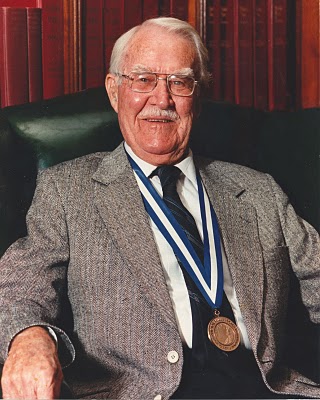
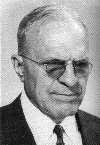
Herbert Dow is certainly worthy of a posthumous Al Copeland award. This 1997 piece from the Mackinac Center explains why:

Herbert Dow, the Monopoly Breaker

By Dr. Burton W. Folsom | May 1, 1997

Today, the Dow Chemical Company is an industrial giant, famous for its plastics, Styrofoam, and Saran Wrap. But when the company first went into business 100 years ago, in May 1897, almost no one took it seriously. The occasion of the company’s centennial offers a timely opportunity to retell an important economics lesson.

Herbert Dow, the founder, had already started two other chemical companies: one went broke, and the other ousted him from control. “Crazy Dow” was what the folks in Midland, Michigan, called him, as he pursued his entrepreneurial vision of an American chemical industry. Like David fighting Goliath, he actually believed he could throw stones at the large German chemical monopolies and topple them from world dominance.

In the story of Herbert Dow, not only do we see the spirit of freedom that helped America become a world power, we also learn how a small company can overcome the “predatory price cutting” of a large cartel.

Dow invented a process to separate bromine from the sea of brine underneath much of Michigan. He then sold bromine to other firms, which made it into sedatives and photographic supplies. With gusto, Dow sold it inside the U. S., but not outside—at least not at first.

The Germans had been the dominant supplier of bromine since it first was mass-marketed in the mid-1800s. No American dared compete overseas with the powerful German cartel, Die Deutsche Bromkonvention, which fixed the world price for bromine at a lucrative 49 cents a pound. Customers either paid the 49 cents or they went without. Dow and other Americans sold bromine inside the U. S. for 36 cents. The Bromkonvention made it clear that if the Americans tried to sell elsewhere, the Germans would flood the American market with cheap bromine and drive them out of business.

By 1904, Dow was ready to break the unwritten rules: He was so strapped for cash that he decided to sell in Europe. Dow easily beat the cartel’s 49 cent price and courageously sold America’s first bromine in England. After a few months of this, Dow encountered an angry visitor in his office from Germany—Hermann Jacobsohn of the powerful Bromkonvention. Jacobsohn announced he had “positive evidence that [Dow] had exported” bromine. “What of it?” Dow replied. “Don’t you know that you can’t sell abroad?” Jacobsohn asked. “I know nothing of the kind,” Dow retorted. Jacobsohn was indignant and left in a huff.

Above all, Dow was stubborn and hated being bluffed by a bully. When Jacobsohn stormed out of his office, Dow continued to sell bromine to countries from England to Japan. Before long, the Bromkonvention went on a rampage: It poured bromine into America at 15 cents a pound, well below its fixed price of 49 cents, and also below Dow’s 36 cent price.

The imaginative Dow worked out a daring strategy. He had his agent in New York discreetly buy hundreds of thousands of pounds of German bromine at the cartel’s 15 cent price. Then Dow repackaged the German product and sold it in Europe—including Germany!—at 27 cents a pound. “When this 15-cent price was made over here,” Dow said, “instead of meeting it, we pulled out of the American market altogether and used all our production to supply the foreign demand. This, as we afterward learned, was not what they anticipated we would do.”

Indeed, the Germans were befuddled. They expected to run Dow out of business; and this they thought they were doing. But why was U. S. demand for bromine so high? And where was this flow of cheap bromine into Europe coming from? Was one of the Bromkonvention members cheating and selling bromine in Europe below the fixed price? Powerful tensions surfaced from within the Bromkonvention. According to Dow, “the German producers got into trouble among themselves as to who was to supply the goods for the American market . . . .”

The confused Germans kept cutting U. S. prices—first to 12 cents and then to 10.5 cents a pound. Dow meanwhile kept buying the stuff and reselling it in Europe for 27 cents. Even when the Bromkonvention finally caught on to what Dow was doing, it wasn’t sure how to respond. As Dow said, “We are absolute dictators of the situation.” He also wrote, “One result of this fight has been to give us a standing all over the world . . . . We are in a much stronger position than we ever were . . . .”

When Dow broke the German monopoly, all users of bromine around the world could celebrate. They now had lower prices and more companies to buy from. This victory propelled the remarkable Dow to challenge the German dye trust, and, after that, the German magnesium trust. His successes in these industries again lowered prices and helped liberate the American chemical industry from its European stranglehold.

Those who value the spirit of freedom and the rise of America as a world power can thank Herbert Dow for what he started in Midland, Michigan, 100 years ago.

BOOOOOOOM!!!!!!!!!!!!!!!!!


Donovan and Mills for Al Copeland Humanitarians of the Year

October 6, 2010

(Guest post by Greg Forster)

It’s taken me a week to think of it, but I have come up with what I believe is the ultimate nominee for the Al Copeland Humanitarian of the Year award this year. Or rather, two nominees.

Yes, the most interesting man in the world is . . . very interesting! I love the ads, but does he really represent the spirit of “The Al”? He certainly has done a lot of things – but what has he actually accomplished?

I propose that the true spirit of “The Al” is what you find inside . . . diapers.

Marion Donovan and Victor Mills’ diapers, to be exact.

Just spend a moment thinking about what life was like during the endless centuries when a diaper was nothing but a piece of cloth – one you had to wash and reuse, because manufactured goods couldn’t yet be made cheap enough for disposability. Contemplate, for a moment (but no longer than that!) how many diapers were changed from the first human beings technologically sophisticated enough to make clothing down through the middle of the twentieth century – and what was involved in changing each and every one of those diapers.

When Martin Luther wanted to illustrate the point that joyfully worshipping God was not a special activity that you did by going to church or performing other “religious works,” but something that had to infuse every single solitary human activity, even the most unpleasant, he was shrewd to choose diaper changing as an example:

Now observe that when … our natural reason … takes a look at married life, she turns up her nose and says, “Alas, must I rock the baby, wash its diapers, make its bed, smell its stench, stay up nights with it, take care of it when it cries, heal its rashes and sores, and on top of that care for my wife, provide for her, labour at my trade, take care of this and take care of that, do this and do that, endure this and endure that, and whatever else of bitterness and drudgery married life involves? What, should I make such a prisoner of myself? O you poor, wretched fellow, have you taken a wife? Fie, fie upon such wretchedness and bitterness! It is better to remain free and lead a peaceful. carefree life; I will become a priest or a nun and compel my children to do likewise.”

He went on to focus on diaper-changing as the representative activity encompassing all these unpleasant duties. Luther knew that by sticking up for the honor of the married estate, he was sticking up for getting poop on your hands. Daily.

But having a family doesn’t mean daily poop-scrubbing anymore.

Born in 1917, Donovan spent much of her childhood hanging around the Ft. Wayne factory run by her father and uncle. They were inventors in their own right – having invented, among other things, an industrial lathe for making automotive gears and gun barrels – and she absorbed their entrepreneurial spirit.

Her first invention was a waterproof diaper cover, made out of a shower curtain, to contain the small leaks that were endemic to diapers in the pre-Donovan era. Rubber baby pants were already on the market, but they weren’t widely used because they caused diaper rash and pinched the skin. The plastic “changing pads” we use today are a distant descendant of Donovan’s innovation.

For good measure, she put snaps on her diaper cover instead of using safety pins, which at the time were the universal fastening technology in the diaper sector. Today we use velcro, but the original quantum leap away from the use of dangerous and labor-intensive pins was Donovan’s.

None of the big manufacturers would even consider marketing her invention, so she went into business for herself. Her product was an overnight success, debuting at Saks Fifth Avenue in 1949. After two years she sold it to one of those super-smart manufacturing companies that had been too dumb to give her the time of day back when it would have counted.

Like any good entrepreneur, she didn’t rest on her laurels but plowed her success into the next innovaiton – this time, disposable diapers. The challenge was significant; she needed to make the interior out of paper (so it would be cheap enough to manufacture in large numbers) but make it durable and absorbant.

She produced what she thought was a workable solution, but once again she couldn’t get the manufacturers interested. They were already working on the same idea – and Victor Mills, a chemical engineer at Proctor & Gamble, had a better solution than hers. (Those are the breaks! “The Al” celebrates the tough life of entrepreneurial struggle.)

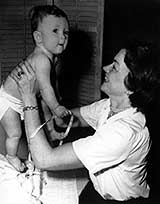
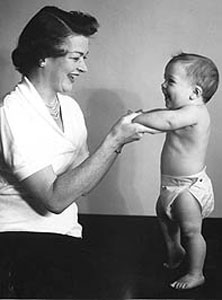
 In 1956, P&G had acquired a new paper pulp plant, and it asked Mills and his team what they could do with it. Lots of companies were working on disposable diapers, but nobody had solved the problem yet. Mills, a grandfather at the time, had a pretty strongly vested interest in coming up with a solution. And the new plant yeilded just enough durability and absorbancy to solve the problem. Using his grandchild to test the prototypes, Mills developed the disposable diaper that ultimately became Pampers in 1961.

Well earned

So if you have kids, thank Donovan and Mills for their contribution to your well-being – and vote for them for Al Copeland Humanitarians of the Year.

HT Thomas Frey, Women Inventers and Chemical Engineering World for images, Famous Women Inventors and Jon Marmor for info


Nominees for the 2010 Al Copeland Humanitarian Award

September 21, 2010

It’s time again to consider nominees for the Al Copeland Humanitarian Award.  The award is meant to honor a person who has made a significant contribution to improving the human condition.

The criteria of the Al Copeland Humanitarian Award can be summarized by quoting our original blog post in which we sang the praises of Al Copeland and all that he did for humanity:

Al Copeland may not have done the most to benefit humanity, but he certainly did more than many people who receive such awards.  Chicago gave Bill Ayers their Citizen of the Year award in 1997.  And the Nobel Peace Prize has too often gone to a motley crew including unrepentant terrorist, Yassir Arafat, and fictional autobiography writer, Rigoberta Menchu.   Local humanitarian awards tend to go to hack politicians or community activists.  From all these award recipients you might think that a humanitarian was someone who stopped throwing bombs… or who you hoped would picket, tax, regulate, or imprison someone else.

Al Copeland never threatened to bomb, picket, tax, regulate, or imprison anyone.  By that standard alone he would be much more of a humanitarian.  But Al Copeland did even more — he gave us spicy chicken.”

Last year’s winner was Debrilla M. Ratchford, who significantly improved the human condition by inventing the rollerbag, beating out Steve Henson, who gave us ranch dressing,  Fasi Zaka, who ridiculed the Taliban,  Ralp Teetor, who invented cruise control, and Mary Quant, who popularized the miniskirt.

This year I would like to nominate The Most Interesting Man in the World.

The Most Interesting Man has improved the human condition by modeling “the good life.”  In an age that lionizes anti-heroes, slackers, and losers, it is nice to be reminded of what masculine virtue can look like (even if Harvey Mansfield would find that redundant).

Yes, The Most Interesting Man is fictional, but the award is for a “person,” which I believe could include a fictional person.  In the past we have focused on entrepreneurs as nominees for the Al Copeland Humanitarian Award, with the purpose of emphasizing how inventors and business people can improve the human condition much more than the politicians and activists who more typically receive such awards.

But I think we should expand our set to include the idea of a person.  The creation of that idea — whoever developed the ad campaign — could be at least as important for improving the human condition as the creation of a business or product.

The floor is now open for other nominations.


Adios to An American Legend

January 18, 2010
 
Another giant has fallen.  Glen Bell, the founder of Taco Bell, passed away yesterday at the age of 86
 
After serving in World War II, including fighting in the battles of Guadalcanal and Guam, Glen Bell returned to southern California to operate a series of hot dog stands.  He then graduated to taco stands, eventually launching Taco Bell in 1962 and then selling the franchised chain to Pepsico in 1978 from which it was ultimately spun out as part of Yum Brands.
 
Bell’s great innovation was the development of the hard-shelled pre-fried tortilla shell.  By cooking the shell in advance in its curved shape, stuffing the taco with ingredients could be mass-produced. 
 
Like Al Copeland, Glen Bell was a great humanitarian.  He’s not a great humanitarian because he served in World War II, or that he remained married for 54 years, or that he created Bell Gardens as a model farm for teaching “the importance of agriculture and how to preserve our natural resource.”  No, Glen Bell was a great humanitarian because he developed a company that delivers a tasty and very inexpensive food that millions upon millions of people have enjoyed.  As I’ve said before, humanitarians are people who actually do things to improve the human condition, such as offering tasty tacos, rather than the blowhard politician, activist, or former terrorist who more typically receives such honors.
 
If you don’t believe me that Taco Bell offers something that improves the human condition check out this blog post from last year by a Taco Bell enthusiast commenting on Glen Bell’s “recipes” for success:
 
#36) Control your growth or it will control you.

If there were a Taco Bell everywhere Taco Bell consumers wanted a Taco Bell, there would be Taco Bells everywhere. All retail space would be occupied by Taco Bell because all matter would be made up of Taco Bell, and the only thought would be Taco Bell because the entire universe, all of existence, would only be Taco Bell. So yeah, for the sake of life on Earth, it’s probably best that Taco Bell’s growth be controlled. Not for the sake of me getting some goddamned Taco Bell in Brooklyn, though.


Debrilla M. Ratchford — Winner of the Al Copeland Humanitarian Award

October 30, 2009

We had several excellent nominees this year for the Al Copeland Humanitarian Award.  Each one of them has made a significant contribution to improving the human condition.  Steve Henson gave us ranch dressing,  Fasi Zaka ridiculed the Taliban,  Ralp Teetor invented cruise control, and Mary Quant popularized the miniskirt.  But this year’s winner is Debrilla M. Ratchford, the inventor of the rollerbag.

Ms. Ratchford was a flight attendant who realized that if you attached wheels and a handle to a suitcase, it would be much easier to transport baggage through airports.  She obtained a patent in 1978 for this invention, but it took almost a decade before the rollerbag became standard airport equipment.

Prior to the rollerbag people had to carry their suitcases or pay attendants with carts to get their luggage from the car to the check-in counter.  Dragging heavy bags to and from the car and around airports was a pain.  And having to wait for (or lose) checked bags was as much of a pain.  The rollerbag allows us to zip through airports and avoid checking bags.

This invention didn’t just ease our aching backs and save us time, it facilitates commerce.  Making it easier to travel, all things equal, means that there will be more travel.  More travel means more business transactions, which adds to our wealth.  Debrilla M. Ratchford didn’t just invent a handy device and make some money for herself.  She also benefited others by reducing the hassle of carrying around luggage and contributing to economic growth.  That makes someone a great humanitarian.

A central purpose of the Al Copeland Humanitarian Award is to highlight the fact that a humanitarian can be someone who benefits him or herself while also benefiting others.  There is no necessary tension between self-gain and improving the human condition.  On the contrary, when people are monetarily rewarded for their efforts, they are more likely to do things that benefit humanity.  The entrepreneur and inventor isn’t a necessary evil, he or she has a morally positive role in society.

This is what Al Copeland did, which is why this award is named in his honor.  As I wrote:

Al Copeland  may not have done the most to benefit humanity, but he certainly did more than many people who receive such awards.  Chicago gave Bill Ayers their Citizen of the Year award in 1997.  And the Nobel Peace Prize has too often gone to a motley crew including unrepentant terrorist, Yassir Arafat, and fictional autobiography writer, Rigoberta Menchu.   Local humanitarian awards tend to go to hack politicians or community activists.  From all these award recipients you might think that a humanitarian was someone who stopped throwing bombs… or who you hoped would picket, tax, regulate, or imprison someone else.

Al Copeland never threatened to bomb, picket, tax, regulate, or imprison anyone.  By that standard alone he would be much more of a humanitarian.  But Al Copeland did even more — he gave us spicy chicken.”

I decided against Steve Henson because I didn’t want to give the impression that only gastronomic innovation improves the human condition (although cool ranch Dorritos are pretty awesome).  I decided against Fasi Zaka because he has not yet achieved the improvement in the human condition he is seeking — making the Muslim extremists seem uncool in the Muslim world.  We wouldn’t want to give an award just for the hope of future accomplishment.  I decided against Ralph Teetor because I personally almost never use cruise control, so the improvement in the human condition seems less impressive to me.  And while Mary Quant was a close second, I decided against selecting her because, like my concerns with making this award too gastronomic, I didn’t want to suggest that improving the human condition was primarily sensual (although Quant also added to freedom — particularly the freedom to run for a bus more easily).

Congratulations to Debrilla M. Ratchford and Happy Halloween!


Submit Your Nominations by Halloween!

October 22, 2009

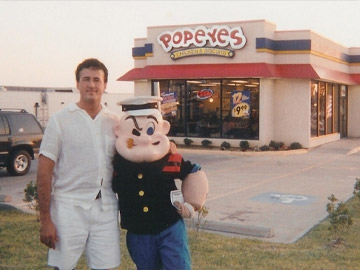
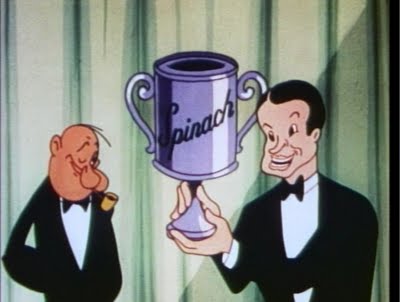
Al Copeland with Popeye

(Guest post by Greg Forster)

For those of you who have been following the announcements over the past week of this year’s nominees for the Al Copeland Humanitarian of the Year Award – we want to hear from you!

Whom would you nominate to recieve “the Al” – what person has made the largest net contribution to the happiness of humanity in a field of endeavor not traditionally recognized by the people who give out awards as contributing to the happiness of humanity?

Just leave a comment on any of the Al Copeland nomination posts with your nomination. If your suggestions strike our fancy we may compose a new post featuring your nomination. And make sure you tell us why you think that person is worthy of “the Al.”

Oh, and let us know which of this year’s nominees you think should win! Our panel of prestigious judges (well, OK, Jay) is not bound to respect the majority vote, any more than the Nobel committee is bound to respect basic common sense. But unlike the Nobel committee, our judges are at least interested in hearing what you think!

Get your nominations in by WEDNESDAY, OCTOBER 28. Why that deadline? Because in honor of the Halloween holiday, we plan to announce the winner of “the Al” on Friday, October 30.

popeye-costume-01

Halloween captures the spirit (so to speak) of the Al Copeland Humanitarian of the Year award almost perfectly. It’s a ton of fun and it’s harmless, and it therefore makes a large net positive contribution to the happiness of humanity. Yet the snobs and the do-gooders – whom Michael Miller of the Acton Institute once remarked should be called “mean-wellers” because on balance they rarely do more good than harm – don’t value that as a contribution to humanity.

Germanetti___Popeye's_20th_Anniversary

So reserve your seat at the head table, get your tux out of mothballs, and get ready to join us for the big awards banquet next Friday.

And until then, don’t miss your chance to make your voice heard!


Mary Quant — Nominee for the Al Copeland Humanitarian of the Year Award

October 19, 2009

There is a common theme in who has been selected to be nominated for the Al Copeland Humanitarian of the Year Award.  For the most part, the nominees have, like Al Copeland, done something to improve the human condition by improving our material pleasure.  Steven Henson gave us delicious ranch dressing.  Debrilla M. Ratchford saved our aching backs by developing the roller bag.  Ralph Teetor gave us the smooth ride of cruise control.  Only Fasi Zaka distinguishes himself from the other nominees in that he was nominated primarily for his contribution to liberty by ridiculing tyrants.

Our next nominee, Mary Quant,  has improved the human condition both by adding to our material pleasure and by promoting liberty.  Quant is credited with the invention of the miniskirt.  She also popularized hotpants and patterned leggings

The contribution of these inventions to material pleasure requires no explanation.  But unlike Henson, Ratchford, and Teetor who primarily sought to improve material pleasure, Quant was also seeking to expand liberty.  Women’s clothing has often been designed to confine women — to limit their liberty by limiting their ability to function in the world. 

Quant wanted to do more than decorate women, she also wanted to liberate women to be able to participate fully in the world.  As the Wikipedia entry puts it, Quant saw the miniskirt as “practical and liberating, allowing women the ability to run for a bus.”

And if you don’t think women’s clothing can be an assault on liberty, how about the requirement in many Islamic societies that women wear burkas?  Imagine running for the bus in this.

(ht Brian)

(edited for clarity)


William Higinbotham – NOT Nominated for Al Copeland Humanitarian

October 19, 2009

William Higginbotham

(Guest post by Greg Forster)

In our ongoing process of gathering nominees for the Al Copeland Humanitarian of the Year award, last week Jay nominated Fasi Zaka on grounds that ridicule of dictators (actual or aspiring) is an important part of mankind’s struggle for freedom.

Well, another important part of the struggle is serious condemnation. We must indeed laugh at dictators, because you can’t effectively undermine their support without including that element. But we must also sometimes sober up and be serious about the threat they pose.

For that reason, I am announcing that William Higinbotham, inventor of the videogame, will not be nominated for Al Copeland Humanitarian of the Year.

First, let’s dive head-first into the deeply divisive historical controversy over the invention of the videogame. (And you thought we were brave to take on the issues surrounding Christopher Columbus!)

CRTamdev-preview

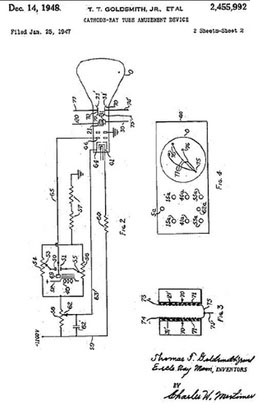
The first known electronic device created for gameplay was the Cathode Ray Tube Amusement Device (US Patent 2,455,992 granted February 1948) created by Thomas T. Goldsmith Jr. and Estle Ray Mann. The user twists a knob to guide a moving dot toward a target. But as it uses a non-representational display (rather than the graphical represntations implied by the term “video”) and is more a novelty skill test along the lines of a carnival “game” than a traditional “game” per se, it does not quite fit the meaning of the term “videogame.”

In March 1950 Claude Shannon published a program for a chess-playing game – but again without graphical representation.

NIMROD-players-prev

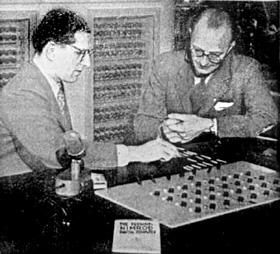
Next we get the NIM (aka “Nimrod”) computer, created by Ferranti International and presented at the Festival of Britain in 1951. It used a series of lights and buttons to play an ancient Chinese numerical game in which players manipulate “heaps” containing different numbers of objects; the player who takes the last object out of the last heap is the loser. Once again, without graphical representations we don’t yet have the “videogame.”

OXO_emulated_prev

Alexander Douglas’s tic-tac-toe program in 1952, designed as part of a Ph.D. thesis on questions of user interface design, almost gets us there. But while the display of Xes and Os on a board is a step toward graphical representation, it’s not strictly there yet – the Xes aren’t crude representations of some kind of X-shaped object, but symbols – not essentially different from the symbols chess players use to express their moves in letters and numbers. I’ll grant that the visual positioning of the symbols is an important step. But it’s not really a “video” game until you have graphical representation.

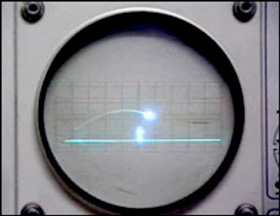
Enter, stage left, the genius of William Higinbotham. In 1958, he worked at the Brookhaven National Laboratories and often had to entertain guests waiting to take tours of the labs. To keep them occupied, he designed a tennis game (christened “Tennis for Two”) on one of the lab’s oscilloscopes.

Oscillosopes are all computer programs now, but my father used to have one of the old stand-alone units with the tiny little screen that showed waves going by. When I was a little kid he let me play with it – you could change the shape of the waves by turning the dials. I was endlessly fascinated by this. Here’s what a standard oscilloscope used to look like:

oscilloscope

And here’s what William Higinbotham got it to do:

tennis_for_two-prev

You turned a knob to change the angle of your shot and pressed a button to hit the ball – and entertainment was revolutionized forever.

tennispaddle

The modern videogame evolved into its final form with breathtaking rapidity – by 1961, MIT’s Stephen Russell led a team that created a game called “Spacewar!” The Magnavox Odessey, the first home video game system, was a functioning prototype by 1967 (dubbed “The Brown Box”) and on sale in stores in 1972. Everything after that is just the same thing better and faster.

So why would this achievement not be worthy of the Al Copeland Humanitarian of the Year award?

Because we have standards, that’s why – and William Higinbotham doesn’t meet them.

Take it away, Wikipedia:

He helped found the nuclear nonproliferation group, Federation of American Scientists, and served as its first chairman and executive secretary. . . . He is said to have expressed regret that he would more likely be famous for his invention of a game than for his work on nuclear non-proliferation. When after his death, requests for information on his game increased, his son William B. Higinbotham wrote, “It is imperative that you include information on his nuclear nonproliferation work. That was what he wanted to be remembered for.” [Emphasis added]

We shall not tarnish the sterling silver of Al Copeland’s reputation by associating it with such filth. Copeland may have offended the delicate sensibilities of many with his penchant for fast cars and boats. He may have annoyed his neighbors to the point of filing lawsuits with his extraordinary Christmas decorations. He may have failed in some busienss ventures. More seriously, he may have had a turbulent family life.

But say this for Al Copeland – he never thought nuclear non-proliferation was more important than videogames.

That’s a stick in the eye to everything the Al Copeland award stands for. And that is why William Higinbotham will never have the honor of being nominated for Al Copeland Humanitarian of the Year.

HT Pong Museum and Gamer’s Quarter for most of the images


Ralph Teetor for Al Copeland Humanitarian of the Year

October 15, 2009

ralph-teetor

(Guest post by Greg Forster)

After careful consideration of various possibilities, including:

  • Richard Belanger, inventor of the sippy cup
  • Reiner Knizia, inventor of numerous board games
  • Edward Lloyd, inventor of modern business insurance
  • Gene Roddenberry, creator of Star Trek
  • Charles V, preventor of the Ottoman conquest of Europe
  • Jay P. Greene, inventor of the Al Copeland Humanitarian of the Year award

. . . I have at last settled on my nomination:

Ralph Teetor, inventor of cruise control.

Cruise control makes driving far less burdensome, which not only makes our lives more enjoyable on a day-to-day basis, it also facilitates a great increase in long-distance travel and reduces shipping costs by reducing not only the labor burden but also the cost of gas (since cruise control is more fuel-efficient). The truckers have a bumper sticker showing a stork delivering a baby, with the tagline “everything else you have arrived by truck.” Well, if that’s true, then anything that lowers the cost of trucking must have tremendous reverberations throughout the economy – which is to say, we’ll never know just how much our lives have been enriched by it.

Oh, and it saves lives. Lots of them. The professional safety narcs strongly resisted the introduction of cruise control on grounds that it would lead to inattentive driving and more deaths. But in fact it led to more uniform driving, with everyone going the same speed and therefore a big drop in the frequency of cars passing each other, and thus a dramatic drop in deaths.

P.J. O’Rourke contacted some of the professional safety narcs to ask them whether they were sorry for having opposed something that turned out to dramatically increase safety. If memory serves, I believe they were unrepentant. No doubt they were worried they’d have to give back the Nobel Peace Prizes they’d won for opposing it.

I chose to focus on cruise control because I thought it fit the values of the Al Copeland award most closely, but it’s worth noting that Teetor was a prolific engineer and inventor – he and his cousin built their first car, with a one-cylinder engine, at age 12 – and contributed far more to our lives than cruise control. In his first job out of college he developed a better way to balance steam turbine rotors in the torpedo boat destroyers we used to kick the Kaiser’s kiester in WWI. Later he ran a company that made piston rings for car engines, supplying Packard, General Motors, Chrysler and Studebaker.

Teetor got the idea for cruise control after a jerky and uncomfortable car ride. His lawyer, driving the car, was an incessant talker and paid more attention to the conversation than the car’s speed, letting the car speed up and slow down as his attention wandered.

Teetor secured the patent for automatic car speed control in 1945, dubbing it Controlmatic. It would later be called Touchomatic, Pressomatic and Speedostat before finally being christened cruise control. The technology was first offered on three Chrysler models in 1958. By 1960 it was available on all Cadillac models.

Oh, and did I mention that Teetor did all this after being blinded in a shop accident – at age five?

I proudly nominate Ralph Teetor for the Al Copeland award.

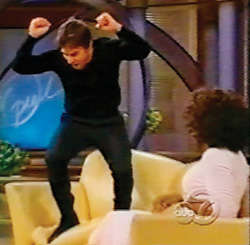
Now if only he had developed a control for this kind of Cruise:

tom-cruise-oprah-winfrey

HT Symon Sez


Nominee for the Al Copeland Humanitarian of the Year Award — Fasi Zaka

October 14, 2009

After triumphing over Nazism and Communism in the 20th century, liberty faces a new threat in this century — radical Islam.  This threat is being counteracted (we hope) by diplomacy with potential allies, force against enemies, and high-minded speeches to remind all that the cause of liberty is right and the cause of tyranny is wrong.

In addition to all that, there is another essential element in the arsenal of liberty — ridicule.  Tyrants of all stripes, in addition to being monstrously cruel and evil, are also almost always laughably, pathetically, and outrageously ridiculous.

Charlie Chaplin realized this when he mocked Hitler in  The Great Dictator.  In Dr. Strangelove, Stanley Kubrick portrayed the communist leader as a weepy drunk and the war-mongering general as a paranoid suffering from ED.  South Park has portrayed Osama Bin Laden as the slapstick LooneyTunes villain, Wile E. Coyote.  The Daily Show and Colbert Report make their living off of puncturing the pomposity of politicians.  Humor may not be the best weapon against tyrants, crooks, fools, and all other kinds of politicians, but it is a very important one.

But Chaplin, Kubrick, Parker, Stone, Stewart, and Colbert have mocked tyrants from the safety of the free world.  Fasi Zaka does it from the front lines.  Zaka is a Pakistani radio DJ — a shock-jock — and host of a TV news parody show, News, Views, and Confused.  Given long stretches of military rule, government censorship, and death threats from extremists, Zaka can’t and doesn’t address oppression in Pakistan head-on.  Instead, he flirts with the issues, poking fun at the Taliban and corrupt and incompetent Pakistani leaders with social satire more than political criticism.

For example, Zaka mocks the Taliban for smelling bad rather than for beheading opponents and suicide bombings.  As an LA Times profile described his approach:

So when a guest host, a character named Mr. Enlightened Moderations, poked fun at fundos , slang for Islamic fundamentalists, it was not for any extreme religious views but for poor dress sense, aversion to after-shave and limited use of deodorant. “You sound like a  fundo,” he’d say accusingly to callers. “You doesn’t even wears a deo, smelly boy.”

By mocking tyrants and their followers Zaka makes them seem uncool.  Making them uncool may limit their power more than a speech on their logical errors.  Remember that young men were drawn to Nazism in part because they wore shiny boots and neat brown shorts.  It was a struggle whether people would perceive fascism as the trend of the future or a group of buffoons singing Springtime for Hitler.  Buffoons who smell bad don’t attract girls, so young men are much less interested in movements that are uncool.

Not everyone agrees with Zaka’s humorous approach:

Some critics say Zaka is squandering a golden opportunity to be constructive and foster moderation in a confused younger generation.  “It bothers me when people do silly entertainment shows when we really need people to make a difference,” says Mani, another radio host.

Radio hosts don’t have to be boring and didactic to get their message across, counters Zaka, pointing to frequent discussions on extremism, women’s equality and the violence sweeping Pakistan. “They presume preaching is the way for change,” he says. “It isn’t.”

Zaka can be serious.  He is, after all, a Rhodes Scholar who was educated at Oxford.  And he regularly writes op-eds with more standard political criticism.  But it is his humor and ridicule that are really advancing the cause of liberty.

I make no claim that  Fasi Zaka is as funny as Charlie Chaplin, Steven Colbert, and the others.  The parts not in English seem even less funny, but you can check out a clip of his TV show here:

And like Chaplin, not all of Fasi Zaka’s political views are necessarily desirable.  Again, Zaka is worthwhile because he mocks bad guys, not because he’s a sound political analyst.

While Zaka may not be the funniest of these satirists for freedom, he is clearly one of the most courageous.  Making crap of the Taliban and military dictators is a real contribution to improving the human condition and makes Fasi Zaka worthy of a nomination for the Al Copeland Humanitarian of the Year Award.

(edited for clarity)