Post-Apocalyptic 21st Century Skills

March 4, 2009

I can’t figure out how to embed this, but it is well worth clicking on the link.  The Onion does a news analysis of the real skills our children will need for the post-apocalyptic 21st century.  One analyst emphasizes the need for basic skills, like how to collect water from the morning dew in human skulls.

http://www.theonion.com/content/video/are_violent_video_games

UPDATE:  Here it is embedded:


Beltway Confusion

March 3, 2009

(Beltway edu-analysts discuss the world over brandy and cigars.  Note where they are headed.)

I feel sorry for my education colleagues within the DC Beltway.  I don’t know if it’s all those wine and cheese receptions or box lunch lectures that addle their brains, but they are clearly confused.  They confuse political analysis for research.  And they confuse their political preferences for political analysis. 

Look, for example, at the recent post by my friend Andy Rotherham at Eduwonk on vouchers, which states:

“Now, paradoxically, the school choice experience since the early 1990s has lessened the allure of vouchers as a scalable education reform but at the same time made these smaller “pilot” type initiatives like the one in D.C. seem less toxic and more harmless among an increasing number of players.   Opponents don’t even really have a slippery slope to point to in any of the early adopter sites for vouchers.  There’s not one in D.C.  There it’s the public charters not the vouchers that are taking over and not in the other cities/states, even Milwaukee, where vouchers have been tried and the effects have been modest.  In other words, vouchers are not destroying the public schools.  Rather, systemically, they’re not really doing much of anything at all.”

Andy concludes that “systemically” vouchers aren’t “much of anything at all” because they aren’t expanding very rapidly.  This is a political analysis on the appeal of larger voucher programs, not a summary of research on the effects of vouchers on public school achievement.  If Andy had wanted to talk about the research on the systemic effects of vouchers he would have referenced this literature, which clearly shows that expanding choice and competition through vouchers improves public school performance.  So, Andy substitutes political analysis for research.

But he also substitutes his political preferences for political analysis because he ignores the steady growth in vouchers over the last two decades.  There are now 24 voucher or tax-credit programs in 15 states serving over 100,000 students.  Just last year two new programs were adopted, in Georgia and Louisiana, and the tax credit program in Florida was significantly expanded.  Andy may wish the voucher movement to be stalled, but a clear political analysis would reveal that vouchers continue to move forward.

Now, it’s true that there have been setbacks in the voucher movement.  And it’s true that each new program encounters a blizzard of opposition, making each step forward seem inordinately difficult.  But vouchers are just the spearhead of a broader choice movement that includes the more rapidly expanding charter movement.  If not for the viability of voucher programs, charters would have been the target of this onslaught of opposition. 

Vouchers have made the world safe for charters.  And the moment that vouchers really do stall, the enemies of school choice will redirect their fire at charters, strangling them with regulation and repealing charter gains.  To say that vouchers haven’t really done much of anything politically because charters are really where the action is ignores how much charters owe their political strength to the credible threat of new and expanded voucher programs.

It may be fashionable at Beltway receptions to dismiss vouchers as everyone is eager to be seen as championing the latest DC fad proposal.  But real analysis of research and politics show that the expansion of school choice, led by vouchers, will have a greater impact on education reform than building new school buildings, expanding pre-school, adopting a 21st century curriculum or whatever folks there are now talking about.

(edited for typos)


100,000

March 3, 2009

Yesterday the JPGB surpassed 100,000 total page views less than a year after starting.


Greetings from the Welfare State

March 2, 2009

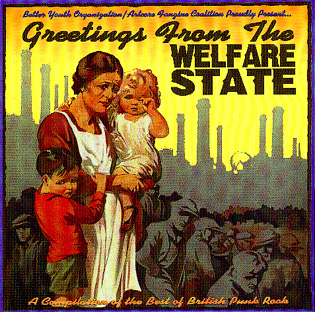
Help me understand the logic of Obama’s proposed budget.  He wants to increase federal government spending next year to “$3.94 trillion, up 32 percent from a year ago.”  And to help pay for this 32% increase in federal spending, especially increases in social welfare, Obama proposes to reduce the deductability for donations to charity for the top income brackets to 28% of the donation.  Effectively, Obama wants to pay for more government welfare by increasing the taxation of the private provision of those services.

And Obama’s proposed budget would also cap the deductability of mortgage interest for the top income brackets at 28%.  That tax increase would help pay for a huge expansion in government expenditures to prop up the housing market. 

The only thing that could account for these proposals is a belief in the inherent superiority of government-provided services over the provision of those same services in the private sector.  We would have to believe that the government is better at identifying and serving charitable needs than are private charities.  We would have to believe that government can better identify under-priced housing than private buyers can.

Mind you, I wouldn’t mind getting rid of charitable and mortgage deductions in exchange for lower marginal rates since I think these targeted deductions distort behavior.  But Obama is proposing to raise marginal rates while reducing these deductions.  Welcome to the welfare state.


Lost Jumps the Death Shark

February 28, 2009

(This is  actually Jeremy Bentham.  He’s preserved and kept at Oxford, where they bring him out for certain occasions.  True story.  But he doesn’t come back to life, unlike another Jeremy Bentham we know.)

Our Friday Lost commentary was again exposed to negatively charged exotic material and shifted through time to today.  And that makes about as much sense as Lost lately.  You could say that I am starting to lose it with Lost.

The problem is that Lost has clearly committed itself to having dead people come back to life.  We’re not just seeing ghosts of dead people.  And we aren’t just seeing time-loops to when people were still alive.  People seem to die and then not be dead.

We know with certainty that this happened to John Locke.  We saw him get killed and then later come to life.  And he wasn’t just a ghost or time-looped.  He remembered dying.  He ate a mango.  He was alive after being dead.

Keep in mind that the producers of the show swore that dead people were dead in the Lostverse.  They told Entertainment Weekly: “These people have hearts, and when those hearts stop beating, they die.” This was part of their explicitly debunking the theory that the Island was Purgatory.  No, they swore, the people on the Island are alive and when they are dead they are dead.  They added to E! Online: “”If we did such a thing after repeatedly stating otherwise, we’d be tarred and feathered!”

Well, get out the tar and feathers.  I guess they did not technically break their pledge that the Island was not purgatory, but it is clear that they misled us about whether being dead means that you stay dead. 

Why does this matter?  I’ve been concerned for a while that Lost has turned from a science-fiction story into a faith-based fantasy.  In science-fiction there are “natural” rules and the plot is constrained by those rules.  Those rules aren’t science as we know it, but they resemble science and must be consistent and logical within the universe of the plot.  In a faith-based fantasy there is a power outside of and exempt from the “natural” rules.  Those stories largely revolve around the desirability of faith in this power.

Now, I have no problem with stories that affirm the desirability of faith, per se.  It’s just that they tend to be less compelling as stories.  Dramatic tension in most stories occurs by bumping against the constraints of the rules.  But if the rules within the story can be broken or suspended at any time or if there is a mystery that is never resolved because it lies outside of the rules, then the drama is undermined.  The book of Job may be a great read and provoke a lot of interesting discussion, but it is hardly great drama.  The explanation is that you are not entitled to an explanation.

If Lost has an Island with a conscious purpose (not the unconscious purpose of Fate, as we discussed last week) and if death does not mean you are dead, then we are breaking outside of a natural system with rules.  It’s true that zombie movies involve the un-dead, but they are always explicit about their rules upfront so that they clearly stay within a natural order.  But in Lost we are trying to figure out what the rules are and it is becoming clear that the rules are mystical and not natural.  Sure, they may explain the rules before the end, but it will seem post hoc and unsatisfying.  We can’t even infer the rules from what we are seeing since clearly anything can happen.

Don’t get me wrong.  I’m still going to watch because I’m addicted and need to get the answers.  But I am preparing myself for the fact that the answers will be unsatisfying because they will come from outside of any natural order that we can observe in the Lostverse.


The Chart That Launched a Conference

February 24, 2009


The Quick and the Ed has additional comment on the teacher pension conference I discussed yesterday.  Rather than focusing on the financial sustainability of teacher pensions, Chad Aldeman at QATE focuses on how the odd accrual of pension wealth distorts teacher labor market decisions.  This is also an incredibly important issue.

In particular, he focuses on the work done by my colleagues Bob Costrell and Mike Podgusrky that finds that the convoluted design teacher pensions encourages some teachers to continue working to receive a large increase in the value of their pensions at a particular age, while it pushes other teachers out the door because they would lose an enormous amount of pension wealth if they continued working.

These “peaks and valleys” in pension wealth can have profound effects on teacher quality, by possibly keeping some teachers in the profession too long and by cutting the careers of others too short.  The chart above should give you a feeling for how convoluted teacher pension designs are.  Aldeman calls it “the chart that launched a conference” because the publication of these findings in Education Next sparked a flurry of new research on teacher pensions, much of which was presented last week.


Discounting Teacher Pensions

February 23, 2009

 end-wall-st-bull-collapsed-slide

 I just returned from a great conference co-sponsored by Vanderbilt, U. of Missouri, and my department at the University of Arkansas on teacher pensions.  One of the major issues discussed at the conference was the financial sustainability of those pension systems.  And at the heart of that discussion was a debate over the appropriate discount rate to apply to pension liabilities.  Essentially, the debate was over what we should assume to be the return on pension investments in the future.

This may seem like an arcane and dry issue, but let me tell you that it is incredibly important.  If you don’t care about it now, you will care if those pensions fall short of their assumed rate of return on investments over a long period of time.  If teacher pension plans run out of money, taxpayers are on the hook to make up the difference to the tune of tens of billions of dollars.  I know that in the era of trillion dollar bailouts tens of billions don’t seem like a big deal, but after a few of these trillion dollar bailouts there may not be much left for the teacher pensions if they go kablooey (that’s the technical term).

Public pensions are generally considered well-funded when they have assets that are roughly 80% of liabilities.  Don’t ask me why it is considered OK to know that you are short 20% of what you owe, but most folks who work on these issues just don’t think it’s realistic to have 100%.  Besides, when plans get close to 100% funding of their liabilities they tend to increase the generosity of their benefits to bring that ratio down. 

About 40% of the major teacher pension plans failed to meet the 80% standard for being adequately funded as of 2007 — before the current market meltdown.  But the 60% that did meet this standard did so assuming that they would return 8% on their investments going forward.  Is 8% the right rate to assume?

Remember that teacher pensions are promising to pay teachers a certain amount of money 20, 30, or 40 years from now.  They also expect to receive a certain amount in contributions from the teachers, from their employers (the state or school districts), and from investment returns on those funds.  Whether you have enough money to make the promised payments to teachers is extremely sensitive to the assumed rate of return on investments.

Some folks, often public finance economists, argue that assuming an 8% return is irresponsible.  They say that the market tells us what rate we should use and it is the risk-free rate of long-term US treasury bonds, currently earning a little less than 4%.  To get a significantly higher return one has to take-on significantly more risk, with the distinct possibility that one will earn far less than 8% and even less than 4%. 

If one assumes a 4% return rather than an 8% return, a teacher pension that would have been 70% funded assuming 8% would drop to 44% funded assuming a 4% return.  Just how under-funded teacher pensions are hinges heavily on whether we assume a 4% or 8% return.

Other folks, often pension plan actuaries, argue that the 8% assumption is reasonable.  They point to the historic rate of return on pension assets to support 8% as a reasonable figure.  They also say that risk is different for the government since it is a perpetual entity.  They can endure losses for a long time and eventually make up for them in a way that a private organization cannot.

I find it hard to support the 8% assumption.  Historic rates of return are hardly reassuring.  We may have received an average return of 8% over the last century, but who knows whether the next century will resemble the last one?  And who knows if we might be like Japan, where stock indices are still less than half of the peak they obtained three decades ago.  There is a good reason why investments ads say past returns are no guarantee of future returns.

And being a perpetual entity provides no protection if future rates turn out to be less than 8%.  Being perpetual only means that one can endure a very long period of under-performance.  That assumes that eventually the mean return will revert to being 8%.  But why should that be?  What if the mean return over the next infinite period is only 4%?  No matter how long we wait, we would never get 8%.

If it were really true that the government could be assured an 8% return while private entities can only be assured a 4% return, then it would make no sense to have a private financial industry.  The government could borrow at 4% to buy up the entire private sector and guarantee everyone an 8% perpetual return.  People should give all of their money to the government to invest so that they could be assured the 8% return with no risk.  If they invest it privately they can only be assured a 4% return with no risk. 

But defenders of using an 8% discount rate respond saying that if you assume a 4% rate and end up making 8%, the plans will be grossly over-funded.  That would essentially involve the transfer of wealth from this generation to a future generation, which would be grossly unfair.

Of course, the only way that the pensions could get more than 4% would be if they took on additional risk by investing in equities, real estate, hedge funds, etc…  If you lent me money at 4% and I took it to Vegas and put it all on black, I might also come back with a lot more than the 4% I would owe you.  I just can’t be guaranteed to come back with extra money.  Similarly, the teacher pension plans cannot be guaranteed the 8% return and should not assume extra risk in the attempt to get it.  If pensions switch to a 4% discount rate they should probably be restricted in their investments to mostly risk-free investments, like government bonds.

Switching to a 4% discount rate is going to be painful, especially with already under-funded teacher pension plans and with the recent market meltdown.  But if we don’t do it, eventually we may well face a future financial crisis brought on by pensions rather than by housing.  Let’s spot the bubbles before they burst.

In addition to reading the papers listed at the conference web site, you may also want to check out this new piece by my colleagues Bob Costrell and Mike Podgursky in the current issue of Education Next.


Get Lost 316

February 21, 2009

Last week Greg suggested that the Island has a will of its own that trumps the will of humans to direct its powers.  According to Greg’s analysis, the Island is essentially a super-natural being, like God, although he admits the possibility that it is a malevolent super-natural force.  And like God, Greg suggests that faith in the Island involves obeying even when the Island’s reasons are mysterious: “If we understood why the Island demands what it demands, there would be no question of faith (remember, John is the “man of faith”). In theology, “faith” doesn’t mean simply believing in certain facts about God, it means trusting and obeying God. And the supreme test of faith is to trust and obey when you don’t understand.”

Upon first seeing this week’s episode, 316, I thought Control-G (the hot-key for agreeing with Greg).  Greg is right so often that we had to develop a hot-key to make our agreement more efficient (in your heart you know he’s right).  It certainly would be novel to have a TV series entirely built around faith in a super-natural power.  Ben’s suggestion that Jack was similar to the Apostle Thomas, Locke’s note wishing that Jack had believed, Lapidus’ presence as the pilot of Ajira 316, and the allusion of the flight number to John 3:16 made me think — at first — that Greg was entirely right — Control G!  In the most recent episode Lost not only seemed like a story of vindicated faith but almost an explicit Christian allegory. 

That’s when I started doubting this interpretation.  Major TV producers would never make a series of a Christian allegory.  The religious references, whether Christian or Island as super-natural power,  have to be a false lead.  The argument between faith and science will be revived.  Faith has only temporarily prevailed.

The original faith/science debate revolved around pushing the button.  The alleged purpose of pushing the button was to save the world from destruction.  Locke had faith that the button must be pushed.  But what seemed like faith may have just been the prescience of time-loops.  The odd coincidences may just be the necessity of time course-correcting.  Is the purpose and direction of events determined simply by Fate, a power without an independent will or consciousness, or is there a super-natural entity choosing the course of events?  Greg’s theory seems to be the later, but I suspect it is the former.

I suspect that Fate has the world being destroyed.  Humans have detected this Fate through the Numbers and time-travel and are struggling to alter that Fate.  What seems like the will of the Island may just be the actions of humans in time loops attempting to steer Fate away from global destruction.  Whether they succeed or not will revolve around whether humans can change Fate, not the will of a super-natural entity.  I just can’t imagine a TV series emphasizing the will of a super-natural being over the primacy of human “agency.”  It would be gutsy and interesting if they did, but I just can’t see it in mainstream TV. 

The video embedded at the top of this post, suggests that human action to prevent destruction of the world is going to be central.  The video comes from Comicon and I found it on Lostpedia, where it is known as the Dharma Booth Video.  In it, Pierre Chang sends a message through time urging whoever sees it to continue the Dharma research to change time.  The different factions will struggle over who will control the potential power to change Fate, but we will discover that who controls it will be less important than using it to avoid total destruction.


Wagner and the Wisdom of Tevye

February 17, 2009

Townsperson: Why should I break my head about the outside world?  Let the outside world break its own head….

Tevye: He is right…

Perchik: Nonsense. You can’t close your eyes to what’s happening in the world.

Tevye: He’s right.

Rabbi’s pupil: He’s right, and he’s right.  They can’t both be right!

Tevye:  (Pause). You know, you are also right.


Fiddler on the Roof is coming to Fayetteville (the Ozark center of Yiddishkeit) in May.  But it felt like Fiddler arrived early with Tony Wagner’s visit yesterday to promote his 21st Century Skills (TM) concept.  People asked him a variety of questions and as it turns out, they were all right.


My colleague Gary Ritter commented that Wagner’s anecdotes sounded more like examples of bad teaching than of a bad curriculum.  You’re right, Wagner replied.  There is also bad teaching out there.


A student questioned his lack of empirical evidence to support his claims.  You’re right, Wagner replied.  He admitted to lacking quantitative evidence but said he was a qualitative researcher.


Stuart Buck noted that in the book Wagner profiled 3 schools that ignored the state tests, taught in a way they believed best, and still did very well on those exams.  So is the problem really with accountability testing?  You’re right, Wagner replied.  The problem is in the unnecessary over-reaction of risk-averse educators.


A math professor asked about whether too much content was really the problem.  You’re right, Wagner replied.  He’s not against content and agrees that content is essential for developing his 7 essential skills (TM).


It didn’t really seem to matter if his answers contradicted claims he made in the book or even ten minutes earlier in his presentation.  In the end, everyone was right and he was for everything people suggested.  He was for accountability testing (as long as it was done right).  He was for academic content (as long as it was the right amount and on the right stuff).  He was for teaching to the test (if the test was a good one). 


The quick, confident answers and the futuristic jargon may have wowed some, but it left me and many others a bit bewildered.  He can’t be for all these things.


Happily there is a video record of his lecture.  It’s actually from his web site, but it is almost identical to the lecture that he gave at least three times yesterday to different audiences.  Notice that in minute 20 he clearly says that our kids don’t need content; they need “competencies.”  And the best part of watching this video on the web is that it is free as opposed to the $20,000-$25,000 consulting fee that Fayetteville schools paid him for more or less the same thing.

See: http://www.schoolchange.org/videos/the_global_achievement_gap_video.html 


Is CPSIA the New Fahrenheit 451?

February 15, 2009

Walter Olson over at City Journal and his blog, Overlawyered.com, has uncovered a frightening and probably unintended effect of the Consumer Product Safety Improvement Act of 2008.  Children’s books made before 1985 are essentially being removed from the market.  Olson writes:

“under a law Congress passed last year aimed at regulating hazards in children’s products, the federal government has now advised that children’s books published before 1985 should not be considered safe and may in many cases be unlawful to sell or distribute. Merchants, thrift stores, and booksellers may be at risk if they sell older volumes, or even give them away, without first subjecting them to testing—at prohibitive expense. Many used-book sellers, consignment stores, Goodwill outlets, and the like have accordingly begun to refuse new donations of pre-1985 volumes, yank existing ones off their shelves, and in some cases discard them en masse.”

He continues:

“CPSIA imposed tough new limits on lead in any products intended for use by children aged 12 or under, and made those limits retroactive: that is, goods manufactured before the law passed cannot be sold on the used market (even in garage sales or on eBay) if they don’t conform…. Not until 1985 did it become unlawful to use lead pigments in the inks, dyes, and paints used in children’s books. Before then—and perhaps particularly in the great age of children’s-book illustration that lasted through the early twentieth century—the use of such pigments was not uncommon, and testing can still detect lead residues in books today. This doesn’t mean that the books pose any hazard to children. While lead poisoning from other sources, such as paint in old houses, remains a serious public health problem in some communities, no one seems to have been able to produce a single instance in which an American child has been made ill by the lead in old book illustrations—not surprisingly, since unlike poorly maintained wall paint, book pigments do not tend to flake off in large lead-laden chips for toddlers to put into their mouths.”

This doesn’t just hit used book-sellers hard, it also applies to any individual trying to sell a book on Ebay and even to public libraries.  We will have to discard countless classic children’s books, many of which are no longer in print, to avoid something that has never been shown to be harmful.

But don’t worry.  I’m sure we won’t actually burn the books.  It might produce harmful toxins!  Instead, I bet we are preparing a facility near Yuca Mountain to safely dispose of Make Way for Ducklings and Anne of Green Gables so those books will no longer harm our children.  Better that they should sit in front of the TV.

(edited to change photo)