For the Higgy: Abraham Flexner

April 15, 2022

The word “expert” shares the same root as the word “experience.” Both are derived from the Latin past participle for “try” — having tried. This origin reflects the long held understanding of what makes someone an expert. It is having done something for a long time so as to have attained mastery of the skill and wisdom from the experience.

Our current understanding of what makes someone an expert is having received a credential that certifies expertise. Someone is an expert in public health because they have a degree from a prestigious institution and hold a high office with responsibility over public health. There is no need for them to have had a long record of experience or demonstrate any wisdom. In fact, they can be relatively young and demonstrably foolish, but they have the credential and position and are therefore expert. If the gross malpractice of our public health response to the pandemic revealed anything, it is how destructive our modern notion of expertise has become.

The false and harmful substitution of credential and position for experience and wisdom in defining expertise has spread to almost every occupation. Teachers are deemed expert because they are certified, not because they have learned from practicing their trade and demonstrated effectiveness. Academics are thought to be experts in their areas because they have written on the topic and are faculty in that field, not because they have done relevant things and shown themselves to be wise. The confusion of credentialing for expertise has spread occupational licensing as a barrier to a whole host of careers, from braiding hair to making floral arrangements.

Abraham Flexner played a major role in creating this modern understanding of what makes someone an expert. Flexner earned a BA in classics from Johns Hopkins University at age 19 after only two years of study. He also briefly studied psychology at Harvard and University of Berlin without earning a graduate degree from either institution. He then returned to his native Louisville and opened a private prep school to promote his ideas about education. As Wikipedia describes it, “‘Mr. Flexner’s School’ did not give out traditional grades, used no standard curriculum, refused to impose examinations on students, and kept no academic record of students. Instead, it promoted small learning groups, individual development, and a more hands-on approach to education.”

In 1908 he wrote a book critiquing higher education for its use of lectures and outdated pedagogical techniques. This book impressed the Carnegie Foundation, which commissioned Flexner to investigate medical education and and make recommendations for how best to prepare doctors. The resulting Flexner Report is heralded for having reshaped and remarkably improved the training of doctors. That may be true (although there have been some serious, negative side-effects), but Flexner’s model for training doctors also negatively shaped how we train almost every profession and the associated notions of expertise.

When Flexner wrote his report, doctors were largely trained by a combination of apprenticeship and lectures. Prospective doctors were not required to have attended college. They were not expected to have studied basic sciences. They simply paid existing doctors to shadow them and/or enroll in one of the 155 medical schools, most of which were unaffiliated with a university and owned by doctors who gave lectures.

While condemning almost all of the existing institutions, Flexner praised Johns Hopkins, his alma mater. The correct approach according to Flexner was to require students to have attended college prior to medical education, have medical schools there were attached to universities and licensed by the state, and to emphasize hands-on learning, including laboratory-based science instruction.

These practices, which were quickly and widely adopted, may have been sensible but they may have been unnecessary to mandate and came at a significant cost. Raising the bar for entry into medical school by requiring that students first attend college and raising the expense of medical education by replacing cost-efficient lectures with laboratory science instruction drove almost all of the institutions training black doctors out of business. The quality of medicine may have improved overall but the sudden disappearance of newly trained black doctors and the difficulty of black patients to access white doctors had a negative effect on healthcare in the black community. In addition, state licensing of medical schools with the intentional goal of limiting the supply of newly trained doctors dramatically increased the costs of healthcare.

But the worst part of Flexner’s model for training doctors is that every profession insisted that they should adopt the same approach even if there were no improvements in quality to compensate for the discriminatory and financial costs of raising the barriers to entry through credentialing. The argument was that if you want to have high quality professionals you have to adopt Flexner’s approach. Now teachers, dental hygienists, optometrists, pharmacists, accountants, lawyers, and every other profession needed to be trained like doctors. In all cases, apprenticeship models where people could acquire experience in a professional, master its skills, and demonstrate wisdom were replaced with systems of credentialing.

Credentialing may be warranted in certain circumstances, but the burden of proof for requiring credentials should be on the profession wishing to raise barriers to entry given the discriminatory and financial costs that necessarily follow. We are also weakened in resisting these unwarranted calls for increased credentialing because we have broadly accepted Flexner’s modern understanding of expertise.

It is particularly ironic that Flexner was the champion of this modern notion of expertise as credentialing given how he lacked both the credential and experience as a doctor. Flexner reshaped medical education without ever having studied or practiced medicine. His claim to expertise, such as it was, was in pedagogy, having run a prep school. Lacking experience and wisdom from the practice of medicine, Flexner asserted a false expertise in medical education that made it easier for him to be foolish about the negative side-effects of his recommendations.

For having advanced this false notion of expertise, Flexner significantly worsened the human condition and is (un)worthy of consideration for The William Higinbotham Inhumanitarian of the Year Award.


The DEI Trilogy

December 12, 2021

James Paul and I have released a series of three studies from the Heritage Foundation documenting how extensive and dangerous Diversity, Equity, and Inclusion (DEI) efforts in education are. As I’ve written on this blog before, DEI sounds like it should be a good thing given that we truly value diversity and inclusion (equity is a different story), “but like many bad enterprises, DEI takes a bunch of good words and in Orwellian fashion uses them to advance the very opposite of what those words mean.”

The first report in our trilogy, “Diversity University: DEI Bloat in the Academy,” shows how large diversity staffs are at the 65 universities in the “Power 5” athletic conferences. The average institution has about 45 people devoted to promoting the social and political agenda associated with DEI. Keep in mind that our study did not count any of the staff devoted to ensuring compliance with non-discrimination laws nor did it count any of the faculty or staff in ethnic or gender studies departments. The compliance staff may be necessary to avoid legal problems and the ethnic/gender studies departmental staff are presumably engaged in the traditional academic enterprise of teaching and conducting research. The DEI staff we counted are neither legally necessary nor engaged in core academic activities. They are activists employed by universities to promote a particular, and as we demonstrate, noxious political agenda.

That report also showed that students report campus climates that are no better and often worse at universities with larger DEI staff relative to those with few DEI personnel. James and I had a piece in the Detroit News highlighting the situation at the University Michigan, which has 163 DEI staff — the biggest among the 65 universities we examined. I had a piece in the Daily Signal discussing how the growth in DEI staff was contributing to administrative bloat and rising costs in higher education. And James and I published another op-ed featuring how large DEI staff are at the University of Virginia (94 DEI staff) and Virginia Tech (83 DEI staff). People interested in looking up any of the 65 universities to see how many DEI personnel there are and how that staff level compares to the number of history professors or staff devoted to providing services to disabled students can use this really cool data visualization that the folks at Heritage designed.

The second report in our trilogy, “Equity Elementary: ‘Diversity, Equity, and Inclusion’ Staff in Public Schools,” measured how far the DEI staffing and political strategy had made its way into K-12 education. We found that among larger districts with more than 100,000 students, 79% had a Chief Diversity Officer (CDO). This is not quite as universal as in higher education, but it is getting close. Among all public school districts with at least 15,000 students, 39% had a CDO. We also looked at the relationship between having a CDO and gaps in standardized test results between black and white, Hispanic and white, and poor and non-poor students. Districts hire CDOs claiming that it is necessary to help close achievement gaps, but we find that those gaps are larger and growing larger over time in districts that have a CDO relative to districts that don’t. This holds true even after we control statistically for the size and demographic characteristics of the districts. It appears that CDOs are likely counter-productive in accomplishing their stated purpose of closing achievement gaps. Instead, we suspect they are focused on their real purpose of advancing a noxious social and political agenda.

I was invited onto Fox News to discuss the Equity Elementary study. We mostly talked about Critical Race Theory and how I thought it could lead to a parent backlash, resulting in a Youngkin upset in the VA gubernatorial election. Turns out I was right about that. But I was also able to mention how CDOs are educationally counter-prodctive in K-12 public schools and instead are working to advance CRT and other radical political efforts. Kyle Smith also had an excellent column in the NY Post describing our Equity Elementary study in some detail. And Heritage made another really cool data visualizion that allows people to look up any of the 554 school districts we examined to see if they have a CDO and how large their achievement gaps are.

The third and most recent installment in our DEI trilogy is “Inclusion Delusion: The Antisemitism of Diversity, Equity, and Inclusion Staff at Universities,” which was released last week. It reports on the contents of university DEI staff’s Twitter feeds with regard to Israel and, for comparison purposes, China. We examined the tweets, retweets, and likes of 741 DEI staff at the same 65 universities studied in the Diversity University report. We found that university DEI staff pay almost three times as much attention to Israel as to China, and are almost always critical of Israel while mostly favorable toward China. Even more shocking than the fact that 96% of their Twitter communications regarding Israel were critical while 62% about China were favorable, is the intemperate language and tone of those tweets. We provide numerous examples in the report and they clearly demonstrate that these DEI staff cross the line from reasonable criticism of Israel into outright antisemitism. Keep in mind that the same university DEI staff hired to prevent hate and bias and to provide a welcoming and inclusive environment for all students are doing the opposite of that, at least with respect to Jews.

So, we have published Diversity University, Equity Elementary, and Inclusion Delusion — DEI — in that order over the last several months. I love the Heritage Foundation for giving me the opportunity to produce this kind of work and contribute factual information to the debate over how our educational system should approach Diversity, Equity, and Inclusion.

You might think that since this is a trilogy and since we have managed to use Diversity, Equity, and Inclusion in the titles that we are now finished with this effort. But like Star Wars, Foundation, Riverworld, and other famous efforts that began as trilogies I strongly suspect that our work is not done here. I hope we don’t have to create the DEI-verse or pursue multiple timelines, but we will continue to examine DEI in education as long as is necessary to prevent a radical agenda from being foisted onto kids.


How do the States Stack Up? Measuring What Matters in Charter School Ecosystems

December 1, 2021

(Guest Post by Matt Nielsen)

In June of 2021, Educational Freedom Institute released a report (EFI Charter Ecosystem Rankings, aka “ECER”) that took a unique approach to rating the charter school ecosystems in each state. While the approach was unique, it was nothing if not obvious: measure what matters.

Dr. Benjamin Scafidi and Dr. Eric Wearne of Kennesaw State University produced that initial report and have now followed it up with a more robust ranking system that includes an expanded set of measures and more recent data. Surprisingly, no other rating system devised to that point measured the outcomes that one might consider important—outcomes like student performance and accessibility.

ECER 2022 asks those two questions: “Do students have reasonable access to a charter school?”, and “Are the charter schools doing right by the students that attend?” 

Those two questions are asked in a couple of different ways to ensure we’re truly ‘measuring what matters’ in as comprehensive a manner as possible. The ranking system includes measures, as follows.

The answers to these questions produced a rank-ordering of each state that turned out much different from efforts by other organizations like NAPCS and NACSA. For readers who are familiar with the input-based ranking systems, the ECER 2022 results may be surprising:

Why was the report necessary when other ranking schemes exist? As Scafidi and Wearne note,

“On NACSA’s 2015 ranking for example, Alabama placed fourth in the country, while having 0 charter schools and 0 charter school students. NACSA noted that in 2015 Alabama “passed a new charter law in 2015 that is based on best practices in charter school policy” for context. Mississippi ranked 6th, with a then five-year-old charter school law, a single authorizer, and 0 open charter schools. Arizona placed 18th in the same analysis, with 15% of their public school students enrolled in charter schools, the highest percentage in the country, except for the District of Columbia, which finished two places ahead of Arizona and enrolled 44% of their students in charter schools.”

Policymakers need reliable reports that accurately portray the effects of their policies. Prior to June 2021, no such report existed for the charter school ecosystems in the United States.

Download the report here to read more about the methodology of the ranking system, and to compare ECER 2022’s rankings to NACSA and NAPCS’s efforts.

Questions or feedback on ECER 2022? Contact Matt Nielsen: matthew@efinstitute.org


And the Winner of the 2021 “Al” is… Ken “Heinie the Tank Buster” Adam

November 1, 2021

We had an excellent set of nominees for this year’s Al. Greg and Matt each nominated two people. Greg nominated Nazar Mohammad Khasha and Ken “Heinie the Tank Buster” Adam. Matt nominated Christopher Lee and Ryan Peterson. I nominated Joseph Friedman. And Ron Spalter nominated John and Justine Glaser.

A compelling case could be made for selecting any of these very worth nominees. Nazar Mohammad Khasha stood up to tyrants with courage and humor, in the fine tradition of past Al nominees and winners. Fasi ZakaWim Nottroth, and  Master Sergeant Roddie Edmonds. Christopher Lee may really have been The Most Interesting Man in the World. Ryan Peterson is an excellent reminder that in the olde tymes there were these people called journbalists who actually went into the world to collect information and report it to you so that you might be better informed to take positive action rather than just folks who scan Twitter to bolster their partisan talking points. Joseph Friedman follows in the excellent tradition of Debrilla M. RatchfordGeorge P. Mitchell, and Al himself to demonstrate that people who invent things and build businesses may help themselves and profit, but they also can do much to improve the human condition. And John and Justine Glaser prove much of the same point.

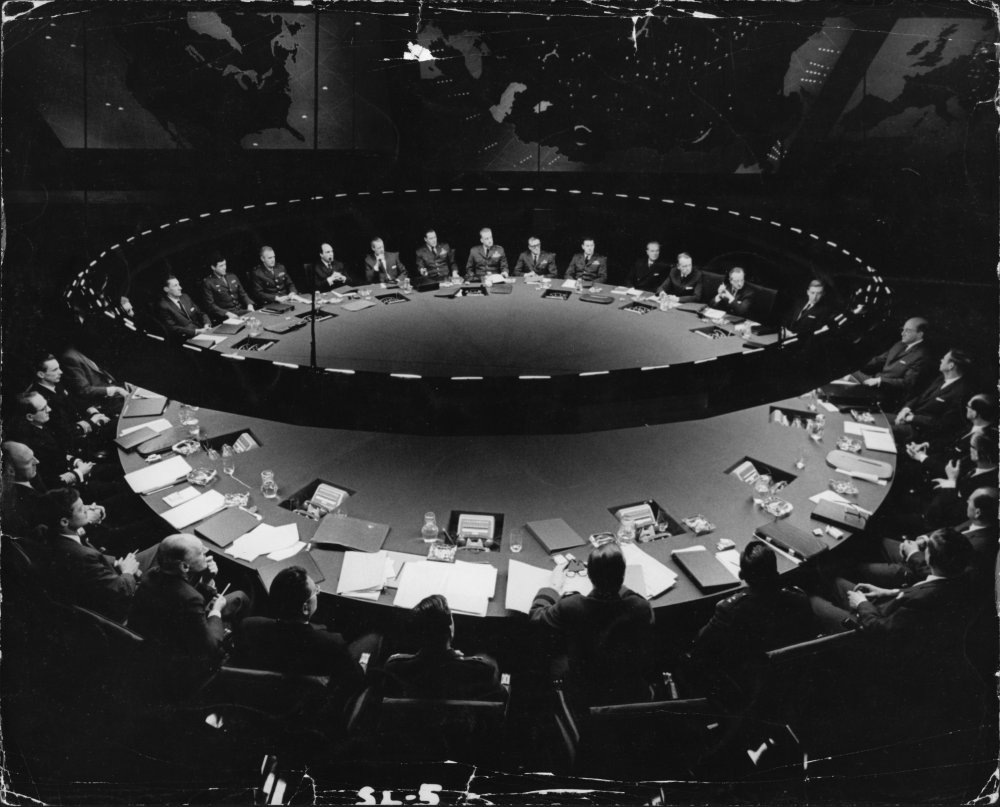
But Ken “Heinie the Tank Buster” Adam is the most deserving among these very fine nominees because he gave us one of the most powerful ways of improving the human condition when faced with its awfulness — escape. Rather than thinking about how awful the container logjam at the port is or how evil the Taliban are, Ken “Heinie the Tank Buster” Adam allowed us to imagine a completely new world that is way cooler than the one we lived in. Secret rocket launchers inside of volcanos and a comic war room full of buffoons are not only cooler than the world, they are cooler than bendy straws, cookies, and the actors who work without those fantasy worlds.

I don’t get to ride a monorail that runs to the rocket launcher inside a volcano, but I can dream for days on end about being able to do so. The construction of compelling fantasy worlds, which Ken “Heinie the Tank Buster” Adam literally did, makes this world much more bearable and therefore significantly improves the human condition. Oh, and he also killed a bunch of Nazis. For these reasons, Ken “Heinie the Tank Buster” Adam is this year’s recipient of the Al.


For the Al: John and Justine Glaser

October 31, 2021
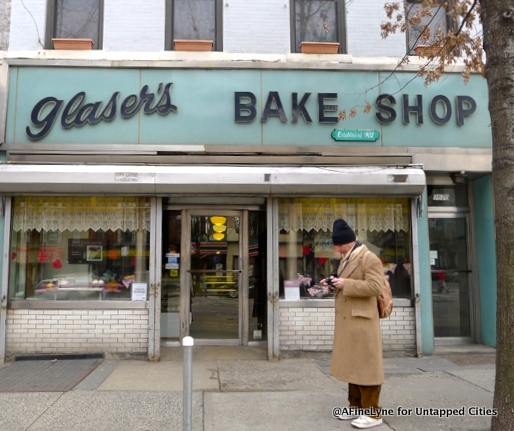
5 of NYC's Oldest Bakeries: Ferrara, Veniero, Glaser's, Parisi, and  Caputo's - Page 3 of 5 - Untapped New York

(Guest Post by Ron Spalter)

I respectfully submit, as nominees for the 2021 Al, John and Justine Glaser.  John and Justine are the originators and creators of the greatest pastry in the history of the world, the black and white cookie.

Overcoming disease, extreme poverty, and jealous other bakers in their day, John and Justine came up with this amazing treat in 1902.

They shouldn’t win just because they created the one edible item that immediately brings joy to all who eat or stand in its presence.  They should win because they were “woke” 118 years before the most woke rubbed the sleep out of their eyes. 

They, despite the incessant whining of their competitors, refused to make a cookie with only one glaze.  Fun fact:  John and Justine were Michael Jackson’s inspiration for the song, “Black or White.”  The unreleased, extended version of the song features the line,

“You know that you’re delicious, it doesn’t matter if it’s black or white.”

Like I said directly to the award committee, if John and Justine Glaser don’t win, the committee is obviously comprised of joyless people with no taste buds.  I submit this nomination even though I’m a type-1 diabetic.  Nuff said


For the Al: Joseph Friedman

October 29, 2021
Friedmanpic.jpg

For your consideration… According to a British member of Parliament, Joseph Friedman invented “arguably the most significant technological achievement of the twentieth century.” Granted that MP was Friedman’s great-nephew, but still… Friedman’s invention has been an enormous contribution to improving the human condition and is worthy of his receiving The Al. What did he invent? The bendy straw.

Friedman who was a serial inventor, seller of real estate and insurance, and general wheeler-dealer came upon the idea of the bendy straw while dining with his young daughter. He saw her struggling to get a straight straw into her mouth given that its end was higher than her mouth. He used a screw on the straw to create ridges that allowed the straw to bend and meet his daughter’s mouth at the right height.

How, you might ask, is the bendy straw arguably the most significant technological achievement of the 20th century? Well, as it turns out, many of us have physical difficulties that make navigating the world challenging. We might be born with permanent physical challenges that make drinking from a glass impossible and reaching a straight straw with our mouth impractical. Even if we aren’t born with such challenges, almost all of us have had or will have physical difficulties at some point in our lives. When we are young we may be too small or lack dexterity. When we are old, we may lose strength or dexterity. The same is true when we are injured. As the disability activist, Judy Heumann, notes, in some sense there is not a clear distinction between what we think of as people with disabilities and everyone else since everyone can reasonably expect that at some point physical limitations may make it challenging to navigate the world and thrive.

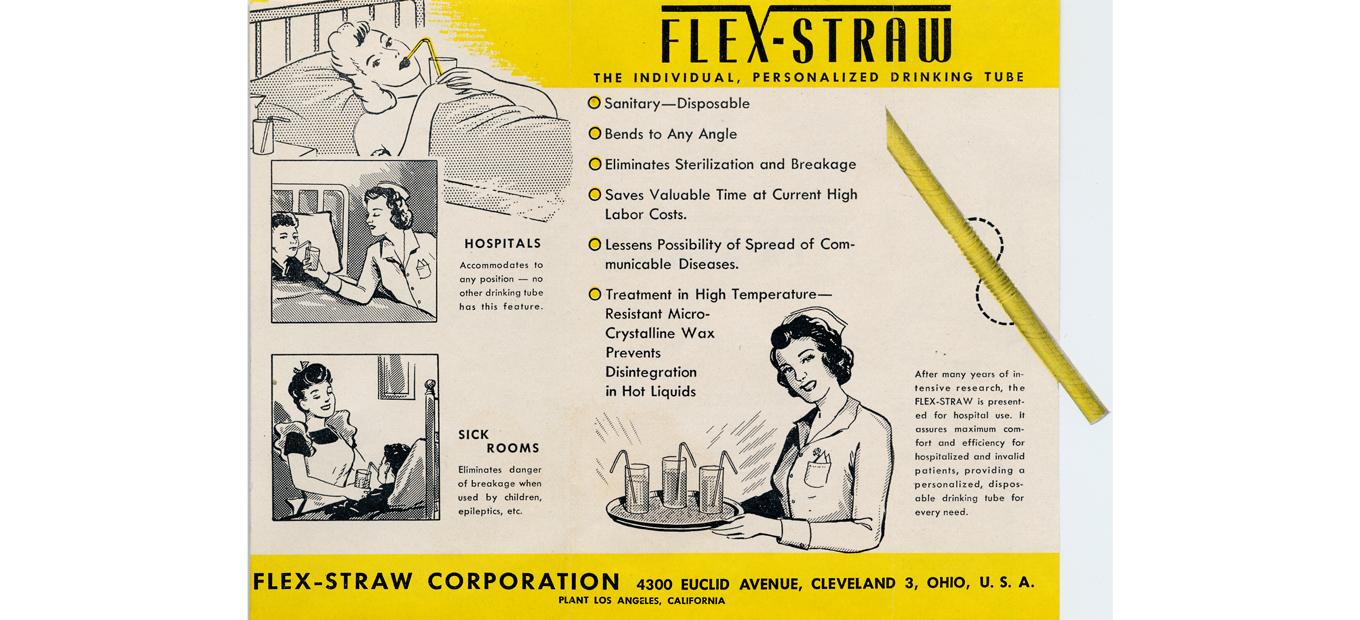
This is why technology that helps people succeed despite their physical challenges is so important. There are many such technologies, but one of the most important is the bendy straw. We all need to drink and the bendy straw is incredibly helpful in getting that liquid into our mouths despite our limitations. In fact, when Joseph Friedman founded the Flexible Straw Corporation (later Flex-Straw Co.), many of his original large customers were hospitals.

Advertisement for flexible drinking straws

Of course, flexible straws are also just fun. If that encourages children (or some of us grown-ups) to drink their milk, that’s also a plus. Bendy straws also work pretty well with a strawberry daiquiri — another point in their favor.

Throwback Thursday: A brief history of the drinking straw |  plasticstoday.com

But some Higgy-wanna-be’s decided that plastic straws were one of the world’s greatest dangers and must be banned in the US and Europe, regardless of the consequences for those with physical challenges or who want to have fun with milk or daiquiris. Never mind that “more than half of the world’s marine plastic pollution entered the ocean from just five countries: China, Indonesia, Philippines, Vietnam and Sri Lanka.” And never mind that, “globally, straws only make up around 0.00002 per cent of all marine plastic pollution (in terms of weight).” The Earth (or something) demands we put an end to Big Straw.

Unlike these Higgy-wanna-be’s, I give a higher priority to improving the human condition and love bendy straws. They are so great that their inventor, Joseph Friedman should be recognized with The Al.


DEI is Educationally Counter-Productive and Politically Radical

October 28, 2021

Diversity, Equity, and Inclusion (DEI) sounds like it should be a good thing. It is made up of mostly good words. We rightly value diversity, both intellectual and cultural. And who could be against inclusion? Equity is actually not such a good thing as it emphasizes having the same outcomes, but it sounds like equality, which is another very fine word.

But like many bad enterprises, DEI takes a bunch of good words and in Orwellian fashion uses them to advance the very opposite of what those words mean. DEI undermines true diversity by reducing and dividing us into ethnic and sexual identity categories while crushing actual intellectual and cultural diversity. And rather than including people from those diverse intellectual and cultural strands, DEI classifies us as either oppressor or oppressed, with the former deserving whatever harsh consequences they might get while the later is entitled to whatever benefits they can grab. Rather than creating equality, this Manichean split into oppressor and oppressed justifies different rules and differential treatment depending on which category you find yourself in. This produces a mad scramble to have one’s own group somehow included in the blessed oppressed category while trying to throw one’s enemies into the damned oppressor category.

As Rick Hess recently pointed out. this DEI world view is very unpopular among large segments of the population, cutting across partisan and racial lines. So why is DEI spreading so rapidly if its ideas are deeply unpopular? Some of the answer can be found in the Orwellian appropriation of positive words for negative purposes. But people can only be fooled for so long, so why is it continuing to grow even as more people can see it for what it really is? A big part of the explanation can be found in the fact that DEI has some organizational advantages within mainstream institutions. The existence of DEI staff led by Chief Diversity Officers (CDO) acts as a political commissariat, articulating and enforcing ideological orthodoxy. It mobilizes the relatively small group of activists who support its woke agenda and amplifies their voice within institutions.

In a series of studies that James Paul and I have released through the Heritage Foundation, we have documented the extent of DEI staff and CDOs. In our first study, Diversity University, we found that the average university among the 65 institutions belonging to one of the Power 5 athletic conferences has 45 DEI staff. That is more than 4 times the number of staff they have devoted to providing services to students with disabilities, which, unlike DEI, they are required to do by law. These universities have 40% more DEI staff than they have History professors. Despite this outsized effort, surveys of students suggest that the campus climate is no better and may actually be worse at universities with larger DEI staff.

While DEI staff are nearly ubiquitous in higher education, they are only beginning to make their way into K-12 public school districts. In our second study, Equity Elementary, we look at every school district with at least 15,000 students — all 554 of them — to see if they have Chief Diversity Officers (CDOs) listed on their web sites. We found that 39% of them do. Among the largest districts, with more than 100,000 students, 79% have a CDO. But even among the smaller ones with closer to 15,000 students, 32% still have a CDO. We then look at whether having a CDO is associated with closing achievement gaps on standardized tests. Contrary to their ostensible purpose, districts with CDOs actually have larger gaps in achievement between black and white students, Hispanic and white students, and non-poor and poor students than districts without CDOs. And those gaps are growing wider over time, This pattern holds true even after controlling for a host of other observable characteristics of those districts.

CDOs in K-12 public school districts may be educationally counter-productive because, like their higher education DEI brethren, they are more focused on promoting a political agenda than they are on finding effective educational interventions. That political agenda includes advancing policies that likely exacerbate achievement gaps, such as eliminating Gifted program and advanced math offerings while selecting English and Social Studies content for its political orthodoxy rather than educational quality.

People are beginning to notice how DEI efforts are educationally counter-productive and politically radical, and they are starting to organize against this. Parents are achieving enough success at pressuring their schools to abandon this woke agenda that they prompted the National School Boards Association (NSBA) to condemn them as domestic terrorists and seek intervention from federal agencies, which the Biden Administration and Attorney General Garland promptly supplied. This appears to have backfired horribly, causing dozens of state affiliates of NSBA to defect, which resulted in NSBA retracting its letter and apologizing (to its affiliates but oddly not to parents).

The Biden Administration and Terry McAuliffe, the Democratic candidate for governor in Virginia, however, can’t as quickly back away from their declarations condemning protesting parents. McAuliffe, who was way ahead in the polls, has seen his lead evaporate and may be upset in next week’s elections. This turmoil is also not helping Biden’s chances of pulling together the votes for his multi-trillion dollar reconciliation proposal.

Our own research on this issue is attracting a lot of attention. Kyle Smith has an excellent column in the New York Post summarizing our Equity Elementary findings. And Fox News had me on last weekend to discuss that study and its implications for the Virginia gubernatorial contest.

The increasingly woke education reform movement has had little substantive response to this research or the parent backlash that is underway other than to call people racists. This name-calling approach is losing its sting as it continues to be mis-used. And the fact that the ed reform establishment continues to embrace a failed strategy for advancing school choice focused on progressive priorities suggests that many existing ed reform organizations are rapidly becoming irrelevant.

Soon they will become like the Children’s Defense Fund and the advocacy organizations built around the War on Poverty in the 1970s. Those organizations still exist and still receive millions in foundation grants. They still write white papers, issue press releases, organize conferences, and make speeches to each other about how right and good they are. But it has been almost half a century since those organizations had any real political influence. This will soon be the fate of many education reform organizations if they do not change their approach.

McAuliffe may survive and Biden may get his trillions, but the future of any politically successful education reform movement has to be focused on helping parents control the education of their own children and capitalizing upon their concern that a woke agenda is fundamentally undermining their control and their values.


Video of Debate with Randi

October 20, 2021

You can watch the full video of my discussion with AFT union head, Randi Weingarten, here:


My Debate with Randi

October 15, 2021

Today I had my event with Randi Weingarten, the head of the American Federation of Teachers, hosted by Harvard’s Program on Education Policy and Governance. The video should be posted in a couple days after they finalize the transcript. In the meantime, if you’d like to see my opening remarks, here they are:

Public schools have been sticking it to many low-income and minority students since they were founded. Public schools have been segregated for most of their history by law. Even after state-compelled segregation was ended, public schools continue to be highly segregated because district boundaries were drawn with red lines separating communities by race. Outcomes for low-income and minority students remain abysmal despite huge increases in school spending, now exceeding $15,000 per pupil.

Public schools have been able to get away with this shocking mis-education of disadvantaged students because, despite all of their failings, public schools have managed to serve upper-income families reasonably well. As long as the public school system could maintain the support of advantaged families, the disproportionate political power of wealthier families protected public education from fundamental restructuring, including a significant expansion in school choice.

Upper-income families could pick suburban districts that gave them what they wanted and permitted greater parental input. The fact that wealthier families often supplemented their children’s education with enriching activities outside of school also helped mask any deficiencies in the quality or content of those suburban public schools.

These arrangements engendered a high level of affection for public education among these wealthy and disproportionately powerful families despite reports of severe difficulties in large, urban school districts. With limited direct experience of the dysfunction of urban public education, wealthy families were willing to believe that the problems stemmed from a lack of funding or from societal ills beyond the power of schools to control. Advantaged families were strongly disinclined to risk any disruption in their comfortable arrangements because of problems for other people’s children, especially when they could seize upon spending or social problems as rationalizations to leave the status quo intact.

The pandemic dramatically changed these political dynamics when the public education system failed to deliver what many advantaged parents wanted. Specifically, the public system broke faith with upper-income families by flagrantly resisting in-person instruction, prioritizing the needs of union members over those of parents. In addition, remote learning allowed upper-income families to see the instruction that their children were receiving and many were shocked by its low quality and radical content.

As suburban families organized to object to that radical content to their local school boards, they were further shocked to discover how unresponsive those school districts had become. And when the Biden Administration, with union support, issued a letter orchestrating an effort by the FBI and government agencies to investigate protesting parents as potential domestic terrorists, the inability of even wealthy parents to control the public education of their own children was laid bare.

Education is an extension of parenting and parents want significant control over how their children are raised and educated. The current arrangements of the public education system survived because wealthy parents believed they had that control. Once it was revealed that they also lacked this control, they mobilized politically to regain the autonomy they desire. This resulted in an enormous increase in educational choice over the last year, creating 7 new programs and expanding 21 existing ones in 18 states.

School choice is a one-way ratchet. Once people have experienced an expanded set of options, they are very resistant to having those options taken away. In addition, the broken faith between the public school system and advantaged families will take a lot of time and effort to restore even after schools return to in-person instruction and disputes over masks and vaccines fade. This means that the political pressure for further expansions of school choice remains strong for the foreseeable future.

This last year has given us a glimpse of the future and that future contains a lot more school choice. Because education is an extension of parenting and because parents are best situated to raise their own children, all parents should have control over where and how their children are educated. It is a shame that it took a pandemic and bad political miscalculations on the part of the unions to make advantaged families experience the same feeling of being out of control that poor families have long felt. But now that wealthier families are getting on board for school choice, all families can benefit from its expansion.


DEI Bloat at UVA and VA Tech

September 17, 2021
2 alumni make largest donation in University of Virginia history

James Paul and I had an op-ed yesterday based on our study of diversity, equity, and inclusion (DEI) staff at universities. This piece features results from the University of Virginia and Virginia Tech, which have two of the largest DEI staff in the country. Here are some highlights:

Hiring people to address problems related to diversity, equity, and inclusion (DEI) has also built an army of political activists who demand that ever more positions be created. Not only has this vicious circle bloated the higher education bureaucracy, it has also strengthened a narrow and divisive vision of racial politics on campus.

Rather than being inclusive to students from all backgrounds—the ostensible goal of DEI—this has made campuses less welcoming.

We recently studied the number of DEI staff at 65 of the nation’s largest universities and found that two of the largest DEI bureaucracies can be found at the University of Virginia and Virginia Tech.

We did not count faculty in ethnic or gender studies departments, whose primary responsibility is in the traditional areas of teaching and research, nor did we count staff required for compliance with federal civil rights legislation. We focused solely on discretionary positions—staff that universities choose to add, often in response to activist complaints.

The University of Virginia has 94 people with formal responsibility for promoting DEI. Only the University of Michigan has more.

To put that in perspective, U.Va. has more than 10 times as many DEI staff as it has staff devoted to providing services to students with disabilities—something universities are required to do by law. There are 6.5 DEI staff for every 100 UVA professors.

Virginia Tech’s DEI bureaucracy is nearly as large. Blacksburg’s 83 DEI staff is 4.6 times larger than its staff providing disability services. It boasts 5.6 DEI staff for every 100 professors.

The titles of these DEI officials is a shuffle of the same words, making it unclear how their responsibilities are not simply being duplicated.

For example, in addition to its “vice president for diversity, equity, inclusion, and community partnerships,” U.Va. also has a “senior director for equity and inclusive excellence” and an “associate dean of students and director, multicultural student services,” each with an assortment of assistants, coordinators, and communication directors.

This university-wide DEI infrastructure is then replicated within almost every college in the university.

U.Va.’s Darden School of Business has an “assistant dean for global diversity, equity, and inclusion” as well as a “senior associate dean & global chief diversity officer.”

The school of law has an “assistant dean for diversity, equity, & belonging,” while the schools of medicine and of nursing each have an “associate dean for diversity and inclusion.”

The College and Graduate School of Arts and Sciences has an “associate dean for diversity, equity and inclusion” along with a paid “director of diversity, equity, & inclusion” in each of its 33 academic departments.

Despite nearly 100 DEI officials with this word-salad of titles, 49 percent of U.Va. students reported in a 2020 survey that they personally experienced or witnessed racial/ethnic harassment or discrimination.

After reviewing a number of student satisfaction surveys, we found that in general, universities with larger DEI staffs did not report better campus climates than at universities with smaller DEI staffs. If anything, the institutions with large DEI staff had worse climates.

None of this should be surprising when we remember that hiring staff is just the way many universities mollify angry constituents. It doesn’t mean the bureaucracies they create are efficiently designed to actually solve problems.

State legislators, boards of trustees, tuition-paying parents, and other stakeholders should demand accountability for these symbolic hiring sprees. They should insist that universities produce evidence of the effectiveness of maintaining an army of DEI staff or cut those headcounts to lower university costs.

We suspect that lower tuition would do far more to promote diversity and inclusion on campus than massive DEI staffs with important-sounding titles.