Speaking of People We Want Social-Distance from, Let’s Do the Higgy!

April 1, 2020

William Higginbotham

(Guest post by Greg Forster)

It’s that foolish time of year again! And we’ve had a bumper crop of bad behavior in just the past couple months, so I can’t think of a better moment to launch the 2020 season of the William Higinbotham Inhumanitarian of the Year Award! There hasn’t been this big and competitive a field in years.

There are plenty of good options, so don’t be shy. Remember that The Higgy has a shorter season than The Al, launching on April Fool’s and closing on Tax Day, so you only have two weeks. With so many fools to choose from, you’ll want to get your nomination in early before someone else takes it!

Remember, although we are now living through a festival of foolish behavior, your nominations are not limited to recent or Coronavirus-related instances of idiocy. Feel free to let your fancy flow far and wide when fetching feasible fools to nominate for this distinguished award.

And please do remember that we are looking for PLDD, not BSDD. (Here is your field spotter’s guide to knowing the difference.) So kindly shelve your nominations for the bloodthirsty communist dictators who ordered doctors to stop testing and destroy their lab samples, announced that human transmission of the virus was impossible when in fact they knew it was already happening, murdered a series of people who tried to tell the world the truth, quietly stocked up on vital medical supplies while telling the world there was no threat, used their iron control of the WHO to reinforce their deadly lies, and sold defective tests and masks to nation after nation after nation.

(If you’re behind on all this, start here. Unless you think “it couldn’t happen here,” in which case start here. Or if you think it’s not worth clicking the links because even communists can’t possibly be that evil, start here.)

To guide your selection process, I’ll carry on immemorial Higgy tradition and reproduce the text of Jay’s original post launching the Higgy award.

Get your nominations in by Tax Day, and happy hunting!

********************

As someone who was recognized in 2006 as Time Magazine’s Man of the Year, I know a lot about the importance of awards highlighting people of significant accomplishment. Here on JPGB we have the Al Copeland Humanitarian Award, but I’ve noticed that “The Al” only recognizes people of positive accomplishment.  As Time Magazine has understood in naming Adolf Hitler, Joseph Stalin, and Ayatullah Khomeini as Persons of the Year, accomplishments can be negative as well as positive.

(Then again, Time has also recognized some amazing individuals as Person of the Year, including Endangered Earth, The Computer, Twenty-Five and Under, and The Peacemakers, so I’m not sure we should be paying so much attention to what a soon-to-be-defunct magazine does.  But that’s a topic for another day when we want to talk about how schools are more likely to be named after manatees than George Washington.)

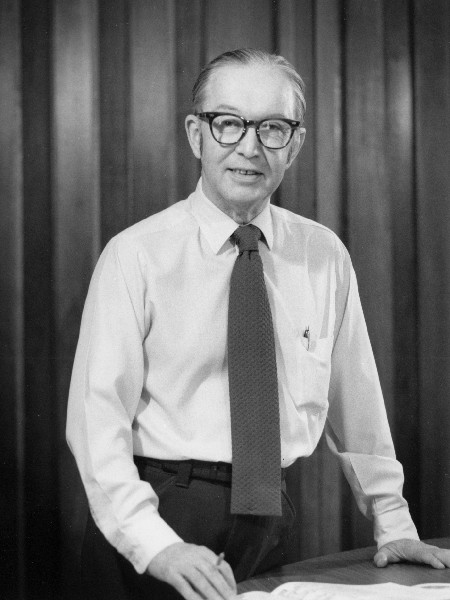
Where were we?  Oh yes.  It is important to recognize negative as well as positive accomplishment.  So I introduce “The Higgy,” an award named after William Higinbotham, as the mirror award to our well-established “Al.”

Just as Al Copeland was not without serious flaws as a person, William Higinbotham was not without his virtues.  Higinbotham did, after all  develop the first video game.  But Higinbotham dismissed the importance of that accomplishment and instead chose to be an arrogant jerk by claiming that his true accomplishment was in helping found the Federation of American Scientists and working for the nonproliferation of nuclear weapons.  I highly doubt that the Federation or Higinbotham did a single thing that actually advanced nonproliferation, but they sure were smug about it…

I suspect that Al Copeland, by contrast, understood that he was a royal jerk.  And he also understood that developing a chain of spicy chicken restaurants really does improve the human condition.  Higinbotham’s failing was in mistaking self-righteous proclamations for actually making people’s lives better in a way that video games really do improve the human condition.

So, “The Higgy” will not identify the worst person in the world, just as “The Al” does not recognize the best.  Instead, “The Higgy” will highlight individuals whose arrogant delusions of shaping the world to meet their own will outweigh the positive qualities they possess.

We will invite nominations for “The Higgy” in late March and will announce the winner, appropriately enough, on April 15.  Thanks to Greg for his suggestions in developing “The Higgy.”


In Which Greg Loses It

March 7, 2020

339ED27B-D0B6-4047-A189-61A804B67B33(Guest post by Greg Forster)

I thought JPGBers following the saga of Higgy winner Kosoko Jackson might be interested to see my new post over on HT, on the latest controversy over an author’s book being cancelled.

In which I lose it.

An excerpt:

(Wisconsinites, vote Dan Kelly on April 7!)

Wait, sorry, wrong part of the post. Here we go:

He can even self-publish his book! Publish it under the label Woody Allen Is Totally Innocent and Also All the Teen Girls Love Him Books and Industrial Waste, Inc.!

“But wait,” I hear you cry, “aren’t you the same Greg Forster recently seen driving donuts in Kosoko Jackson’s front yard?”

Yes, so for the slower students, I shall hereby Break If Down (stand back):

For the record, yes, this does constitute an amendment to my earlier statement here on JPGB that “At bare minimum, if the publisher initially judged the book publishable, it should come out so we can all evaluate it based on what’s actually in it. Publishers aren’t obligated to publish anything and everything, but they do need to show some spine once they’ve made a judgement – especially given that they’ve actually read the book and the critics who are Angry Online almost never have.”

That statement neglected to include a caveat to the effect that in some cases, the initial publication decision was so foolish that it’s right to reverse it. I had in mind potentially hard cases, open to interpretation, where mob rule threatened to make informed judgment impossible – not colossal errors of prudence on the publisher’s part, where informed judgment unambiguously supports cancellation. Judging each case on the merits is the overall principle here.

Speaking of judges: Vote Dan Kelly on April 7!


How Much Money Does a School System Need?

February 11, 2020

JOKER_burning_money_3_0600

(Guest post by Greg Forster)

Looks like I picked the wrong week to quit dousing piles of cash with gasoline and lighting them on fire. OCPA carries my second new article of the week, this one on a theme all too familiar to JPGBers:

This January, the Tulsa World suggested a new year’s resolution for Oklahoma’s state legislature: “fund public schools adequately.” The paper declares that “we’ve never actually tried it, or at least not for long enough to make a difference.” So “let’s make 2020 the year.”…

From 1970 to 2016, current spending per student in Oklahoma public schools shot up from $3,637 to $8,426, in today’s dollars (adjusted for inflation). Are the schools twice as effective? Or let’s make this even easier. As spending doubled, did educational outcomes improve at all—by any amount? No. And the Tulsa World would seem to agree, since it asserts that the spending increase from $3,637 to $8,426 was not “enough to make a difference.”

How much money would be enough for the schools to finally provide the quality of education we have a right to expect of them? Curiously, The Blob always talks as if there were an objectively correct answer to that question (if what we spend now is “not enough,” they must know how much “enough” is), yet we never learn that answer.

Could it be that they themselves don’t know the answer? If not, why not?

Since my previous OCPA article this week had a Russia connection, I thought I’d find one for this article, too. And this time, I decided to class up the joint with some highfalutin literature:

Leo Tolstoy once wrote a short story called “How Much Land Does a Man Need?” Pahom, a peasant, is convinced that he would be completely happy and content with his life—and thus immune to temptations from the devil—if he only had enough land. But each time he acquires more land, he discovers that it isn’t enough; he always needs more. His quest for “enough” land destroys him.

Something like that has happened to the government school monopoly. Generations of demanding more and still more funding, promising to deliver results as soon as they have “enough” money, have slowly eroded the system’s cultural prestige and middle-class political support. The rising star of school choice can be traced, ultimately, to the monopoly’s stubborn refusal to ask itself Tolstoy’s question. How much money does a school system need?

How much feedback does an edu-pundit need? Let me know what you think!


Even Seemingly-Harmless Choice Regulations . . . Aren’t

February 9, 2020

C1E966A2-1651-484D-831C-441841C53345
(Guest post by Greg Forster)

OCPA carries my article on an illegal data breach of private data on choice families in Arizona…

The Arizona Department of Education handed over a spreadsheet containing private data on participating families to Save Our Schools Arizona, a group that wants to shut down choice programs and restore the government’s monopoly on education.

The sheet gave the names and email addresses of more than 7,000 parents, the grades their children are in, and the children’s disabilities (if any). As the parent of a special-needs student, I’m not interested in hearing from anybody that this was not a grave violation of the privacy of these families. And we’ll be lucky if ideological fanatics, whipped up by the monopoly system’s generations of irresponsible rhetoric demonizing school choice, don’t use this information to target the families for harassment—or worse.

…that has implications for seemingly harmless regulations on choice programs.

Oklahoma is not obligated to wait for the arousal of a slumbering federal law enforcement to take the hint Arizona is giving it. The more private, personal data the state collects—or requires schools to collect and send it—the less privacy we all have. While the data that were illegally released in Arizona might be data that we can’t prevent the government from having if a choice program is going to exist, the lesson for Oklahoma is that there’s more danger in handing over more data.

No need to keep your opinion private; let me know what you think!


Pass the Popcorn: Into the Unknown

January 22, 2020

Elsa & Anna in the mist

(Guest post by Greg Forster)

I’m delighted to report that Frozen II is every bit as ambitious as the original, and almost (not quite) as successful in its ambitions. It is well worth your attention, both as entertainment and as a profound reflection on the human condition, and repays multiple viewings – the only big-franchise movie in years of which I think all that can be said.

This review contains only mild spoilers – I mention a few specific things, but you will not lose any of the experience of the film from reading this. And some of the things below that seem to be spoilers are actually written to avoid revealing the real nature of the things they discuss. You’ll just have to trust me! (That, or go see the movie and come back here when you’ve seen it, either way.)

Elsa determined

As I first began to understand what the original Frozen was up to, what really impressed me was not just the sheer audacity of it – making a Disney movie that would permanently destroy the influence of Walt Disney’s poisonous romantic individualism in American cinema – but the absolute ruthlessness of the filmmakers in pursuit of their goal. Comparing Frozen to Enchanted, an earlier Disney film (and a princess film to boot) that had also taken liberties with traditional Disney romanticism, I summarized the difference Frozen would make: “Frozen is not subverting the Disney view…for fun. Frozen is playing to win.”

Frozen II is also playing to win, but against a different opponent. Like the first Frozen, it succeeds by making you really feel why the opponent that it is setting out to destroy is so attractive – making you commit yourself emotionally to the target – and then pulling out the rug. Your spirit soars with Elsa as she casts off the bonds of her oppression, repudiating her painful abuse at the hands of an unjust culture, and sings a paean to the liberation of unlimited individuality. (If your spirit does not soar, I regret to inform you that you are spiritually dead.) When Frozen has made you leap for joy that Elsa has embraced unlimited individuality, then – and only then – does it force you to see why unlimited individuality does not work, even on its own terms, and is in the long run an agent of death.

That is what I meant when I said “Frozen is playing to win.”
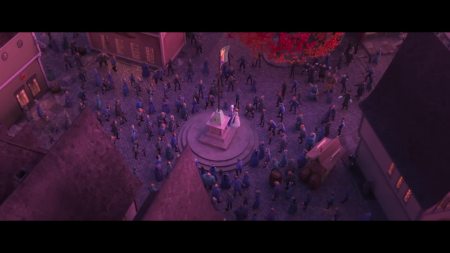
Flag of Arendelle

The target in Frozen II is not romantic individualism but romantic collectivism – traditionalism and nationalism as organizing principles of human life. The rousing opening number, “Some Things Never Change,” expresses the main characters’ deep and abiding love for Arendelle and its way of life. The uncertainties and anxieties of individual life find reassurance in the continuity and stability provided by community. That the individual is made to find their place in a community of love is, from one angle, the whole point of the first Frozen.

The desire for justice, in particular, can only be fully expressed socially; debates about what is right and wrong in interpersonal affairs are always carried out in particular communities, not in some abstract global seminar of the world’s philosophers. Justice is ultimately not an answer to the question “how shall I live?” but an answer to the question ” how shall we order our lives together?”

Hence the citizens of Arendelle sing: “We’ll always live in a kingdom of plenty/that stands for the good of the many.” And Elsa replies: “And I promise you, the flag of Arendelle will always fly!”

And the health and well being of the community is interdependent in even deeper ways than that with the individual happiness of its members. One section of “Some Things Never Change” is devoted to Kristoff’s anxiety as he prepares to propose marriage to Anna. This may seem out of place in a song about the nation’s way of life, but it is not. As an individual, Kristoff is well aware that he faces potential failure in his longing to marry Anna, and is of course preoccupied with his own uncertain fate. But the long-term telos of human erotic desire is the formation of families, which are themselves the primal community, and are also the soil out of which the larger community grows.

Frozen II would have been an even better film if the directors had not cut Anna’s song “Home,” which is not in the movie but can be heard on the deluxe soundtrack. I understand why they felt they had to cut it, because thematically it overlaps somewhat with “Some Things Never Change.” But there were other things that could have been cut (more on that below). And “Home” accomplishes several things that “Some Things” by itself does not. It completes the connection between individual happiness and the community; it emphasizes that a healthy love of one’s homeland is a great moral good, generating in us a sense of calling to do good for our neighbors and contribute to the flourishing of others; and (without spoiling anything) it sets up Anna in a really beautiful way for what happens to her at the very end of the movie.

Elsa into the Unknown

Frozen II is not going to debunk the need for community – which was, again, the point of the first movie. But it is going to debunk the idea that “some things never change.” On the contrary, all things corrupt and decay. Our communities are 1) always in a process of falling apart just under the surface, and 2) implicated in historic injustices that we are responsible to right, even if it means a risk of social chaos. Community simply as such is good, but the near-universal human tendency to romanticize community is as deadly to the real health of the community as the tendency to romanticize individualism is to the real health of the individual.

The reason we have a universal tendency to romanticize community is precisely because our desire to imagine a safe and stable future is at war with the real fact of our vulnerability and anxiety as individuals. We want to look forward into the future and see safety, but the prospect of personal failure cannot be eliminated from human life. To imagine a safe future, we look at our national ways of life and tell ourselves that “some things never change.”

Delightfully, there are subtle clues on screen during “Some Things Never Change” that telegraph the falsehood of the romantic view of community. Anna and Olaf sing of the people of Arendelle that “we get along just fine,” exactly as two people in the background get into a nasty argument. The permanence of Arendelle is “like an old stone wall that will never fall,” they sing, as stones fall out of the wall that Olaf is walking along.

Which suggests something about the lines later in the song asserting that “we’ll always live in a kingdom of plenty/that stands for the good of the many” and “the flag of Arendelle will always fly!”

Not to mention this lyric, which flies by the first time you hear it, but when you see the movie a second time it stands out like a tower:

May our good luck last!

May our past be past!

“Our past?” What on earth is that referring to? Best not to ask! Quick, let’s move on to the part of the song where we sing about how we’ll always have plenty, and stand for the good of the many!

We are summoned, by the voices of the spirit world, to abandon this romantic illusion of our nation’s future. We must hear those voices and step, as Elsa puts it in the first of her two showstoppers, “Into the Unknown.”

(By the way . . . two showstoppers! Whatever they’re paying Idina Menzel, it’s not enough. I hope she’s making enough money to build a real ice palace of her own, in downtown LA, maintained by the world’s most expensive array of outdoor air conditioners.)

Anna in the cave

We can always choose not to hear the voices of the spirits, if we are stubborn. But when Elsa finally chooses to hear the song, she discovers that an old wrong must be put right.

Putting old wrongs right is something you can’t stop doing once you start. And you can’t specify in advance how much damage you’re going to do to the existing social order. Like I said, the world being what it is, all our communities are implicated in legacies of injustice.

Everything Elsa and Anna love is ultimately put in jeopardy by the unrelenting demand of the spirit world that old wrongs must be put right.

On the edge of death itself, they reach the realization that there is really only one thing that never changes. (No, not “change,” that would be dreadful.) The one thing that never changes is a thing that is both human and divine at the same time, immanent and transcendent. It is a thing that builds up our communities, and at the same time tears them down.

You can’t have a love of justice that builds community without a love of justice that constantly threatens to destroy it, because they are the same love. The divine and human wrath that comes down upon our communities for their sins is only a form (a terrible one) of the same divine and human love that summoned our communities into being. It is only our stubborn refusal to listen to the song of the divine that allows us to avoid seeing this painful fact.

As Anna sings, echoing the words of the wise troll: When we can no longer envision a safe future, when even hope itself has died, we can only “Do the Next Right Thing.” And that is enough.

Matthias & Anna

The person who has the answer to it all is Lieutenant Mattias. The son of an immigrant who came to Arendelle and made good, Mattias learned at an early age both to love Arendelle and not to romanticize it – to value the preservation of the good, but also be ready for any amount of change should justice require it.

The original Frozen was attacked for not having characters of color, which was the dumbest sort of anti-creative tokenism, given that a small and isolated kingdom in the far north of Europe in the early 19th century (the timeline is established more clearly in Frozen II than in the first movie) need not have had a single resident of color. So naturally I was nervous that artistic integrity had been sacrificed – in ways that might do more damage to marginalized communities than to anyone – when I saw that Frozen II had a major character of color. Mea culpa!

It is a testimony to the genius of the filmmakers that Mattias is not only not a token, but he manages to simultaneously satisfy both and neither of the two sides of our culture wars. Right-wingers may cheer him as “assimilated,” and in a sense he is, but not so assimilated as to have forgotten the lessons of life on the margins where he came from, or to make Arendelle the foundation of his mental universe. Left-wingers may cheer him as a “prophetic” marginalized figure, and in a sense he is, but his love and his gratitude for Arendelle are profound, and he unhesitatingly serves the royal family of Arendelle to the last full measure of devotion.

Frozen II is playing to win.


Frozen-2

There is, in the end, no salvation. The love that builds community will always destroy it. And so on, forever.

Unless, of course, there is a supernatural savior who can bridge the gap between the world of the spirits and the world of humanity, uniting a human nature and a divine nature into a bridge with two sides. In that case, all bets are off!

(When my coreligionists rushed to claim the original Frozen as a product of Christian theology, I thought they were erroneously reading into the story a specifically Christian significance that need not be there. I still think that was the case. But Frozen II removes the ambiguity.)

If Frozen II has not landed with the same massive sensation of overwhelming cultural force as the original, I think that is partly because Frozen is now an established mega-franchise, and partly because the message is less radical to audiences that have already assimilated the first Frozen (as well as Inside Out, etc.). But it is also partly because Frozen II makes some missteps. The original Frozen was a hugely ambitious movie that accomplished its ambitions, but also a flawed movie in some respects. So is Frozen II.

The first time you see it, things feel rushed, because the movie is trying to do just a bit too much for its runtime. In mid-production, Josh Gad, who plays Olaf, brought the filmmakers a really attractive idea for a theme to work into the movie, based on an adorable exchange with his daughter (on whom Gad based the Olaf character’s personality). I’m glad they saw what a bright idea it was, and how it dovetailed with what they were already doing, but I think they did end up biting off more than they could chew. They’d have done better to save most of that stuff for Frozen III. The same goes for Kristoff’s big musical number, which is a funny gag, but not funny enough to justify the screen time it eats up. I assume they did this because Jonathan Groff was the only original cast member who was a professional singer, but he got to do virtually no singing in the first movie. So why not give him a huge, overproduced musical number this time, as an inside joke? (Or, for all I know, the actor may even have demanded it.) The worst flaw, though, is that the lyrics to “The Next Right Thing,” which is the big emotional hinge of the whole movie and sets up the climax, are poorly done. There’s just no easier way to say it; they needed several more iterations on the drawing board with that one.

All these flaws, except the last one, fade away on second viewing. Once you know what’s going on, it doesn’t feel rushed. And the depth of the story unfolds more as you take it in again.

Go see Frozen II. Then see it again.

Our past is never past. But the time is always right to do the next right thing.

Whole Leech-uage Instruction

January 14, 2020

classroom-2787754_640

(Guest post by Greg Forster)

In the past I’ve stayed out of the Reading Wars, but no longer. OCPA carries my latest, in which I compare whole language to leechcraft:

Whole language is based on a fundamentally wrong understanding of what reading is. It’s not a self-contained skill like throwing a baseball or riding a bike. I feel confident in asserting that nobody in the whole history of the world has ever read anything for any reason other than to access the content of what they’re reading. It’s a testament to the resilience of the human spirit that our children somehow manage to learn to read in spite of the methods we use to teach them.

For 17 years, since I got into the education reform business, I’ve been trying to convince people that there is no educational “one best way” that works for all children, and that goes for reading, too. But just because there is no one approach that works for everyone doesn’t mean there aren’t some approaches that don’t work at all. There’s no “one best medicine” that cures all patients, but leeches don’t work for any patients.

When it comes to getting public schools to use phonics instruction, I counsel despair:

There is nothing—I mean it, nothing—we can do to get teachers in public schools to drop whole language. They believe it works. And when the classroom door closes, they’re going to do what they believe works….

The bottom line is that teaching is not a science, it’s an art. There is such a thing as a science of education, such as when we conduct empirical studies and find out that phonics produces better results when the teachers actually do it, but that big programs designed to bribe them to do it don’t cause them to do it. However, the act of teaching itself is not something that can be engineered like a machine. Those classroom doors, which the technocratic reformers who want central control hate so much, simply have to close.

And despair leads to . . . school choice.

Use your mastery of phonics to read it and let me know what you think!


Who Governs the School System?

December 27, 2019

chuttersnap-193778-unsplash
(Guest post by Greg Forster)

The best school accountability is parental choice, of course, but reforms to the public school system’s governance structure can also help. OCPA carries my latest, in which I explain why putting mayors and governors in charge of appointing schools chiefs is modestly helpful but not the cure-all it’s usually sold as:

Jurisdictions that have experimented with letting their chief executives appoint their schools chiefs have generally not regretted doing so. New York City’s experiment with mayoral control of schools, for example, is generally viewed as a modest success.

However, even positive results can be disappointing, if they don’t live up to expectations. And that’s what we’ve seen in New York and elsewhere.

More effective alternatives are a heavy political lift, but worth the heft:

Two simple (if politically difficult) reforms would greatly strengthen the accountability of public school systems to the voters who are its ultimate boss. One is to hold educational elections at the same time as normal elections. Typically, educational elections are held in the spring and/or in odd years. This ensures that few voters participate other than those connected to educational special interests. The people who ride the school system as a gravy train show up to vote in educational elections no matter when they are; everyone else misses out, and often people aren’t even aware the election is happening…

A second reform would be to shrink school districts. A century ago, there were over 100,000 school districts in the United States. Today, there are under 15,000. Meanwhile, the U.S. population has exploded.

This makes a huge difference to school governance. The smaller the district, the closer the school board is to the people it’s supposed to serve. Believe it or not, people used to actually know the members of their local school board. They saw them in the supermarket. Do you think that might have contributed to better school governance?

Let me know what you think!


Pass the Popcorn: Anything Mentionable Is Managable

December 14, 2019

03E168C5-4482-4DEC-B2F4-CBC8F3359EE4.jpeg

(Guest post by Greg Forster)

”Do you know what that means? To forgive?”

Adults only. I’m not joking.

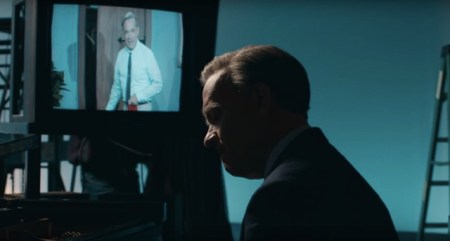
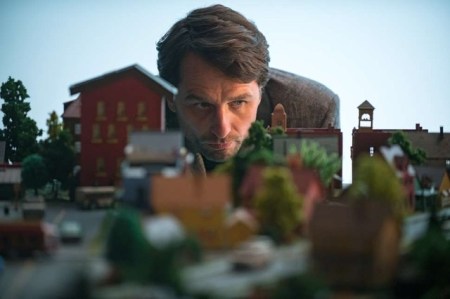
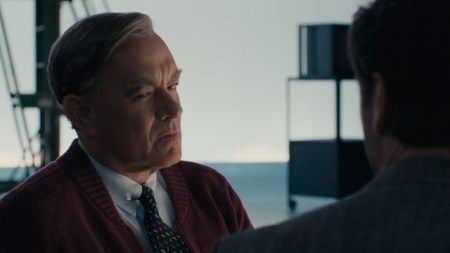
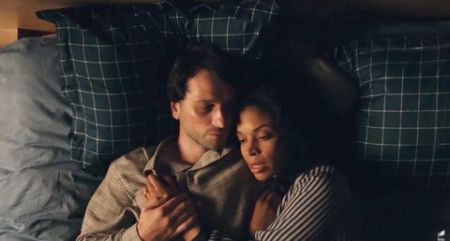
Go see A Beautiful Day in the Neighborhood in theaters. It is a masterfully made film, using every inch of the screen and every decibel of the soundtrack to accomplish its nefarious purpose – to invade your defenses and subvert your cynical expectations. This is not so much a movie as a lived experience invoked by means of a movie. (No, they didn’t spend $100 million on CGI to make Tom Hanks look exactly like Fred Rogers. Get over it.)

But do not take anyone under 13 to see A Beautiful Day in the Neighborhood. And 13 is marginal. Not because of language, violence or nudity.

Feelings can be much more obscene than any of that.

528BFDF5-12E2-4875-B2AD-E360098D1FA5

”Someone has hurt my friend Lloyd.”

A Beautiful Day in the Neighborhood is a movie about death, betrayal, secrets, hatred and hand puppets.

It’s a movie about a man who is so angry at another man that he wants that man to die. So much that he still wants that man to die even as the man is actually dying, painfully, right there in front of him.

A man who must make a choice to release another man from his feelings of anger, but does not realize that he must do this, and does not contain in himself whatever it might require for him to come to that realization on his own.

A Beautiful Day in the Neighborhood is a movie about what we can do with the mad that we feel. About what it takes to take the armor off.

But it’s also a movie about what kind of man it takes to help another man make a choice to release his feelings of anger.

259C2BB0-82B9-4EC6-810F-537EFB8E7E9D.jpeg

“Until recently, my eldest son didn’t tell anyone about me. He’s a very private person. And that’s okay.”

In this movie we watch Fred Rogers do for a grown-up who is in a very (very) grown-up situation what he did for millions of children in their juvenile situations.

An investigative journalist is sent against his will to interview Fred Rogers. Rather than write a simplistic “puff piece,” he feels responsible to figure out what really makes Fred Rogers tick.

That requires the journalist to push Rogers to open up and be vulnerable.

And Rogers, with a divinely innocent cunning and ruthlessness that I can only describe as a good mirror image of Hannibal Lector torturing Clarice Starling for confessions, turns the reporter’s demand for vulnerability against him.

Rogers will reveal himself, alright – he reveals himself by compelling the reporter to reveal himself. Rogers could not reveal himself in any other way, because that is who he is.

Be careful what you wish for.

The singular mystery of Fred Rogers is not that no one but his wife seems to have known what he was really like. Plenty of great men are like that. They’re like that because they’re coy, they’re disciplined not to take risks, they’re always on stage – always have their armor on, lest a vulnerable moment damage whatever great work they’ve set their hands to.

The really singular mystery of Fred Rogers is that he was a completely open book – walking around all day with no armor, making himself vulnerable to other people, talking about things that nobody wants to talk about (“to die is to be human”). That transparency and vulnerability, taking the armor off and keeping it off, was the great work he set his hands to.

And even so, nobody but his wife seems to have had the first clue what he was really like.

Because it takes divine power for one man to carry the burdens of another man’s sins.

FF1396D1-C37D-4B58-99FF-E4C983E54153

“Let’s take one minute and just think about all the people who have loved us into existence.”

Some right-wing culture-war morons have tried to farm clicks (I refuse to link them) off the fact that Fred Rogers’ Christian faith is only referred to obliquely, a couple times, in this movie. But that is of course the whole goddamned point here.

(Of course nothing that follows releases Christians from the obligation to express their faith verbally. But there is such a thing as a story, and such a thing as the point of a story, and such a thing as things that are beside the point of a story.)

J.R.R. Tolkien wrote that the people in the fictional world of Lord of the Rings don’t have religions because that fictional world is itself an expression of religion. If Aragorn and Frodo and Eowyn and all the rest had religions, the story about them would become something other than religion.

Fred Rogers walked around all day taking on the burdens of other people’s sins, and never seemed to mind bearing the burden. And that made him a complete mystery, because nothing in natural human life is like that. No one who is living a natural human life is like that.

But Fred Rogers was like that. And I can think of another person who was like that.

496A4EDB-F1CD-4183-9B7C-CE84ECD9F7BB

“I can see that you are a man of conviction. You know the difference between what is wrong and what is right.”

The final image and sound of A Beautiful Day in the Neighborhood – Rogers at a piano – suggests the price Fred Rogers paid for the life he chose to live. Even the greatest beauty must be disrupted to release the sad and mad feelings our human experience of suffering creates.

But it suggests, also, the price we have all paid for the sin of humanity. A world without injustice would be a world of uninterrupted beauty, a beauty that would never have to be disrupted to release the sad and mad feelings. And that’s just not the world we live in.

Sometimes people are good

And they do just what they should

But the very same people who are good sometimes

Are the very same people who are bad sometimes

Go see A Beautiful Day in the Neighborhood. In theaters, where the divinely innocent cunning and ruthlessness of the filmmakers can do its work properly.

Leave the younger kids at home.

Leave your armor at home, too.


Are Test Scores as Meaningless as “Height Effects”? No, but Technocratic Misuse of Scores Is

November 25, 2019

tra-nguyen-TVSRWmnW8Us-unsplash

(Guest post by Greg Forster)

I’m already seeing this study being discussed as if it debunked all use of test scores. Four researchers used statistical methods usually associated with measuring teacher effect on year-to-year test score gains, and used them to measure teacher effect on student height. They found a substantial apparent teacher effect on year-to-year changes in height, which is obviously a false positive.

This definitely debunks one way of using test scores – the way commonly used by technocrats and central controllers of the Common Core type. If you use only one year’s worth of data (or, technically, use two years of data to track one year’s worth of change in the data) you are getting a lot of noise along with your signal. Multiple years of change must be tracked before you can sort out signal from noise to measure a teacher’s effectiveness.

But serious scholarship had already long since debunked the one-year way of using test scores. This particular way of showing that technocratic abuse of test scores is absurd gains points for cleverness. However, the finding itself isn’t new. People who really care about measuring effective teaching have been complaining for years about technocratic abuse of test score data!

The technocrats and central controllers have done a lot to make the use of test scores look worthless and even counterproductive. If they don’t want look ridiculous in the way this study makes them look ridiculous, maybe they should start listening to serious scholars about the responsible use of data. Of course, if they did, they’d have to give up being technocrats entirely because technocracy always abuses data.

My thanks to Jay for helping me think this through before posting; thoughts here are my own.


Blood Heir Triumphs

November 2, 2019

(Guest post by Greg Forster)

Jay suggested in his Al award post we might be in need of some positive vibes. So check out this trailer for Blood Heir, which is about to be published in spite of the best efforts of Higgy winner Kosoko Jackson. (Meanwhile, no sign of Jackson’s own book, cancelled by the same kind of dishonest wokescold mob that Jackson tried to help against Blood Heir; Amazon’s review of Jackson’s book: “We don’t know when or if this item will be back in stock.”)

It’s not as good as Autumn Thomasson’s trailer, but then again, nothing is.

So what did Jackson and his woke vigilantes accomplish in the end? They put “the most talked-about fantasy of 2019” on the front of that trailer. 

I hope the publisher makes One Billion Dollars and buys a Blood Heir billboard across the street from Jackson’s house.