Pass the Popcorn: City of The Dark Knight (Issue #0)

July 25, 2008

New PTP Mini-Series, Issue #0 – Rare Collector’s Item!

Have you been regressing endogenous variables again?

(Guest post by Greg Forster)

It’s too much.

I mean, too much for one blog post. Last Friday I lightheartedly left a comment on Matt’s PTP entry promising to have my Batman post up by Monday. Surely, I thought, I’d be so juiced after the movie that I’d run straight back to my computer and blog until my fingers bled.

But no, this was a very dense movie. Chris Nolan is ambitious, and the movie vindicates his ambition triumphantly. After the movie, I was unable to talk much about it – because there was too much to digest. And by the time I was ready, I had already forgotten half the thoughts I’d had during and right after the movie. Clearly this is a work that’s going to repay a lot of repeat viewing – a hypothesis I intend to test vigorously, hopefully with plenty of checks for the robustness of the finding (e.g. does the movie repay repeat viewing if the repeat views are in a drive-in? In IMAX? With co-workers? In the afternoon? Does it make a difference if I order a soda with my popcorn? How about what kind of soda I order? I’d better try watching it once with each kind, just to be sure).

At this point I just know that any blogging I do is going to be no more than a pale shadow of what I really thought and felt during the movie. So, to assuage my conscience (and save myself from spending all day working on this post, fretting about what I’m forgetting to include) I’m hereby inagurating a special Pass the Popcorn Mini-Series. I’m posting some of my thoughts now, in anticipation of revisiting the subject later. (Don’t worry, not too often. But we are going to have to find something to write about on Fridays after the summer movie season dies down, and this will help fill the gap.)

Oh, before I forget:

(HT xkcd)

There are already some haters out there, like John Podhoretz in the Weekly Standard, who are offended – nay, outraged – that a comic book movie is getting the kind of praise The Dark Knight is getting. Well, OK, it ain’t Shakespeare, but that’s apples and oranges. Let’s take a similar example – say, a mob movie. Podhoretz never misses an opportunity to share his opinion that The Godfather is the best movie ever made. And I agree that The Godfather deserves to be taken seriously as a great work of art. But it is a mob movie. If The Godfather can be great, why not this?

Unforgivably, Podhoretz works out his anger by spoiling as much of the moive as he can get away with. So don’t read it until after you’ve seen the movie. (Reading the spoilers in this blog entry is of course an entirely different matter.)

It’s readily apparent from Podhoretz’s review what’s really eating him: he loves the old, wild and carefree tradition of superheroes from the Silver Age, recently resurrected so dazzlingly in Iron Man. That tradition got killed off in the 1980s, in large part due to Frank Miller’s amazing work in reinventing Batman, and Podhoretz resents that this type of superhero has crowded his preferences out of the market.

(As an aside, Frank Miller looks to have come way down in the world, artistically speaking; to judge by the preview they ran in front of Dark Knight, Miller’s newest project is to take Will Eisner’s treasure The Spirit and turn it into a porno movie. But all will be forgiven if Holy Terror, Batman! ever actually sees the light of day.)

I sympathize with Podhoretz. One of the best comics ever drawn is Scott McCloud’s ZOT!, which came out when the Dark and Serious school was at its height, as an attempt to rescucitate the wild and carefree hero. (According to McCloud’s introduction, it was especially a reaction against the literally murderous nihilism of Watchmen, which, alas, now looks like it’s finally going to get the movie they’ve been threatening to make of it for decades. Yes, there was a lot of real storytelling genius in Watchmen. That’s what makes it so horrible – to see such genius used to glorify cynicism and murder.)

But while most of the Dark and Serious stuff was crud, let’s face it, most of the Wild and Carefree stuff that preceded it was also crud. ZOT! and the new Iron Man are jewels, but jewels in the rough. So was Miller’s original Dark Knight Returns, and so is the new Dark Knight.

And then there’s the politics. There’s a handy precis of the issues, with links, here if you’re interested. My take: The Dark Knight probably isn’t directly about the war on terror. It’s about things that are universal. (Ever since Frank Miller’s Dark Knight Returns, Batman has periodically been used to explore these issues – meaning we don’t need to bring in the war on terror to explain why these issues are present in a Batman movie.) But of course if these things are universal then they’re as present in the war on terror as everywhere else, so the application of the movie’s subject matter to the war on terror in the viewer’s mind is perfectly valid. 

Having unburdened myself of these reactions to the reactions to the movie, do I have time left today to say anything about the actual movie? Just briefly.

Warning: Believe with Caution

The Dark Knight seems to be primarily about moral hypocrisy. People are not “basically good.” All human beings are both good and evil. However, it’s not in our nature to admit this about ourselves; we have to pretend that we’re good. And the same hypocrisy manifests at the social level – society, being made up of human beings, is not “basically good” but is both good and evil. However, in order to keep from becoming aware of our own evil, lest we should have to admit the truth about ourselves, we also have to sheild ourselves from other people’s evil. If we admitted that everyone else was not “basically good,” it would be really hard to avoid raising the question about ourselves. And so we have to pretend that everybody is “basically good.”

The Joker is out to expose our hypocrisy. His ultimate goal isn’t to kill, it’s to corrupt. He would say that he isn’t out to corrupt us, but to make us admit to the corruption that’s already there in our hearts. But to “admit” to the courrption in the Joker’s sense is really to surrender to it – to become “corrupt” on a whole different level.

This, incidentally, is why it was such a good decision to give the Joker no backstory (and not just by omission but by the Joker’s deliberate obfuscation about his own past). As Chris Nolan has said (I’m paraphrasing), this Joker isn’t a person, he’s a primal force. My hypothesis: the reason this Joker has to be a primal force and not a person is because he has to stand outside of our hypocrisy. The Joker’s place in the narrative requires him to be, not both good and bad, but all bad. And while the Joker is right that all people are bad, it’s also true that all people are good – therefore the Joker, being all bad, can’t be a person.

On the individual level, the Joker’s mission is manifested in the “one rule” dynamic between Batman and the Joker. As all real Batman fans know, Batman’s one rule is that he doesn’t kill people. The Joker’s goal for the Batman is to induce him to break his one rule – thereby proving that his rule is really a construction of self-righteous hypocrisy.

Here the influence of Miller’s Dark Knight Returns is obvious, although Miller’s Joker is primarily motivated by a desire for mass murder and cares about Batman’s one rule only secondarily:

Late Nite Talk Show Host “Dave”: You’re said to have only killed about six hundred people, Joker. Now don’t take this the wrong way, but I think you’ve been holding out on us.

Pansy Liberal Psychologist: This is a sensitive human being here, Dave. I won’t let you harrass-

Joker: I don’t keep count . . . I’m going to kill everyone in this room.

Dave: Now that’s darn rude.

At the social level, the Joker is out to stop Gotham City’s resurgent belief in justice, embodied (in different ways) by Batman and Harvey Dent. I wish there had been an opportunity to establish more tangibly the positive impact that Dent’s mob cleanup was having on the city; it would have made us feel more urgently the real stakes that the Joker was playing for.

What the heck is this guy’s name again? They said it, like, five times in the movie. You would think I’d remember.

And that leads to the big twist at the end – maybe the best twist I’ve ever seen in a movie: the good guys have to defend hypocrisy. Of course it would be great if society could admit the truth about its own corruption and still strive to uphold justice anyway. But fallen human nature doesn’t work that way.

All my life, I’ve hated those cheesy TV shows where they decide to cover something up because “people need heroes.” Even the Simpsons, when they set out to parody this, couldn’t quite bring themselves to pull the trigger. It’s not done as a parody when Lisa decides not to reveal that Jebediah Springfield was actually a notorious pirate; they play it straight.

But The Dark Knight makes it work. People really do need their heroes, and their heroes really are fallen people. Ergo, people really do need hypocrisy. The reason I buy this in The Dark Knight when I’ve rejected it in all previous incarnations is because The Dark Knight doesn’t try to make it out to be a good thing. It’s wrong that people need hypocrisy – that people need to have heroes before they’ll agree to uphold justice and do good and so forth. It’s ugly and stupid and evil. As Dr. Surridge says in the original V for Vendetta comic (not the dreadful movie version), “There’s something wrong with us.”

Yes, it’s wrong that people need hypocrisy – but since they do need it, it’s not necessarily wrong to supply it.

Hold that thought. More to come. Stay tuned!


Eduwonk: Vouchers Boring, Bus Service Consolidation Fascinating

July 23, 2008

(Guest post by Greg Forster)

One of Eduwonk’s most important contributions to the education blogosphere is the snarky comment. Snark is frowned upon in these parts (don’t leave a snarky comment on this post, or you’ll be violating site policy). But if I may register a minority report on behalf of the loyal opposition, I think snarky comments do for the marketplace of ideas what short sellers and speculators do for the stock market: they’re not classy or respectable, but they perform an indispensable price-discovery function. (Another similarity is that the people who do them make tons of money – right, Andy? Andy?)

Of course, not all brokerage houses are interested in having their services used by short sellers, and there may be some sense in declaring some education blogs as snark-free zones. The short sellers can always take their business to other brokers – just like I post all my snarky comments on Pajamas Media.

But if Eduwonk is going to dish out snark, he’d better be able to take it. So check out what I found while scrolling through Eduwonk this morning.

In response to John McCain’s big education speech at the NAACP:

If this campaign turns into a debate about vouchers please just shoot me now. I’d prefer a debate that ignores education than that tired fight again.

Two days earlier:

Shouldn’t we be . . . trying to get school districts out of the busing business altogether? Big school districts like to boast about how they bus more passengers each day than Greyhound. That’s true, but also sort of insane if you think about it and consider that their primary mission is teaching and learning. Besides, today’s buses are horrendous polluters even when greener technology is available, control over transportation means control over parental decision-making, and school districts often aren’t even very good at designing efficient transportation schemes or adapting to changing circumstances like $4 gas, which was not exactly an unforeseen issue in the transportation world…Student safety means that, especially for younger students you want to be careful about how you merge transportation schemes, but having local or regional agencies that handle transportation would pay a lot of dividends if was approached with the dual principles of being greener and more parent- and civic-friendly at the front-end.

Got that? A debate about the policy that represents the most fundamental break from the existing system, is most consistently supported by empirical evidence, and is currently the most politically successful movement in the education world is boring enough to induce suicide. But the prospect of transferring control of bus services from school districts to local or regional transportation agencies is fascinating.

Supply your own snarky comment; I’m not allowed.

But before leaving the subject, I will note that if you’ve seen the new Batman movie, you already know whom to call for all your school bus operation needs:

You know how I got these scars? I was in an accident caused by an incompetent school bus driver, because educational transportation is controlled by school districts whose core mission is teaching and learning rather than by local or regional transportation agencies!


Educating Journalists about Education Science

July 16, 2008

(Guest post by Greg Forster)

Don’t worry, this post is definitely not a continuation of the recent big dustup about 1) whether it’s naughty for scholars to provide journalists with accurate information about their work; and 2) whether it’s naughty for anonymous bloggers to argue that scholars’ motives are relelvant to their credibility, but bloggers’ motives aren’t relevant to theirs (which reminds me of Pat Moynihan’s quip about the Supreme Court cases, since overturned, holding that government can’t subsidize private school books but can subsidize classroom equipment such as maps; Moynihan asked, “What about atlases?” – books of maps? What about scholars who are bloggers? Or bloggers who write about scholarly studies? Once you start legitimizing ad hominem arguments, where do you stop?).

But I would like to expand on a comment that Eduwonk made during said dustup, which deserves more attention and has significance well beyond the issues that were at stake in that squabble. The comment got lost in the exchange because it was somewhat tangential to the main points of contention.

He wrote:

Not infrequently newspapers get snookered on research and most consumers of this information lack the technical skills to evaluate much of the work for themselves.   As education research has become more quantitative — a good thing — it’s also become less accessible and there is, I’d argue, more an asymmetry to the information market out there than a fully functioning marketplace of ideas right now.  In terms of remedies there is no substitute for smart consumption of information and research, but we’re not there yet as a field.

We are living in the first golden age of education research, brought on by the advent of systematic data collection, which every other field of human endeavor began undertaking a long time ago but which education is only getting around to now because it has been shielded from pressure to improve thanks to its protected government monopoly. Given the explosion of new information that’s becoming available, educating journalists about quantitative research is a huge problem. Jay is right that there is a marketplace of ideas. There really can’t help but be one; the idea some people seem to have that we can forbid people who own information from spreading it around as much as they want is silly. But just because there’s a market doesn’t mean there’s a perfect market, and Eduwonk is right that markets require informed consumers to function well. The current state of methodological ignorance among journalists does hinder the market of ideas from functioning as well as it should. (I’ll bet Jay would agree.)

As it happens, the same subject came up this morning in a completely different context, as my co-workers and I struggled to figure out the best way to present the findings of an empirical study we’re coming out with so that journalists will be able to follow them. And I wasn’t there, but I hear this topic also came up at a bloggers’ panel at the recent conference of the Education Writers’ Association.

Here at the Friedman Foundation, this has been a topic of great importance to us for some time, since exposing the bad and even bogus research that’s used to justify the status quo is one of our perennial challenges. We took a stab at composing a journalist’s guide to research methods. It went over well when we first distributed it (at last year’s EWA, if memory serves). But it’s necessarily very basic stuff.

Eduwonk is also right about journalists having been snookered by lousy research, and I think that has had both good and bad effects. The good news is that I’ve noticed a clear trend toward greater care in reporting the results of studies (not at propaganda factories like the New York Times, of course, but at serious newspapers). In particular, we’re seeing journalists talk about studies in the context of previous studies that have looked at the same question. Of course, we have a long way to go. But we’re on the way up.

On the bad side, however, I have also noticed a greater reluctance to cover studies at all. Part of that is no doubt due to the increase in volume. I’m young, but even I can remember the heady days of 2003 when any serious empirical study on the effects of a controversial education policy (vouchers, charters, high-stakes testing) would get at least some coverage. Now it’s different, and (to echo Eduwonk) that’s a good thing. But I think it’s extremely unlikely that this is the only factor at work. Junk science has poisoned the well for serious research. No doubt that was part of its intended purpose (although of course the motives of those who produce it have no relevance to its scientific merts or lack thereof).

My hope is that journalists will soon realize they’re getting left behind if they don’t learn how to cover the research accurately. Their job is to go where the news is. If the news is in quantitative research – and that is in fact where a lot of it is – they’ll have to learn how to get there.

Also, the changing media landscape will help. The old idea that journalists must be neutral stenographers with Olympian detachment from all the issues they cover is an artifact of the mid-20th-century role of the media as oligarchic gatekeeper, and is rapidly dying out. As “news” increasingly includes coverage by people who are actively engaged in a field, even as advocates, we can expect the news to be increasingly provided by people with greater amounts of specialized knowledge. (By the way, the old idea of the scholar as detached Olympian stenographer is equally an artifact of vanished circumstances, and will probably be the next thing to go; see the Our Challenge to You statement on the inside cover of any empirical study published by the Friedman Foundation for our views on the relationship between advocacy and scholarship.)

An optimistic view, yes – but since my optimism on other subjects has been triumphantly vindicated over the past year, even when the conventional wisdom said to head for the hills, I think I’ll let it ride.


Pass the Popcorn: Fresh Prince of the Fourth

July 11, 2008

(Guest post by Greg Forster)

Last week’s PTP was preempted by Independence Day, so this week we get a delayed look at the latest Will Smith summer blockbuster, which opened on July 2. As it happens, we went out and saw it last night at the drive-in, so for once I’ll have actually seen the movie I’m reviewing.

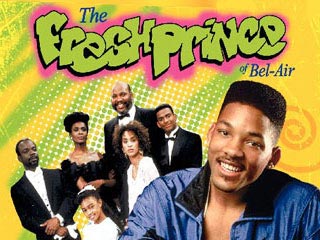
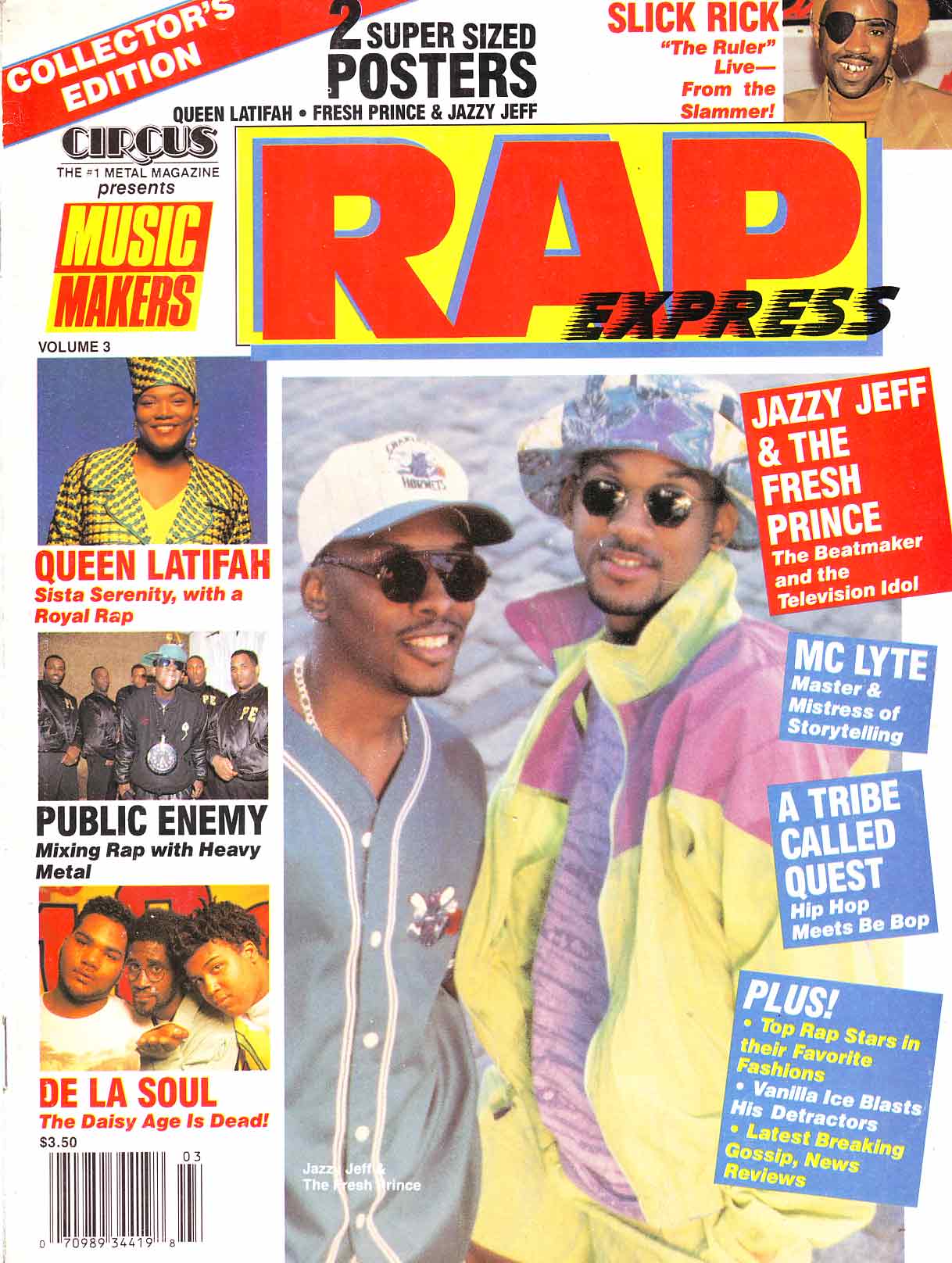
But since our focus around here is generally retrospective, I want to start with a look back at the amazing career of one of the few movie stars of his generation who’s always appealing. But, like Pixar, he wasn’t always what he is now! The Will Smith summer blockbuster machine is so effective that it’s hard to remember a time when he was just the latest fly-by-night novelty act. So join me – won’t you? – in a leisurely stroll down memory lane:

(HT Press Rewind)

Love the hat in that last one!

And who could forget this immortal contribution to the novelty genre? It’s hard for me to believe this now, but when I was 15 years old, that was the funniest thing in the whole history of the world without exception.

While we’re on the subject, is there anything more amazing, and at the same time profoundly disturbing, than the fact that the army of geeks who are the Internet have taken the time and the intelligence and the energy and all the other gifts God gave them and used them all to produce not only a detailed profile of the DJ Jazzy Jeff and the Fresh Prince act, but even one of DJ Jazzy Jeff himself? Jazzy Jeff has apparently gone on to become “an R&B producer of note,” so at least one member of the act managed to save his career after the breakup.

OK, this is all good fun, but we all know how the story ends. The crashed alien ship opens and the hideous monster appears, bent on destroying all human life it can lay its tentacles on, and then the Fresh Prince decks it in one blow, pops a stogie into his mouth and says . . .

“Welcome to Earth!”


In that golden moment, a star was born.

(Too bad the movie in which it occurred was such a comprehensive stinker; of the millions of humor e-mails that used to get circulated back when the Internet was text-based, one of the funniest I ever saw was “40 Things I Learned from Independence Day.”)

Actually, looking the man up on IMDB (carefully avoiding the entries for Will Smith, art director of one TV episode in 1998; Will Smith, writer and actor for obscure cable shows; Will Smith, actor in the 2006 movie Wormwood; William Smith, sound technician on numerous movies and TV shows for 16 years; and Will Smith, frequent appearer as himself on the program “HGTV Design Star”) I am shocked to discover that the movie Bad Boys came out a full year before Independence Day – in other words, at a time when there was no Will Smith, only the Fresh Prince of Bel-Air (which show was still on the air at the time).

The next July 4 weekend came Men in Black, which has worn extremely well and remains one of the all-time best summer movies. Don’t believe me? Get it out and watch it. If you don’t laugh your pants off, I’ll give you your money back on this blog entry.

And then, in a turn of events that has become something of a theme here on Pass the Popcorn, it all started to go wrong. First came Enemy of the State, which must have been a big comedown for Gene Hackman, who starred in The Conversation, the outstanding 1970s movie that Enemy of the State would have been trying to be if it were trying to do anything but milk money from Will Smith. And then there was Wild Wild West, which subject we shall pass by unremarked upon.

But in this case, Smith found redemption. He had always had serious acting chops and the ambition to use them, as he had proved waaaaaaaay back in 1993 with Six Degrees of Separation. So he quit making stupid movies and broadened his horizons, first with The Legend of Bagger Vance and then with Ali. No one mistakes these movies for timeless classics, but for Smith they represent the path back from the brink of the abyss.

Having rescued himself from a fate worse than death, he dove back into blockbuster territory, making Men in Black II (which was fun and did the job of killing two hours pleasantly), Bad Boys II and I, Robot. Then, after a one-year transitional return to comedy with Hitch, it was back to serious acting (this time even more serious) with The Pursuit of Happyness and I Am Legend – the latter clearly with one foot in both worlds, garnering praise for his performance as well as delivering action . . . though the angsty twist ending was changed at the last minute and what they hastily threw together to replace it makes no sense at all, landing the movie alongside Blade Runner, Dawn of the Dead, Superman II and Die Hard 4 on Cracked’s list of “5 Awesome Movies Ruined by Last-Minute Changes.”

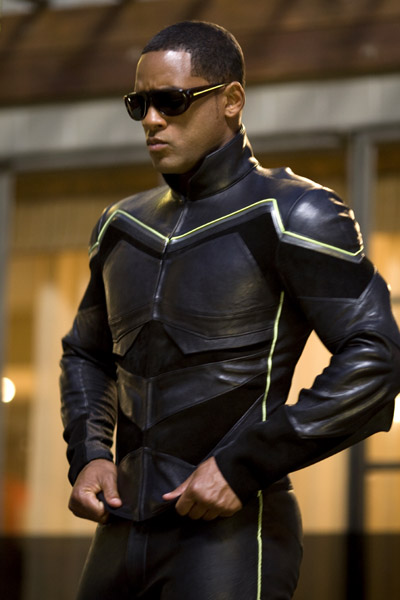
Now we have Hancock. The critics hate it, but what do they know? I had a great time.

Skimming the pans, the main complaints seem to be 1) it contains “treacle,” and 2) it could have been much better than it was. It must be admitted up front that some treacle does occur in the movie. I found that it passed by relatively painlessly. I think that’s because the treacle is just there for setup. In order to communicate the premise in time to move on and do everything this movie wants to do, it has to paint you a psychological portrait of Hancock in double-quick time. This is done by having Hancock encounter a clean-cut do-gooder who rapidly diagnoses Hancock’s dysfunctions and explains to him why he behaves the way he does. And then we’re off to the races! It could certainly have been done with more subtlety, but I found the damage limited.

“I will fight crime . . . . . . . butt . . . naked . . . before I wear that.”

And it’s also true that this movie could have been something much better than it is – again, if it had been done with more subtlety, and if more care had been taken to keep certain plot points a little more logical, particularly in the climax. But while this isn’t the great movie it could have been, it’s still quite good if you take it for what it is. There’s a lot here to enjoy. Some of it is slapstick and bull-in-the-china-shop stuff – Hancock blundering through heroics while drunk, Hancock graphically describing to a seven-year-old (in front of his horrified mother) what he should do to the school bully – and that stuff is good, but there’s also some clever wit, especially when Hancock is trying to clean up his act with the help of a PR consultant, and we watch him walk through the same painfully artificial gestures that the same PR consultants train our business and political leaders to perform in real life, except that Hancock doesn’t have the skill they have at faking sincerity and it all comes off wrong. I doubt I’ll be buying the movie, but I thoroughly enjoyed the two hours I spent watching it.


Learn to Swim by Drowning

July 10, 2008

(Guest post by Greg Forster)

So far I’ve kept largely out of the hubbub over Reading First, but I can’t resist a comment on Stephen Krashen’s “opposing view” editorial in yesterday’s USA Today.

On the merits of Reading First I offer no opinion, but Krashen’s proposal for what we should be doing instead of Reading First is a good illustration of how little the program’s opponents are offering by way of promising alternatives.

Krashen argues that we should increase literacy by spending more money on libraries. Apparently the mere physical presence of books will help people learn how to read – by osmosis, presumably.

Actually, Krashen’s real argument is that we don’t have a problem with literacy anyway. He asserts that 99 percent of U.S. adults can read and write “on a basic level.” Thus, we should be focused on increasing people’s ability to read at a higher level – in which respect he asserts that the main obstacle is a lack of access to reading material among low-income populations.

His source for the 99 percent literacy datum is the CIA World Factbook. Insert your own joke about the CIA’s “slam dunk” intelligence on Saddam’s WMD program here.

In fact, the CIA includes all persons 15 years and older in this statistic, so we’re not just talking about “adults.” The CIA is actually claiming that 99 percent of U.S. adults and teenagers can read and write.

Clearly the CIA is defining “literacy” at such a low level as to be meaningless for evaluating the need for programs like Reading First. If the CIA considers 99 percent of U.S. adults and teenagers to be literate, then it must be counting the ability to read a stop sign as literacy. Reading First is intended to address literacy problems on a slightly more serious level.

As for the idea of spending more money on libraries, if the unspecified “studies” that Krashen asserts show literacy benefits from libraries involve scientifically valid analysis of systematically collected empirical data, then by all means let’s spare a little more money for the libraries. (In Krashen’s defense on that last point, USA Today doesn’t really offer a lot of space for specifics on what studies you’re referring to and what methods they used.)

But the alleged need for more libraries really ought to be considered separately from fights over pedagogy. The relevant question for evaluating the merits of Reading First is how we ought to be teaching reading in our schools. Unless Krashen wants to quit teaching reading in schools and just lock the kids in the library until they figure out how to read, his argument for more libraries really doesn’t speak to the question at hand. He might as well argue that since Reading First allegedly doesn’t work, we should be spending the money on hospitals instead.

All of this, of course, is separate from the question of whether spending more money on libraries really would improve literacy. In response to Krashen’s editorial, I recieved an e-mail that was circulated by Martin Kozloff of the education school at the University of North Carolina-Wilmington, who gave me permission to post it here:

This [proposal to spend more on libraries] has been Krashen’s refrain for the past 20+ years. It’s hard to argue with investment in libraries, but it feels like a bait and switch argument rather than addressing instructional needs of students.

Yes, we CAN eliminate drowning simply by building more swimming pools and then immersing the kids in water-rich environments.

“Here, ya go, Billy.” [SPLASH]

“HAAALLLLP!”

“It’s alright, Billy, you are an emergent swimmer.”

Kozloff takes quotes from critics of phonics-based instruction and substitutes swimming for reading:

“Children must develop [swimming] strategies by and for themselves.”

“Saying that we are determined to teach every child to [swim] does not mean that we will teach every child to [swim]…The best we can do … is … to ensure that, if not every child [survives a rip tide], there is a minimum of guilt and anguish on the part of teachers, students, and parents.”

“We might offer students some [floating] hints at an appropriate moment when they are [drowning] and aren’t sure how to [stay afloat].”

“[Swimming] learning proceeds naturally if the environment supports young children’s experimentation with [rip currents].”

“In my view, [swimming] is not a matter of [stroking with your arms and kicking with your legs] but of bringing meaning to [drowning].”

“Early in our miscue research, we concluded.That [the middle of an ocean] is easier to [swim in] than a [raging river], a [raging river] easier to [swim in] than a [lake] , a [lake] easier than a [pool], a [pool] easier than a [bath tub], and a [bath tub] easier than a [kitchen sink]. Our research continues to support this conclusion and we believe it to be true.”

“The worst [swimmers] are those who try to [paddle and kick] according to the rules of [physics and common sense].””In my view, [swimming] is not a matter of [stroking with your arms and kicking with your legs] but of bringing meaning to [drowning].”

“Early in our miscue research, we concluded.That [the middle of an ocean] is easier to [swim in] than a [raging river], a [raging river] easier to [swim in] than a [lake] , a [lake] easier than a [pool], a [pool] easier than a [bath tub], and a [bath tub] easier than a [kitchen sink]. Our research continues to support this conclusion and we believe it to be true.”

“The worst [swimmers] are those who try to [paddle and kick] according to the rules of [physics and common sense].” 

Kozloff is, of course, a harsh critic of whole language instruction. I have no desire to step into the phonics/whole language debate as such.

But Kozloff clearly has a point when he observes that offering libraries as an alternative to Reading First is like offering swimming pools as an alternative to a program of swimming lessons. Even if the lessons in the Swimming First program aren’t effective, it’s simply a distraction to respond by talking about the need for more swimming pools.

And quite a lot of the noise about Reading First has this quality about it – by which I mean what Kozloff calls a “bait and switch” quality. No one in the national spotlight seems to be championing whole language the way they were, say, ten years ago. If the critics think whole language is the way we should go, let them say so. If not, what are their alternative models for good pedagogy?


Have You Heard About the Latest Thing in Education? Fads!

July 2, 2008

(Guest post by Greg Forster)

In a number of recent discussions, we’ve tangentially touched on the subject of educational fads: some new idea will quickly gather a huge following, tons of money will pour in to support it, and then a few years later everyone will forget about it – not because anyone actually bothered to measure whether the hot idea worked, but because a new fad will come along, and the cycle will start over. As a result, the demand for improvement that ought to be producing political capital for real reforms instead gets dissipated in the mad rush for fad after fad. Meanwhile, as educators see fads come and go, they become less receptive to all proposed ideas – even ideas that would accomplish real reform and/or have solid science showing they work. It seems to be pretty widely agreed upon that this has been one of the major problems in education over the past century.

I’m tempted to say that complaining about the problem of fads has become a hot fad among reformers. But fads are things that don’t last! Complaints about the fad problem, by contrast, are perennial. Recently I’ve noticed a couple more contributions to the genre: Roger Frank Bass of Carthage College provided a sharp-edged overview of the educational fad phenomenon in the Milwaukee Journal Sentinel on Sunday. Meanwhile, last Monday America’s last education labor reporter noted the juxtoposition of two headlines – “The Next Big Thing: Small Schools” in Baltimore, and “Small School Experiment Doesn’t Live Up to Hopes” in Seattle. “Maybe they were just on the wrong coast,” quips Antonucci. (Come to think of it, I was shocked back in May to see Newsweek pimping small schools on the front cover – this, not months but years after the failure of the Gates Foundation’s extraordinary investment in small schools had become clear even to the Gates Foundation. There’s nothing sadder than people who desperately want to be cool but are always wearing last year’s outfit.)

What I don’t see very often, though, is reformers asking why we have this problem. There are no other socially urgent functions (from law and emergency services to the production and sale of consumer goods) that have remained basically unchanged and unimproved for a century because they’re crippled by an inability to 1) stick with one idea long enough to 2) objectively measure whether it works and 3) make a deliberate decision on whether to keep it. Only education spins its wheels this way; everywhere else in society, “fads” are either the province of children and adolescents (for whom they are probably beneficial, since they harmlessly dissipate dangerous youthful energies) or else are shunted off into the realm of “fashions,” which are not supposed to accomplish anything serious and thus do nobody any harm if they constantly change.

So what’s different about education? Well, if you’ve read your homework assignment, or if you’ve spent any time here on Jay P. Greene’s Blog (or “JPGB,” as all the kids are calling it when they text each other about it), you already know the answer: accountability for results. Educational decisionmaking exists in an “outcome vaccuum” to a greater extent than decisionmaking in just about any other field.

Of course the vast majority of people in the system are well-intentioned, but we all know where the road paved with good intentions leads. Flitting from one promising idea to the next promising idea is precisely the kind of thing well intentioned people can end up doing when they lack the disciplining force imposed by firm outcome-based incentives.

“Incentives again? What, are you proposing a unified field theorem of educational problems, where everything that’s wrong with our schools traces back to this single cause?” Well, maybe not – but if there’s an alternative explanation for the unique prevalence of the fad problem in education, I’d be open to hearing it.


Pass the Popcorn: Pixar as Art and Commerce

June 27, 2008

(Guest post by Greg Forster)

With Wall-E conquoring the movie universe today, how could we do anything else for this week’s Pass the Popcorn but a retrospective on Pixar?

Yet how much is there left to say, really? A retrospective of Pixar along the lines of the previous retrospectives I’ve done here would read like this: they made a really amazing movie, then they made another one, then they made another one . . .

I could tell you all about how great Toy Story and Finding Nemo are. But you already know. So I’ll skip the movie-by-movie retrospective and just look around for things to say about Pixar that everybody doesn’t already know.

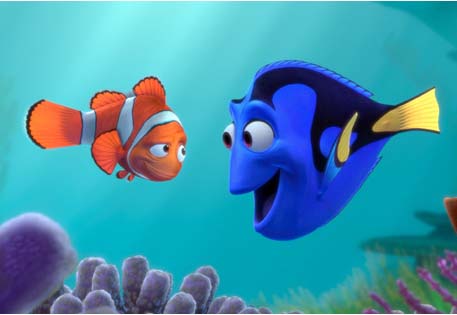
“Hey, Marlin! Didja know Pixar made a whole bunch of really great movies?”

“Yes, Dory, I knew.”

“Oh. Okay, then. . . . Hey, Marlin! Didja know Pixar made a whole bunch of really great movies?”

If I shared the view that Pixar’s more recent offerings (Cars, Ratatouille) represent a step down from its earlier accomplishments, I might write my third consecutive retrospective of a great filmmaker who succeeds both artistically and commercially, then lets fame go to his head and produces substandard work. However, I don’t think Pixar’s quality has declined. Yes, Cars is not Toy Story. But you know what? A Bug’s Life ain’t Toy Story either. Between the two, I’m not sure which I’d take – they’re both quite good for what they are, definitely well above the average “family movie” (not that that’s saying much), but they’re not great filmmaking. Same goes for Monsters Inc.

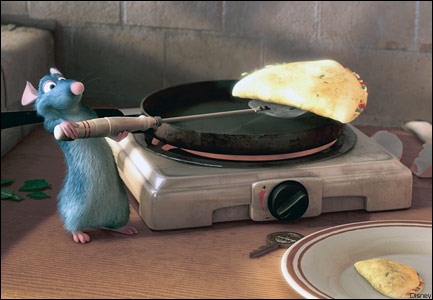
Believe it or not, this was a Pixar movie. Remember?

And I don’t care what anybody else thinks, I think Ratatouille is a very impressive accomplishment. It not only has sharp dialogue (consider, for example, the duel of wits between Linguini and Anton Ego in the press conference scene) and great humor (in its context, the moment where Ego is transported back to childhood by his first bite of Remy’s ratatouille is every bit as funny as the “I am your father” line in Toy Story 2), but also philosophical depth (the whole movie is basically Plato’s Ion in cartoon form, with cooking as a proxy for art and creativity generally – as Ego’s climactic monologue makes clear).

“Not by craft does the poet sing, but by power divine.”

So Pixar movies have always ranged from good family movies (A Bug’s Life, Monsters Inc., Cars) to exceptionally good family movies (The Incredibles, Ratatouille) to landmark artistic achievements (Toy Story, Toy Story 2, Finding Nemo).

But other things about Pixar have changed over time. It’s hard to remember this now, but there was a time when the name “Pixar” primarily meant “digital animation.” Of course everyone acknowledged that Toy Story was also a great story, and would have been noteworthy even without the technological breakthrough. But it was the digital filmmaking technology everybody really noticed when Toy Story hit the theaters.

Once upon a time, this wasn’t the adventures of good old Woody and Buzz. It was a revolutionary breakthrough in digital filmmaking that was going to change the role of technology in movies – which happened to come in the form of a story about a bunch of toys.

Of course, today nobody cares about Pixar as a technological innovator – and that fact is as great a testament as anything to its accomplishments as a producer of art. “Pixar” now just means “great movies.”

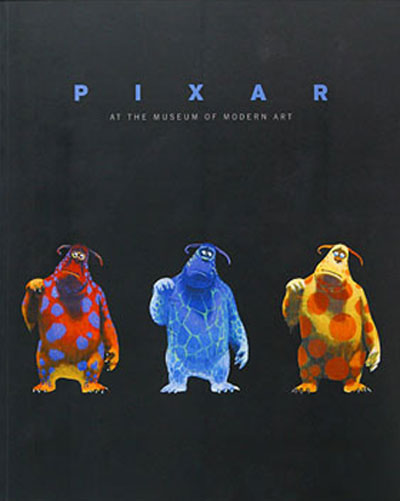
Pixar as fine art (at MOMA; HT www.rationalistic.com)

And, technology aside, Pixar’s accomplishments are breathtaking not only as art but also as commerce – in fact, I think what’s really most noteworthy about Pixar is that it appears to have developed a working business model for consistently producing good-to-great movies.

The idea of a business model for producing good art will strike some as misguided or even offensive, but it is really nothing more than the reappearance of what was the normal mode of producing art in almost all times and places. All great art before the advent of Rousseau’s philosophy – from Aeschylus and Euripides to Dante and Hieronymus Bosch to Shakespeare and Rembrandt – was produced in the context of a economic system designed to systematize financial support for artists (in the form of community festivals, household patronage, guilds, etc.) who were in turn expected to produce good work in response to something approximating market demand. The supposed antinomy between art and commerce is a prejudice of our own time. As C.S. Lewis once remarked, before the Romantic movement with its idolization of the artist and the creative process, the idea that artists should not be expected to produce good work “to order” would have been considered as absurd as the idea of a captain who could only steer the ship when the fit took him. Socrates’ remarks to Ion notwithstanding, in addition to divine power there is indeed a “craft” to the production of good art, and the divine power responds to the craft as much as the craft responds to the divine power.

Their greatest challenge: Reconcile art and commerce!

By now everyone knows the formula: Pixar collects a small stable of very talented filmmakers and gives them a long production cycle (four to five years for each project) during which they work collaboratively, each member of the team contributing actively to the other members’ projects. Everyone draws on everyone else’s talent and ideas, and the long cycle ensures that nothing has to go out the door before it’s ready.

Presumably it’s the presence of so many great artists in such a collegial and collaborative atmosphere that explains the remarkable phenomenon of Pixar shorts – the company has taken a defunct genre, the animated short, and produced enough great work in it to support a separate release on its own DVD even though they’re all already out there as bonus features on the DVDs of Pixar movies (which everybody who bought the shorts DVD probably already owns). The short Knick Knack was by itself worth the price of admission to Finding Nemo. No doubt what we’re seeing is the ideas generated during artistic bull sessions at Pixar that couldn’t support a full-length movie, but were too good to throw away.

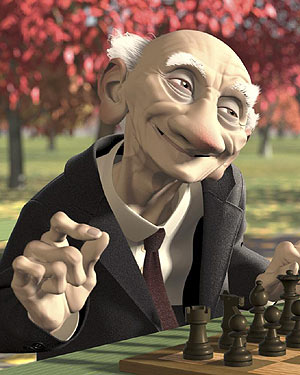
If you look at him and say, “Hey, that’s the guy who cleaned and fixed Woody in Toy Story 2!” you’re missing some of Pixar’s best work.

The Pixar formula looks very much like art-colony stuff, which is not what people expect from an intersection of art and commerce. But my point is that the Pixar formula is a formula – Pixar didn’t happen by accident, and it didn’t happen without investors who evaluated the business plan and judged (correctly, as it turns out) that the Pixar formula would produce reliable returns in the form of consistently good movies. In other words, while all the non-commercialized, anti-commercial art colonies seem to have stopped producing art worth seeing, in this case commerce produced an art colony that works. And it’s not fundamentally all that different from the household patronage system of Renaissance Italy, with Steve Jobs standing in for Lorenzo de’ Medici; capitalism just allows the patrons to draw resources from a broader base.

There’s no reason the Pixar model couldn’t be reproduced by other movie companies, by TV production houses, by music labels, etc. Even “high” art, for which there is a much more limited audience, could be produced this way. You would just have to finance it through contributions from, and sales to, the wealthy (and, presumably, through government subsidies) rather than by selling stock – which is pretty much how high art is financed now.

Of course, it takes a certain kind of person to create and sustain a collegial atmosphere among a bunch of top-flight artists – a class of personality not known for playing well with others. This is John Lasseter’s most important accomplishment, and recognizing the value of what Lasseter was doing is Steve Jobs’s most important accomplishment (at Pixar, anyway). For this, Lasseter can be forgiven even the egomaniacal introductory sgements he plastered onto the American DVD releases of the works of Hayao Miyazaki – but that’s a rant I’d better stop before it starts.

There are other Steve Jobses out there in the entertainment industry. There’s no reason they can’t find other John Lasseters and hire them to create new Pixars.

Pixar has a “formula” on the creative side as well as on the institutional side. Around the time of Toy Story 2 or so, I remember Jay remarking that Pixar movies succeed because all of them are about something, and specifically they’re about something that kids understand and adults still care about. In the early movies this was always pretty clear – Toy Story is about the anxiety of being replaced (Buzz is to Woody as a newborn baby is to the older sibling), A Bug’s Life is about standing up to bullies, Toy Story 2 is about death. In some of the later movies the subject isn’t as clear – you can make out a case that Monsters Inc. is about fear of the unknown, but you have to stretch a lot further. Nonetheless, the formula is still there for the most part, and it’s still pretty clear in most of the movies.

How will Wall-E fit in? The director (Andrew Stanton, he of Finding Nemo) has confirmed what seemed likely from the previews – namely that the movie has an environmental theme. That would of course be a disaster, since the last thing Pixar needs is to start making preachy movies. But Stanton swears the movie isn’t preachy. And I’ve long since given up judging Pixar movies by the previews, which always seem to promise disappointment, and thankfully have always proven wrong. The previews for Finding Nemo struck me as awful.

So I guess I’ll see you all at the theater tonight, and we’ll all find out together.


Weekend PJM Column

June 25, 2008

(Guest post by Greg Forster)

I was out of town earlier this week and didn’t get a chance to post a link to my Pajamas Media column on the D.C. voucher evaluation, which ran over the weekend. It’s here.


Lefty? You Take that Back!

June 25, 2008

(Guest post by Greg Forster)

Mike Petrilli has completely misunderstood my response to his and Checker Finn’s NRO piece last week.

I would let it slide, but the man also called me a “lefty,” so now my honor is at stake. (And even while delivering this shiv to the ribs, he calls me “our friend Greg Forster.” Beware the smiling mamba!)

Pistols at ten paces being illegal, I must content myself with another blog post.

To recap:

1) Mike, writing with Checker, claimed that in the NCLB era the kids at the bottom had made good progress while the kids at the top remained unchanged.

2) They said this meant that NCLB had sacrificed “excellence” in order to promote “equality.”

3) I responded that if it’s true the kids at the bottom are getting better while the kids at the top are staying the same, it sounds like we’re making progress toward both more equality and more excellence.

Well now Mike throws this at me:

Is the whole population getting “more excellent”? No, the whole population is making incremental progress. That’s surely good. But excellence is something else entirely. According to Webster’s, it’s the quality of being “superior, eminently good, first-class.”

So the improvement in learning among the lowest-performing students is “incremental progress” but it is not an improvement in excellence. Well then, incremental progress toward what, exactly, if not toward excellence? If they keep making incremental progress until they’re all as smart as Einstein, wouldn’t that be excellence? And doesn’t that mean that the progress they’re actually making now is progress toward excellence? So if that’s not an improvement in excellence, what is it?

Then he delivers the shiv:

Greg’s definition equates “excellence” with a narrowing of the achievement gap. That’s breathtakingly radical. Who knew that Greg had become such a lefty!

Mike, I said we were making progress toward both equality and excellence. I didn’t say that progress toward equality was progress toward excellence. If I say that my daughter is getting both taller and smarter at the same time, does that mean I equate height with intelligence?

If we want to parse definitions, I would define narrowing the achievement gap between groups as an improvement in “equality,” and any raising of the level of achievement – whether across the board or in a particular group – as an improvement in “excellence.” And obviously you can have both of those at the same time without collapsing the distinction between them.

Meanwhile, by Mike’s definition, if some students improve while others stay the same, we have made no progress toward excellence. I don’t think that’s the way the word “excellence” is normally used.

If I wanted to respond to Mike’s final paragraph in kind, I could say this:

By Mike’s definition, no matter how much improvement the other kids in the class make, only the kids at the top of the class can ever be capable of “excellence.” That’s breathtakingly reactionary. I had no idea he was such an elitist!

But I would never do something like that to a friend.


More Equal and More Excellent? Yes, We Can!

June 19, 2008

(Guest post by Greg Forster)

While I’ve been debating the merits of the DC voucher study with Matt this morning, I’ve also noticed Checker Finn and Mike Petrilli have a colunmn attacking NCLB on NRO. They cite John Gardner’s question “Can we be equal and excellent too?” and argue that NCLB sacrifices excellence for the sake of equality – neglecting education for the top students in order to raise those on the bottom.

Their evidence? Students in the lowest decile have made big gains in the NCLB era, while those at the top have flat achievement scores.

The broader question of the tradeoffs made under NCLB I’ll leave for another day, but it seems worth pointing out that Checker and Mike’s evidence doesn’t back their argument; in fact, it backs the reverse.

Pop quiz!

Question One: If the kids at the bottom are doing better while the kids at the top stay the same, is the whole population getting more equal or less equal?

Question Two: If the kids at the bottom are doing better while the kids at the top stay the same, is the whole population getting more excellent or less excellent?

I’ve always agreed with NCLB critics that universal excellence is an unreasonable goal. But if it’s unreasonable, why are Checker and Mike holding that out as the goal by which NCLB should be judged?

On the other hand, if the current system is badly dysfunctional, then by correcting its worst flaws it may be possible to increase equality while also increasing excellence. Eventually we must reach a point where the two goals will start to diverge and we have to make tradeoffs. But that doesn’t mean we’re already at that point – as Checker and Mike’s evidence suggests.

Can we increase equality while increasing excellence? Yes, we can!