What Is “Merit”?

September 16, 2009

(Guest post by Greg Forster)

As JPGB’s friend Marcus Winters notes on NRO today, the Obama administration has been staying the course on this issue, denying “Race to the Top” funds to states that disallow the use of objective measurement in evaluating teachers. Marcus also rightly links this to the topic of merit pay, which the president repeatedly embraced during the campaign. One of the biggest obstacles to enacting real merit pay is making sure that the measurement of “merit” really measures merit. Too many experiments with “merit pay” have really been experiments in peer evaluation pay, grade inflation pay, and so on. Check out Marcus’s article for more.


Peer Review, DC Style

September 16, 2009

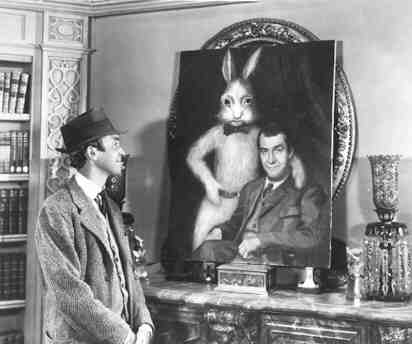
Harvey

Elwood Dowd admires a painting of himself with the DOE peer reviewer

(Guest post by Greg Forster)

Eduwonk reports that Arne Duncan and his Race to the Top team are discovering just one of the many fun flaws of “peer review”:

A lot of behind the scenes chatter and concern and I’d say even worry that it’s going to be hard to get “Race to the Top” proposal peer reviewers who know a lot about school reform – and proposals like this are complicated.  There are a lot of conflicts among the usual suspects.  After all, teachers’ unions have to sign on off the applications and can benefit from them so they’re self-interested, most wonks outside of government are helping various states get together ideas and applications, and states themselves are pretty self-interested, obviously.  Add on to that the generally meager rewards of peer reviewing in the first place and this issue has a lot of folks chattering about exactly who can do this work in a high-quality way…

So it sounds like the standard they’ve set for themselves is to find reviewers who know a lot about school reform but have no vested interest in school reform. How many people did they think were going to fall into that category?

Ben Stein in Ferris Bueller (wide)

Anyone? . . . Anyone?

Maybe “peer review” wasn’t really an appropriate rubric for evaluating government grant proposals. Has anyone ever suggested, say, peer review for Pentagon contracts?

But then, if they don’t put some kind of academic-sounding veneer on it, the thoroughly politicized nature of the process will be too embarrassingly transparent.

Of course, when they do “peer review” in academia they have the best of both worlds. The process is just as corrupted by the self-interest of the participants – mostly not in terms of politics but in terms of their desire to promote research that agrees with their own findings and suppress research that might call their own findings into doubt – and yet because the reviewers are professional academics everything is assumed to be done in the interests of scholarship.


Do You Know What Else Rises to the Top?

June 10, 2009

If Arne Duncan did half of what he talks about, we’d be making huge progress toward education reform.  It would be great if  he actually followed the evidence regardless of ideology, only funded what works, made strides to end the lifetime-guaranteed employment of ineffective teachers, provided financial rewards to the most effective teachers, etc… 

We’d be lucky if Duncan manages to do one-tenth of what he talks about.  But I’m amazed at how many people confuse words with action.  Mike Petrilli is right that we should praise this new rhetoric and Greg has persuasively argued that rhetoric is politically important, but people really get carried away in their praise of a bunch of mostly empty words

Perhaps it is natural for people to suck up to whoever is in power.  Perhaps it is the triumph of hope over experience.  But I have to say that I am deeply skeptical of what Duncan will accomplish.

Let’s take as an example the Race to the Top money.  How does anyone really believe that a one-time expenditure of less than $5 billion is going to have any significant influence on the nature of $550 billion in annual expenditures?  This isn’t the tail wagging the dog.  This is the tail of the flea on the dog wagging the dog. 

What’s more, everyone except the most politically naive understands that there is enormous political pressure on Duncan to distribute the $5 billion roughly equally so that it provides absolutely no incentive to race to the top.  Andy Rotherham has dubbed this the peanut butter meme because people are guessing “how many states the Department of Education will have to include in the ‘Race to the Top’ funds to make the initiative politically palatable without spreading the money like ‘peanut butter’ across the states”

For those who still somehow believe that the Race to the Top money is going to have a big effect (and may also believe in the tooth fairy), I’d like to make a little wager.  I’m willing to bet that every state will receive at least some money from the Race to the Top fund and that the distribution of money will be roughly proportionate. If you think I’m wrong, would you be willing to bet that fewer than 30 states get the money? 

Like with much else that Duncan says, the Race to the Top fund is just a bunch of empty words.  You can’t have 30 and certainly not 50 states at the top.  Unfortunately, cream isn’t the only thing that rises to the top.

Edited to fix the link to Greg’s post; see also Matt’s post and to clarify Andy’s quotation.