(Guest post by Greg Forster)
If you didn’t like my take on Iron Man 2, try this one on for size:
Part of the long-running series.
(Guest post by Greg Forster)
If you didn’t like my take on Iron Man 2, try this one on for size:
Part of the long-running series.
 2 Comments |
  Pass the Popcorn | Tagged: Continuity, Greg Forster, Iron Man, Iron Man 2 |
  Permalink
 Posted by Greg Forster
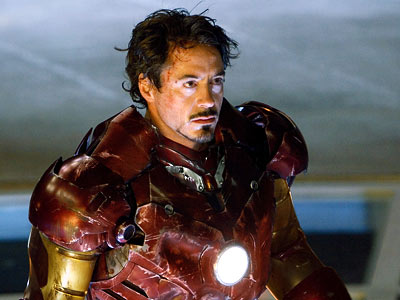
(Guest post by Greg Forster)
My first movie post here on JPGB made the controversial assertion that Iron Man was good but Speed Racer was better, so I’ve been looking forwrad to blogging on Iron Man 2. (Alas, I’ll never get to blog on Speed Racer 2.)
Iron Man 1 got all the little things right, but the big thing right smack in the middle of the whole movie – Tony Stark’s psychology – was poorly handled. As I argued two years ago, the reason was marketing; Tony’s motivation could be read as either left-wing or right-wing, and they didn’t want to alienate half the audience by clarifying the issue.
I was pleasantly surprised by Iron Man 2. I was expecting that they would no longer get all the little things right – and that expectation was borne out. Iron Man 2 has lots of amazingly dumb moments. But what I wasn’t expecting was that this movie would have a clear message at the heart of it. This time, they got the big thing right. By which I don’t mean that they chose to make him right-wing or left-wing, but rather that they had something worth saying and they came out and said it in a satisfying way. Iron Man 2 is Iron Man 1 inverted – the dumb quotient is ratcheted way up, but the palladium arc generator implanted in the movie’s chest is now running at full power.
First, on all the little things they got wrong, let me be content to give you just one example.

Early in the movie, the bad guy, Whiplash, has managed to pin down Tony Stark – alone, no weapons, no armor. Over and over again, Whiplash comes at Tony with his deadly high-tech weapons. Each time, Tony finds a cunning way to force Whiplash back or escape his attacks.
And each time, I kept thinking . . .
. . . with all of Whiplash’s amazing technological weaponry . . .
. . . it’s a good thing he’s too dumb to bring a lousy GUN!

Iron Man v. Whiplash, 1981 version
Also, while I’ll probably need another viewing before I’m sure I’ve judged this right, I think the Tony/Pepper relationship didn’t deliver as much this time. I certainly didn’t walk away feeling like it was an important part of the movie, as I did after Iron Man 1. But then, they do some subtle things with the relationship this time (I won’t spoil them) so it may be that on a second viewing I’ll get more out of those scenes.

But all of that is really as nothing next to the thought-provoking issue at the heart of this movie, which is: can superheroes be trusted with power any more than anybody else?
Just as Chris Nolan’s movie The Dark Knight borrowed extensively from Frank Miller’s comic The Dark Knight Returns, Iron Man 2 is drawing on a deep well – although in this case not from the same franchise. A while back Warren Ellis launched a comic called The Authority, in which a bunch of supers team up and use their powers not only to fight off super-powered world-threatening bad guys, but also to fight more ordinary injustices. They knock off tinpot dictators, force Russia to withdraw from Chechnya, and so forth.

At one point the president calls them up to give them grief about all the havoc and instability they’re causing. People will blame America for their actions and attack it in retaliation, he argues. They tell him they’re only doing what any decent people would do if they had the power.
“You just watch your step,” says the president.
“Frankly,” replies the team leader, “we could say the same to you.”
But later, the heroes get drunk on power and start partying all the time and behaving irresponsibly. Bad guys start winning again. The popular and political tides turn against them.
Grant Morrison summed up The Authority very nicely with one question: Superman always puts the flag back on top of the White House. What if he didn’t?
Iron Man 2 is not The Authority. It is, of course, a Hollywood movie, and (as has been noted) is dumb in many respects. Yet it’s asking the same interesting question. The plot revolves around the Pentagon’s anxiety that rogue states or terrorists will develop technology parallel to Tony’s. They want him to hand over his tech so that America will be ready to defend itself. He (of course) gives them the finger. He tells them that his tech is his, and if the government can take away his most cherished possessions at will, then citizenship is actually just “indentured servitude.” Plus, he argues that it’s better to break the government monopoly on protecting the public from dangerous threats: “I have privatized world peace!”
But then Tony starts partying all the time and behaving irresponsibly. His friend the Air Force colonel (remember him?) tries to stick up for him at the Pentagon, but when Tony gets out of control, he steals one of Tony’s suits and becomes War Machine – a government superhero.
The point of the movie: Governments are prone to corruption and must be held accountable to the people. But individuals who claim to speak for “the people” are also prone to corruption and must be held accountable. For that matter, each individual person is prone to corruption and must be held accountabile. Individual liberty and collective accountability must coexist; you can’t have one without the other.
Oh yeah, and Samuel L. Jackson is Nick Fury.

“Does he have a superpower?” my wife asked me. “Yes,” I replied. “He’s a badass. His superpower is badassery.”
If you have a high tolerance for Hollywood schlock – much higher than was required to enjoy Iron Man 1 – I recommend this movie wholeheartedly.
8 Comments | Pass the Popcorn | Tagged: Greg Forster, Iron Man 2 | Permalink
Posted by Greg Forster

 Jay P. Greene's Blog