(Guest Post by Matthew Ladner)
When Arizona Governor Jan Brewer announced her proposed budget, she established a benchmark in calling for the termination of a state program that currently serves 17,400 seriously mentally ill adults to save $37 million, the Arizona Republic reported. The governor’s budget chief, John Arnold, said this spending reduction is especially hard for the governor because she has been a strong advocate for mental-health causes.
“That benchmark means that anyone who seeks more funding from the state must first make the case why the cause is more important than providing services to 17,400 mentally-ill adults,” Arnold told the Republic.
Arizona is spending far, far more money than it is bringing in and lawmakers must make difficult choices. The concept of a benchmark to justify any new spending is therefore a good one. But it cuts both ways. What about continuing to spend in areas that are nowhere near as worthy as services to the mentally ill?
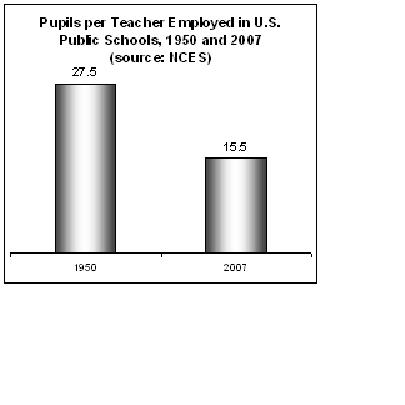
Consider administrators in the K-12 public educational system. The National Center for Education Statistics reveals that of the 104,630 employees at Arizona school districts in 2007-08, only 54,032 of them were teachers. What is more worthy of funding: maintaining an almost 1-to-1 teacher to bureaucrat ratio or maintaining services for the mentally ill?
Here’s another example: community colleges. The Maricopa County Community College District has a current operating budget of more than $683 million. The total budget from all sources is almost $1.5 billion. The district will spend only $276 million on instruction, making it around only 40 percent of its operating budget and only 18.6 percent of its total budget. MCCCD spends more than three times as much for administration and academic support as the state spends on the mentally ill, and the district’s three-year student completion rate is 11 percent. It is not clear what MCCCD is doing with that additional $130 million, but it does not seem to involve quality administration or academic support.
Defenders of the education status-quo will be quick to point out the federal government’s “maintenance of effort” requirements for using stimulus funds. However, there are waivers for such requirements, and Governor Brewer should seek them immediately. When we are cutting services for the mentally ill, we can hardly afford to maintain wasteful spending as a sacred cow.





 Posted by matthewladner


 Jay P. Greene's Blog