Get Lost 316

February 21, 2009

Last week Greg suggested that the Island has a will of its own that trumps the will of humans to direct its powers.  According to Greg’s analysis, the Island is essentially a super-natural being, like God, although he admits the possibility that it is a malevolent super-natural force.  And like God, Greg suggests that faith in the Island involves obeying even when the Island’s reasons are mysterious: “If we understood why the Island demands what it demands, there would be no question of faith (remember, John is the “man of faith”). In theology, “faith” doesn’t mean simply believing in certain facts about God, it means trusting and obeying God. And the supreme test of faith is to trust and obey when you don’t understand.”

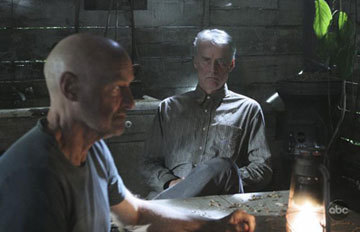
Upon first seeing this week’s episode, 316, I thought Control-G (the hot-key for agreeing with Greg).  Greg is right so often that we had to develop a hot-key to make our agreement more efficient (in your heart you know he’s right).  It certainly would be novel to have a TV series entirely built around faith in a super-natural power.  Ben’s suggestion that Jack was similar to the Apostle Thomas, Locke’s note wishing that Jack had believed, Lapidus’ presence as the pilot of Ajira 316, and the allusion of the flight number to John 3:16 made me think — at first — that Greg was entirely right — Control G!  In the most recent episode Lost not only seemed like a story of vindicated faith but almost an explicit Christian allegory. 

That’s when I started doubting this interpretation.  Major TV producers would never make a series of a Christian allegory.  The religious references, whether Christian or Island as super-natural power,  have to be a false lead.  The argument between faith and science will be revived.  Faith has only temporarily prevailed.

The original faith/science debate revolved around pushing the button.  The alleged purpose of pushing the button was to save the world from destruction.  Locke had faith that the button must be pushed.  But what seemed like faith may have just been the prescience of time-loops.  The odd coincidences may just be the necessity of time course-correcting.  Is the purpose and direction of events determined simply by Fate, a power without an independent will or consciousness, or is there a super-natural entity choosing the course of events?  Greg’s theory seems to be the later, but I suspect it is the former.

I suspect that Fate has the world being destroyed.  Humans have detected this Fate through the Numbers and time-travel and are struggling to alter that Fate.  What seems like the will of the Island may just be the actions of humans in time loops attempting to steer Fate away from global destruction.  Whether they succeed or not will revolve around whether humans can change Fate, not the will of a super-natural entity.  I just can’t imagine a TV series emphasizing the will of a super-natural being over the primacy of human “agency.”  It would be gutsy and interesting if they did, but I just can’t see it in mainstream TV. 

The video embedded at the top of this post, suggests that human action to prevent destruction of the world is going to be central.  The video comes from Comicon and I found it on Lostpedia, where it is known as the Dharma Booth Video.  In it, Pierre Chang sends a message through time urging whoever sees it to continue the Dharma research to change time.  The different factions will struggle over who will control the potential power to change Fate, but we will discover that who controls it will be less important than using it to avoid total destruction.


Get Lost 10

February 13, 2009

christian-locke

(Guest post by Greg Forster)

For a while during this week’s episode I was thinking that using the time-travel plot device to go back and fill in all the continuity holes (e.g. what was up with Rousseau and her teammates getting “sick”?) is really, really good for the show – in fact, I started to think that it works a little too well. It’s very convenient that the Island ’s flashes just happen to bring Jin to the right place at the right time to see Rousseau’s team get attacked, and then her later elimination of the “sick” team, and then – supreme convenience! – meet up with the other castaways.

But then it dawned on me that this “too convenient” dynamic isn’t a problem at all – because it returns us to the central theme of the first season, which began to trail off in the second season and has been moved to the background of the show for some time now – the theme of the Island having a plan and a purpose, rather than just being a passive natural phenomenon.

Over time, as we’ve learned more about what’s on the Island and how the Island works, the focus has been on 1) the mechanics of the Island’s power, and 2) the conflict between the various human organizations (Dharma, the Others, Widmore, and now the 1950s U.S. Army) who have striven for control of its power. The mysterious things that happen on the Island have been less and less about the Island ’s purpose and more about powers harnessed by humans for their own purposes. This goes all the way back to the season 2 button-pushing hatch, where the unimaginable power in the hatch was under human control (first by Dharma and then by castaways). Back in season 1, when stuff happened on the Island it wasn’t under the control of anyone that we know of, except the Island itself, and the power of the Island was directed not to human purposes but rather to the Island ’s purpose for the humans – getting them to confront their inner demons. In season 4 there was a little bit of the Island having its own purpose, with John getting his commission from Christian to move the Island, but that was mainly framed as part of the war between the Others and Widmore.

In this season, at long last the Island is once again its own master. Clearly someone or something with a mind of its own wanted Jin to see what he saw and then carry the knowledge back to the rest of the group. And when Christian told John, “I told you that you had to move the Island – I said you had to move it, John,” and all the ramifications of that began to dawn on me, I was overjoyed. The perfect finishing touch was when Christian said he couldn’t help John get up, and John had a moment of – panic? anger? hard to say – but then accepted it and steeled himself to drag himself up with his own strength. Because he doesn’t need to understand. He needs to carry out his orders and trust that they’re right.

And notice that after John promised not to bring Sun back, Christian emphasized to John that his orders are to bring everyone back.

So now that we’re getting answers to the questions about what kind of power the Island has, the show is going back to the questions it raised in season 1 – namely what kind of purpose lies behind that power.

And we don’t have any answers about that yet. Is the Island’s mind independent? Or is “Jacob” some kind of collective projection of the inner desires and fears of the people on the Island, such that their personal demons get reflected back to them in the Island ’s behavior? Or is the Island a gateway to the afterlife? Note that Charlotte ’s statement “the Island is death” was the episode’s title. They’re deliberately dredging up the theory that the Island is really some sort of Purgatory – but they’re not committing themselves to that theory in any way, they’re just reminding us that it’s one possibility.

Final thought: perhaps John’s death was necessary so that Sun could be recruited to return to the Island without John having to break his word. If so, John’s death could be viewed as a poetically just penalty for his making a promise to Jin that he knew he shouldn’t have made. Because he disobeyed his orders, John doesn’t get to come back to the Island – sort of like Moses’ death on the mountain, just before his people enter the promised land, was his punishment for a seemingly trivial disobedience. John’s death being a “sacrifice” doesn’t conflict with its also being a punishment, as any student of theology will tell you.

But if John’s death is arranged in any way by the Island – as a penalty, a sacrifice, whatever – that implies the Island is somehow in control of events not just on the Island, but everywhere. Perhaps through human agents loyal to it or at least under its influence, or perhaps in some other, more disturbing way.

Either way, it’s clear that this season we’re not just out to discover what lies behind the time travel, the cursed numbers, the smoke monster, etc. We’re also – perhaps we’re primarily- out to discover what lies behind the words “Jacob sent me.”


Get Lost 9

February 6, 2009

(Spoiler Alert!)

Another great episode, but not too much new was revealed that could not have already been guessed. 

1) Jin is alive, but not having seen him die, we could have guessed that he’d be back.  In addition, having him alive will make Sun’s efforts at revenge more tragic. 

2) Miles has been on the island before and is probably Pierre Chang’s (Marvin Candle’s) son, who was the baby we saw with him when the record skipped in the season opener. 

3) Ben was the one sending lawyers to take Aaron from Kate, probably to push her into returning with Aaron to the island to keep him.

The introduction of younger Danielle and the French scientists suggests that much of this season will be consumed with “back-filling” the plot.  That is, we are going to fill in the story of how various, previously minor, characters are actually significant parts of the plot in the past.  Now that we’ve seen the younger Widmore and the younger Danielle, I bet we are going to learn about how Widmore was forced from the island and why some are allied with him and some with Ben.

I’m also pretty sure that “Ellie,” the woman who held Daniel Faraday at gunpoint as he went to dismantle “Jughead,” the H-bomb, is a younger Ms. Hawking.  And Ms. Hawking is Daniel Faraday’s mom.  You can see the evidence for this theory here.

I think Lost will be governed by Terminator Rules, where the future cannot be changed despite efforts to do so.  And with an H-bomb on the island I fear that the end is that the island is destroyed by it.  People are trying to “save the island” by changing time, but it will be doomed.  And we’ll have one big time loop where “Adam and Eve” (who may be Aaron and Ji Yeon, Sun and Jin’s baby) loop back to the start of the island in time from near it’s end.

I do have some questions about Jin and Danielle.  Had they met in the future?  If so, did Danielle remember that she had met Jin in the past?  Is it possible that we aren’t playing by Terminator Rules and Jin’s encounter with Danielle in the past is something that didn’t happen previously?  Has the string of time been changed?

Also, Brian has suggested a theory that the water bottle in the canoe is going to be very significant.  Perhaps the people in the canoe are members of the Oceanic 6 unknowingly (?) shooting at their former fellow castaways.  Or maybe they are intentionally doing so to stop them from something horrible that they are about to do.  As we back-fill we are going to see these same episodes from different perspectives.


Get Lost 8

January 30, 2009

110898_043

“The name is Faraday. Daniel Faraday.”

(Guest post by Greg Forster)

 I’m finally caught up on the new season of Lost. Some thoughts:

1) From “Libby says hi” to “Nice to meet you,” Lost is worth the investment for the humor value alone.

2) Once again, I rejoiced in the return of the real Hurley.

3) Jay is right that we shouldn’t try to suss out the “rules” of the show’s universe. Unfortunately, the show itself seems to feel the need to gesture in that direction – hence Juliet explains that “whatever you have with you” travels with you through time. That’s just asking for trouble. What counts as something you have with you? Do you have to be touching it? What about the backpacks? Their clothes touch the backpacks but they don’t – and of course if you say that anything touching your clothes also goes, why does “stuff you have with youness” traverse clothing but not other objects (say, for example, the Island itself)?

They’d have been better off taking an attitude more like this:

4) Why was Ben lighting a candle in the church?

5) Did you notice that Richard wears eyeliner? It’s pretty blatant. Maybe that’s the fashion for men some time in the future and he forgot to take it off when he came back. Or maybe he’s not really ageless at all – he just looks permanently youthful (like Dick Clark used to) because he has great makeup.

6) In the Lostverse, judges will issue court orders requiring people to give blood samples without revealing who’s asking for the sample or why – but if you walk into Oxford University off the street and ask to go through their employment records, they’ll open them right up for you.

7) Once again, for a man with unlimited cash and an army of goons who’s made tons of enemies and tampered with terrifying occult powers, Widmore’s security really bites.

But I don’t get that scene. How come Desmond thought Widmore would give him the address? How come Widmore gave it to him? I thought the whole reason Desmond and Penny were on the run was because her father was hunting them down. Why didn’t Widmore grab him and turn him over to the goons to beat Penny’s location out of him? If they’re not running from Widmore, why are they hiding? “Somebody toss me a frikkin’ bone over here!”

8 ) Forster’s Iron Law of TV Nerds: If a merely “recurring” nerdy comic relief character becomes a regular fixture of the show, he will gradually morph into a badass action hero who wins the affections of smoking hot chicks. This law derives its inexorable operation from the fact that all TV shows are written by people who are themselves nerdy comic relief characters in real life.

Mark my words, by the time Lost is over, Daniel Faraday will have killed some bad guys, and at least one other attractive female will demonstrate affection for him.

Also known as the Wesley Wyndam-Price Axiom.

nerdy-wwpwesleywyndampryce

Wesley Wyndam-Pryce, Feb. 1999; Wesley Wyndam-Pryce, May 2004

HT Buffy Guide and Wikipedia


Get Lost 7

January 23, 2009

First let me gloat.  I was right on target in predicting that time travel would be the central feature of Lost’s plot over the last two seasons.

That being said, it is important not to get lost (so to speak) in trying to figure out the details of how time travel works.  Lost is no more about the mechanics of time travel than Star Trek is about the mechanics of dilithium crystals.  These are just plot devices that create tensions and constraints with which the characters interact.

So, now that I’ve predicted the technical theme of the plot, let me suggest what I expect the substantive theme to be going forward.  It will all be about finding one’s constant, and a constant is just a metaphor for the attachments that one has in this world that give our life meaning and purpose.  In some sense we are all adrift in time and space, as are the Losties, and search for people and things to which we can tether ourselves. 

Daniel has Desmond as his constant.  Desmond has Penny.  John Locke has his compass (likely among other things).  My guess is that we will learn about everyone’s search for a constant over the next two seasons.  For Benjamin Linus my guess is that Annie is his constant.  For Sawyer it will be Kate. 

Not everyone will find their constant.  Not everyone will keep theirs.  In the end, the people without constants will truly be lost.

UPDATED to add a few random thoughts:

1) Never be the whiny guy on Lost, like Neal, ‘cuz the whiny guy is always toast.

2) Marvin Candle, aka Pierre Chang, has a a baby at the beginning of the episode.  Perhaps they could reproduce on the island before the “incident” caused by the negatively charged exotic material.  Also, perhaps Miles is the baby, who sort of resembles Pierre Chang.  This would help explain his special powers and comfort with the island.

3) Dead people who visit the living always give good advice.  Anna Lucia told Hurley to avoid getting arrested, but he did anyway.  That was a mistake.

4) Sun was clearly manipulating Kate and probably against what Ben wants.

5) Ms. Hawking may well be Daniel’s mom.


Get Lost in Time

January 17, 2009

Richard meets Ben for the first time in the jungle. ("The Man Behind the Curtain")Richard learns that the majority of the survivors have left the camp. ("Through the Looking Glass")

The Ageless Richard Alpert

Our Get Lost feature would normally appear on Friday, but it has encountered “negatively charged exotic matter” and was moved in time to today (Saturday).  Similarly, when Ben moved the Island, I suspect he moved it in time, not space.  The question is when is the Island, not where. 

There are several clues to support the view that time travel is a central to understanding the mysteries of the Island.  To find the island Charles Widmore required the services of time-travel scientist, Daniel Faraday.  People who approach (or leave) the island incorrectly are dislocated in time, as was Desmond and several of the freighter’s crew.  The rocket fired from the freighter obviously time travelled before it reached the island.  The Island is hidden by time, not space.

Even off the Island, Ms. Hawking is able to predict the future, suggesting time travel.  Miles is able to speak with the dead; perhaps he travels back in time.  When Ben is transported to the Tunisian desert he asks the hotel clerk what year it is. 

Back on the Island we know that Desmond could glimpse the future (time travel).  And Richard does not age (more time travel). 

Here’s my best guess of how time loops and travel will help resolve the mysteries:  Under Lost rules one cannot really change Fate because the world auto-corrects for any attempt to change it (as Ms. Hawking suggests).  The plot of Lost will be resolved by showing the futile attempts to change Fate loop back into the same time-line. 

I think the time-line begins with the Black Rock, which carrying metals from a slave-operated mine, is attracted to the exotic material of the Island and hurled upon its mountain-side.  The survivors of the Black Rock include Charles Widmore and someone from the Hanso family.  Widmore was in charge, but over time there are schisms among the Black Rock survivors and Charles is forced to move the Island in time and is teleported off the island and to modern times. 

The Others, including Richard, are the descendents of the Adam and Eve skeletons, which I suspect are two of the survivors of Flight 815 who looped back in time.  They stop being able to reproduce for some reason, perhaps related to the arrival of the Black Rock and Charles’ moving of the Island.  Time stops moving forward for the Others, which is why they can’t age but also can’t reproduce.

Hanso clashes with these Others and eventually brings in Dharma to study and exploit the Island’s time-travel properties.  Widmore desperately wants to get back to the Island to reclaim what was his.  The Others recruit Ben to get rid of the Hanso led Dharma group and to re-start time for them by discovering how to reproduce.

The Losties are drawn to the Island as part of the auto-correction for whatever changes the Dharma experiments have produced.   All of these efforts are doomed to failure since changing Fate is impossible.  Locke is cured of his paralysis and Rose is cured of cancer only because they have moved back in time, but eventually Fate will auto-correct and their ailments will return.

In the end both Jack, the man of science, and Locke, the man of faith, will be vindicated.  They were destined to be on that Island, as Locke suggests, but the exotic material and time-travel will provide the “scientific” explanation Jack insists must exist.  And in the very end, we’ll discover that the two skeletons in the cave — the Adam and Eve — are two of the last people remaining alive on the Island — perhaps Sawyer and Kate.  And maybe Aaron survives that time loop and is the initial leader of The Others.

The appearance of dead people, like Christian Shephard, and the whispers in the jungle will all be explained by time travel.

Who knows how exactly the writers will resolve the mysteries, but it is safe to bet that it will involve time loops and unchangeable Fate.  And in some ways the way in which the mysteries are resolved is beside the real point of the series.  The real point is the character development as they confront the tensions and mysteries that we all confront in some way.  Dwelling too much on the mystery of the plot is the same sort of mistake people make with M. Night Shyamalan movies.  They aren’t really about the twist.  They are about the issues and mysteries in life before the twist resolves them.


Is Lost Like Riverworld?

December 12, 2008

It recently dawned on me that the TV series, Lost, resembled the Riverworld series of books written by Philip Jose Farmer.  Given that I hadn’t read these books since I was about 13, I started to re-read them to see if there really were similarities and if the resolution of Riverworld might tell us something about what will happen in Lost.

Let me first say that you should re-read books you really liked at 13 with caution.  It wasn’t quite as great as I remembered.  I wonder what else I thought was really cool at 13 that turns out to be mediocre.  No wait, I don’t want to know.  In any event,  I was struck by the plot and thematic similarities to Lost.

The basic premise  of Riverworld is that every person who ever lived on Earth up until 2008, all 36 billion or so, is resurrected on a giant planet that consists of one super-long river that zig-zags from pole to pole and back again.  The river is lined by impassably huge mountains, so one can only move up or down the river, not over the mountains.  Everyone is reborn healthy at the age of 25 and is provided with food daily from special stones.  If they die in the Riverworld, they are just reborn somewhere else along the river.

The hero of the plot is the explorer, Sir Richard Francis Burton.  He is determined to discover who created the Riverworld and why.  He decides to find the headwaters of the great river, just as he strove to discover the headwaters of the Nile in real life.  Along the way he encounters all sorts of historical figures from different places and eras, including the inspiration for Alice in Wonderland (Alice Liddell), Hermann Goering, Samuel Clemens, and others.

Here are the similarities between Riverworld and Lost:

  • In both people are stranded (perhaps after “dying”) in a place and are trying to figure out who made that place and why they are there.
  • In both the need for food and shelter is largely eliminated — in Riverworld the stones provide food and clothing and the weather is mild, while in Lost the Dharma stockpiles provide food and the weather is mild.
  • In both the purpose of their being there seems to have something to do with their moral development.
  • In Riverworld the people controlling the planets (The Ethicals) plant spies among people when they are resurrected.  In Lost the “Others” also plant spies among the Losties.
  • In both the spies are detected and the control of the Ethicals/Others is challenged.
  • Both the resurrectees and the Losties form new “governments” and split into competing factions that fight against each other.
  • People do not appear to age on the Island or in the Riverworld.
  • In both it appears that dead people come back.  In Riverworld it is more obvious.  But in Lost the dead regularly visit the living (e.g. Christian Shephard, Harper Stanhope, Mikhail Bakunin, etc…). 
  • Amazingly there is also a character (based on the historical figure) Mikhail Bakunin in Riverworld.

And I’m not the only person who sees connections between Riverworld and Lost.  While searching for material to verify similarities between the two I cam across this post on the Entertainment Weekly site by “Doc Jensen” that concludes: “C’MON, PEOPLE! There MUST be a CONNECTION!”

Let’s say that the Lost writers were at least partially inspired by Riverworld.  If that’s the case we might expect that the purpose of the Island will be like the purpose of the Riverworld.  Both may be designed to identify who is morally worthy to reproduce and create future civilizations.  Perhaps the whispers are the spirits of the deceased who sometimes find a way to materialize in a new body.  Perhaps the obsession the Others have with getting babies born on the Island is to re-embody those spirits or to figure out a way to create the future civilization.  Perhaps Aaron is important either because he embodies an old spirit or because he has passed the test to carry-on the new civilization.

Of course, Lost is not bound by Riverworld.  And maybe the connections are largely coincidence or just common themes in sci-fi.  But I’m guessing that J.J. Abrams and the writers were influenced by Riverworld. After all, Abrams is my age and may well have read the same books when he was 13.  So, Riverworld may give us some clues about where Lost is heading.


Get Lost 6

December 5, 2008

lost-game

HT New York Magazine; photo illustration by Everett Bogue

(Guest post by Greg Forster)

It’s a special “great interregnum” edition of Get Lost!

I figured I would pick up our Lost feature and write about the coming season, what with the recent release of several promo videos for season 5, including this two-minute sneak peek . . .

. . . about which I think the only thing that needs to be said is: you can’t get that kind of court order without disclosing your name, morons. Would it have been so hard to come up with a more plausible way to conceal the identity of the forces behind the order? Maybe have somebody do it under a fake name? This is like last season when Sun supposedly bought her father’s company with the Oceanic court settlement. I know Lost has sometimes been aimless, but when did it get just plain dumb?

But anyway, as I started watching the trailers, which are mostly made up of clips from last season, and as I read over the final installment of our Get Lost feature from last season, especially the discussion in the comment thread, I came to a moment of revelation.

I have no idea what’s been going on on Lost.

And I don’t just mean in the season finale. I have virtually no memory of the entire season 4. Just now, when I mentioned Sun buying her father’s company? I didn’t remember that until I went back and read Jay’s last Get Lost post, where it’s mentioned in the comments. And right now almost the only other things I can remember from season 4 are the ones that were prompted by the season 5 promos I just watched.

This is weird, because I remember season 3 pretty well, even though it’s older, and (like all other sentient life forms) I liked season 4 a lot better than season 3. What gives?

I have a theory, and it’s not a comforting one. Everyone breathed a collective sigh of relief when we saw the last few episodes of season 3 and it became clear that the creators had gotten the message: the plot needs closure. The questions need to be answered. And as season 4 progressed, it seemed ever more clear that the creators were no longer just stringing us along (as I think it’s pretty clear they were in season 3, and probably were by at least season 2) but were moving things toward a satisfying conclusion.

But is it too little, too late? Was season 4 really as good as we thought it was? Or was J.J. Abrams just playing with our heads again?

You know, the more I think about it, the more I’m convined that man has some kind of mind control power. I kept watching Alias all the way to the end of the final season, but in retrospect, I have no idea why. This must be what people feel like on Star Trek after some alien has possessed them and made them sabotage the ship – they stumble around the brig asking “what the heck was I doing?” (So I guess they got the right man to direct the big comeback picture for the Trek franchise, huh?)

During season 4, we thought we had broken Abrams’ evil mind control spell. But was that just what he wanted us to think? (And if so, how could we know?)

By two-thrids of the way through season 3, which is where it started moving back from the brink, this show had accumulated a lot of amorphous mystery. If season 4 was really doing such a great job of pulling it all together, wouldn’t I remember it? Any of it?

So I’m sending out a bleg to all you Lost fans out there. Do you remember season 4, and does it seem as good to you now as it did in May? Is the show really any less aimless now than it was, say, at the end of season 2?

In the meantime, my “we’re all J.J. Abrams’ zombie slaves” theory does give me one reason for hope. Alias may have reeked for two straight seasons, but the big finale did in fact draw together the many loose ends of the convoluted plot in a highly satisfying way. So maybe we have grounds for hope that we’ll get the same from Lost – and clearly we aren’t going through a two-year reekfest on the way there.


Get Lost 5

May 30, 2008


The season finale did not disappoint.  I’ll sing its praises but first let me vent a complaint.

Jack’s decision to get the Oceanic six to lie about the island makes no sense.  He justifies the decision by citing the strength of the conspiracy to create a false Oceanic crash site in which they are all supposed to be dead.  But the first law of conspiracies is that you cease to be a threat once you tell as many people as possible as much as you know.  If you’ve already spilled all of the beans, then the conspiracy gains nothing by killing you.  Anyone trapped in a John Grisham novel would do well to keep this law in mind. 

I hope they provide additional justification for this decision, but keeping the secrets of the island does nothing to protect them or the people on the island.  Bad guys can and still do target them.  And because they don’t know where the island is, keeping secrets is not needed to protect the people left there.

Now on to the good stuff.  We now have some sense of why Jack wants to go back to the island — Locke has told him that his friends there are in trouble.  And now that Locke is dead he feels responsible, both for Locke’s death (in all likelihood) and for those remaining on the island. 

We also know why Kate does not want to go back.  She’s having dreams of Claire warning her not to bring Aaron back.  This is consistent with my earlier expressed theory that Aaron is supposed to be the next leader and there is a struggle about whether he should assume that role or not.

The struggle over whether they should return or not will likely be a main plot for next season.  One other interesting angle on Ben’s declaration that they all need to return is that he may use that to find Desmond and then Penny so that he can take his revenge on Charles Widmore by killing his daughter.  (hat tip to Greg for this observation) 

The discovery that Charlotte was previously on the island and may have even been born there seems quite important, especially given the fact that pregnant women seem to die before they can give birth. 

I’m assuming that Michael is dead and probably so is Jin (although he could have somehow been blown from the deck).  Having Christian Shepherd appear to Michael telling him that he could go was meant, I think,  to say that his purpose for the island was now done and he could die.

That vision strengthens the show’s reliance on mysticism, but the show also took steps to stay within the framework of sci-fi by revealing the negatively charged exotic material that moves the island (as well as bunnies).  It’s like dilithium crystals on Star Trek.  We don’t know how they work, but there is some physical substance that could account for a large chunk of the magic.

Now that the show is on hiatus for a few months, we’ll have to find some other distraction for Friday afternoons, but that shouldn’t be hard.  We are chock-full of distractions.


Get Lost 4

May 16, 2008

(Guest post by Greg Forster)

While Jay’s travelling, I’ll be providing your weekly descent into Lost geekdom.

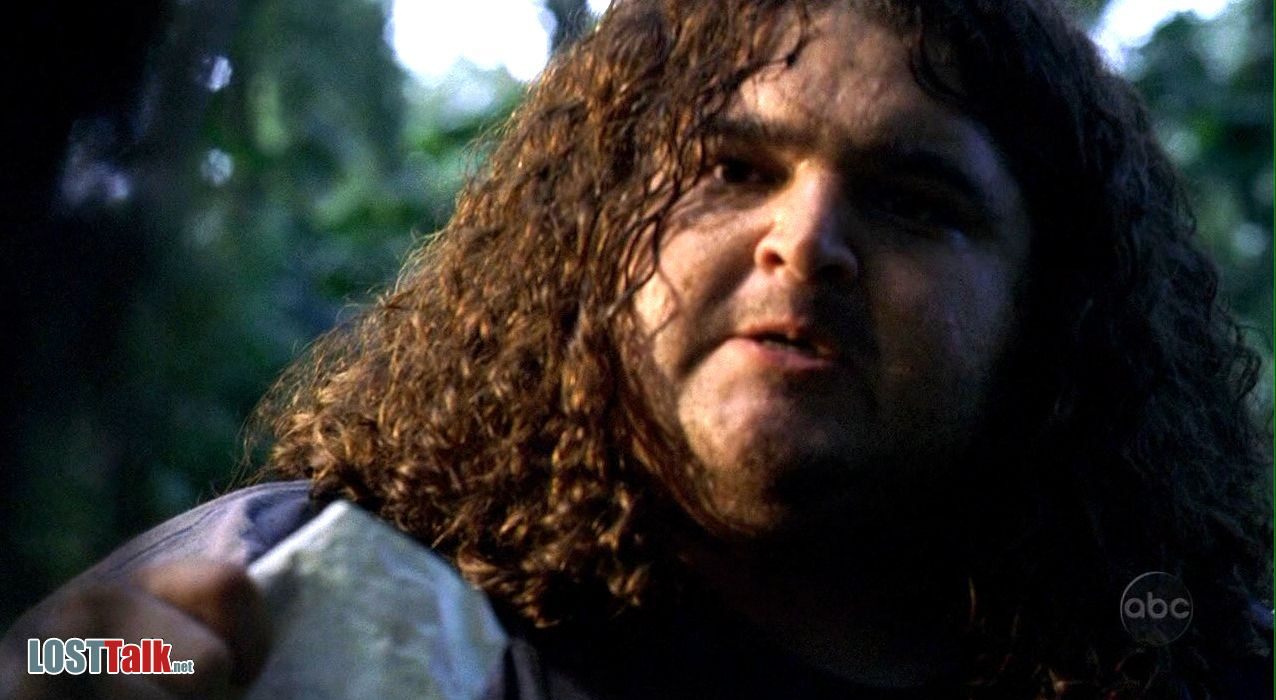
This may seem like a strange thing to single out, but what I liked most about this episode was the return of the real Hurley. Last week I was a little miffed when Hurley decided not to go into the cabin. That’s not the Hurley I know: the one who’s driven to find answers about the malevolent force that’s killed his grandfather and ruined his life – and who has consistently shown himself to be physically brave in his pursuit of his quest. (“I can make it. I can get out of the way. I’m spry.”) This week I felt like we saw the return of the real Hurley.

This Hurley!

Okay, that thing in the woods – maybe it’s a monster. Maybe it’s a pissed-off giraffe. I don’t know! The fact that no one is even looking for us? Yeah, that’s weird. But I just go along with it, because I’m along for the ride. Good old fun time Hurley. Well guess what?

NOW I WANT SOME FRIGGIN’ ANSWERS!

(HT LostTalk.net; you can see the original in all its glory at 6:00 here)

The really great thing about Lost is the amazing character portrayal. They’re not stereotypes. You feel like you know these people. Think about how hard that must be for the writers given the number of characters they’re juggling.

Second order of business. I believe this was the first time that the “flash backward/forward” storyline followed more than one character (or two closely related characters like Jin and Sun or Boone and Shannon – remember them?). I spent most of the episode thinking, “this isn’t working.” They were trying to do too many things, and the narrative didn’t gel.

Of course, at the end we saw why they were doing it. They were trying to set up the season finale with a feeling of epic scope – half a dozen plotlines all coming to a head at the same time and in the same place. Focusing on one character’s story would undermine the big closing montage of everyone trudging through the jungle towards The Orchid (it felt kind of like the Lost version of the “One Day More” number in Les Mis, or “Tonight” in West Side Story). So by the end I wasn’t disappointed with it, but on the other hand I don’t think they achieved what they were going for.

A side point that occurred to me: Earlier in the season, we established that the Oceanic Six cover story claims that eight people survived the crash and two never made it off the island. At the time I assumed that Claire had to be one of them, in order to explain the presence of her baby, Aaron. But now it transpires that the cover story claims Aaron is Kate’s. So now we don’t know the identities of both of the people who (according to the cover story) survived the crash but not the island.

On the other hand, the mystery of why Jack was reluctant to pursue Kate on account of Aaron has been resolved. Aaron is a constant reminder of his father’s failings, and as the show’s producers put it in a season 1 episode title, all the best cowboys have daddy issues.

Final note: the preview of the season finale claims (or perphas suggests, I don’t remember the exact words) that we will see the rescue of the Oceanic Six. Lost previews have lied many times before. But if this one’s accurate, does that imply that seasons five and six will take place in “the future,” i.e. 2005? Or will we see the rescue in a flash-forward?

See you in two weeks!