Carrying Coals to Newcastle

January 6, 2010

Stuart Buck and I have a piece on National Review Online this morning about how money to address unemployment is being devoted to education.  The curious thing is that education (and health care) are the only major sectors of the economy that have added jobs over the last two years while every other sector has lost more than 7 million jobs. 

Fixing unemployment by spending an additional $23 billion on teacher salaries is like carrying coals to Newcastle.  I’d much rather that Congress carry Newcastle beer.  Hmmmmm.  Beer.  Then at least we wouldn’t mind so much their blowing our money to address a problem in the only sector where it doesn’t exist.


Public Schools: Cornerstones of Democracy!

January 5, 2010

(Guest post by Greg Forster)

During the mad real estate rush a couple years ago, five school districts here in Wisconsin (including the biggest district here in my county) borrowed $200 million and sunk it into some extremely unwise investments hoping to get rich quick.

Because that’s exactly why we gave the public school system the right to tax us – so it could play the market with our money.

The investments all went south and are now worthless.

But don’t panic! Fortunately, they structured the deal so that in the event they lost all their money, they could totally shaft their creditors. The investments were made by a trust they set up rather than by the districts themselves, so the districts aren’t liable for the losses. Their creditors have to eat it all.

One bank, which lent the districts $165 million, has asked the districts to try to pay at least some of it back, on grounds that they have a “moral obligation” to make the losses good even if they don’t have a legal obligation to do so.

Here, according to the Milwaukee Journal Sentinel, is the districts’ response:

The districts’ officials have argued they are protected from paying back the $165 million because the loans were undertaken by trusts rather than the districts themselves and because a moral obligation is not the same as a legal obligation.

But remember, public schools are the cornerstone of democracy because they and only they are capable of inculcating children with strong civic values like responsibility and respect for the rights of others.


Merry State-Secret Christmas!

December 23, 2009

(Guest post by Greg Forster)

On top of the administration’s penchant for government control of newspapers and creating bogus “emergencies” in order to claim emergency powers, now the indispensable Andy McCarthy brings us the news that it has quietly signed an executive order to permit Interpol (the international criminal justice organization) to operate in the U.S. totally immune from all U.S. law, including the Constitution itself.

In addition to all the obvious threats this raises – such as the denying of basic civil rights to targets of Interpol’s investigations, and Interpol’s close relationship with foreign governments and international agencies hostile to the United States – McCarthy also notes that the executive order means Interpol archives, housed in the Justice Department, will be exempt not only from FOIA or any other form of transparency, but even from subpoena by Congress or the courts.

McCarthy asks:

Why is it suddenly necessary to have, within the Justice Department, a repository for stashing government files which, therefore, will be beyond the ability of Congress, American law-enforcement, the media, and the American people to scrutinize?

And these people think they’re the guardians of civil rights and we’re the aspiring tyrants!

Merry Christmas. Hope you’re all still here in the New Year.


Metaphor Alert!

December 22, 2009

(Guest post by Greg Forster)

Priceless video of Gordon Brown, with great ceremonial pomposity, leading Al Gore into a closet.

Update: Watch their faces as they come out. Brown, to his great credit, is laughing his hiney off. Gore still has his game face on. Like the fate of the treaty depends on his not looking bad as he walks down the hallway. Then, after what feels like an eternity, he seems to realize that he’ll look like an idiot if he doesn’t smile. So he scruches his face up into a sort of smile-like contortion.

HT Daily Telegraph, via Mark Steyn


Death Panels for College Kids Update

December 18, 2009

(Guest post by Greg Forster)

In today’s Wall Street Journal, Arne Duncan points out that it makes no sense for government to run a giant subsidy program for student loans that allows bankers to capture taxpayer dollars as intermediaries between Uncle Sam and the kids.

Obviously, the only sensible alternative is for government to completely abolish private lending and socialize the whole system, so that the only place any student of any income level will be able to go for a loan is the federal government! No other possible solution to the problem is imagineable.

The headline summarizes the administration’s bullying ambitions with admirable transparency: “Banks Don’t Belong in the Student Loan Business.”

And how did the path to socialism start? With the creation of a “public option.” After that, the rest is just math.


CBS v. CDC on Swine Flu

November 3, 2009

Dr Horrible

(Guest post by Greg Forster)

Now, I know CBS News is a disreputable tabloid organization – not a highly reliable source of information, like, say, the National Enquirer. But here at JPGB we’ve always said that empirial research should be judged on its own merits, not on the identity of the researcher.

CBS is reporting that states checking up on H1N1 diagnoses have found that only a small (sometimes tiny) portion of those diagnosed by their doctors as having swine flu actually had it. California tested 13,704 cases of people who were told by their doctors that they probably had swine flu and found that only 2% actually had it. Florida tested 8,853 cases and found that only 17% had swine flu. Other states found similar results.

CDC stonewalled CBS’s FOIA requests for the data, saying the state agencies that reported the data didn’t feel confident enough in their accuracy to have them publicly released. Sorry, we’d love to help, but our hands are tied. In the report you can see the CDC spokesman promise that he’ll get those data right to CBS just as soon as the states tell him it’s OK with them to release them.

But when CBS went to the states and asked for the data, they handed them right over.

I can’t imagine why the CDC might feel like it has something to hide. Surely it has nothing to do with the president’s use of swine flu panic as an excuse to claim “emergency powers” to sweep away “bureaucratic obstacles” (formerly known as the rule of law).

Update: OK, admittedly we don’t have all the details here. Maybe there will turn out to be some issue of selection bias at work. But the reason this information isn’t readily available is because of the CDC stonewall. That’s the story here.


Swine Flu Socialism

October 28, 2009

robotinsurance2

Courtesy of the World Health Organization

(Guest post by Greg Forster)

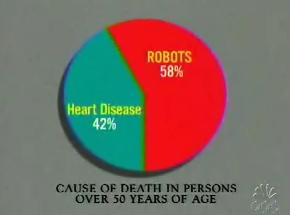
Further to Jay’s post below on how the supposed swine flu “pandemic” is sounding a lot like the ad for Old Glory Robot Insurance:

Michael Fumento, who has made a career out of calling BS on the political abuse of medicine, reports on just how bogus the swine flu panic is – and more importantly, the agenda behind it.

The World Health Organization’s old definition of “pandemic” required an outbreak not only to consist of multiple epidemics around the world, but also to pose an unusually severe threat to life and health before it could be called a pandemic. This was important because plain old ordinary flu causes multiple simultaneous epidemics around the world all the time, but it’s no cause for alarm because the plain old ordinary flu is a routine problem.

But just before swine flu was declared a pandemic, the WHO quietly rewrote the definition of “pandemic” to remove the necessity of an unusually serious threat.

Why’d they have to do that? Because the swine flu is actually less deadly – by orders of magnitude – than the regular flu:

Medically, the pandemic moniker is unjustifiable. When the sacrosanct World Health Organization (WHO) made its official declaration in June, we were 11 weeks into the outbreak, and swine flu had only killed 144 people worldwide — the same number who die of seasonal flu worldwide every few hours. The mildest pandemics of the 20th century killed at least a million people worldwide. And even after six months, swine flu has killed about as many people as the seasonal flu does every six days…

In Australia and New Zealand, flu season has ended, and almost all cases have been swine flu. Yet even without a vaccine, these countries are reporting fewer flu deaths than normal. (In New Zealand, that’s just 18 confirmed deaths compared with 400 normally.) Swine flu is causing negative deaths! [ea]

Update: When I originally posted this I forgot to include this wonderful tidbit. One of the very classy methods being used in the media to hype the swine flu is to report the total number of cases of all types of flu, including even undiagnosed cases with “flu-like symptoms.” Then the total figures for flu deaths and flu cases are falsely reported as swine flu figures.

Why would the WHO want to gin up a baseless panic about swine flu? Partly because they had already over-hyped avian flu and wanted to use a new panic over swine flu to retroactively justify the old panic over avian flu. “The world can now reap the benefits of investments over the last five years in pandemic preparedness,” boasts WHO’s director-general.

And partly it’s for the same reason the Old Glory Insurance Company wants you to believe in robot attacks – money. Apparently WHO makes a living off phony disease scares:

Yet this [CYA for the avian flu scare] doesn’t explain why the agency hyped avian flu in the first place, nor why it exaggerated HIV infections by more than 10 times, or why it spread hysteria over Severe Acute Respiratory Syndrome (SARS). That disease ultimately killed a day’s worth of seasonal flu victims before vanishing.

But the SARS scare was enough, leading to a broad expansion of WHO powers, including a degree of direct authority over national health agencies. It’s now using that to leverage more authority and a bigger budget. No shocker there.

But at least the Old Glory Insurance Company only wanted to take your money. They didn’t want to take your freedom as well. Not so much can be said for the WHO:

What may be surprising is that it wants to use that power to help bring about a global economic and social revolution–and that Director-General Chan was so blunt about it in a speech in Copenhagen last month.

She said “ministers of health” should take advantage of the “devastating impact” swine flu will have on poorer nations to tell “heads of state and ministers of finance, tourism and trade” that:

  • The belief that “living conditions and health status of the poor would somehow automatically improve as countries modernized, liberalized their trade and improved their economies” is false. Wealth doesn’t equal health.
  • “Changes in the functioning of the global economy” are needed to “distribute wealth on the basis of” values “like community, solidarity, equity and social justice.”
  • “The international policies and systems that govern financial markets, economies, commerce, trade and foreign affairs have not operated with fairness as an explicit policy objective.”

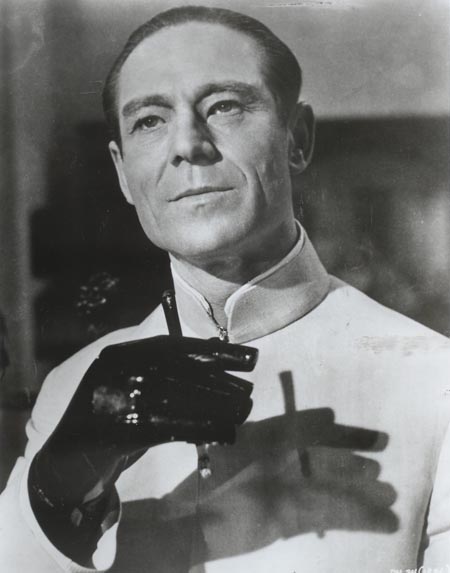
In related news, the WHO has announced a new panel of doctors to wield those “special emergency powers” we need to sweep away “bureaucratic obstacles” and combat swine flu. Here they are:

Dr No

Dr Horrible

Dr Doom

Dr Octopus

Dr Evil


Our Tax Dollars Paying for Penuchle

October 5, 2009

(Guest post by Jonathan Butcher)

Boy, does this sound familiar!  Apparently, the U.S. Post Service shells out $1 million every week to “pay thousands of employees to sit in empty rooms and do nothing.”  Mail volume has slid 12.6% compared to last year, and the Post Office simply can’t find enough to do to keep postal workers busy.  “So they sit — some for a few hours, others for entire shifts…They spend their days holed up in rooms — conference rooms, break rooms, occasionally 12-foot-by-8-foot storage closets…”  Funny, this reminds me of grad school (without the free food).

The employees can’t be fired due to union rules, of course.  Not only that, but workers at slower post offices can’t even be reassigned to busier locations.

Why does this sound familiar?  Because teacher union rules in New York City created something remarkably similar.  As The New Yorker pointed out recently (and noted on jaypgreene.com here) , teachers unions have some 600 teachers in the city sit in “rubber rooms,” playing cards, chatting, or fighting over folding chairs.  These teachers get their summers off and are getting paid their full salary (in some cases upwards of $100,000 a year).

Unlike the postal workers, the issue with these teachers in a holding pattern is that they are under investigation for misconduct or incompetence.  But the fact remains that unions in both cases make it virtually impossible to fire anyone, the knights of the folding chairs still get paid a full salary, and they are all doing absolutely nothing for months on end.

Our tax money, funding penuchle games for federal and state employees everywhere.

(HT: Carpe Diem)


Car Buyers Hate Bailouts

October 2, 2009

The Homer

(Guest post by Greg Forster)

You, the taxpayer, spent billions of dollars bailing out Chysler and GM.

Great news!

GM’s sales are down 45% from last September (when sales were already bad enough to drive the company into banrkuptcy). Chrysler is down 42%. Ford is only down 5%. Car buyers are clearly punishing the two bailout recipients brutally. Robert Farago of Truth About Cars predicts that GM and Chrysler will both “go down by the end of next year” without a second, new federal bailout. The only question, he says, is whether the two bailed out manufacturers will need the cash before the 2010 midterm elections.

Why is that great news? Because maybe it will help a few legislators learn their lesson for next time.

HT Kausfiles


Market Ideas at Work Around the World

September 29, 2009

(Guest Post by Jonathan Butcher)

It is a beautiful thing when improvements in how we live can be explained by economic theories rooted in free market principles.  When someone halfway around the world sees their way of life improve and this is featured in the media, dust off your favorite book by a free market thinker and look for the theory that explains it.

This week’s Economist provides an opportunity to do just that.  In a feature section on the telecom industry and emerging markets, this excerpt on cell phones in an article entitled “Eureka Moments” caught my attention:

“How did a device that just a few years ago was regarded as a yuppie plaything become, in the words of Jeffrey Sachs, a development guru at Columbia University’s Earth Institute, ‘the single most transformative tool for development’?  A number of things came together to make mobile phones more accessible to poorer people and trigger the rapid growth of the past few years.  The spread of mobile phones in the developed world, together with the emergence of two main technology standards, led to economies of scale…” (emphasis mine).

The casual reader may miss the significant principle at work here: the poor, even on the other side of the planet, benefit from developments in wealthier nations.  This idea is at least as old as 1960, as Friedrich A. Hayek, beautifully elaborates in The Constitution of Liberty:

“There can be little doubt that the prospect of the poorer, ‘underdeveloped’ countries reaching the present level of the West is very much better than it would have been, had the West not pulled so far ahead.  Furthermore, it is better than it would have been, had some world authority, in the course of the rise of modern civilization, seen to it that no part pulled so far ahead of the rest and made sure at each step that the material benefits were distributed evenly throughout the world…

“The over-all speed of advance will be increased by those who move fastest.  Even if many fall behind at first, the cumulative effect of the preparation of the path will, before long, sufficiently facilitate their advance that they will be able to keep their place in the march.”

So, if we want to help the poor at home or abroad, powerbrokers should do everything they can to foster the success of the successful.  Instead of redistributing wealth through higher taxes on the rich, policymakers should make policy that helps entrepreneurs succeed.  For it is the knowledge they create, use, and pass on with their enterprises that quickens the pace of progress, pulling everyone along at a faster rate as the new technology spreads.

It is not just tax policy or legislation pertaining to businesses to which this idea applies; other social programs can be improved in the same way, and education is no exception.  Charter schools are an excellent example of a public policy that promotes individual liberty and entrepreneurship—resulting in the creation of new ideas that can then be used widely.

Everywhere charters have spread, the new ideas on leadership and teaching, for example, that they carry with them have been copied.  Even those opposed to charter schools have decided to combat them using the charter concept.  For example, Pilot Schools were created in Boston by existing school leaders in response to charter schools, using concepts central to the charter movement (more freedom over administrative decision making, specialized mission statements, etc.).  The result is that parents have even more options than before—more schools to chose from and more freedom.

Likewise, President Obama’s recent call for a longer school day and year is nothing new; the much-heralded KIPP Academies, also charter schools, have been operating with this policy for many years.  Again, new ideas that survive once implemented, created in the realm of entrepreneurship, are difficult to ignore even at the highest level.

The Economist’s piece goes on to explain how cell phones help the poor in rural areas around the globe, by “generally mak[ing] it easier to do business.”  In fact, a recent study found that “adding an extra ten mobile phones per 100 people in a typical developing country boosts growth in GDP per person by 0.8 percentage points.”  Would that we could see such an improvement in student achievement from policies promoting educational entrepreneurship.  Here’s hoping policymakers let the successful succeed, in education and elsewhere.