Random Pop Culture Apocalypse: The Decade in Pop Music

December 31, 2010

(Guest Post by Matthew Ladner)

Technically, I think a decade is ending tonight. Or maybe it ended on Dec. 31, 2009. I don’t really care- New Year’s Eve 2010 feels like the end of a decade, and a good excuse for a random pop culture apocalypse: the decade in music.

Ten years ago, I was a thirty-three year old hipster-doofus living in Austin Texas soaking up all-girl Japanese speed metal bands at SXSW.  These days as a busy father of three, I don’t get out quite as much. That’s okay, as all-girl Japanese speed metal bands are only good the first time anyway.

Anyhoo, here are what I think are a few music highlights from the last decade.

The biggest change in music over the decade was a shift in the industry itself. The rise of Napster, Ipods and Itunes has killed/is killing the era of record labels getting bands to put one or two popular songs on an album/cd with a collection of lesser efforts and sticking the fan for $15. No thanks- we’ll take the good song for 99 cents, thank you very much.

I came to appreciate what a huge change this was years ago when I a buddy of mine were in Rain in Vegas and we witnessed a basketball arena sized dance club of 20 somethings completely freak out when the DJ played “ABC” by the Jackson Five. I asked a guy next to me “how do you kids even know about this song? Was it on the O.C. or something?” He just said “Dude- this song is totally awesome!”

My next experience along these lines was in a karaoke bar in DC with a group of friends. As a canary in the coal mine for what was to come, a 21 year old looking kid from Georgetown sang “Don’t Stop Believing” by Journey, and the place went bananas. Kids were jumping on their chairs, people were going nuts, and I was stunned. “This song was released when I was in 8th grade- how can these kids even be aware of it?” I asked.

“Get with it grandpa!” came the reply.

After that, Don’t Stop Believing went through a pop-culture renaissance that I never would have dreamed possible, led of course by this:

It’s tempting to crown Don’t Stop Believing as the techno-zombie resurrection song of the decade, but there was some good original stuff. I was in a hotel room on business in 2009, and was watching the MTV video music awards out of sheer boredom. I was feeling my age: the whole thing seemed entirely juvenile and absurd. I was watching it mostly out of morbid fascination. The host, that British guy who is currently married to Katy Perry for the next few months, is distilled obnoxious in a bottle.

Anyway, the big build up, Mr. Perry announces that Jay-Z is in a car in Manhattan on his way for the final performance. The tension builds- scenes of the limo driving…Jay-Z walking through the building…

I thought to myself “This is going to totally suck. There is no way this is going to deliver on this much hype.” Early in the song, Jay-Z refers to himself as “the modern-day Sinatra” and I thought “I knew it- this guy is setting himself up for failure.”

But then, about a third of the way in, I started to change my mind. By the end, I was blown away by An Empire State of Mind:

Jay-Z may have 99 problems, but being unable to deliver aint one.

Despite Jay-Z, there can be little doubt that the music industry is in decline. The biggest grossing tours from this year: Bon Jovi and AC/DC. No, that is not a misprint. The fracturing of music into micro-genres makes it difficult for any new act to rise into Rolling Stones/U2 type of global dominance. I heard Alice Cooper discussing his I-tunes inspired popularity in Europe (who knew?) and he basically said that the new acts are at a severe disadvantage these days, because they must compete with the greatest hits of the past, not just with each other. I don’t think Jay-Z is worried about competing with Alice, but I think Alice has a point.

Dinosaur acts can still rock though:

Some day, I’ll have to write an entire post on why I both hate and dig Robert Plant. In the meantime, this collaboration with Alison Kraus was cool:

I seem to have a fascination with duets, really liked this one from Moby and Gwen Steffani:

Nothing of course beats a good spoof. I thought this one was great. When it came out, one of my 20 something coworkers thought the lead singer was hot, and another appreciated the satire. Mix spoof and nostalgia, drink up a tasty cocktail:

The dropping cost of video production now means people can make their own videos. I get a kick out what a group of California film students did with the Yeah, Yeah, Yeah song “Maps.” Low-tech creepy geeky cool:

Of course, the ability to do inexpensive audio remixes has led to the advent of the mash-up. Also known as “bastard pop” this basically entails taking the music from one song and inserting the vocal performance of another. Most of these are not worth a listen, but when it works it is great fun:

and:

and:

Overall, I’d give the last ten years a B-plus, but only because of resurrection factor. Maybe I’m just too old to “get” Lady Ga-Ga. Feel free to enlighten me with links in the comments!


Ed Week on Jeb’s K-12 Influence

December 30, 2010

 (Guest Post by Matthew Ladner)

Education Week on Jeb Bush’s growing K-12 influence. Over on the Gradebook blog, Jeff Solochek previews the year ahead in Florida K-12 reform.


Cox: South and West surge without California

December 23, 2010

(Guest Post by Matthew Ladner)

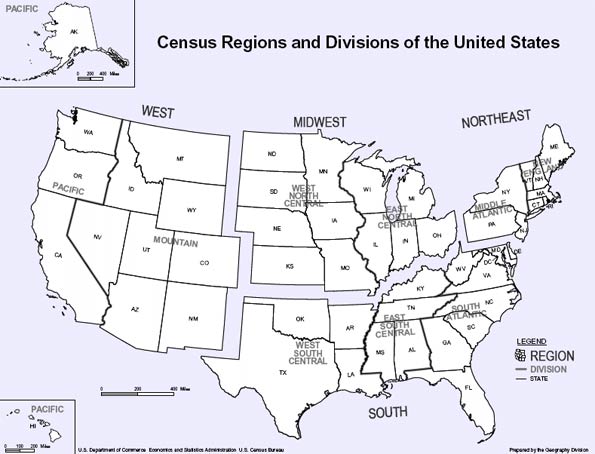
Violating Jay’s hiatus post yet again, just wanted to pass along Wendell Cox’s write up on the new Census numbers. Texas will be gaining **ahem** 4 new Congressional seats after the 2010 Census, Florida will get two, and a variety of Western and Southern state will pick up one, with the notable exception of California, which scored a goose egg.  The sclerotic states of the Midwest and Northeast lost seats yet again.

Two graphics from Cox tell the story:

and:

And for the Northeast and Midwest:


Susana Martinez appoints Hanna Skandera for NM Education Secretary

December 21, 2010

(Guest Post by Matthew Ladner)

Governor-elect Susana Martinez of has nominated Hanna Skandera to lead the Department of Education in New Mexico. Skandera served as Deputy Commissioner in Florida during Jeb Bush’s time in office, and Governor-elect Martinez campaigned on implementing reforms based on the Florida reforms during the campaign. An outstanding choice, and a great signal that Governor Martinez is very serious about reform.


On Hiatus

December 19, 2010

Everything will get very quiet in the education world until the new year, so we’ll be taking a break from blogging for the next week or so.  See you in 2011.


Fordham Fears the Daleks

December 17, 2010

(Guest post by Greg Forster)

The Fordham Institute’s Gadfly, in an item signed by Janie Scull, picks up and recirculates the Gates Foundation’s drillandkillaphobic error – but with a subtle twist (see if you can catch it – I didn’t when I first read it):

Second, teachers who, according to their students, “teach to the test” do not produce the highest value-added scores for said students; rather, instructors who help their students understand math concepts and reading comprehension yield the highest scores.

Gates was originally pushing the line that the study found a negative relationship between “teach to the test” or “drill and kill” and outcomes. Not only is there nothing in the study to support that, the study actually finds the opposite.

Fordham is now slightly changing the claim so that it appears to say test prep is bad for students, without actually saying that. Read that sentence very carefully. Now read it again, and this time bear the following in mind: the study found a positive correlation between test prep and outcomes. Now, does this look like an honest characterization of the study to you?

I’ll admit that they had me fooled. I originally put up a version of this blog post saying that they were recirculating Gates’s erorr. Then I reread it and pulled that down. They’re not just recirculating the error, they’re weaseling it up to see if they can circulate it in a way that will pass muster. I haven’t seen such word-twisting since I watched the president of the United States explain “it depends on what the meaning of ‘is’ is.”

“I did not have a statistically significant relationship with that variable.”

Despite her efforts to remain technically correct, Scull does make an erroneous claim. She directly attributes the phrase “teach to the test,” in quotes, to students. In fact, as Jay pointed out, the phrase “teach to the test” and similar phobic phrases such as “drill and kill” do not appear in the study. The study found a positive relationship between “test prep” and outcomes.

This is worse than the New York Times and Los Angeles Times reporting the original error. Those papers simply picked up what Gates told them and reported that Gates said it. Sure, in a perfect world reporters would always check these things with independent researchers – but it’s not a hanging offense. (However comically hysterical some of them might get when they get called on it.)

The Fordham Institute is, or at least claims to be, an independent voice. And the Gadfly item did not attribute its claim to Gates, as the newspapers did. The Gadfly item states its partly erroneous, partly weaseled-up claim simply as a fact. That lends the intellectual prestige of the Fordham Institute to both the error and the Clintonian weaseling.

Jay has said before, and I agree, that Fordham can take huge piles of money from Gates without losing its integrity.

That’s why I have full confidence Scull and Fordham will be running a correction of this erroneous item.

As I wrote earlier this week, human beings are not daleks, so test prep and similar activities can’t be the be-all and end-all, but the fear of test prep has so far been much more destructive than its overemphasis. If we don’t get past drillandkillaphobia, we’ll never fix education.

[This post has been edited since it was first published, as indicated in the text.]


Drill and Kill Kerfuffle

December 16, 2010

The reaction of New York Times reporter, Sam Dillon, and LA Times reporter, Jason Felch,  to my post on Monday about erroneous claims in their coverage of a new Gates report could not have been more different.  Felch said he would look into the issue, discovered that the claimed negative relationship between test prep and value-added was inaccurate, and is now working on a correction with his editors.

Sam Dillon took a very different tack.  His reaction was to believe that the blog post was “suggesting on the internet that I had misinterpreted an interview, and then you repeated the same thing about the Los Angeles Times. That was just a sloppy and irresponsible error.”  I’m not sure how Dillon jumps to this thin-skinned defensiveness when I clearly said I did not know where the error was made: “I don’t know whether something got lost in the translation between the researchers and Gates education chief, Vicki Phillips, or between her and Sam Dillon at the New York Times, but the article contains a false claim that needs to be corrected before it is used to push changes in education policy and practice.

But more importantly, Dillon failed to check the accuracy of the disputed claim with independent experts.  Instead, he simply reconfirmed the claim with Gates officials: “For your information, I contacted the Gates Foundation after our correspondence and asked them if I had misquoted or in any way misinterpreted either Vicki Phillips, or their report on their research. They said, ‘absolutely not, you got it exactly right.'”

He went on to call my efforts to correct the claim “pathetic, sloppy, and lazy, and by the way an insult.”  I guess Dillon thinks that being a reporter for the New York Times means never having to say you’re sorry — or consult independent experts to resolve a disputed claim.

If Dillon wasn’t going to check with independent experts, I decided that I should — just to make sure that I was right in saying that the claims in the NYT and LAT coverage were unsupported by the findings in the Gates report.

Just to review, here is what Dillon wrote in the New York Times: “One notable early finding, Ms. Phillips said, is that teachers who incessantly drill their students to prepare for standardized tests tend to have lower value-added learning gains than those who simply work their way methodically through the key concepts of literacy and mathematics.”  And here is what Jason Felch wrote in the LA Times: ““But the study found that teachers whose students said they ‘taught to the test’ were, on average, lower performers on value-added measures than their peers, not higher.”  And the correlations in the Gates report between test student reports of test prep and value-added on standardized tests were all positive: “We spend a lot of time in this class practicing for the state test.” (ρ=0.195), “I have learned a lot this year about the state test.” (ρ=0.143), “Getting ready for the state test takes a lot of time in our class.” ( ρ=0.103).  The report does not actually contain items that specifically mention “drill,”work their way methodically through the key concepts of literacy and mathematics,” or “taught to the test,” but I believe the reporters (and perhaps Gates officials) are referencing the test prep items with these phrases.

I sent links to the coverage and the Gates report to a half-dozen leading economists to ask if the claims mentioned above were supported by the findings.  The following reply from Jacob Vigdor, an economist at Duke, was fairly representative of what they said even if it was a bit more direct than most:

I looked carefully at the report and come to the same conclusion as you: these correlations are positive, not negative.  The NYT and LAT reports are both plainly inconsistent with what is written in the report.  A more accurate statement would be along the lines of “test preparation activities appear to be less important determinants of value added than [caring teachers, teacher control in the classroom, etc].”  But even this statement is subject to the caveat that pairwise correlations don’t definitively prove the importance of one factor over another.  Maybe the reporters are describing some other analysis that was not in the report (e.g., regression results that the investigators know about but do not appear in print), but even in that case they aren’t really getting the story right.  Even in that scenario, the best conclusion (given positive pairwise correlations and a hypothetically negative regression coefficient) would be that teachers who possess all these positive characteristics tend to emphasize test preparation as well.

Put another way, it’s alway good to have a caring teacher who is in control of the classroom, makes learning fun, and demands a lot of her students.  Among the teachers who share these characteristics, the best ones (in terms of value added) appear to also emphasize preparation for standardized tets.  I say “appear” because one would need a full-fledged multivariate regression analysis, and not pairwise correlations, to determine this definitively.

Another leading economist, who preferred not to be named, wrote: “I looked back over the report and I think you are absolutely right!”  I’m working on getting permission to quote others, but you get the idea.

In addition to confirming that a positive correlation for test prep items means that it contributes to value-added, not detracts from it, several of these leading economists emphasized the inappropriateness of comparing correlations to draw conclusions about whether test prep contributes to value-added any more or less than other teacher practices observed by students.  They noted that any such comparison would require a multivariate analysis and not just a series of pairwise correlations.  And they also noted that any causal claim about the relative effectiveness of test prep would require some effort to address the endogeneity of which teachers engage in more test prep.

As David Figlio, an economist at Northwestern University, put it:

You’re certainly correct here.  A positive pairwise correlation means that these behaviors are associated with higher performance on standardized tests, not lower performance.  The only way that it could be an accurate statement that test prep is causing worse outcomes would be if there was a negative coefficient on test prep in a head-to-head competition in a regression model — though even then, one would have to worry about endogeneity: maybe teachers with worse-performing students focus more on test prep, or maybe lower-performing students perceive test prep to be more oppressive (of course, this could go the other way as well.)  But that was not the purpose or intent of the report.  The report does not present this as a head-to-head comparison, but rather to take a first look at the correlates between practice measures and classroom performance.

There was no reason for this issue to have developed into the controversy that it has. The coverage contains obvious errors that should have been corrected quickly and clearly, just as Jason Felch is doing.   Tom Kane, Vicki Phillips, and other folks at Gates should have immediately issued a clarification as soon as they were alerted to the error, which was on Monday.

And while I did not know where the error occurred when I wrote the blog post on Monday, the indications now are that there was a miscommunication between the technical people who wrote the report and non-technical folks at Gates, like Vicki Phillips and the pr staff.  In other words, Sam Dillon can relax since the mistake appears to have originated within Gates (although Dillon’s subsequent defensiveness, name-calling, and failure to check with independent experts hardly bring credit to the profession of journalism).

The sooner Gates issues a public correction, the sooner we can move beyond this dispute over what is actually a sidebar in their report and focus instead on the enormously interesting project on which they’ve embarked to improve measures of teacher effectiveness.  An apology from Sam Dillon would be also nice but I’m not holding my breath.


Panic on the Streets of Florida!

December 16, 2010

(Guest Post by Matthew Ladner)

Florida governor-elect Rick Scott is making it clear that he is deadly serious about the next wave of Florida K-12 reform.  Worrying about tenure reform is soooo 5 months ago, because Governor-elect Scott mentioned the possibility of letting parents control education funding through Education Savings Accounts. The Goldwater Institute study cited in the paper will be coming out in the not-so-distant-future.

Reactionaries have already started howling.  Mother Jones hates the idea, and started spouting conspiracy theories interrupted only by occasional name-calling. Why wait to actually read a plan when you can go ahead and start complaining about it in advance? Some of the Florida papers have been almost as silly, having apparently learned nothing from having opposed Governor Bush’s reforms only to watch with sheepish silence as Florida shot up the NAEP ranks.

Someone even placed a call to Little Ramona, who as usual these days sings straight out of the AFT hymnal.

This particular rant takes the cake so far. Wow, I mean W*O*W. Check it out:

After a half century of broadening the wealth gap and decimating the middle class, there are many people who would prefer a return to near feudal conditions, when religion, educational disadvantages and abject poverty were used to more easily control the lower classes. A massive expansion in vouchers would be a giant step in that direction and it should be no surprise that billionaire members of the ruling class (like Scott) are lending their support.

When does my “ruling class” membership card arrive in the mail?  I mean really, feudalism gets such a bum rap these days. We don’t need feudalism-we need Neo-Feudalism! You know, the Dead-Hand-of-Clericalism grasps the Invisible-Hand-of-the-Market around the neck of the working class and squeezes!

Oi vey

Stay tuned for the study…I’m afraid the reality will seem terribly reasonable in comparison to the fever dreams of opponents.


“Academics” and the “Practical” Part III: The Daleks Are Coming!

December 15, 2010

(Guest post by Greg Forster)

This week Jay highlighted the fact that a study showing a positive correlation between test prep activity in the classroom and improved learning is being portrayed as having shown a negative correlation between test prep activity (“drill and kill”) and improved learning. At this point it’s not known (at least to me) where the error arose, and I don’t have anything to say about the question of who said what. But I think it illustrates how the whole subject of drillandkillaphobia needs to be revisited.

Lately I’ve explored in some depth how testing has come to be the focal point of the fight between the two great factions in the education space, the “liberal artists” and the “pragmatists.” Liberal artists have gradually come to invest all their hopes in standardized testing. Pragmatists have gradually come to invest all their fears in precisely the same thing. This is a mutually reinforcing circle – over time, the liberal artists increasingly think testing must be good because the pragmatists hate it, and the pragmatists increasingly think it must be bad because the liberal artists love it. So naturally the battle line over testing has become more and more absolute.

The problem, as I’ve tried to show, is that this dynamic causes each side to reject something that’s essential to good education. The liberal artists seek curricula (or standards that can only lead to curricula) that emphasize sterile head knowledge of facts to the exclusion of practical problem-solving. We don’t know how to test what Daniel Willingham calls “deep knowledge” of subject area content, and even if we did the tests would be almost infinitely vulnerable to manipulation if they were ever used for accountability purposes. But we do know how to create rigorous tests for head knowledge of facts, so the liberal artists define “subject area content” to mean simply head knowledge of facts.

The pragmatists do the opposite. And since I was pushing pretty hard last time to emphasize what I thought were the dysfunctions of the liberal artists, I’d like to balance the scales with something about drillandkillaphobia.

Merely mention the subject of testing and it seems that pragmatists instantly jump to the conclusion that you want schools to look like this:

Now the interesting thing is that these days, they will engage in the most hysterical drillandkillaphobia while all the time affirming that we need to keep standards high, content knowledge matters, etc. To some extent I think that must be intentionally tactical – P21 knows that its flavor of loosey-goosey crunchy granola doesn’t sell these days, since they’ve lost a lot of battles in the war of ideas. But I don’t think that explains all of it. Take another look at that Ken Robinson “Changing Paradigms” video, where he begins by saying that of course we don’t want to lower standards. Clearly he, at least, really means it. It seems completely obvious to him that there’s no contradiction between his attacks on testing and his affirmation of high standards.

And that’s the problem. It seems so obvious to him that he fails to even take the question seriously. (That was one of the key points in Willingham’s stimulating critique of Robinson’s video.)

If the liberal artists need to get over their testophilia, the pragmatists need to get over their drillandkillaphobia. I’m not aware of any hard evidence linking test prep to worse outcomes. Sure, lots of people are really convinced that it must be the case, but that’s hardly a solid ground for making policy. (The floor is open in the comments section if you have some hard evidence you want to share.) And it’s not like this is a new question. I’ll admit that I haven’t done an exhaustive review of the research (again, if you have, the floor is open) but Jay and I conducted a study a while back showing that attaching rewards and penalties to a test doesn’t change the results; that would seem to speak right to the heart of drillandkillaphobia. This new Gates Foundation study, finding a positive correlation between test prep and learning outcomes, would seem to be another piece of evidence against it.

People can’t learn what Willingham calls the “deep structure” of practical problems until they’ve learned what he calls the “surface structure.” You can’t get from the pool deck to the bottom of the pool without passing through the surface of the water; similarly, you can’t get to deep (i.e. practical) content knowledge without first getting shallow (i.e. factual) content knowledge. If you like, it’s “merely” or “sterile” head knowledge. But head knowledge it is and head knowledge it will remain, even after you add the “deep” part.

People learn head knowledge by memorization. And any kind of memorization will appear, to those who wish to stigmatize and delegitimize it, to be “merely” “rote” memorization. You can call it “regurtitation” when people know facts, and in a sense you’re right – but people do need to know facts and be able to summon up that knowledge as necessary, whether you call that “regurgitating” or not. And for everyone but the real genius students, gaining head knowledge of facts will involve some kind of “drill.”

As the pragmatists themselves never tire of reminding us, real learning is hard. Well, yes it is. You can’t learn if you don’t memorize stuff. Memorizing stuff is hard and unpleasant, and it’s a lot more so for some kids than for others. That’s the world; deal with it.

I fully admit that if you really want to learn you are never just memorizing. You must be trying to understand the facts you absorb – understand their significance and the connections between them. But while it must be more than memorizing, it is never less than memorizing. Of course, if it must be more then by definition it can never be less.

Take that great, perennial boogyman of rote memorization – historical dates. People whine, why does it matter in what year a certain event occurred? Well – why does it matter? If you stopped and seriously asked that question and sought out the answer, you might . . . well, you might learn something.

The great irony, of course, is that at the same time the pragmatists are pushing this new bout of drillandkillaphobia, they’re working hard to impose a federal-government controlled system of national testing – excuse me, a totally “voluntary” system of “common” “assessment” that has nothing to do with the federal government, nothing to see here, move along, pay no attention to the man behind the curtain. That really is an attempt to handcuff real learning and turn us all over to the benevolent dictatorship of soulless men in white coats who must be trustworthy because, after all, they’re scientists. And that, of course, was always the original sin of the Progressive movement, in its educational form as in all other forms. Handing over all power to a tiny priesthood is the very epitome of “democracy” as long as we’re careful to call the priests “scientists.” But now I’m broaching a whole new and much deeper subject, one that will require another post to handle with any justice.


False Claim on Drill & Kill

December 13, 2010

The Gates Foundation is funding a $45 million project to improve measures of teacher effectiveness.  As part of that project, researchers are collecting information from two standardized tests as well as surveys administered to students and classroom observations captured by video cameras in the classrooms.  It’s a big project.

The initial round of results were reported last week with information from the student survey and standardized tests.  In particular, the report described the relationship between classroom practices, as observed by students, and value-added on the standardized tests.

The New York Times reported on these findings Friday and repeated the following strong claim:

But now some 20 states are overhauling their evaluation systems, and many policymakers involved in those efforts have been asking the Gates Foundation for suggestions on what measures of teacher effectiveness to use, said Vicki L. Phillips, a director of education at the foundation.

One notable early finding, Ms. Phillips said, is that teachers who incessantly drill their students to prepare for standardized tests tend to have lower value-added learning gains than those who simply work their way methodically through the key concepts of literacy and mathematics. (emphasis added)

I looked through the report for evidence that supported this claim and could not find it.  Instead, the report actually shows a positive correlation between student reports of “test prep” and value added on standardized tests, not a negative correlation as the statement above suggests.  (See for example Appendix 1 on p. 34.)

The statement “We spend a lot of time in this class practicing for [the state test]” has a correlation of  0.195 with the value added math results.  That is about the same relationship as “My teacher asks questions to be sure we are following along when s/he is teaching,” which is 0.198.  And both are positive.

It’s true that the correlation for “Getting ready for [the state test] takes a lot of time in our class” is weaker (0.103) than other items, but it is still positive.  That just means that test prep may contribute less to value added than other practices, but it does not support the claim that  “teachers who incessantly drill their students to prepare for standardized tests tend to have lower value-added learning gains…”

In fact, on page 24, the report clearly says that the relationship between test prep and value-added on standardized tests is weaker than other observed practices, but does not claim that the relationship is negative:

The five questions with the strongest pair-wise correlation with teacher value-added were: “Students in this class treat the teacher with respect.” (ρ=0.317), “My classmates behave the way my teacher wants them to.”(ρ=0.286), “Our class stays busy and doesn’t waste time.” (ρ=0.284), “In this class, we learn a lot almost every day.”(ρ=0.273), “In this class, we learn to correct our mistakes.” (ρ=0.264) These questions were part of the “control” and “challenge” indices. We also asked students about the amount of test preparation they did in the class. Ironically, reported test preparation was among the weakest predictors of gains on the state tests: “We spend a lot of time in this class practicing for the state test.” (ρ=0.195), “I have learned a lot this year about the state test.” (ρ=0.143), “Getting ready for the state test takes a lot of time in our class.” ( ρ=0.103)

I don’t know whether something got lost in the translation between the researchers and Gates education chief, Vicki Phillips, or between her and Sam Dillon at the New York Times, but the article contains a false claim that needs to be corrected before it is used to push changes in education policy and practice.

UPDATE —

The LA Times coverage of the report contains a similar misinterpretation: “But the study found that teachers whose students said they “taught to the test” were, on average, lower performers on value-added measures than their peers, not higher.”

Try this thought experiment with another observed practice to illustrate my point about how the results are being mis-reported…  The correlation between student observations that “My teacher seems to know if something is bothering me” and value added was .153, which was less than the .195 correlation for “We spend a lot of time in this class practicing for [the state test].”  According to the interpretation in the NYT and LA Times, it would be correct to say “teachers who care about student problems tend to have lower value-added learning gains than those who spend a lot of time on test prep.”

Of course, that’s not true.  Teachers caring about what is bothering students is positively associated with value added just as test prep is.  It is just that teachers caring is a little less strongly related than test prep.  Caring does not have a negative effect just because the correlation is lower than other observed behaviors.

(edited for typos)